
 1 month ago
43
1 month ago
43
Kagawa is famous for udon, yet the prefecture hides other treasures. One of them is iriko meshi, a humble rice dish with deep flavor. Iriko means dried sardines, a pantry staple across western Japan. Cooks here simmer them into rice for a savory result. So iriko meshi いりこ飯 Kagawa sits at the heart of local home cooking. The dish feels simple, though it carries real history. Let me walk you through this Sanuki regional comfort food, bite by bite.
TOC
What Is Iriko Meshi?
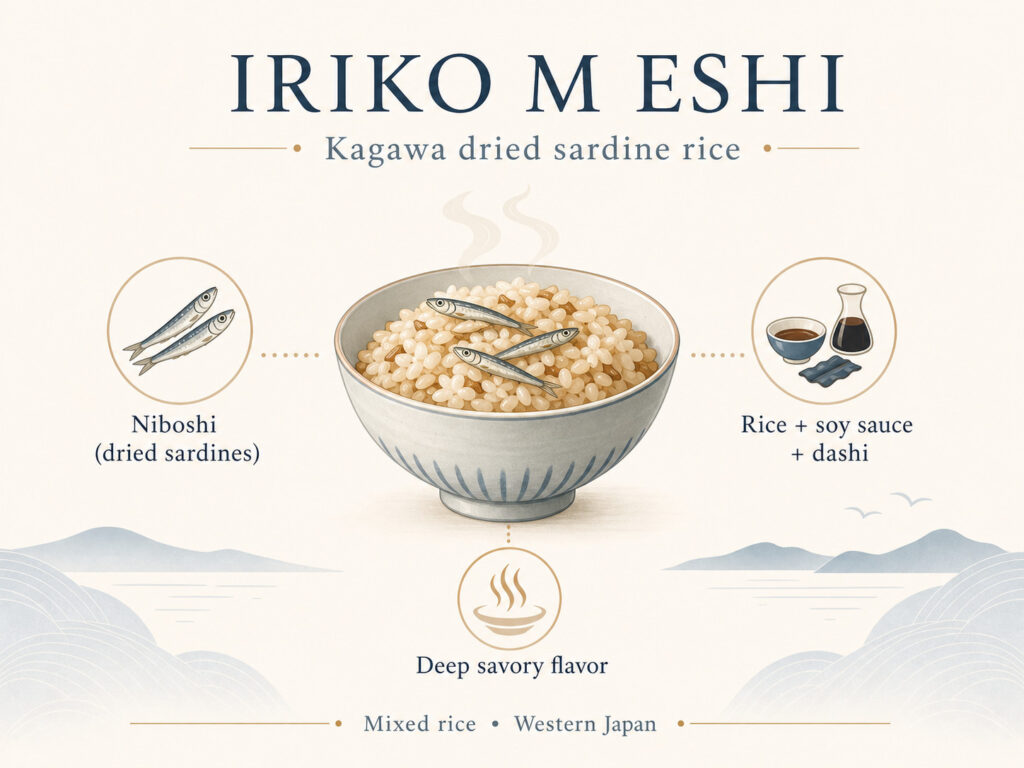
Iriko meshi is a Japanese rice dish using niboshi, the small dried sardines. The name joins two words, iriko and meshi, meaning dried sardines and rice. Cooks prepare the rice with iriko, soy sauce, and dashi together. Therefore the grains soak up a deep, savory flavor. This makes it a classic dried sardine rice from Kagawa. In western Japan, locals call niboshi by the name iriko. So Kagawa iriko rice fits the regional pantry perfectly.
The dish belongs to the mixed rice family. For background, see our guide to takikomi gohan. Some cooks chop the iriko finely, while others leave them whole. Either way, the fish flavors every single grain.
The Taste of Iriko Meshi
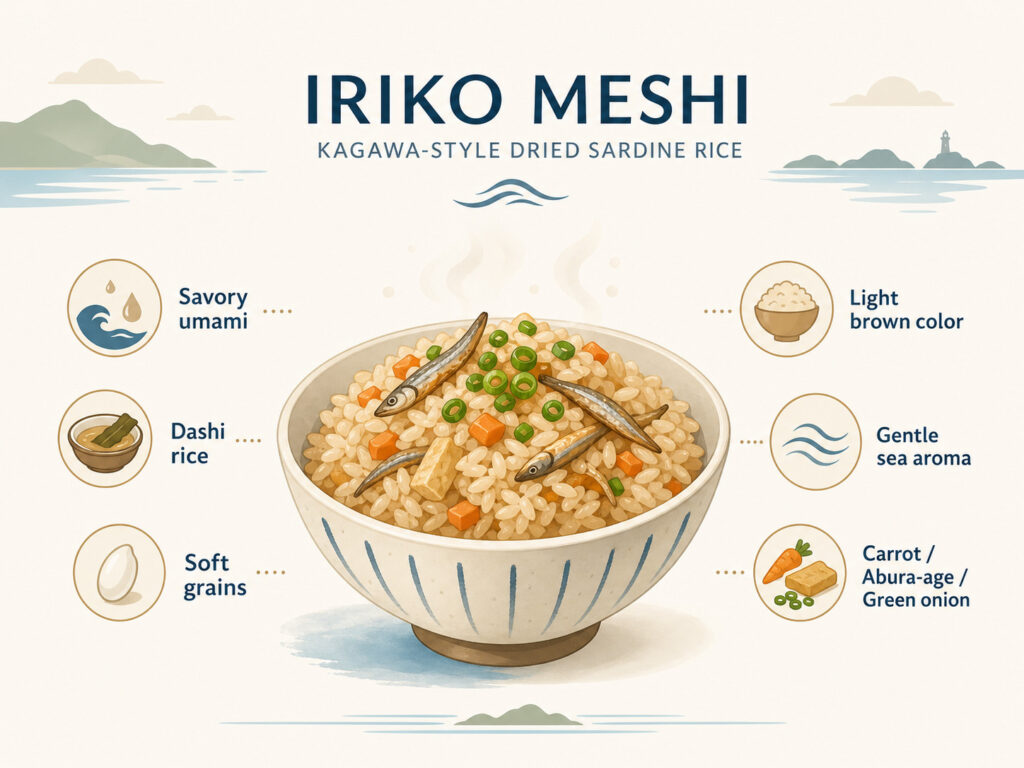
What does iriko meshi taste like? The flavor leans savory, gentle, and full of umami. The sea shows up in every bite, but softly. Honestly, it tastes like comfort more than luxury. The aroma alone makes you hungry. Here is what defines a good bowl:
- A savory and umami-rich iriko rice base
- Rice cooked with iriko broth for deep flavor
- A light brown color from soy sauce and dashi
- A gentle marine scent from Seto Inland Sea dried sardine rice
- Soft grains that still hold their shape
Many families add carrot, abura-age, or green onion. These extras lift the dish without hiding the iriko. As a result, the bowl feels balanced, never fishy or heavy. That gentle harmony explains its lasting appeal.
How to Make Kagawa Iriko Meshi
How do you make Kagawa iriko meshi at home? The process stays simple, which is part of the charm. You mostly need rice, iriko, and a few basic seasonings. A rough home method looks like this:
- Soak the iriko in water to draw out a light dashi.
- Remove the heads and guts if you dislike bitterness.
- Rinse the rice, then add it to the pot.
- Pour in the iriko dashi, soy sauce, sake, and mirin.
- Add the iriko, plus carrot or abura-age if you like.
- Cook everything together, then rest the rice before serving.
Some cooks leave the heads in for extra depth. Others worry about a bitter edge, so they remove them. Both choices work, honestly. For more on the stock itself, read our dashi guide.
Iriko Meshi Versus Other Mixed Rice Dishes
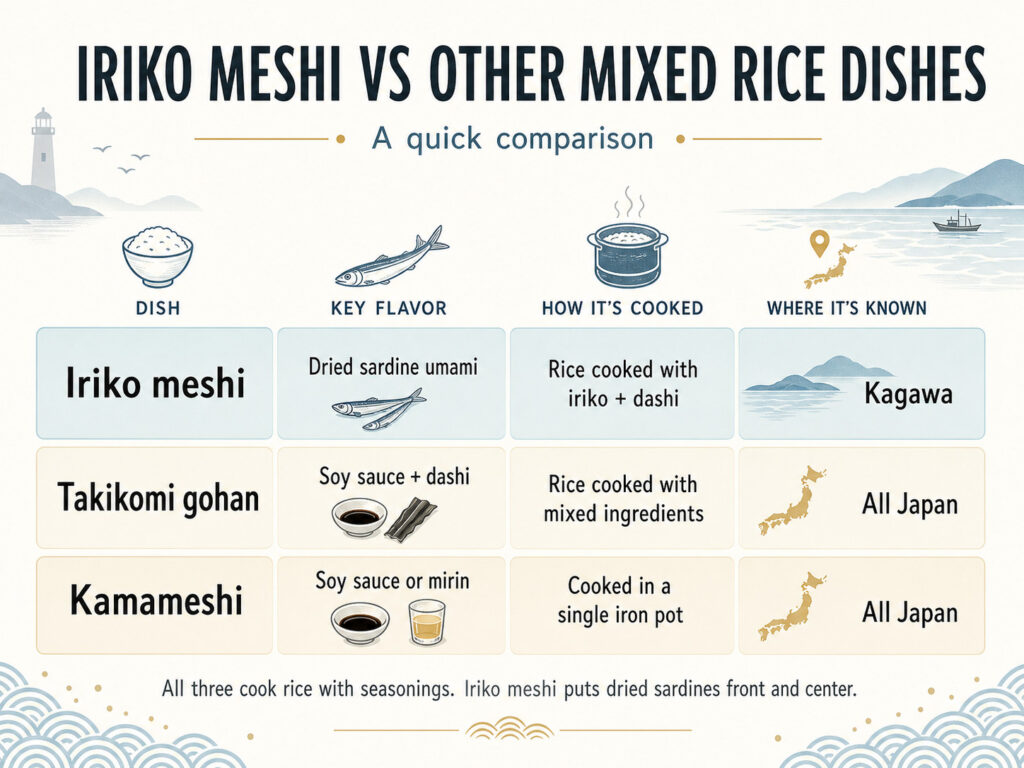
How does it differ from other mixed rice dishes? A short comparison helps here.
| Iriko meshi | Dried sardine umami | Cooked with iriko and dashi | Kagawa |
| Takikomi gohan | Soy sauce and dashi | Rice cooked with mixed ingredients | All Japan |
| Kamameshi | Soy sauce or mirin | Cooked in a single iron pot | All Japan |
All three cook the rice with seasonings together. Yet iriko meshi puts dried sardines front and center. You can compare it with kamameshi, a close cousin from the same family.
The History of Iriko Meshi
Roots in the Seto Inland Sea
Iriko meshi grew straight from the local sea. The Seto Inland Sea gave Kagawa endless small fish. Fishermen dried these sardines to store them for months. So iriko became a pantry staple in nearly every home. Cooking it into rice simply made sense. In short, this is Setouchi food culture and iriko meshi in one bowl.
Iriko From Ibuki Island
One place stands out for iriko: Ibuki Island. This tiny island near Kanonji produces prized dried sardines. Its fish carry a clean, sweet marine flavor. So iriko meshi from Ibuki Island dried sardines earns special praise. Locals treat 伊吹島 iriko Ibuki Island rice as a small luxury. The island’s name still signals quality today.
From Farm Tables to Today
For generations, families made this dish at home. It fed farmers, fishermen, and busy households alike. Rice stretched further when cooked with cheap, tasty iriko. Today the dish remains a Kagawa heritage food with iriko. You also find it at local eateries and seasonal events. The recipe survives because it works, plainly and well.
Where to Eat Iriko Meshi in Kagawa
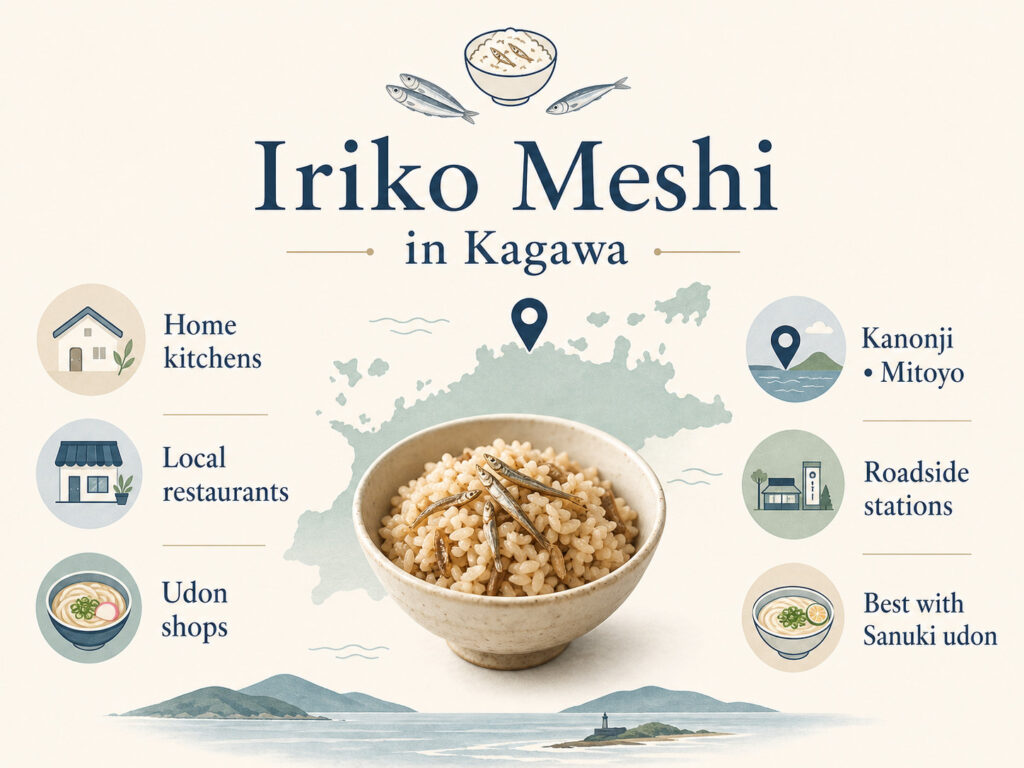
So where can you try iriko meshi in Kagawa? Home kitchens still make the best versions, honestly. Many local restaurants and udon shops also serve it. Look around Kanonji and Mitoyo, near the Ibuki Island route. Some michi-no-eki road stations stock it too. For more regional dishes, browse our Kagawa food page. Pairing it with Sanuki udon makes a very local meal.
Final Thoughts
Iriko meshi proves that simple food can still shine. The dish turns humble dried sardines into something warm and satisfying. It tastes of the Seto Inland Sea, gently and honestly. Kagawa may be udon country, yet this rice deserves attention. If you visit, seek out a bowl. You might just find a new favorite comfort food.
Iriko Meshi FAQ
What is iriko meshi?
This dish is a savory rice meal from Kagawa Prefecture. Cooks prepare it with small dried sardines called iriko. They cook the rice together with soy sauce and dashi. The grains then soak up a deep, marine umami.
What does it taste like?
It tastes savory, gentle, and rich with umami. The dried sardines add a soft marine note to every grain. Soy sauce and dashi round out the flavor. Most people find it comforting rather than strong.
What is iriko?
Iriko means small dried sardines, common in western Japan. Eastern regions often call the same fish niboshi. Cooks simmer them to make a savory stock. They also cook the fish directly into rice and soups.
How do you make it at home?
First, soak the dried sardines to draw out a light stock. Rinse the rice and add it to the pot. Then pour in the stock, soy sauce, sake, and mirin. Cook everything together, and rest the rice before serving.
Why is Ibuki Island special?
Ibuki Island near Kanonji produces highly prized dried sardines. Its fish carry a clean, sweet marine flavor. Local cooks treasure this quality for rice and broth. Many fans consider it the gold standard.
Is it the same as takikomi gohan?
It belongs to the takikomi gohan family of mixed rice. However, this version puts dried sardines at the center. Other takikomi gohan use mushrooms, chicken, or vegetables instead. The cooking method stays very similar.
Do you remove the sardine heads?
Some cooks remove the heads and guts to avoid bitterness. Others leave them in for extra depth and umami. Both methods produce a tasty result. Beginners often start by removing them.
What do you serve with it?
A simple miso soup pairs beautifully with the rice. Pickles and grilled fish also make good partners. Many locals enjoy it alongside Sanuki udon. The dish fits an everyday home-style meal.
Where can you eat it in Kagawa?
Home kitchens still make some of the best versions. Local restaurants and road stations also serve it. Look around Kanonji and Mitoyo, near the Ibuki route. Seasonal events sometimes feature the dish too.
Is it healthy?
Dried sardines add protein, calcium, and savory minerals. The dish uses simple, natural ingredients. It carries less fat than many meat-based meals. Still, the soy sauce adds salt, so balance the rest of your plate.
References
- MAFF Our Regional Cuisines (Uchi no Kyodo-ryori), https://www.maff.go.jp/j/keikaku/syokubunka/k_ryouri/ (Surveyed: June 2026)
- Kanonji City Official Website (Ibuki Island Iriko), https://www.city.kanonji.kagawa.jp/ (Surveyed: June 2026)
- Wikipedia (Niboshi), https://en.wikipedia.org/wiki/Niboshi (Surveyed: June 2026)
- Wikipedia (Takikomi gohan), https://en.wikipedia.org/wiki/Takikomi_gohan (Surveyed: June 2026)
Related Articles
- Kayakumeshi (かやく飯) (Surveyed: June 2026)
- Kamameshi (釜飯) (Surveyed: June 2026)
- Sanuki Udon (讃岐うどん) (Surveyed: June 2026)
- Dashi: The Ultimate Guide to Japanese Stock (Surveyed: June 2026)
- Onigiri (おにぎり) (Surveyed: June 2026)
- Kagawa Area Japanese Food (Surveyed: June 2026)






 English (US) ·