
 1 month ago
42
1 month ago
42
Ask someone what to eat in Ibaraki. Most people say natto, the fermented soybeans, or Mito’s pickled plum. Both are fair answers. But ask a local, and the first thing out of their mouth is usually kenchin soba. It’s a bowl of earthy root vegetable soup poured over buckwheat noodles. One bite, and warmth spreads through your whole body. Most people assume it’s a winter dish. In Ibaraki, restaurants serve it almost year-round.
TOC
What Is Kenchin Soba?
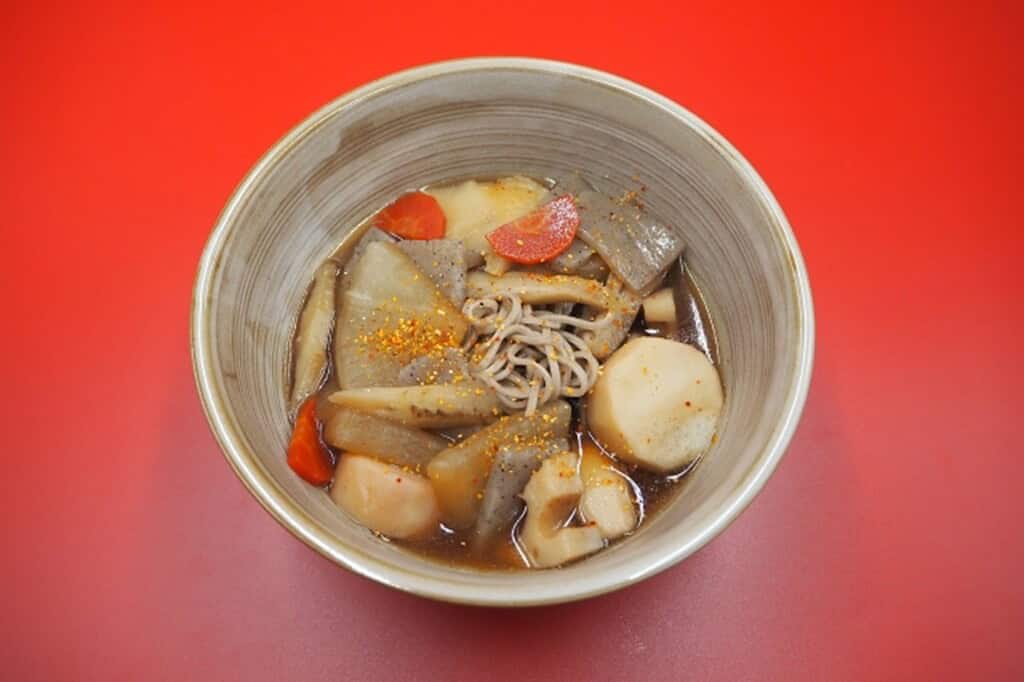
Kenchin soba combines two things: kenchin soup and soba noodles. The soup starts with root vegetables, burdock root, daikon radish, carrot, taro, konjac, and tofu, all stir-fried in oil and then simmered in dashi broth. The noodles join the bowl in one of two ways. In the kake style, the soba sits directly in the hot soup. In the tsuke kenchin style, the noodles arrive cold and separate, and you dip them into the soup as you eat. Which version you prefer turns out to be a surprisingly personal thing.
Why It Has a Strong Reputation
Ibaraki ranks fourth in Japan for buckwheat production, behind Hokkaido, Nagano, and Tochigi. The prefecture’s signature variety, Hitachi Akisoba, earned its name in 1978 and has built a loyal following ever since. Respected soba restaurants in Tokyo use it. The nutty aroma and clean flavor set it apart from ordinary buckwheat. Pair that with the kenchin soup tradition, rooted in a region where root vegetables grow abundantly, and the result is something that feels natural and inevitable. Japan’s Ministry of Agriculture, Forestry and Fisheries officially documented kenchin soba as part of its regional cuisine preservation project.
What It Tastes Like
The aroma reaches you first. Restaurants that use Hitachi Akisoba fill the room with a toasty, nutty scent before the bowl even arrives. The first sip of soup opens up a layered vegetable umami that builds slowly. Soy sauce broth is the standard, but some restaurants use miso or a blended base. The vegetables are cut large and hold their shape. They give the bowl real substance. On a cold day, the heat moves from your throat all the way down.
History and Origins
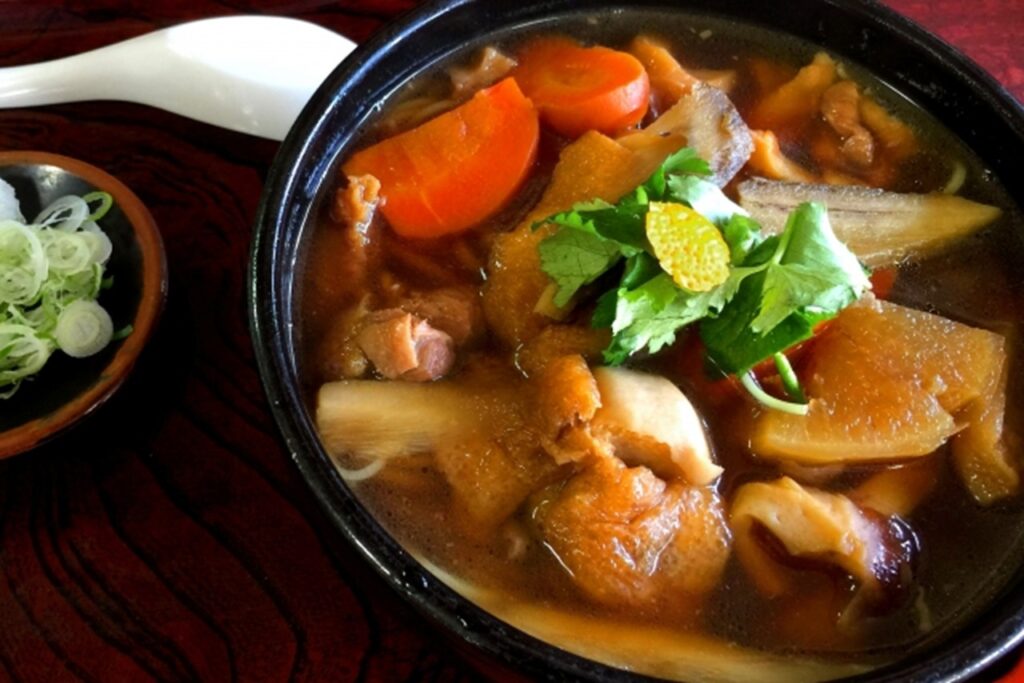
Kenchin soup traces its roots to a style of Chinese Buddhist cuisine called fucha ryori. A dish of stir-fried vegetables and tofu wrapped in tofu skin arrived in Nagasaki through trade routes. From there, the idea traveled to Kenchoji Temple in Kamakura, where monks broke apart tofu and cooked it directly into broth. That dish became known as kenchin soup, a name that likely derived from Kenchoji itself.
In Ibaraki, the custom of eating soba with kenchin soup spread during the late Edo period, centered on the Mito domain. Families dipped cold soba into the hot soup around the lunar new year, roughly the time of Setsubun in February. The region grew buckwheat and raised root vegetables in abundance. The dish fit the land and the season perfectly, and it stayed.
Today, restaurants serve it across all four seasons. Seasonal variations appear regularly, with summer versions featuring fresh warm-weather vegetables. Ready-made kenchin soba products have also reached store shelves, helping spread the name beyond Ibaraki.
Restaurants Worth Visiting
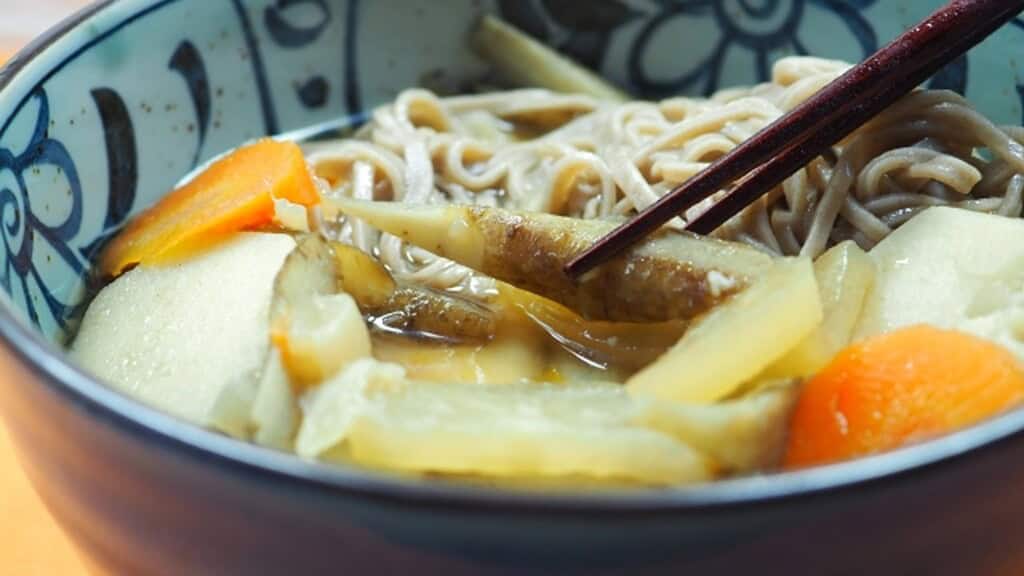 A bowl of Kenchin Soba featuring soba noodles, root vegetables, and broth, showcasing authentic Japanese cuisine.
Kenchin soba restaurants are spread across Ibaraki Prefecture. The three below each offer something distinct. Hours and holidays can change, so checking ahead before your visit is a good idea.
Kenchin Soba Dokoro Mukashiya
This restaurant sits at the entrance to Fukuroda Falls, one of Japan’s three most celebrated waterfalls. The building is a renovated farmhouse roughly 200 years old. Mukashiya holds the distinction of being the first restaurant in Ibaraki to put kenchin soba on a menu as a named dish. The hand-cut noodles and the gentle miso-based kenchin broth are the kind of combination that stays with you.
Address: 178 Fukuroda, Daigo Town, Kuji District, Ibaraki
Phone: 0295-72-3201
Website: https://www.ibaraki-shokusai.net/shop/detail/6686
Soba Dokoro Tokiwaya
Tokiwaya has operated for over 60 years in the Kanasago district of Hitachiota City, the area recognized as the birthplace of Hitachi Akisoba. The restaurant mills its own buckwheat every day from whole grain. Diners choose between thin-cut or thick-cut noodles. The kenchin toppings come in generous pieces and include more than eight different vegetables. A summer version made with seasonal warm-weather vegetables keeps the menu interesting throughout the year.
Address: 343 Takagakicho, Hitachiota City, Ibaraki
Phone: 0294-76-2330
Website: https://tokiwaya.hitachiota.jp/
Jikyuan Geisokan Shiomachikan
This is a sister restaurant to Jikyuan, one of Ibaraki’s most respected soba establishments. The building dates to 1887 and originally served as a bank. The renovation preserved the original structure while creating a calm, atmospheric dining space. The signature dish follows an old-style kenchin preparation: ten vegetables stir-fried in rapeseed oil. The broth uses three types of dried fish, a deep and complex combination that carries the bowl.
Address: 2325-1 Nishiichocho, Hitachiota City, Ibaraki
Phone: 0294-72-5911
Website: https://www.jikyuan.co.jp/shiomachi.html
Closing Thoughts
Kenchin soba grew from three things that came together in Ibaraki: good buckwheat, an abundance of root vegetables, and a food tradition that stretches back to the Edo period. The dish looks modest. But it delivers a flavor that is hard to forget. Finding a bowl like this on a trip somewhere new has a way of making you feel closer to that place. If you find yourself in Ibaraki, sit down and try one.
References
Ministry of Agriculture, Forestry and Fisheries, Our Local Cuisine, Tsuke Kenchin (Ibaraki Prefecture): https://www.maff.go.jp/j/keikaku/syokubunka/k_ryouri/search_menu/menu/tukekenchin_ibaraki.html
Teuchisoба Hitachiya, The Origins of Kenchin Soba: https://teutisoba.com/archives/630
Ibaraki Food and Agriculture Portal, Mukashiya: https://www.ibaraki-shokusai.net/shop/detail/6686
Kenchin Soba FAQ
What is Kenchin Soba?
Kenchin Soba is a traditional winter noodle dish from Ibaraki Prefecture. Chefs serve nutty buckwheat noodles (soba) with a hearty hot soup full of root vegetables and crumbled tofu.
Where does Kenchin Soba originate?
The dish originates from Ibaraki Prefecture, specifically the northern region around Mito and Hitachiota. Local farmers created it centuries ago to warm themselves during the freezing winter months.
What exactly is Kenchin-jiru?
Kenchin-jiru is a savory Japanese soup. Cooks stir-fry daikon radish, carrots, burdock root, and tofu in fragrant sesame oil before simmering them in a soy sauce-based dashi broth.
What ingredients make up a bowl of Kenchin Soba?
Cooks pack the soup with hearty ingredients like taro (satoimo), daikon, carrots, burdock root, konnyaku, and tofu. They pair this rich vegetable stew with high-quality buckwheat noodles.
Is Kenchin Soba a vegan or vegetarian dish?
Historically, Buddhist monks created Kenchin-jiru as a strictly vegan temple food (shojin ryori). However, modern restaurants often use bonito (fish) stock to flavor the broth, so strict vegans should check with the chef before ordering.
What is the difference between Tsuke-Kenchin and regular Kenchin Soba?
Diners eat “Tsuke-Kenchin” by dipping cold, firm soba noodles into a separate bowl of piping hot Kenchin soup. In contrast, cooks serve regular Kenchin Soba with the hot noodles already swimming inside the warm soup bowl.
What is Hitachi Aki Soba?
Hitachi Aki Soba is a premium variety of buckwheat grown in Ibaraki Prefecture. Soba masters across Japan highly prize these noodles for their deep, nutty aroma and distinct sweetness, making them the perfect match for the hearty Kenchin soup.
Why do people traditionally eat this dish in winter?
Locals harvest fresh buckwheat in late autumn, right when root vegetables reach their peak sweetness. Farmers naturally combined these seasonal ingredients into a hot, nutritious meal to survive the bitter winter cold.
Do chefs include meat in Kenchin Soba?
Traditional recipes strictly avoid meat. However, to satisfy modern tastes, some contemporary restaurants now add pork or chicken to the broth to provide extra richness and calories.
How do cooks prepare the tofu for this soup?
Instead of cutting the tofu with a knife, traditional cooks crumble it by hand directly into the pot. This irregular shape helps the tofu absorb much more of the savory soy broth.
What seasonings give the broth its unique flavor?
Chefs rely on soy sauce, mirin, and dashi to build the soup’s umami foundation. Crucially, they stir-fry the vegetables in fragrant sesame oil before adding the liquid, which gives the broth a distinctive, roasted aroma.
How does Kenchin Soba differ from standard hot soba?
Standard hot soba features a light, clear broth with minimal toppings. Kenchin Soba offers a thick, rich, and oily stew heavily loaded with chunky root vegetables, creating a much more filling and substantial meal.
Where can I eat the best Kenchin Soba?
You will find the most authentic bowls in Ibaraki Prefecture, especially in northern cities like Hitachiota, Hitachiomiya, and Mito. Numerous traditional soba shops line the local streets, proudly serving the dish from autumn through spring.
What condiments pair perfectly with this dish?
Diners love to sprinkle Shichimi Togarashi (seven-spice chili blend) over the soup to add a spicy kick. Freshly grated yuzu citrus peel also brightens the earthy root vegetables beautifully.
Can I easily cook Kenchin Soba at home?
Yes, home cooks can easily recreate it. You simply stir-fry chopped root vegetables and crumbled tofu in sesame oil, simmer them in a soy-based dashi, and pour the hot soup over boiled store-bought soba noodles.
Related Japanese Food
No related articles were found yet.




 English (US) ·