
 3 weeks ago
36
3 weeks ago
36
Most visitors to Kobe go straight for the steak. That is completely understandable. Kobe beef is one of the most celebrated ingredients in all of Japan. But the city has another beef dish. It is less famous. It costs a fraction of the price. And if you ask locals in Nagata Ward, they will tell you it is the dish they grew up eating.
That dish is bokkake (ぼっかけ).
TOC
What Is Kobe Bokkake?
Bokkake is a stew of beef tendon and konnyaku. The two ingredients simmer together in a sweet and savory soy sauce broth for a long time. Hours, sometimes. The result is something unexpectedly tender.
Beef tendon, known as gyusuji (牛スジ) in Japanese, is one of the tougher cuts. It needs time and heat to soften. When cooked slowly, it breaks down into a silky, almost gelatinous texture. The collagen melts. The flavor concentrates. What was once tough becomes rich and yielding.
Konnyaku adds its own character. It is a firm, slightly chewy block made from the Japanese konjac root. On its own, it tastes like almost nothing. But simmered in bokkake broth, it absorbs the sweet soy sauce and takes on a deeply savory flavor. The contrast between the soft tendon and the springy konnyaku is part of what makes this dish so satisfying.
You might wonder: is it a side dish, or a main? The answer is genuinely both. And that flexibility is one of the things that makes bokkake so woven into daily life in Kobe.
The Flavor and How It Feels to Eat It
The broth is the soul of bokkake. It is built from soy sauce, mirin, sugar, and sake. The balance leans sweet, but not obviously so. There is depth underneath. A round, savory warmth that comes from hours of slow cooking.
The tendon melts gently in your mouth. It has that quality of good stewed meat where you barely need to chew. The konnyaku holds its shape. It resists slightly, then gives. Together, the two textures create a kind of back-and-forth that keeps each bite interesting.
The dish is humble looking. It does not arrive dramatically. But the first spoonful is always a little surprising. Richer than expected. Warmer. More complex than the ingredients suggest it should be.
Why Bokkake Is Famous in Kobe, Especially Nagata
Kobe is a port city. It has a long history as a working-class hub. The Nagata district, in the city’s southwest, was particularly known for its factory workers and tight-knit communities. Food there needed to be filling, affordable, and satisfying.
Beef tendon was once considered a leftover cut. It was cheap. It was available. Creative home cooks and small restaurant owners in Nagata began simmering it with konnyaku to stretch the dish further and add texture. The slow-cooked broth made even inexpensive ingredients taste exceptional.
Over time, bokkake became the flavor of Nagata. Families passed down their recipes. Local restaurants developed their own versions. The dish became inseparable from the neighborhood’s identity. Today, Shin-Nagata station has an entire area of restaurants built around it.
There is also the “Bara Sauce” connection. This local Worcestershire-style condiment from Nagata is often served alongside bokkake-topped dishes. It adds a sharp, tangy contrast to the sweet stew. The two together taste unmistakably like Kobe.
How Bokkake Is Eaten Today
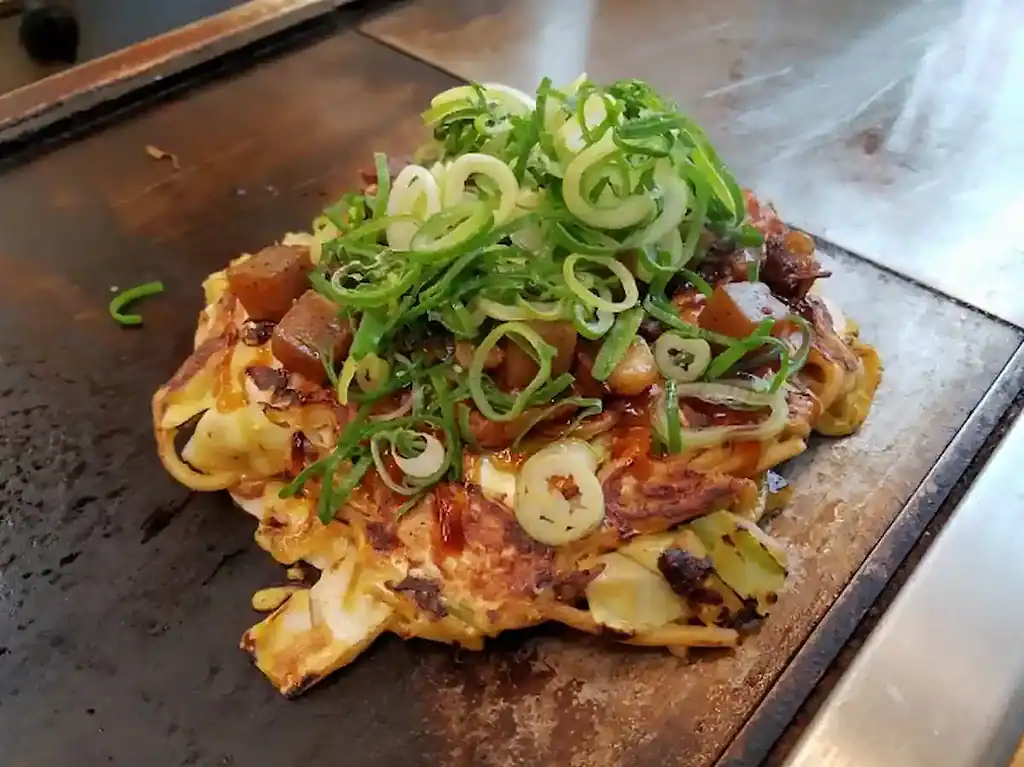 Traditional Japanese Kobe Bokkake with fresh green onions, cooked on a teppan grill.
Bokkake rarely appears alone on a plate. More often, it acts as a topping or filling that transforms other dishes.
Bokkake yakisoba is perhaps the most popular version. Stir-fried noodles on an iron griddle, loaded with soft beef tendon and chewy konnyaku. The sauce from the stew seeps into the noodles. It becomes something wholly different from regular yakisoba.
Bokkake sobameshi takes the concept further. This Nagata specialty combines fried rice and yakisoba noodles together on a hot griddle, then tops the whole thing with bokkake. It sounds like too much. It is somehow exactly right.
You will also find bokkake folded into okonomiyaki. The savory pancake tradition in Kobe and the Kansai region is strong, and bokkake fits naturally into that world. For more on how Kobe-area cooks approach savory pancakes, the Kansai-style okonomiyaki guide on Food in Japan gives useful context.
Some shops serve it over udon. Others mix it into a rice bowl. A few adventurous restaurants use it as a topping for fried eggs or tofu. The base recipe stays the same. The applications keep expanding.
Bokkake and Doteyaki: Similar but Different
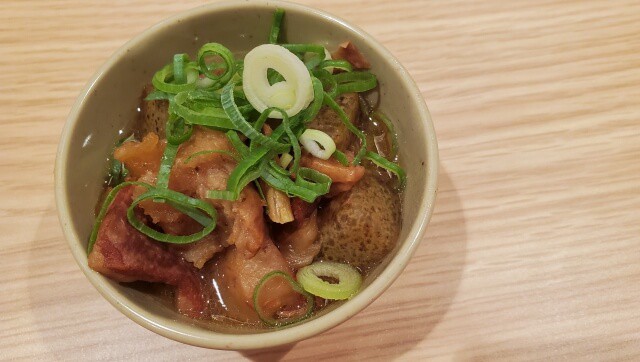 Savory Japanese beef stew with green onions in a ceramic bowl, showcasing delicious traditional Japanese comfort food.
If you have already tried doteyaki in Osaka, you might notice similarities. Both dishes use beef tendon. Simmered in a sweet-savory Japanese broth, they share that slow-cooked, deeply comforting quality. This is the very category that defines Kansai street eating.
The difference is the seasoning base. Doteyaki uses white miso as its foundation, which gives it a thicker, earthier flavor. Bokkake relies on soy sauce and sugar, making it lighter and slightly sweeter. Doteyaki also tends to stand alone. It is almost always used as a topping or mixed into another dish.
They share an ancestor but grew up in different kitchens.
The History Behind Bokkake
The exact origin of bokkake is not well documented. That is often the case with working-class food. Nobody was keeping careful records of what families cooked in Nagata’s small kitchens in the postwar era.
What most accounts agree on is this: It developed in the Nagata area during the mid-20th century, when the neighborhood was dense with factory workers and small food stalls. Beef tendon was an affordable cut. Konnyaku was cheap and filling. The combination made sense economically long before it became celebrated culinarily.
As Nagata’s food culture grew more visible, so did it. Restaurants began formalizing the recipe. Local chefs experimented with how to use it as a topping. The dish found its way onto teppan griddles across the city.
Today, some restaurants in Kobe take considerable pride in their bokkake. A few simmer the tendon for a full day to achieve that particular silkiness. The broth is treated seriously. What started as frugal home cooking has become a point of local identity.
Where to Try Bokkake in Kobe
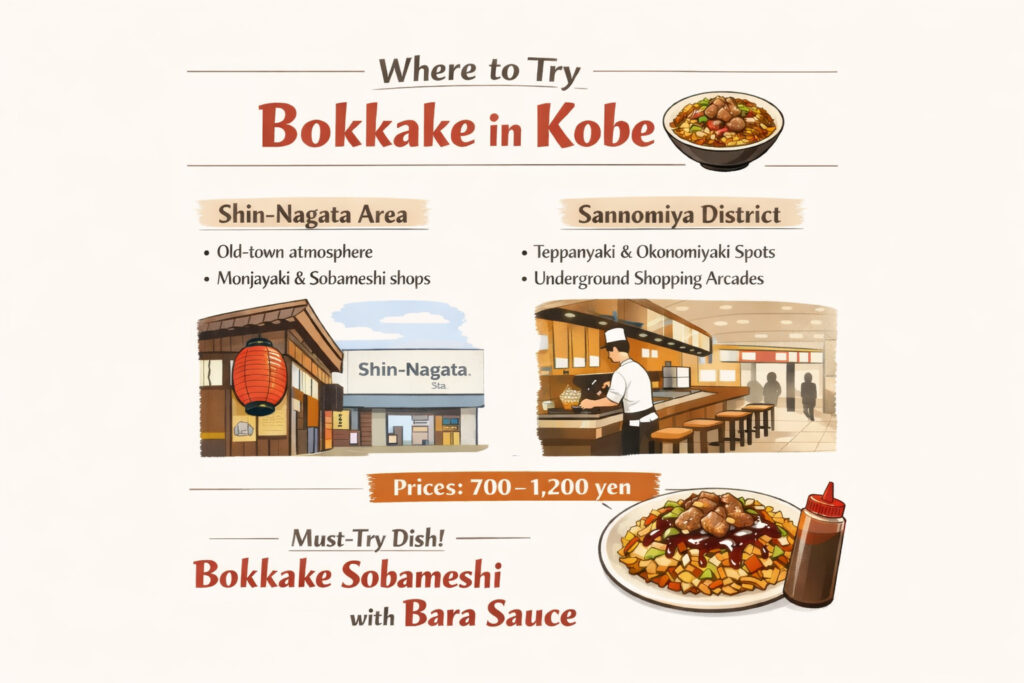
The Shin-Nagata area is the obvious starting point. Monjayaki and sobameshi shops in the neighborhood almost always serve it as a topping option. The atmosphere around Shin-Nagata Station has a warm, old-town feel that suits the dish.
Sannomiya, Kobe’s main commercial district, also has options. Several teppanyaki and okonomiyaki restaurants in the underground shopping arcades near Motomachi and Sannomiya stations offer bokkake yakisoba. Prices are generally reasonable, often between 700 and 1,200 yen for a bowl or a plate.
If you can only try one combination, go for the bokkake sobameshi with a drizzle of Bara Sauce. That is the dish that most clearly captures what Nagata cooking tastes like.
References
- SoraNews24: A visit to the birthplace of Kobe’s other famous food, sobameshi
- LIVE JAPAN: Better Than Osaka? Finding Kobe’s Best Okonomiyaki Shops
- GOOD LUCK TRIP: Yakisoba Specialty Shop Ikari Shin-Nagata
- OSAKA-INFO: The Best of Kobe Cuisine
Kobe Bokkake FAQ
What is Kobe Bokkake?
Kobe Bokkake is a savory stew from Hyogo Prefecture. Chefs make it with beef tendon and konjac (konnyaku). Food lovers know it for its deeply savory, sweet-and-salty flavor.
Where does Kobe Bokkake come from?
Kobe Bokkake originates from the Nagata ward of Kobe City. Locals have enjoyed it as a cheap, hearty worker’s meal since the post-war Showa period.
What does Kobe Bokkake taste like?
Kobe Bokkake has a sweet, savory, and umami-rich flavor. The texture feels delightfully chewy and gelatinous. Diners often compare it to a thick, soy-sauce-based beef stew.
Where can I eat Kobe Bokkake in Japan?
You will find the best Kobe Bokkake in Kobe City. Famous areas include the Nagata and Sannomiya districts. Many okonomiyaki shops and udon restaurants also serve it as a popular topping.
How much does Kobe Bokkake cost?
Kobe Bokkake typically costs between 500 and 1,000 yen per serving. Prices vary slightly depending on the restaurant and the main dish you pair it with.
Is Kobe Bokkake vegetarian or vegan friendly?
Traditional Kobe Bokkake contains beef tendon and fish broth. Vegans and vegetarians can easily cook plant-based versions at home using thick mushrooms instead of beef.
What are the main ingredients in Kobe Bokkake?
The main ingredients in Kobe Bokkake include beef tendon, konjac, soy sauce, and sweet mirin. The slow-cooked beef tendon gives the dish its distinctive melt-in-your-mouth richness.
Can I cook Kobe Bokkake at home?
Yes, you can easily cook Kobe Bokkake at home. Japanese grocery stores stock the key ingredients — beef tendon and konjac blocks. Home cooks master this slow-simmered recipe effortlessly with just a pot and patience.
What is the difference between Kobe Bokkake and Doteyaki?
The main difference involves the primary seasoning. Kobe Bokkake features a soy sauce and sweet mirin base, while Osaka’s Doteyaki relies heavily on sweet white miso paste.
Is Kobe Bokkake popular outside Japan?
It remains relatively unknown outside Japan. You will rarely find it at Japanese restaurants in North America or Europe. This rich regional topping successfully maintains its beloved local status exclusively within the Kansai area.




 English (US) ·