
 1 month ago
46
1 month ago
46
Some foods survive for centuries not because they are trendy, but because they are deeply tied to a place and its people. Mame shitogi (豆しとぎ) is one of those foods. It comes from the Nanbu region of Aomori Prefecture, and most people outside Tohoku have never heard of it. But in the communities where it was made, this soft, lightly sweetened soybean and rice cake carried genuine meaning. It was an offering to the gods before it was ever a snack.
TOC
What Is Mame Shitogi?
Mame shitogi is a traditional confection from Aomori Prefecture, made by combining boiled, mashed green soybeans (ao-daizu) with rice flour and a small amount of sugar. The mixture gets shaped into small round or oblong cakes. No baking, no frying, no complex technique. The process is remarkably direct, and the result reflects that simplicity.
The name comes from two words: “mame” (豆), meaning beans or soybeans, and “shitogi” (しとぎ), an ancient Japanese term for an uncooked or lightly processed grain offering. Locals in the Nanbu region also call it まめしとぎ. Outside Aomori, very few people know it exists. That regional exclusivity is actually part of its appeal for food travelers curious about rural Japanese culinary traditions.
Unlike many Japanese traditional sweets, mame shitogi does not rely on red bean paste or glutinous rice. The green soybean is the star. This sets it apart from most wagashi, which tend toward milder, starchier profiles. The soybean gives it something earthier and more savory, even in the sweetened version.
Taste and Texture
The texture is the first thing that surprises people. Mame shitogi is soft but crumbly, closer to a fragile rice cake than to the chewy elasticity of mochi. It holds its shape when cool, but breaks apart easily at the touch. Some people find that fragility charming. Others find it unexpected. Either way, it is unlike anything in mainstream Japanese confectionery.
The flavor is subtle and green. The soybeans carry a grassy, slightly nutty note, and the rice flour provides a quiet starchy base. Sugar keeps it gently sweet rather than assertive. Overall, the taste profile is restrained, closer to a savory-leaning snack than a dessert in the Western sense. Eating one plain for the first time, you might need a moment to appreciate it. The second one tends to make more sense.
Traditional Ways to Eat Mame Shitogi
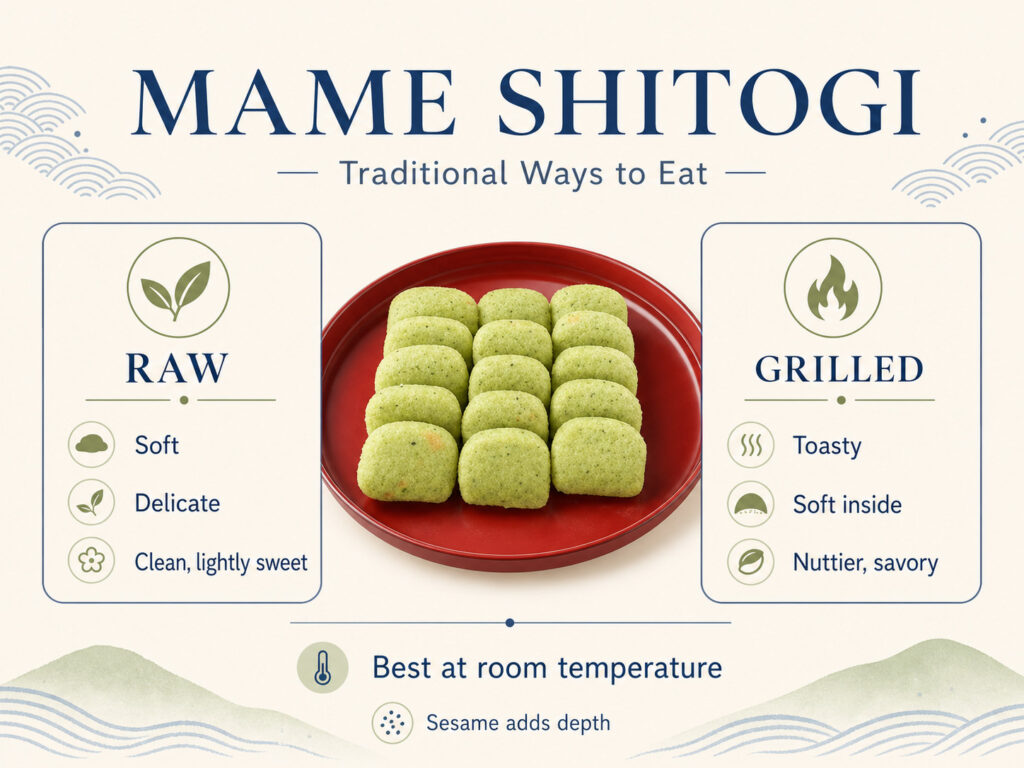
| As-is (raw) | Soft, crumbly, delicate | Clean, green, lightly sweet | Traditional. Best experienced at room temperature. |
| Grilled (yakimame shitogi) | Toasty exterior, soft interior | Nuttier, slightly caramelized, more savory | Traditional. Widely preferred by locals in the Nanbu region. |
The grilled version deserves special mention. Heat transforms the outer layer into something lightly caramelized while keeping the interior soft. Many locals in the Nanbu region prefer it this way. Adding toasted sesame to the mixture before grilling deepens the flavor further. For anyone trying mame shitogi for the first time, experiencing both the raw and grilled versions together gives the clearest sense of what this ingredient can do.
History: From Ritual Offering to Regional Specialty
The word “shitogi” predates mame shitogi by a very long time. In ancient Japan, shitogi referred to uncooked or minimally processed grain cakes offered to deities. Rice was scarce and precious, so presenting it to the gods in its simplest form carried deep meaning. Over centuries, this ritual practice spread through many regions, with each area adapting the recipe to available ingredients.
Mame Shitogi and the Broader Nanbu Food Tradition
Mame shitogi does not stand alone in the Nanbu region’s food culture. It belongs to a broader tradition of cold-weather, grain-based staples built around scarcity and resourcefulness. Nearby dishes like senbei jiru, the cracker soup of Hachinohe City, share a similar origin story: grain made practical and delicious in a region where rice could not always be relied upon.
The Tohoku region as a whole has a rich tradition of transforming cold-resistant ingredients into distinct local foods. For context, zunda mochi from Miyagi Prefecture, further south along the Tohoku coast, uses edamame in a comparable spirit: green soybeans crushed and paired with rice. The two sweets share an ingredient logic, even if the ritual contexts differ. Zunda mochi became widely known across Japan; mame shitogi stayed rooted in its home ground of southern Aomori and northern Iwate. That gap in visibility reflects geography and tourism patterns more than it does the merit of either food.
Traditionally, people made mame shitogi in December, during the year-end period called “kami-sama no toshidori.” This was a time for giving thanks to the agricultural and mountain deities who had watched over the harvest. Families offered mame shitogi to Inari (the fox deity of rice and agriculture), Ebisu and Daikoku (gods of good fortune), and the mountain gods. The offering was sincere and practical. You gave what you had.
Beyond Aomori, similar soybean rice cakes exist in other cold northern regions of Japan, particularly Iwate Prefecture. However, the Aomori Nanbu version has become the most widely recognized. The connection to harvest rituals and winter prayers gives it a cultural depth that newer food trends simply cannot replicate.
Mame Shitogi and the Broader Nanbu Food Tradition
Mame shitogi does not stand alone in the Nanbu region’s food culture. It belongs to a broader tradition of cold-weather, grain-based staples built around scarcity and resourcefulness. Nearby dishes like senbei jiru, the cracker soup of Hachinohe City, share a similar origin story: wheat and grain made practical and delicious in a region where rice could not always be relied upon.
The Tohoku region as a whole has a rich tradition of transforming simple, cold-resistant ingredients into distinct local foods. For context, zunda mochi from neighboring Miyagi uses edamame in a similar spirit, crushing green soybeans into a paste and pairing them with rice. The two sweets are related in ingredient logic, even if the ritual context differs. Zunda mochi became a widely known Tohoku specialty; mame shitogi stayed local. That gap in fame says more about geography and tourism patterns than it does about quality.
Modern Takes and Where to Find Mame Shitogi Today
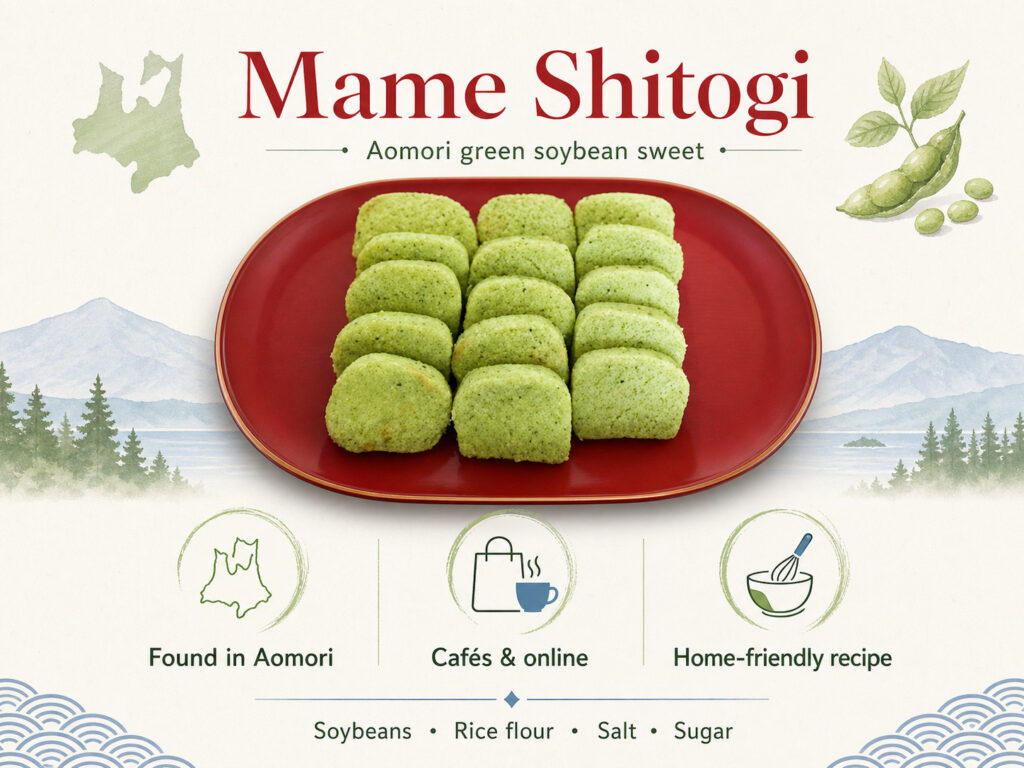
For a long time, mame shitogi was primarily homemade, passed down within families. Today, the picture is more varied. Supermarkets and roadside stations (michi-no-eki) in Aomori Prefecture carry pre-packaged versions, particularly in the southern Nanbu area. Finding them outside Aomori requires more effort, though specialty online shops occasionally stock them.
Some cafés and restaurants in the region have begun serving mame shitogi as a contemporary dessert, pairing it with fruit sauce, whipped cream, or crushed nuts. These modern arrangements are not traditional preparations. They represent a newer effort to introduce the ingredient to younger audiences unfamiliar with its ritual origins. Purists have mixed feelings about this direction. However, the core ingredient, the ao-daizu green soybean, remains unchanged in these versions, and that continuity is meaningful.
Home recipes are also accessible online through agricultural cooperative sites and regional food preservation groups. Making mame shitogi at home requires only soybeans, rice flour, salt, and sugar. The process is forgiving for beginners. For anyone interested in exploring Tohoku’s traditional food culture beyond the well-known dishes, this is a worthwhile project.
Final Thoughts
Mame shitogi is the kind of food that rewards slow attention. It is not visually dramatic. The flavor does not knock you over. But understanding where it came from, why it existed, and what it meant to the people who made it changes how it tastes. It is an Aomori mame shitogi rice and soybean sweet that outlasted the famines, the Meiji period, and the arrival of convenience stores. That persistence means something. If you ever find yourself in Aomori in December, and you spot a package of mame shitogi at a roadside station, pick it up. Try it plain first. Then, if you have the option, grill one. The contrast is worth experiencing firsthand.
FAQ
Mame shitogi is a traditional confection from Aomori Prefecture, specifically the Nanbu region. Cooks make it by boiling and mashing green soybeans, then combining them with rice flour and a small amount of sugar. The result is a soft, crumbly, lightly sweetened cake. People historically offered it to agricultural and mountain deities during December year-end rituals.
The flavor is mild and gently green, with an earthy soybean note and a quiet sweetness from the rice flour and sugar. It is not intensely sweet like many Japanese desserts. The texture is soft and crumbly when eaten plain. Grilling changes the character significantly, adding a toasty, slightly nutty quality to the outside.
The Nanbu region of Aomori experienced repeated cold-damage rice failures historically. Soybeans grew more reliably in that harsh climate. When rice was unavailable for the traditional shitogi offering, farmers substituted soybeans, and the mame shitogi version gradually became the local standard. The food evolved from necessity, not experimentation.
Traditionally, families made and offered mame shitogi in December during year-end harvest thanksgiving rituals called “kami-sama no toshidori.” Offerings went to Inari, Ebisu, Daikoku, and mountain gods. Today, you can find it year-round at Aomori supermarkets and roadside stations, though the December ritual context remains meaningful in the Nanbu region.
Supermarkets and michi-no-eki (roadside stations) in Aomori Prefecture stock packaged versions, particularly in the southern Nanbu area. Some specialty food shops in Aomori cities carry them as local souvenirs. Outside Aomori, they are rare in physical stores, though online retailers occasionally stock them. The freshest versions still come from home kitchens in the region.
They share a green soybean ingredient base, but the dishes are distinct. Zunda mochi uses edamame paste spread over or mixed into mochi rice cake, and it comes primarily from Miyagi Prefecture. Mame shitogi blends mashed green soybeans with rice flour to form a standalone cake, and it originates in Aomori. The ritual offering history of mame shitogi also gives it a different cultural context.
References
Ministry of Agriculture, Forestry and Fisheries (MAFF) – Mame Shitogi, Aomori (Surveyed: 2024 December)
Aomori Prefectural Government – Regional food and agricultural heritage resources (Surveyed: 2024 December)
Japan National Tourism Organization (JNTO) – Aomori regional food culture (Surveyed: 2024 December)
Related Articles
Aomori Food – Apple Cuisine and Northern Japan Specialties (Surveyed: June 2025)
Senbei Jiru (Surveyed: June 2025)
Zunda Mochi (Surveyed: June 2025)
Mochi (Surveyed: June 2025)
Japanese Sweets – Wagashi and Traditional Japanese Desserts (Surveyed: June 2025)
Tohoku Food – Traditional Northern Japan Dishes (Surveyed: June 2025)
Discover Tohoku: 11 Japanese Foods You Need to Taste (Surveyed: June 2025)





 English (US) ·