
 1 month ago
31
1 month ago
31
Saga sake is known for a rich, full-bodied, and gently sweet style, often called nōjun umakuchi. Brewers craft it with soft mountain water and quality sake rice, especially Yamada Nishiki. The most famous label is Nabeshima, a champion at a major international contest. This guide explains what makes Saga sake unique. It covers the region’s water, climate, rice, history, flavor, major breweries, food pairings, and the best places to taste it. Saga sits in northwest Kyushu, between Fukuoka and Nagasaki. It also faces two very different seas, which quietly shape its food and drink.
Many travelers still overlook Saga on the way elsewhere. That habit hides a deep and confident sake culture. In fact, the prefecture counts among Kyushu’s most respected brewing regions. So this guide treats Saga local sake as a complete reference, not a quick overview.
TOC
Quick Summary of Saga Sake
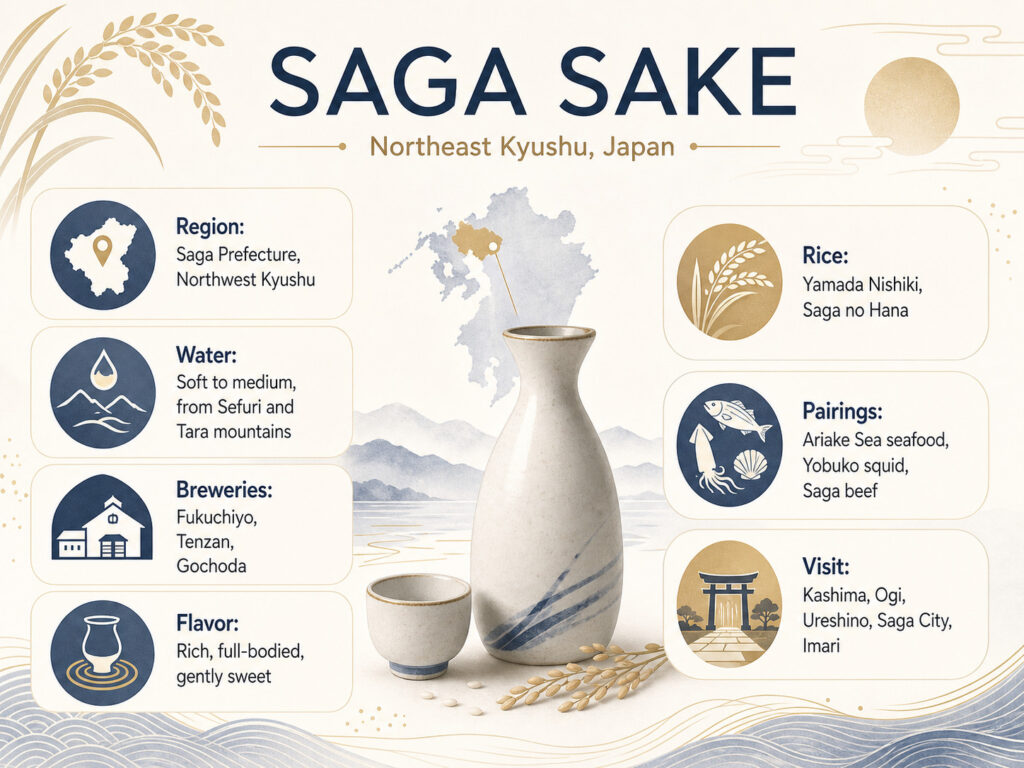
Here is a fast snapshot before the details begin.
| Region | Saga Prefecture, northwest Kyushu |
| Famous For | Rich, umami-forward sake and the acclaimed Nabeshima |
| Water Type | Soft to medium, from the Sefuri and Tara mountains |
| Famous Breweries | Fukuchiyo (Nabeshima), Tenzan, Gochoda (Azumaichi) |
| Flavor Trend | Rich, full-bodied, gently sweet (nōjun umakuchi) |
| Signature Rice | Yamada Nishiki (main), Saga no Hana |
| Best Pairings | Ariake Sea seafood, Yobuko squid, Saga beef |
| Best Areas to Visit | Kashima, Ogi, Ureshino, Saga City, Imari |
What Makes Saga Sake Unique
Several factors help explain this regional style. Water, climate, rice, brewers, and food each play a part. The two surrounding seas shape the local palate as well. Together these elements create a sake unlike its neighbors.
Water From the Sefuri and Tara Mountains
Water sets the foundation for any sake. Many Saga breweries draw on clear mountain sources. The Sefuri range feeds the north, while the Tara range feeds the south. This water runs soft to medium in mineral content. Because of that, fermentation moves at a gentle pace. As a result, the sake often feels round and smooth on the palate.
Kashima brewers, in particular, prize the Tara range groundwater. That clean water shaped the town’s brewing for centuries. Soft water tends to produce a softer, sweeter impression. So Saga’s gentle profile starts at the spring itself.
A Warm Kyushu Climate
Saga sits in the warm south of Japan. Winters here stay milder than in snowy northern regions. The warmer climate has historically required careful fermentation control. That challenge often contributed to fuller, softer expressions rather than sharply dry ones. So the regional profile leans toward depth and gentle sweetness.
Modern cooling tools now make winter brewing far easier. Even so, the local taste for richness remains. Many brewers still aim for body over sharpness. In that sense, climate shaped a habit that outlived the technology.
Local Sake Rice: Yamada Nishiki and Saga no Hana
Rice choice shapes flavor as much as water does. Saga grows plenty of Yamada Nishiki, the king of sake rice. The prefecture also developed its own variety, called Saga no Hana. This local grain gives a clean body with soft umami. So brewers can balance imported prestige with local character.
Ureshino, better known for tea, also raises prized Yamada Nishiki. Some breweries even run their own grower groups there. That close link between field and kura builds real depth. Good rice nearby lets brewers experiment with confidence.
Two Seas, Two Food Cultures
Saga touches two contrasting seas, which shapes its food and drink. To the south lies the shallow, muddy Ariake Sea. It yields nori seaweed, shellfish, and unusual catches like mudskipper. These deep, briny flavors call for a fuller, umami-rich sake.
To the north sits the open Genkai Sea. This sea is home to the famous Yobuko squid. Its cleaner, sweeter seafood suits more delicate pours. So local sake learned to cover both ends of the table. That range partly explains the region’s flexible style.
A Certified Local Identity
Saga takes its sake identity seriously. The prefecture began a designation-of-origin system back in 2004. It certifies sake made only with Saga rice, water, and other local ingredients. The system also checks quality, not just origin.
National recognition followed in time. In 2024, traditional Japanese sake brewing joined UNESCO’s intangible heritage list. Saga’s historic kura share in that wider honor. Such recognition helps protect old methods for the future.
How Saga Sake Compares to Other Regions
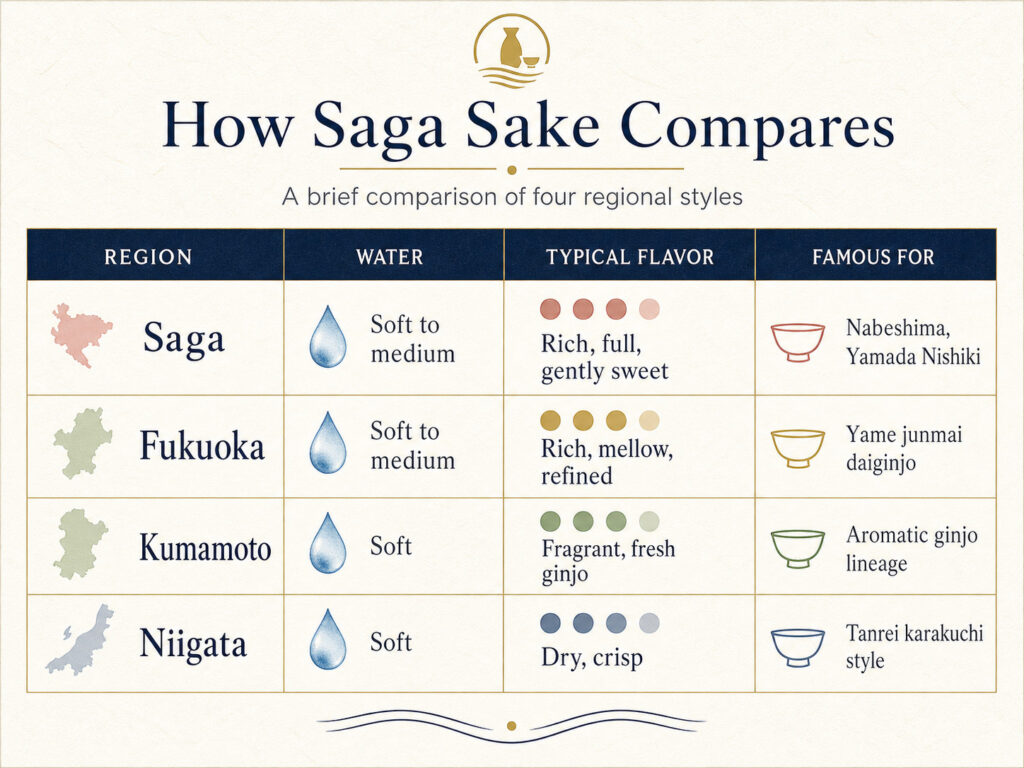
A short comparison helps place this region on the map. The table below sets Saga beside three other styles.
| Saga | Soft to medium | Rich, full, gently sweet | Nabeshima, Yamada Nishiki |
| Fukuoka | Soft to medium | Rich, mellow, refined | Yame junmai daiginjo |
| Kumamoto | Soft | Fragrant, fresh ginjo | Aromatic ginjo lineage |
| Niigata | Soft | Dry, crisp | Tanrei karakuchi style |
Niigata sets the dry, crisp benchmark for most drinkers. Kumamoto leans fragrant and fresh, with a famous ginjo tradition. Fukuoka feels close to Saga, though often a touch more refined. Within Kyushu, Saga ranks among the richest and most umami-forward styles. So fans of bold, rounded sake often start their Kyushu journey here.
Flavor Profile and Characteristics
Most Saga sake leans rich, full-bodied, and rounded. The umami sits forward, balanced by a soft sweetness. Brewers here favor depth over sharp dryness. Therefore the finish usually feels warm and satisfying. Aromas range from ripe fruit to steamed rice and gentle flowers.
Here is what you can generally expect:
- A rich and full-bodied profile in the nōjun umakuchi style
- Deep umami balanced by a gentle sweetness
- Soft fruit aromas, such as melon, pear, and apple
- A smooth texture from soft local water
- A warm, lingering finish rather than a sharp snap
Serving temperature changes the experience here. A junmai daiginjo tastes elegant when served well chilled. By contrast, a hearty junmai opens up gently warmed. Warming lifts the rice sweetness and softens the edges. So one bottle can offer two different moods.
Style still varies from brewery to brewery. A premium Saga junmai daiginjo can feel fragrant and refined. Meanwhile a classic junmai shows more grain and warmth. A few modern kura now craft lighter, fresher bottles. That range keeps the region interesting for curious drinkers.
History of Saga Sake
Castle Towns, Ports, and Rice Plains
Saga has brewed sake for centuries, like most of Japan. The old Saga and Hizen domains held fertile rice plains and clean water. Castle towns gave brewers steady local demand. Ports along the Ariake Sea then carried goods to wider markets. Post towns on the Tara highway added travelers and trade. So brewing took root in places like Kashima and Ogi.
Hizen Hamashuku shows this history clearly. The town served as both a port and a post stop. Merchants, sailors, and craftsmen all gathered there. Sake and soy sauce brewing grew alongside that busy trade. Many storehouses from that era still stand today.
A Sweet, Full Local Tradition
Saga long preferred a sweeter, fuller style of sake. Warm weather and rich seafood shaped that taste over time. Because good rice stayed close, brewers could aim high. That access shaped a confident, full-flavored profile. The link between farm and kura still runs deep today.
The Modern Rise of Nabeshima
Recent decades brought fresh energy to the prefecture. In 2011, Nabeshima Daiginjo won the Champion Sake title. The award came at the International Wine Challenge in London. That contest ranks among the most respected in the world. The victory significantly raised the region’s global profile.
The win also reshaped how Saga saw itself. Suddenly a small Kashima kura stood on a world stage. Demand for Nabeshima rose quickly across Japan and abroad. Other local breweries felt the new attention too.
Why the Kura Culture Survives
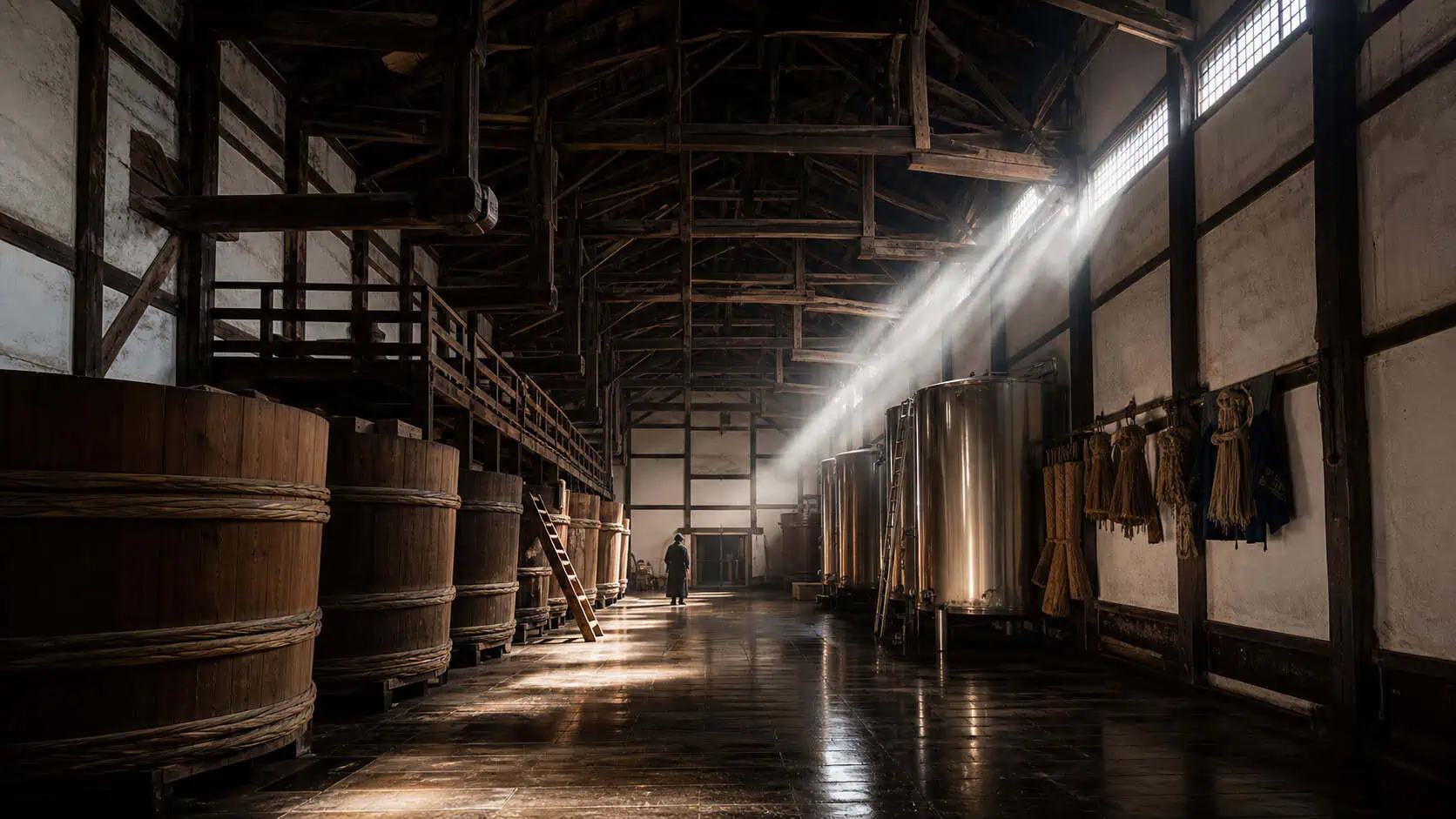
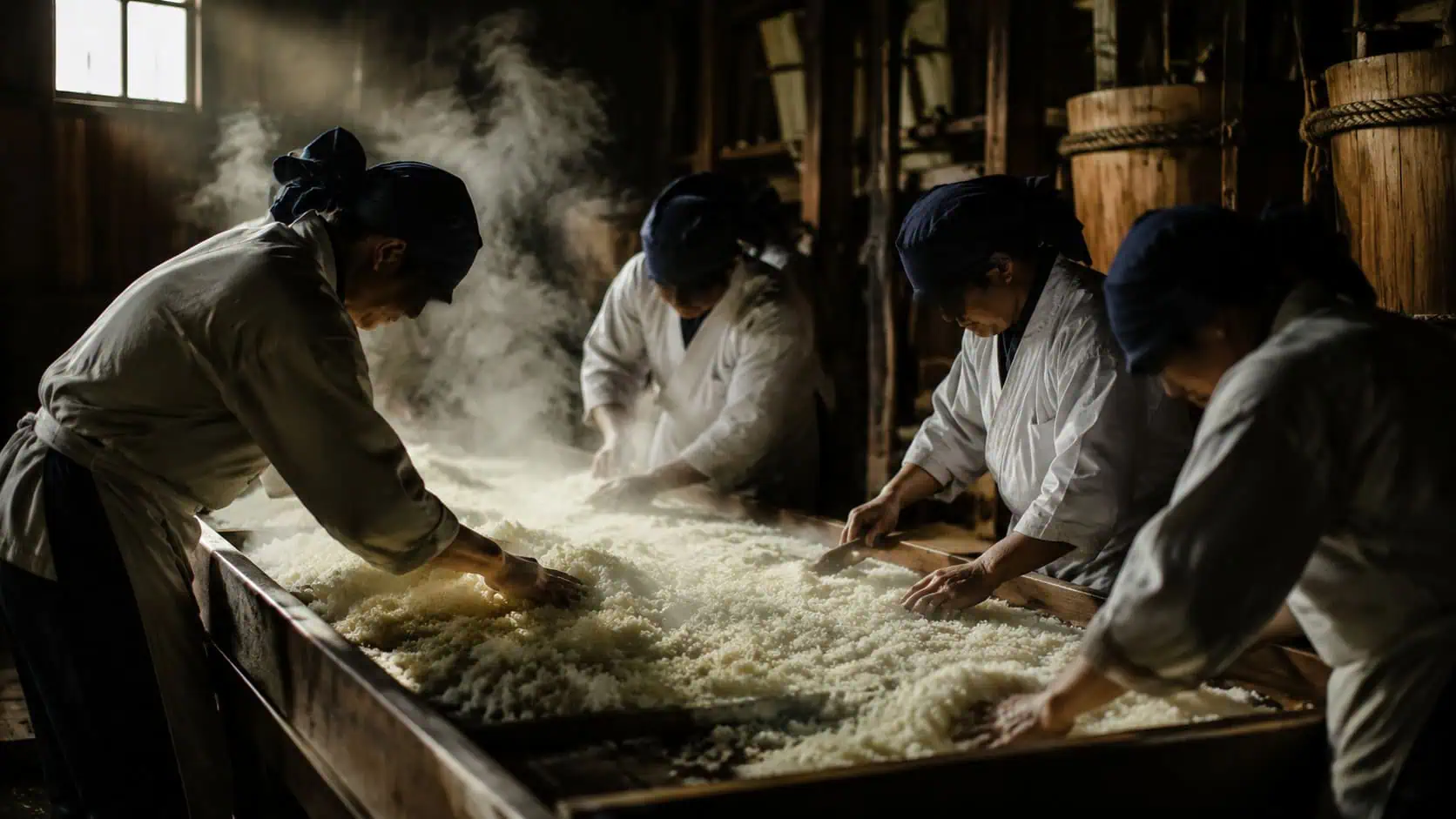
Many rural breweries faced hard times in past decades. Sales fell, and some old kura nearly closed. Younger owners then stepped in to revive them. They modernized tools while keeping careful, traditional methods. Small-batch quality became a selling point, not a weakness. So Saga’s brewing culture survives, and in places even grows.
Famous Breweries and Brands
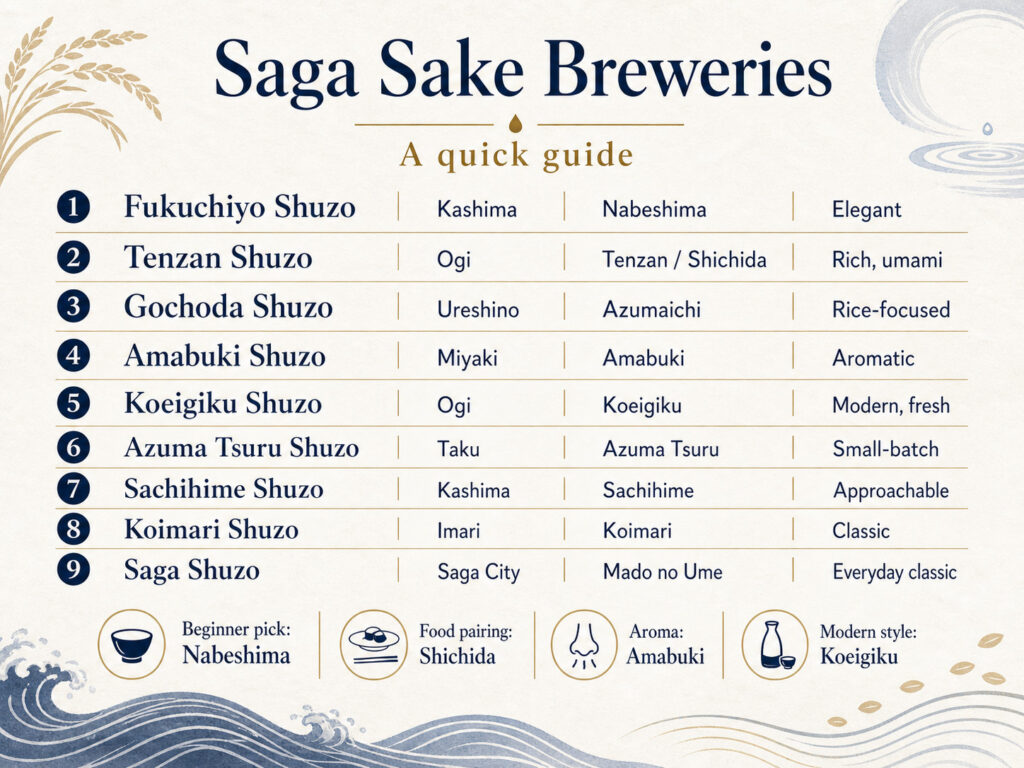
The prefecture holds many respected breweries, especially around Kashima and Ogi. The list below is not a ranking. Instead, it maps who makes what, with a note on how each differs.
- Fukuchiyo Shuzo, Kashima. Maker of Nabeshima 鍋島. Elegant, polished, and internationally renowned. A refined, classic place to start.
- Tenzan Shuzo, Ogi. Maker of Tenzan 天山 and Shichida 七田. Richer and umami-driven, so it pairs well with hearty meals.
- Gochoda Shuzo, Ureshino. Maker of Azumaichi 東一. Refined and rice-focused, built on its own Yamada Nishiki.
- Amabuki Shuzo, Miyaki. Maker of Amabuki 天吹. Aromatic and distinctive, thanks to its signature flower yeasts.
- Koeigiku Shuzo, Ogi. Maker of Koeigiku 光栄菊. Modern and expressive, often fresher in style. A favorite among natural-leaning drinkers.
- Azuma Tsuru Shuzo, Taku. Maker of Azuma Tsuru, also read Higashitsuru. Small-batch and hands-on, with real character.
- Sachihime Shuzo, Kashima. Maker of Sachihime 幸姫. An approachable local brewery near the Sakagura Dori.
- Koimari Shuzo, Imari. Maker of Koimari, including the loved “Mae” label. Classic sake from the famous porcelain town.
- Saga Shuzo, Saga City. Maker of Mado no Ume 窓乃梅. A long-running, easygoing everyday classic.
So how should a newcomer choose? For beginners, Nabeshima offers the safest first taste. Shichida suits those who love umami and food pairing. Amabuki appeals to drinkers chasing aroma. Koeigiku rewards anyone curious about modern, fresher styles.
Famous Local Sake Types
Saga does not invent its own legal categories. Instead, it expresses the standard styles in a richer way. For the full system, see our guide to the types of Japanese sake. Here is how the region tends to shape each one:
- Junmai: Saga versions often emphasize body and warm umami
- Ginjo: fragrant and lighter, yet rarely thin or austere
- Junmai Ginjo: here it balances soft fruit with a gentle richness
- Daiginjo and Junmai Daiginjo: elegant, but with more depth than dry northern styles
- Nigori: cloudy and sweet, a cozy winter choice
Amabuki adds one more local twist worth noting. The brewery uses yeasts drawn from real flowers. These flower yeasts give bright, fruity aromas. So Saga also offers an aromatic path, not only a rich one.
The premium end shines brightly. Many drinkers first try a premium Saga junmai daiginjo, then explore further. For broader background, our main sake guide explains how brewers craft each grade.
Best Food Pairings
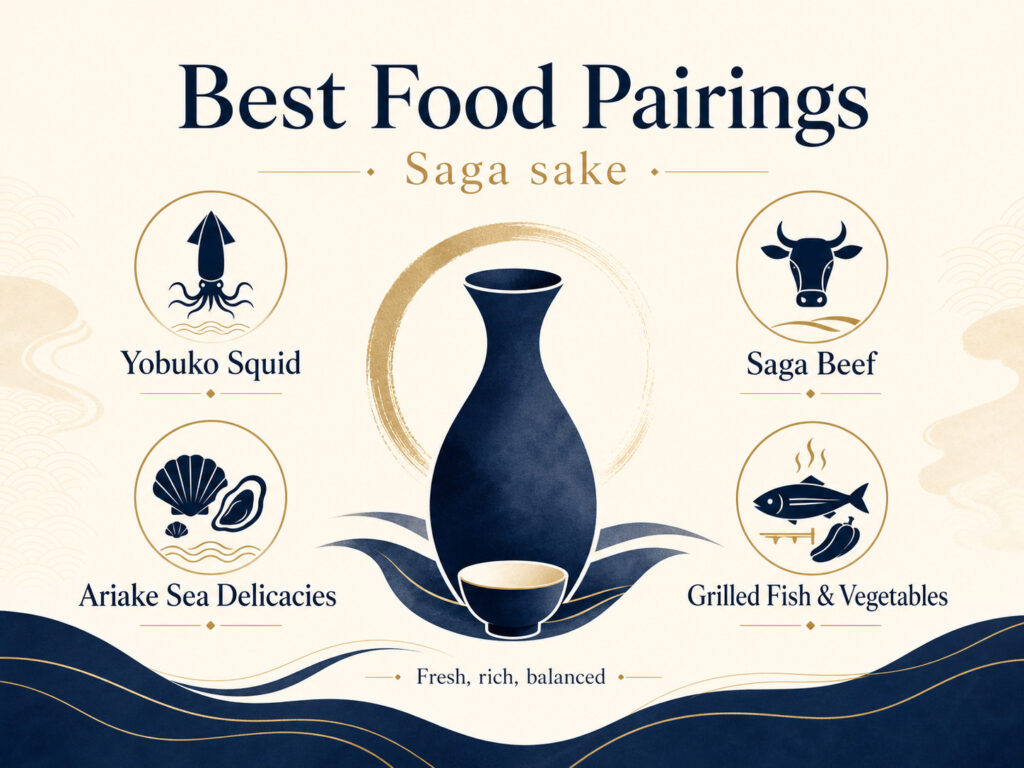
Saga food runs bold and fresh, so the sake matches it well. A rich, gently sweet pour stands strong beside hearty dishes. The two surrounding seas offer very different partners. Try these matches first:
- Yobuko squid, served as glassy, ultra-fresh sashimi from the Genkai Sea
- Saga beef, rich marbled wagyu for steak or sukiyaki
- Ariake Sea specialties, including nori seaweed and shellfish
- Grilled fish and simmered local vegetables
A fuller junmai matches the fat in Saga beef nicely. By contrast, a clean daiginjo flatters delicate squid sashimi. Briny Ariake seafood pairs with the richest, most umami-forward bottles. A lightly warmed junmai also suits simmered home-style dishes. For a wider local view, browse our Saga food page. You can also explore the island through our Kyushu food guide.
Best Places to Experience Saga Sake
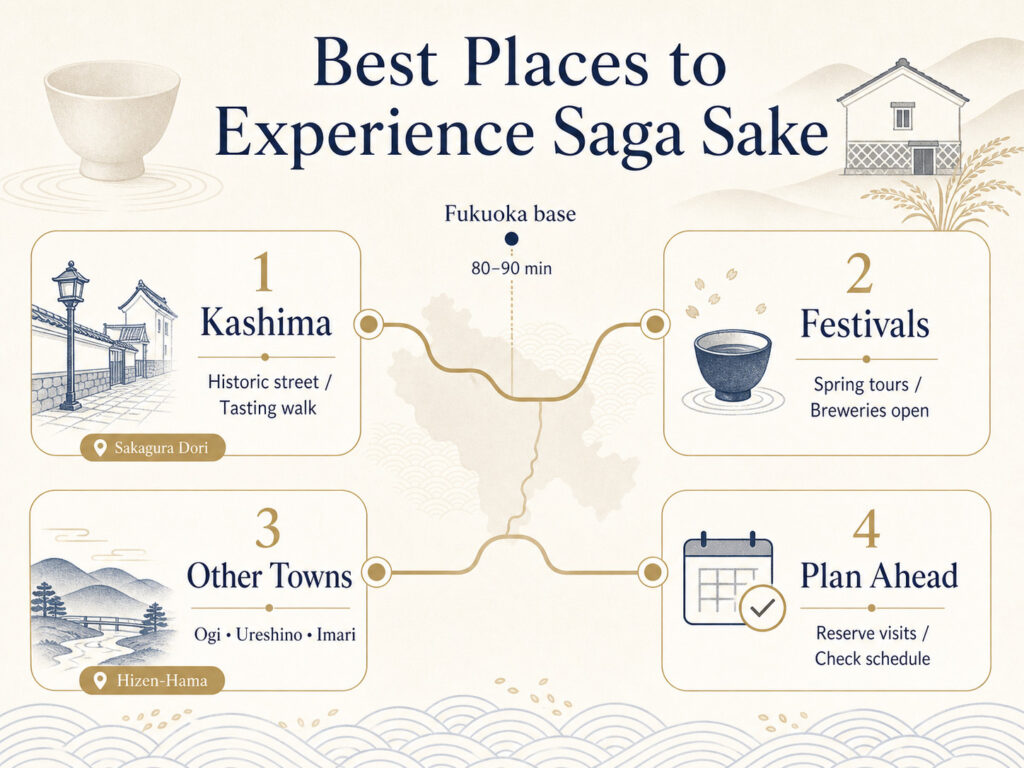
Kashima and the Sakagura Dori
Kashima makes the best first stop for most visitors. Its Hizen Hamashuku district preserves a historic post town. White-walled storehouses line a single walkable street, the Sakagura Dori. The government listed this area as a protected historic district in 2006. Several working kura still operate within a few minutes’ walk. So you can taste Nabeshima and its neighbors in one easy stroll.
The street rewards slow wandering. You can sample sake, buy bottles, and try local sweets. Old timber and plaster buildings frame every photo. In short, it blends sake, history, and atmosphere in one place.
Festivals and Other Towns
Each spring, Kashima hosts the Hizen Hamashuku Flower and Sake Festival. The wider Kashima Sakagura Tourism event draws over 80,000 visitors. Breweries open their doors for tasting, food, and music. Free shuttle buses connect the kura on festival days.
Other towns reward a longer trip. Ogi offers Tenzan and Koeigiku, plus a famous waterfall. Ureshino blends sake rice with green tea and hot springs. Imari adds Koimari and its world-famous porcelain. Saga City, meanwhile, serves as a handy central base.
Planning Your Visit
Fukuoka makes a convenient base for a day trip. Limited express trains link Hakata with Saga City in under an hour. Kashima sits a little farther, around 80 to 90 minutes away. A half or full day suits a relaxed brewery route. The Sakagura Dori sits a short walk from Hizen-Hama Station.
A little planning goes a long way. Many kura ask for reservations before a tour. Visits may also depend on the season and the brewing schedule. Winter is the busy brewing time, so check ahead. Of course, the spring festival needs no booking to enjoy.
How to Choose Saga Sake for Beginners
New drinkers often feel unsure where to start. A few simple tips make the choice easier. First, pick a junmai ginjo for a soft, fruity entry. Second, serve it well chilled for a clean first taste. Third, choose a richer junmai if you enjoy bold food.
Brand choice can guide beginners too. Nabeshima gives a polished, reliable introduction. Shichida leans into savory depth and pairs with meals. Amabuki offers bright, aromatic bottles for fruit lovers. A friendly local shop owner can also point the way.
Final Thoughts
Saga shows that a quiet prefecture can brew world-class sake. The region blends good water, top rice, and skilled hands. Its style stays rich and full, with a gentle sweet edge. Nabeshima opened the door, yet many kura deserve attention. If you love bold food, this region rewards a closer look. A glass beside fresh squid or wagyu makes the connection clear.
Saga Sake FAQ
Is Saga sake good for beginners?
Yes, the soft and rounded style feels easy to like. A junmai ginjo makes a gentle, fruity entry point. Nabeshima also offers a polished, approachable taste. Serve it chilled for the cleanest first impression.
What is the difference between Nabeshima and Shichida?
Nabeshima leans elegant, polished, and internationally famous. Shichida, from Tenzan Shuzo, feels richer and more umami-driven. Many drinkers reach for Nabeshima as a refined treat. They often choose Shichida to pair with hearty food.
Can you visit Saga breweries without a car?
Yes, the Kashima brewery street sits near Hizen-Hama Station. From the station, you can walk to the kura in minutes. Trains from Fukuoka and Saga City reach the area directly. During the spring festival, shuttle buses link the breweries.
When is the best season for sake tourism in Saga?
Spring brings the famous Kashima Sakagura Tourism event. That festival draws huge crowds for tastings and food. Winter offers active brewing, though kura stay busy then. Always book a tour ahead during peak times.
What should I buy as a souvenir bottle?
A Nabeshima junmai ginjo makes a reliable, crowd-pleasing gift. For something local, try Shichida, Azumaichi, or Amabuki. Smaller 720 ml bottles travel more easily than large ones. Buy chilled bottles and drink them fairly soon.
What award did Nabeshima win?
Nabeshima Daiginjo won the Champion Sake title in 2011. The honor came at the International Wine Challenge in London. That contest ranks among the most respected in the world. The win brought global attention to the whole prefecture.
What is Amabuki flower-yeast sake?
Amabuki Shuzo brews with yeasts taken from real flowers. These yeasts give bright, fruity aromas to the sake. The style feels lively and easy to enjoy. It offers a fun contrast to the region’s richer bottles.
References
- Saga Sake Brewers Association (Surveyed: June 2026)
- Kashima City Tourism Association (Surveyed: June 2026)
- Fukuchiyo Shuzo (Nabeshima) Official Website (Surveyed: June 2026)
- Japan Sake and Shochu Makers Association (Surveyed: June 2026)
- Saga Prefecture Official Website (Surveyed: June 2026)
Related Articles
- Sake: Types of Japanese Sake, Sake Making (Surveyed: June 2026)
- Junmai Sake (Pure Rice Sake) (Surveyed: June 2026)
- Daiginjo Sake (Surveyed: June 2026)
- Yobuko Ika (呼子イカ) (Surveyed: June 2026)
- Saga Beef (佐賀牛) (Surveyed: June 2026)
- Saga Area Japanese Food (Surveyed: June 2026)




 English (US) ·