
In Japan, there are five main types of shoyu (soy sauce): koikuchi, usukuchi, tamari, shiro, and saishikomi. Each has its own flavor profile, color, and culinary uses.
When people compare "tamari vs soy sauce," they are usually comparing tamari with koikuchi shoyu, the dark soy sauce that accounts for around 80% of soy sauce consumption in Japan. Both are fermented soy sauces, but they differ in ingredients, flavor, texture, and how they are used in cooking.
Tamari is typically made with little to no wheat, giving it a thicker texture, deeper color, and richer umami flavor. Koikuchi soy sauce, on the other hand, contains both soybeans and wheat, resulting in a lighter texture and a more balanced combination of umami, saltiness, and sweetness.
In this guide, we'll compare tamari and dark soy sauce side by side, looking at their flavor, nutrition, and best uses so you can choose the right soy sauce for your cooking.
What is Japanese Soy Sauce
 Everybody knows what Japanese soy sauce is. More or less. However, what sets shoyu apart from other Asian varieties comes down to three things: the ratio of wheat to soybeans, how long it's left to ferment, and local twists like adding palm sugar or molasses. Standard Japanese soy sauce (koikuchi), or dark soy sauce, generally uses a balanced 1:1 ratio of soybeans to roasted wheat, a process perfected during the Edo Era. From the high wheat content come carbohydrates that convert into sugars to support the fermentation process.
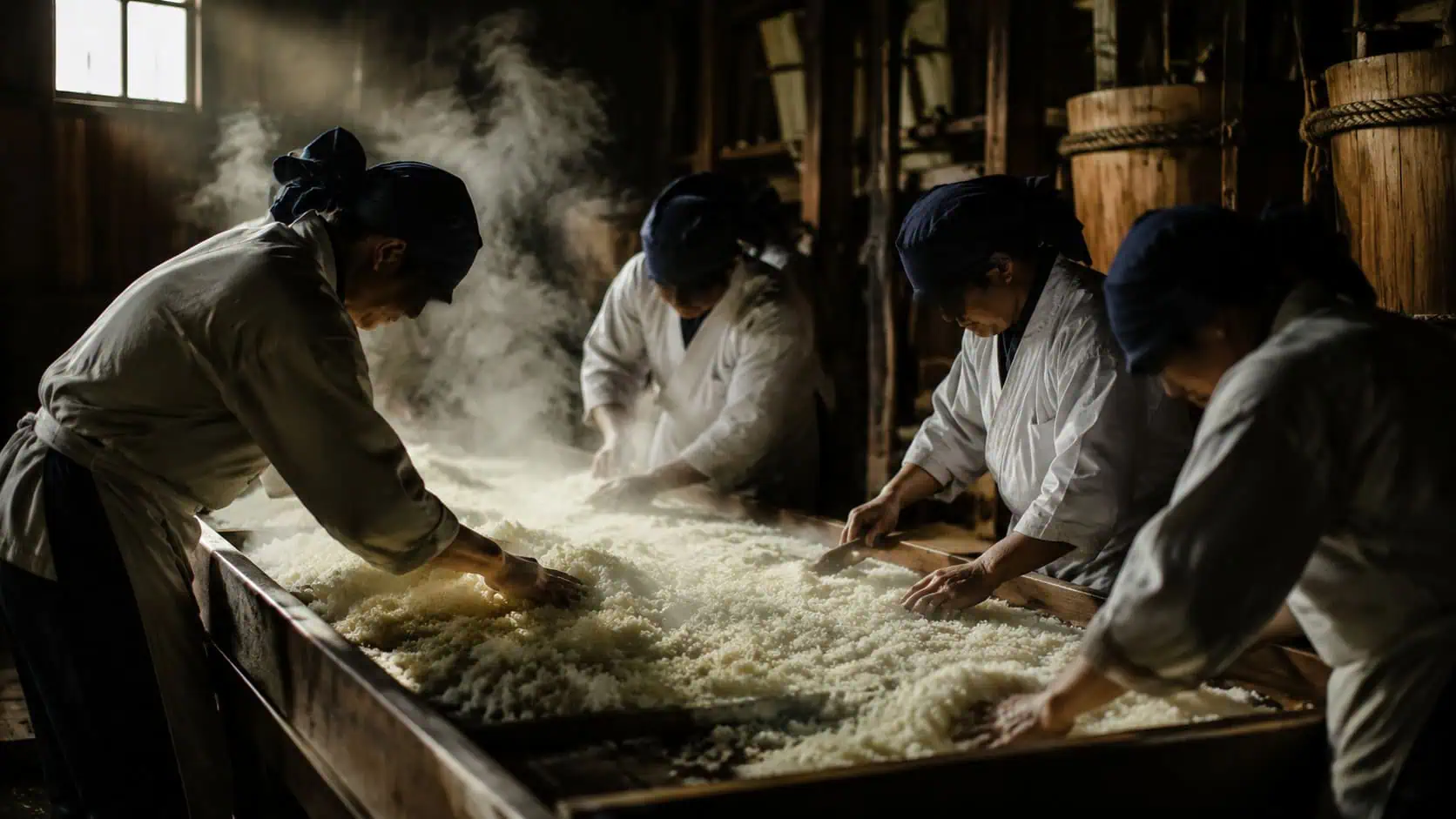
 The process begins with steamed and defatted soybeans (oils removed for faster protein breakdown) which are roasted and combined with cracked wheat. A carefully procured koji mould culture is then combined with brine water (to regulate fermentation) and this is then aged in cedar casks or large stainless steel tanks.
5 Common Types of Japanese Shoyu
Under the Japan Agricultural Standards (JAS), Japanese soy sauce is officially classified into five types:
Koikuchi Shoyu (rich flavor)
What most people reach out for when cooking with Japanese soy sauce. In Japan, about 84% of soy sauce used is koikuchi. It has a deep amber-brown color, a bold, salty-umami flavor, and a slightly sweet finish. Kikkoman and Yamasa are the internationally recognized commercial benchmark brands.
Usukuchi Shoyu (light flavor)
 Pale golden-amber which is actually saltier than koikuchi. It’s more popular in the Kansai region where the culinary tradition like Kyoto Kaiseki prizes the natural colors and prefers delicate flavors of ingredients not to be overpowered.
Saishikomi Shoyu (twice-brewed)
The most luxurious Japanese soy sauce originating from Yamaguchi Prefecture. Instead of using brine water, the koji is fermented a second time in previously brewed sauces. Saishikomi's pronounced syrupy sweetness and depth is used more for garnishing or drizzling.
Shiro Shoyu (white soy sauce)
 Developed in the early 19th century in Hekinan, Aichi Prefecture. Shiro shoyu is made primarily from wheat with very little soybean and fermentation is much shorter. It produces a delicate, subtly sweet flavor with almost no color contribution to a dish. It’s suitable for chawanmushi or clear soups where color preservation matters.
Tamari Shoyu
Classified as the fifth JAS variety, so is technically a member of the soy sauce family under Japanese regulations, but its differences from koikuchi are substantial enough to merit its own full discussion below. Want to explore more Japanese soy sauces? Read our guide to the 15 best Japanese soy sauces, from premium barrel-aged shoyu to versatile everyday options.
What is Tamari?
 In the tamari vs. soy sauce debate, there are two commonalities: both are products of the soy bean and both are fermented sauces. Tamari soy sauce, however, is much older and started out as an incidental by-product of miso production, essentially it was a ‘miso paste sauce’.
Tamari soy sauce dates to around 1254 when the Zen monk Kakushin returned from China with a recipe for Kinzanji miso and taught it to villagers in Wakayama. The miso-makers noticed that the liquid pooling around the fermenting soybean paste tasted quite exceptional.
The word ‘tamari’ comes from the verb ‘tamaru’, meaning ‘to accumulate’ or ‘to pool’. Its wider use and production eventually centered around the miso-making hub of Nagoya and other locations in Aichi Prefecture.
 The manufacturing of tamari, however, gradually shifted away from simply harvesting a by-product of the miso industry. The process, like koikuchi soy sauce, starts with steaming soy beans before mixing them with a specific koji mould. However, tamari is fermented under slow, natural conditions, often for six months to over a year.
Although tamari is not ‘wheat based’ like other soy sauces, modern production methods do use a small amount of wheat for fermentation processes—perhaps 3 to 10% or less—so you need to check the label.
For the modern health-focused consumer, and especially export markets, there are high quality gluten-free tamari sauces to choose from.
Soy Sauce vs Tamari Sauce: Key Differences 
In a nutshell, soy sauce (koikuchi) and tamari are both Japanese soy sauces, but they differ in composition and use. Koikuchi contains wheat, giving it a lighter texture, balanced sweetness, and aromatic flavor ideal for everyday cooking. Tamari contains little to no wheat, offering a thicker consistency, deeper umami, darker color, and superior performance as a dipping sauce or glaze.
Production Methods and Ingredients
The first obvious difference is that tamari, in its traditional form, is essential wheat and gluten free. Koikuchi soy sauce relies on an active multi-microbial yeast fermentation driven by wheat carbohydrates. Tamari uses minimal wheat and undergoes a slow and dense breakdown driven almost mostly by the Aspergillus tamarii mold on pure soy protein. Modern manufacturers sometimes use other types of koji moulds for tamari.
Umami and Flavor Profile
The wheat in soy sauce gives a bright and somewhat sweet edge to its flavor. Tamari, with its higher amino acid yield, has a much deeper umami flavor. Koikuchi hits the top of the palate with saltiness then umami, while tamari's flavor unfolds slowly, lingers longer, and resonates in the middle and back of the palate. This makes it substantially better suited to raw foods like sashimi.
Viscosity and Cooking Behavior
When heated, koikuchi evaporates alcohol and esters rapidly, releasing a distinct aroma. Its more penetrative quality makes it the best choice for long braises, marinades, and stir-fries. With its noticeable thicker viscosity, tamari works well as a dipping sauce that requires a richer and more sustained flavor. When exposed to heat, it resists evaporation and instead reduces down into a glossy, clingy coating. This makes it ideal for glazing (teriyaki) or as a finishing sauce.
Color Contribution to Food
Koikuchi will tint food with a warm, mahogany shade, but it remains translucent enough to let the underlying texture of proteins and vegetables show through. Tamari, on the other hand, can be quite opaque or even deep dark brown, borderline black. It can yield a dark, lacquered, high-contrast finish on grilled meats and rice crackers (senbei). The combination of Japanese mirin with sugar and usukuchi soy sauce also gives a glossiness to food, but without the heavy coloration.
Nutritional Profiles
Tamari, of course, being made from pure soy beans often has around 1.5 to 2 times the amino acid nitrogen content of standard koikuchi. It also has a higher concentration of total flavonoids and distinct amino acids like glutamic and alanine acids. The JAS regulation for salt content is: Usukuchi (~18%–19%), Koikuchi (~16%), and Tamari (~15%–16%). Because of its stronger flavor, some may feel tamari is saltier, but in reality it requires less brine to stabilize the fermentation compared to usukuchi which is the saltiest.
When to Use Soy Sauce
Use dark soy sauce (koikuchi) when you need the sauce to disappear into the dish. This can include high-heat wok cooking, long braises, ramen broths, soy-based marinade, and pan deglazing. Why? Koikuchi’s thinner consistency disperses quickly through liquids and broths; its wheat-derived aromatics survive extended cooking without turning bitter; and its sharper saltiness penetrates proteins more efficiently. For teriyaki, gyudon or a tsuyu dipping broth, koikuchi's bright, assertive character cannot be substituted with tamari which makes dishes taste heavier and less defined.
When to Use Tamari
Tamari is best used as a dipping sauce for sashimi, a finishing sauce for tataki, glazing at the last minute, or dressing a cold dish. It's also the correct choice for teriyaki glazes applied in the final moments of grilling. Basically, anywhere the sauce sits on top of food rather than cooking into it. Tamari's viscosity makes it coat rather than run; its deeper, slower umami is perceptible directly in a way it isn't once dissolved into a broth. Its thickness caramelizes into a lacquered finish that koikuchi, being thinner, struggles to hold.
Bonus: Tamari Soy Sauce Recipes
Since most people are less familiar with tamari sauce and how to use it, here are a few JapaneseTaste recipes that specifically call for a top-grade tamari:
Buri Teriyaki - Because yellowtail (buri) are highly flavorful and rich in natural fats, this recipe’s tamari glaze cuts through the fish’s oiliness. Mix ingredients, reduce and caramelize in a pan.
Gluten-Free, Chilled Bukkake Udon - Although udon is made from wheat, in this recipe you make your own ‘udon’ by combining rice flour and tapioca. The dressing soup combines mirin, gluten-free tamari sauce, sugar, dashi powder, water, and salt.
Yakiniku Dipping Sauce - The recipe uses a three year barrel-aged tamari mixed with sugar, honey, sesame oil, ground ginger, garlic, and roasted sesame seeds.
Crumbled Tofu Donburi Vegan Bowl - A vegan rice bowl that pairs tamari sauce with miso, sugar, cooking sake, and minced ginger to season firm tofu that has been dried and crumbled to a meat-like texture.
Traditional Simmered Fish - Tamari is combined alongside mirin, sake, sugar, and sliced ginger. Its natural viscosity and density give the fish a lustrous shine (teri) and a deeper, concentrated flavor as the poaching liquid reduces.
Room for Both on the Shelf!
Tamari vs. soy sauce is not so much about their rivalry, but about two distinct expressions of Japanese fermentation traditions. Koikuchi's wheat-driven brightness and penetrating saltiness make it the standard for Japanese cooking. Tamari's viscosity and slow-unfolding umami makes it the perfect finisher or glazing sauce, but it does have other applications. For those with gluten sensitivities or strict dietary requirements, tamari is the clear choice. For everyone else, keeping both on the shelf and learning to use each on its own terms is simply good cooking.





 English (US) ·