
 1 month ago
48
1 month ago
48
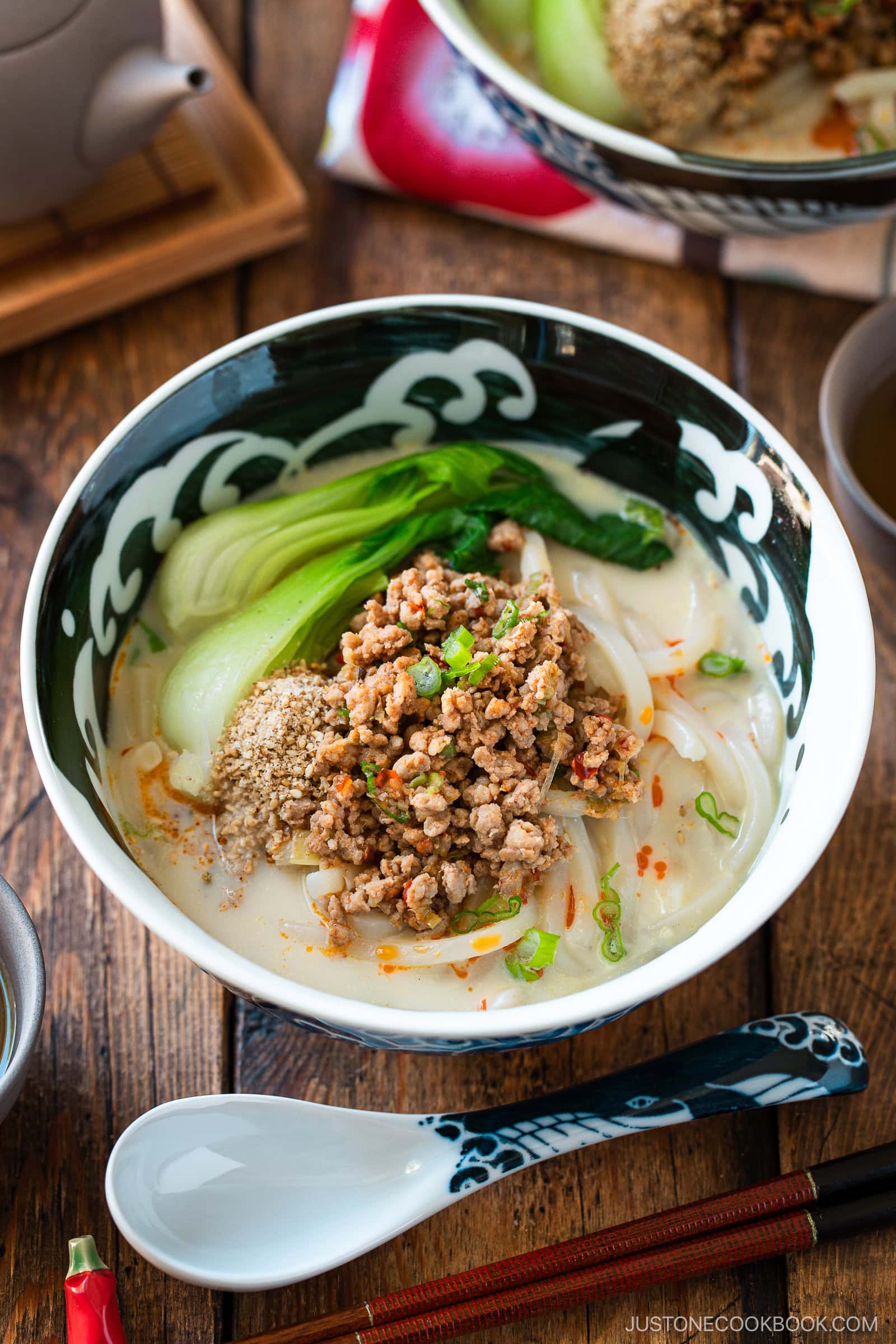
Recipe Highlights
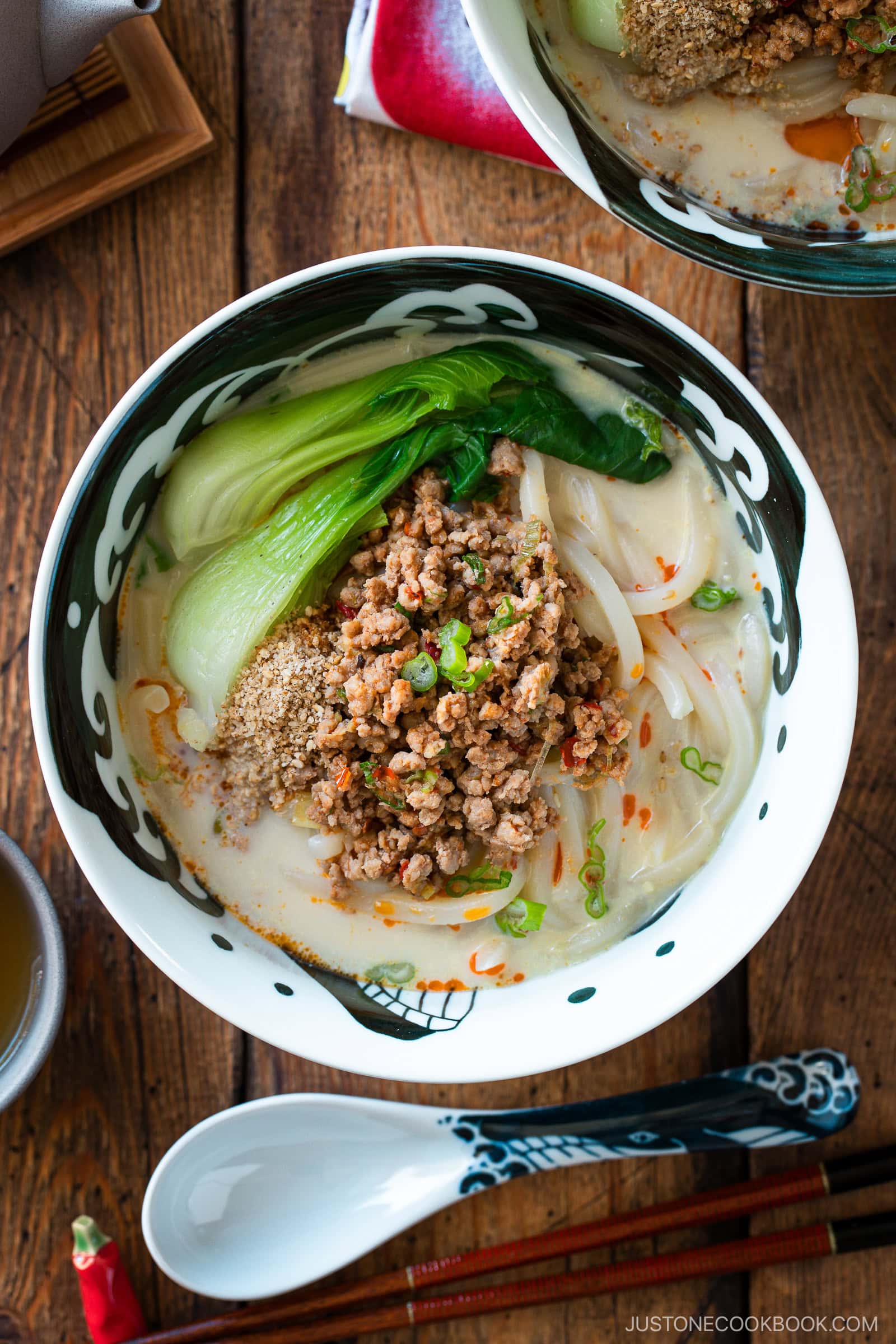
Tan Tan Udon is my quick and cozy bowl of noodles that feels rich and satisfying for such a fast recipe. With pantry staples and a few simple tricks, you can build a creamy sesame broth and savory meat topping without sacrificing flavor. It’s bold, comforting, and ready in just 15 minutes.
- Builds deep flavor with pantry ingredients
- Rich, creamy broth and savory topping without long simmering
- Ready in just 15 minutes with frozen udon noodles
If you love udon noodle dishes, try my Udon Noodle Soup, Beef Udon, and Curry Udon recipes next!
Table of Contents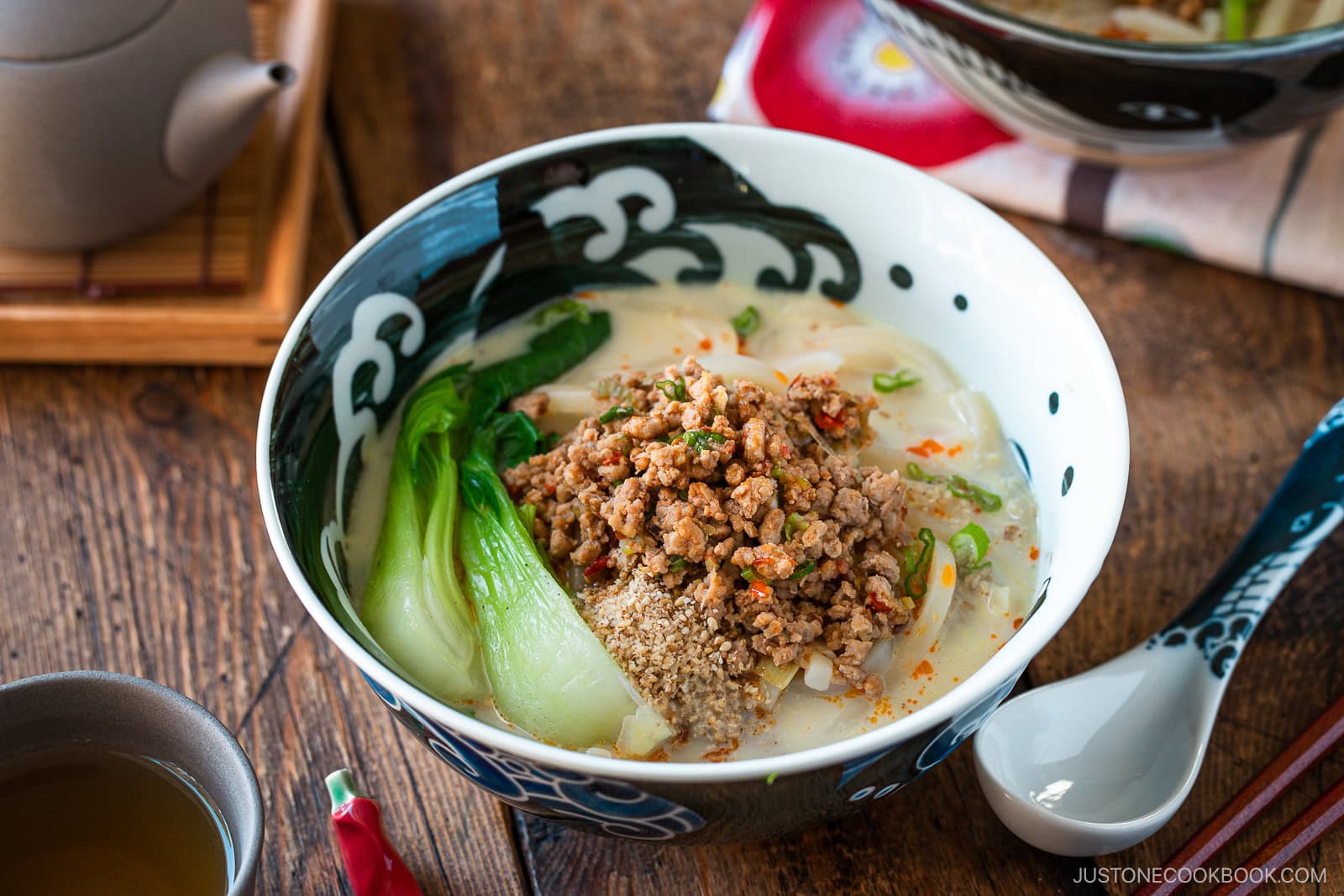
What is Tan Tan Udon?
Tan tan udon (坦々うどん) is inspired by Japanese-style tantanmen (Tan Tan Ramen), which evolved from Chinese dan dan noodles. In Japan, it became a comforting soup with a creamy sesame broth and seasoned ground meat. This version uses thick udon instead of ramen, giving the dish a chewier texture and heartier feel.
Ingredients for Tan Tan Udon
- udon noodles (frozen recommended, or try my Homemade Udon Noodles)
- Shanghai bok choy
- ground pork
- garlic, ginger, and green onions/scallions
- doubanjiang (spicy chili bean paste) – you can use the non-spicy or gluten-free type
- toasted sesame oil
- soup broth – chicken stock, unsweetened soy milk, soy sauce, and toasted white sesame seeds
- la-yu (Japanese chili oil) – optional; you can make Homemade La-yu
Find the printable recipe with measurements below.
Jump to RecipeHow to Make Tan Tan Udon
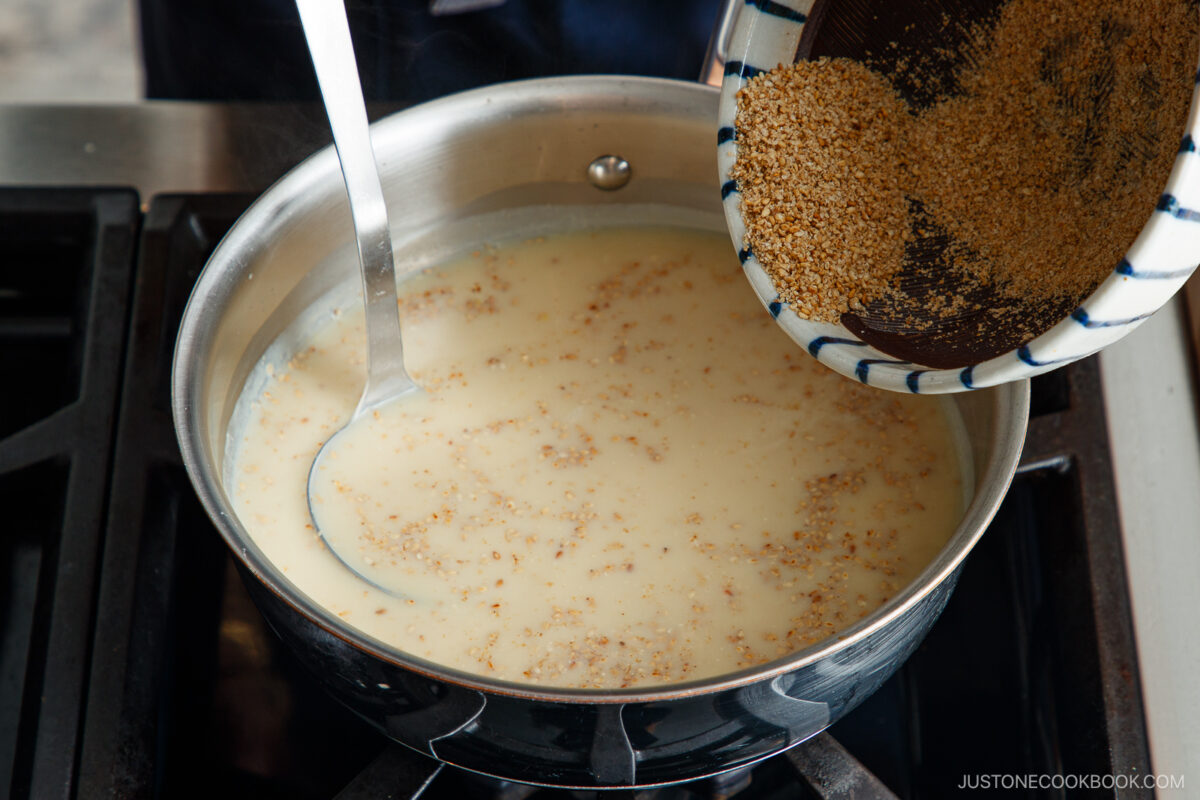
- Make the soup. Simmer the chicken stock and soy milk in a saucepan and add soy sauce. Grind the sesame seeds and stir half into the broth. Cover and keep warm.
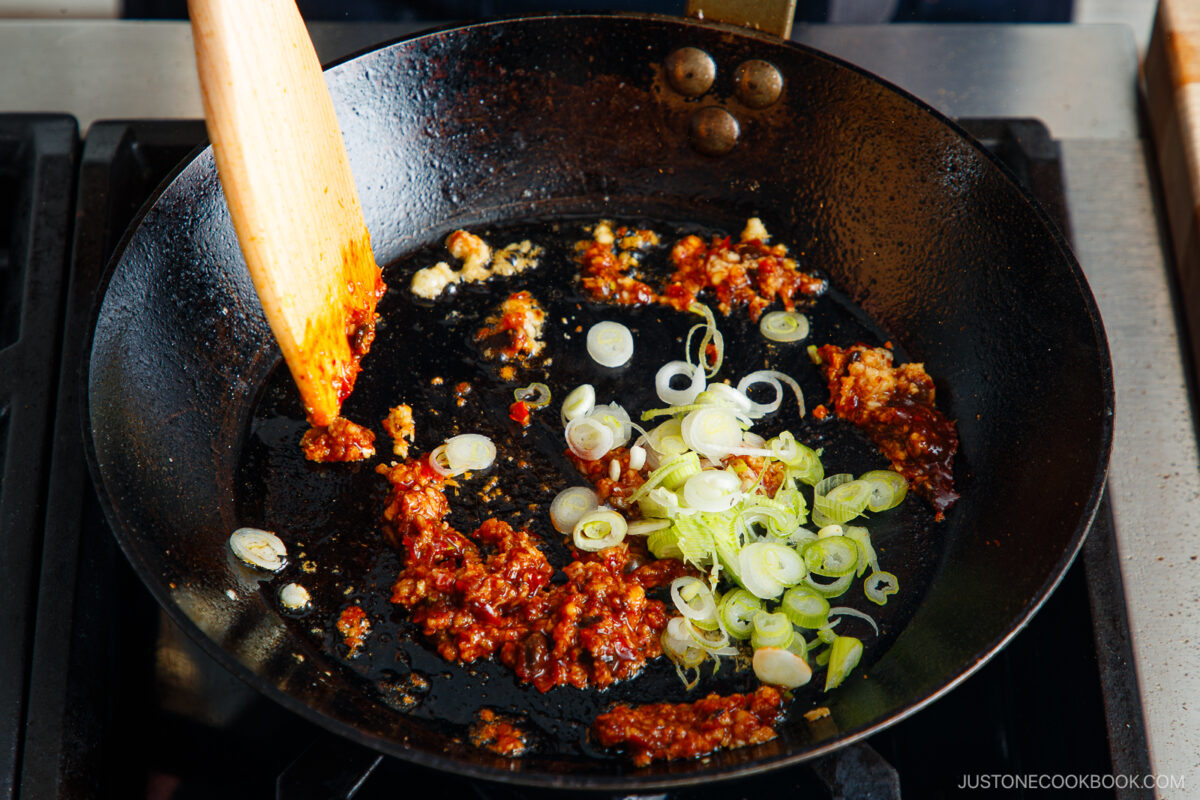
- Cook the aromatics. Heat sesame oil in a frying pan and sauté the minced garlic, grated ginger, and doubanjiang until fragrant. Add sliced green onion whites and stir.
- Cook the pork. Add the ground pork and break it up as it cooks. When no longer pink, stir in most of the scallion greens.
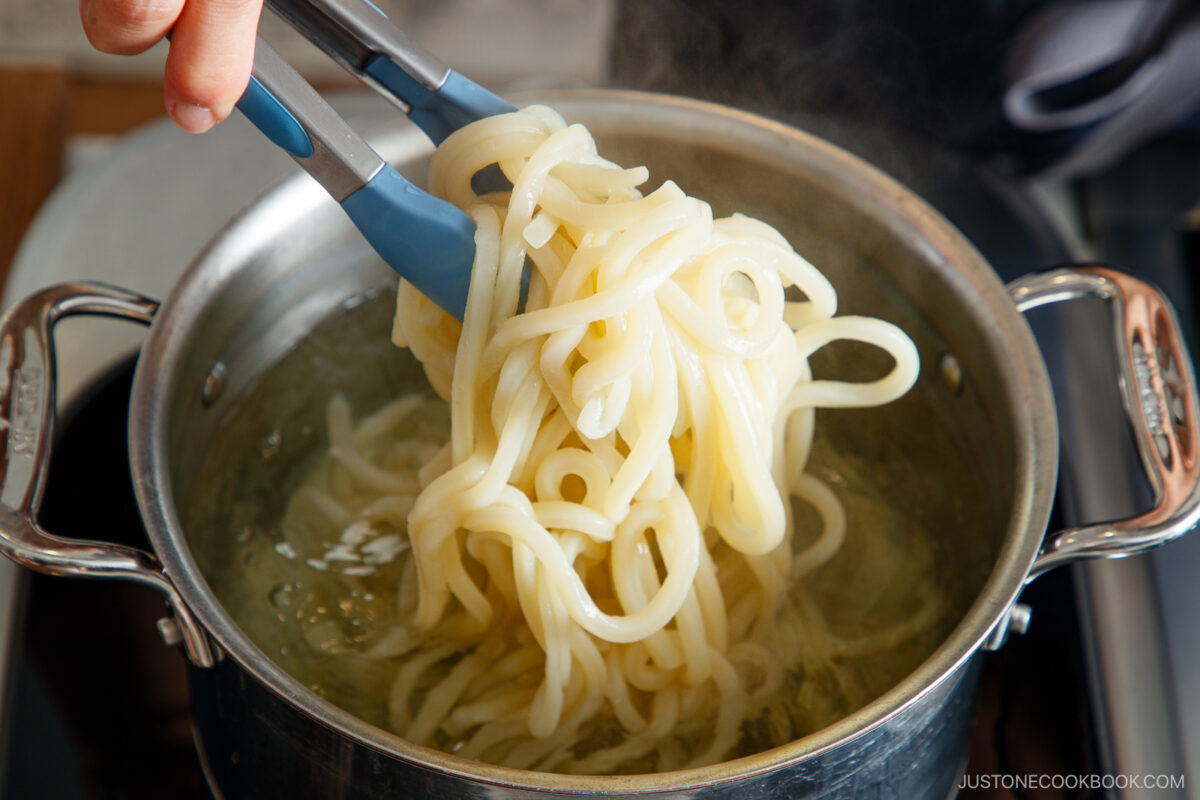
- Cook the bok choy and noodles. Blanch the bok choy quarters in boiling water until tender and remove. Boil the frozen udon until loosened, then drain and divide into bowls.
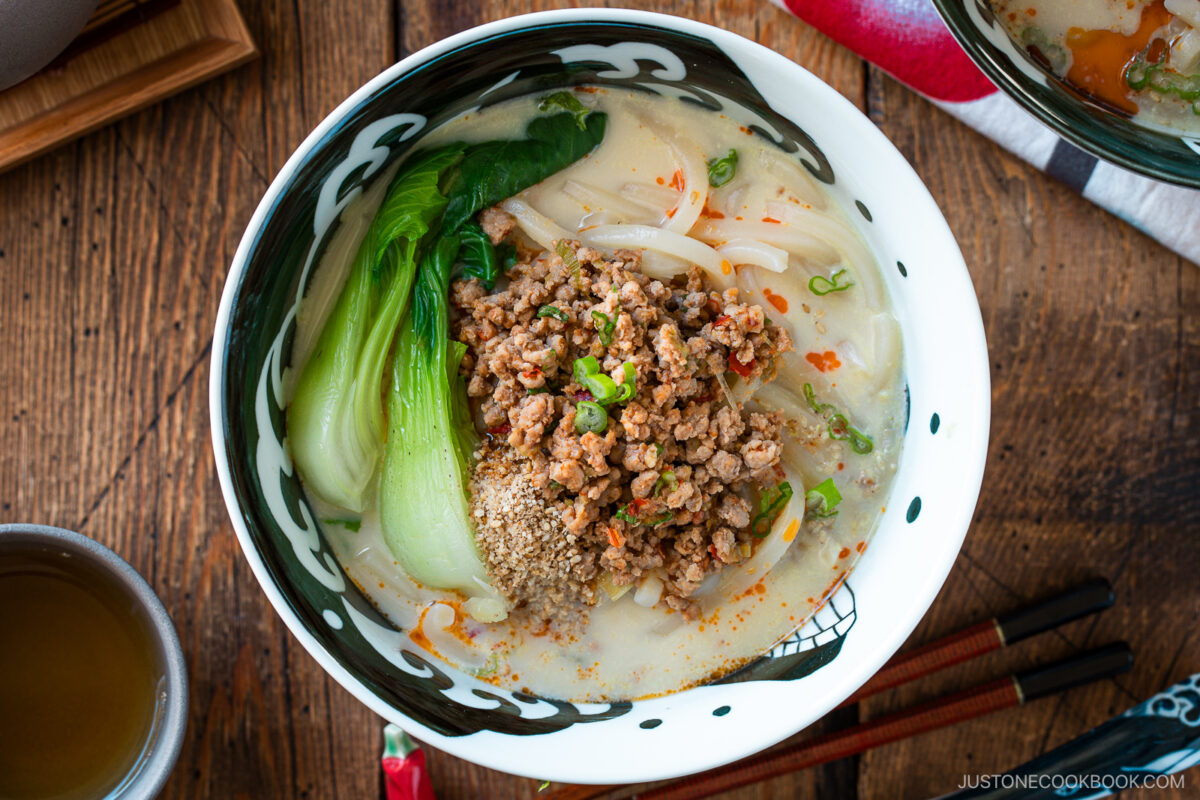
- Serve. Pour the hot soup and spoon on the pork mixture. Top with bok choy, ground sesame seeds, and green onions. Drizzle with la-yu at the table if you like extra heat.


Nami’s Recipe Tips
These simple tips will help you make Tan Tan Udon perfectly every time.
- Use Asian-style soy milk for the right flavor – Western soy milk, even unsweetened, often includes vanilla or natural flavors, while Asian soy milk is typically just soybeans and water for a cleaner, more savory taste. Here’s a 2-ingredient soy milk.
- Keep the broth at a gentle simmer, not a boil – Once you add soy milk, maintain a gentle simmer to prevent scorching. Soy milk can foam up and boil over quickly if heated too aggressively.
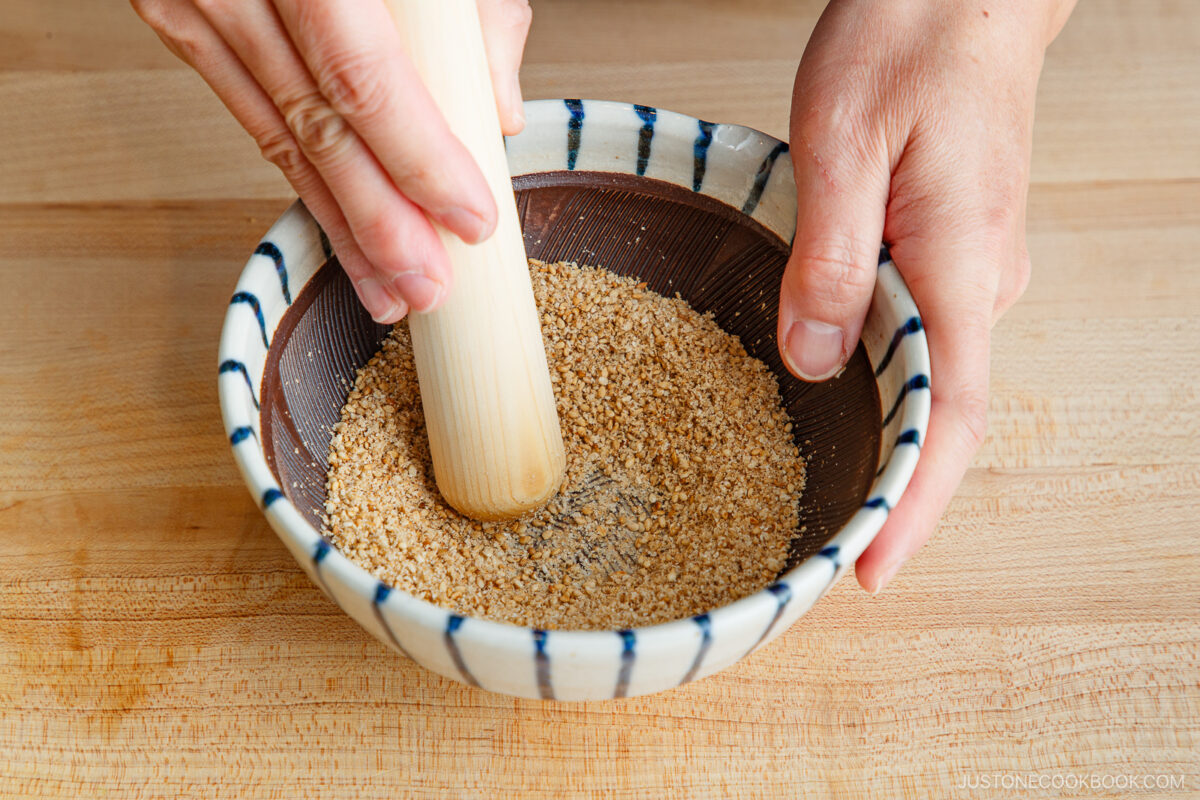
- Grind the sesame seeds fresh – Freshly ground sesame adds a deeper aroma and richer flavor to the broth. For even more fragrance, briefly toast the sesame seeds in a dry pan, shaking frequently, until aromatic before grinding. Since this shortcut recipe doesn’t use sesame paste, feel free to increase the sesame seeds for a fuller sesame flavor.
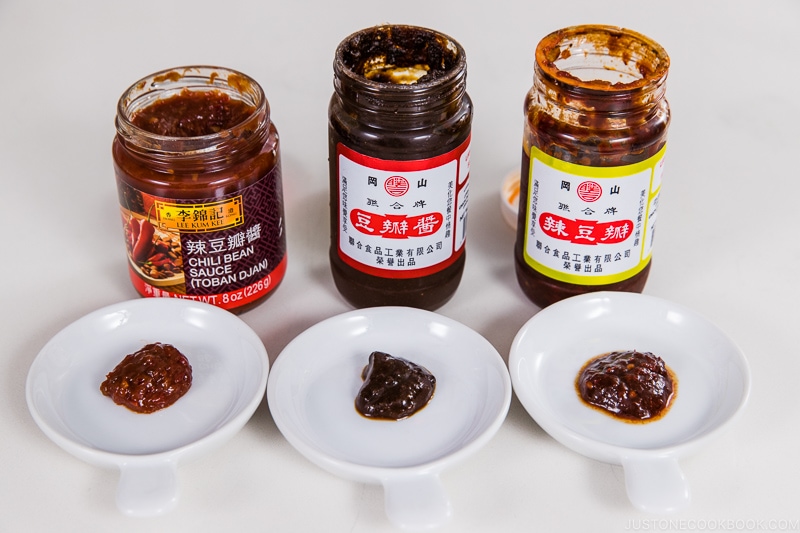
- Control the spice level – Adjust the amount of doubanjiang to your taste, or use a non-spicy version for a milder bowl. When my kids didn’t eat spicy food, I used to buy a Taiwanese non-spicy doubanjiang from our local Asian supermarket.
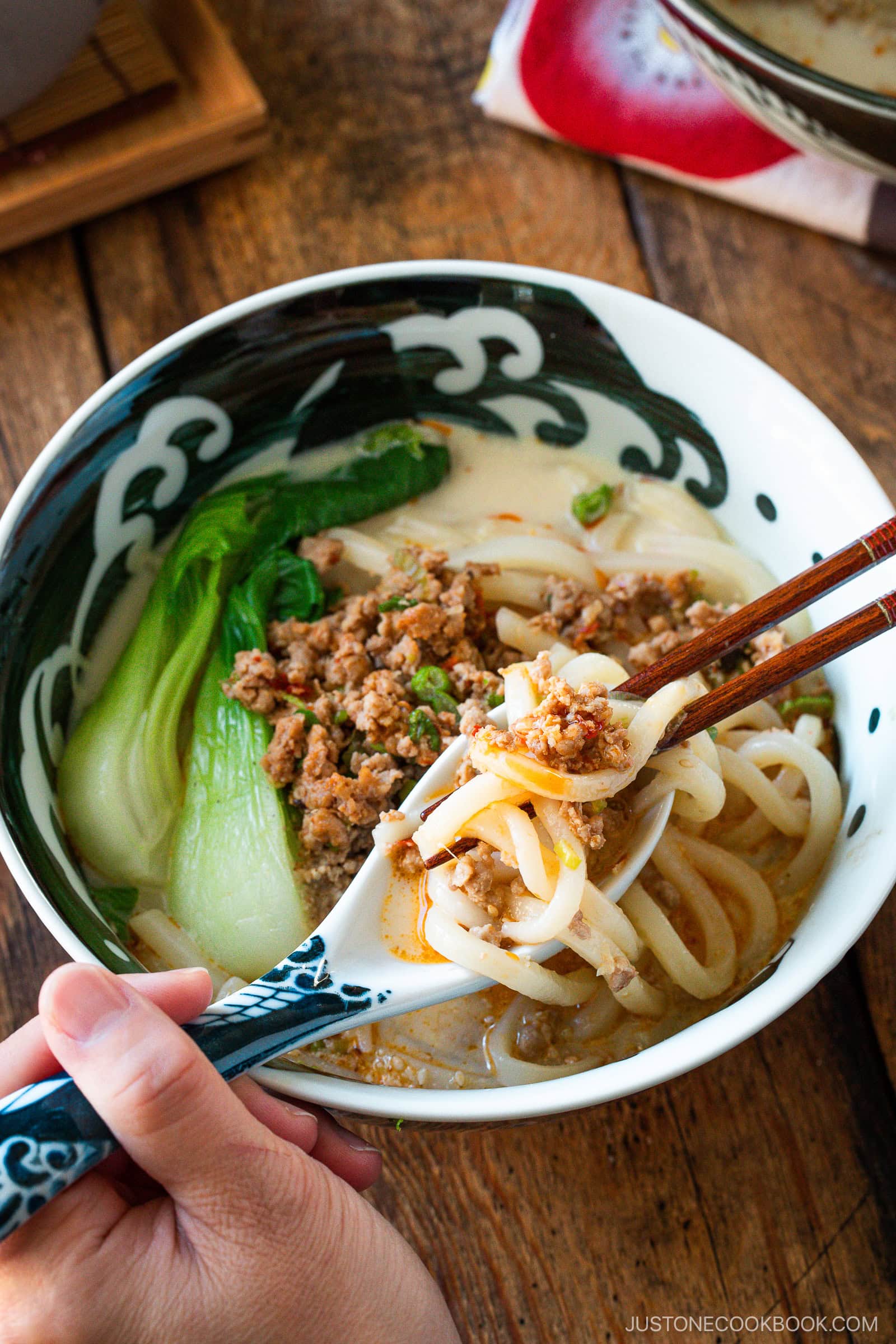
- Use frozen udon noodles – They have the best chewy texture and cook very quickly. Boil just until loosened.
Variations and Customizations
Looking to change things up? Try these easy and tasty ideas!
- Swap the pork. Ground chicken or ground turkey are great lighter alternatives to pork.
- Vegan/vegetarian. Use vegetable stock and replace the pork with firm tofu crumbles or finely chopped mushrooms.
- Change the creaminess. To make the creamy soup lighter or heavier, adjust the chicken stock, soy milk, and ground sesame (or use sesame paste).
- Use your choice of veggies. Top it with spinach, green cabbage, or other vegetables instead of baby bok choy.
- Serve it cold. In the summer, use cold soup broth.
What to Serve with Tan Tan Udon
I like to pair this rich noodle soup with lighter sides for balance.
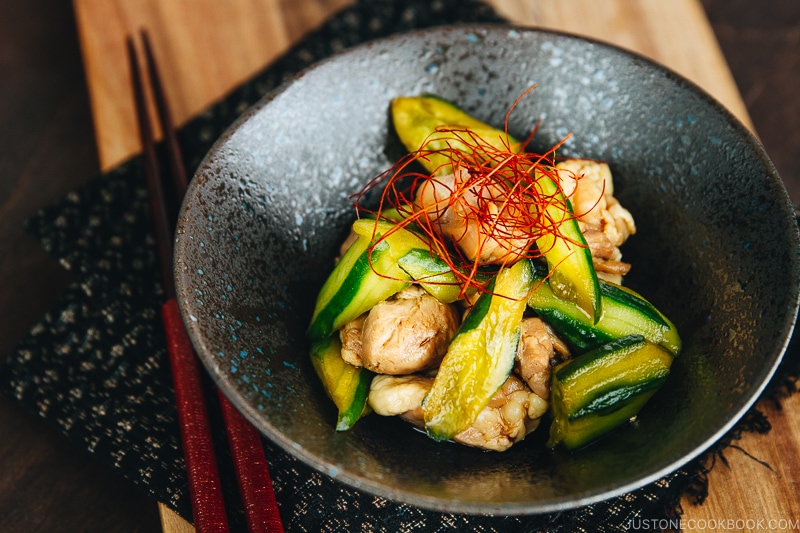
- Cucumber and Chicken Marinated in Chili Oil – This easy steamed chicken is a simple way to start the meal.
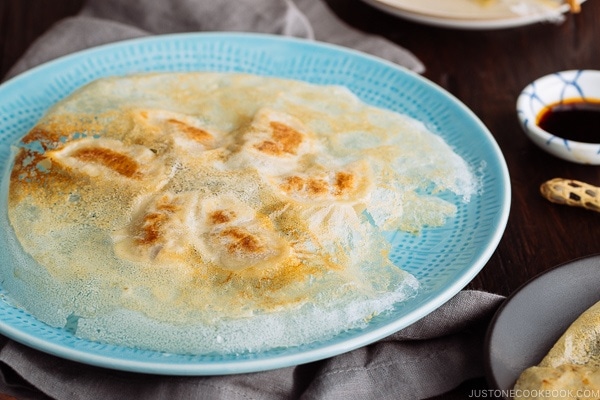
- Gyoza with Wings – Pan-fried dumplings with crisp, thin wings turns this into a cozy noodle set.
- Spicy Edamame – Fiery soybeans add extra protein.
- Spinach with Sesame Miso Sauce – A chilled vegetable side that complements the nutty flavor in the broth.
Storage and Reheating Tips
To store: Cool and store the soup broth and pork mixture in separate airtight containers. Refrigerate for up to 3 days. You can also freeze the pork mixture up to 3–4 weeks. Cook the noodles right before serving.
To reheat: Defrost the pork mixture if frozen, then warm the broth and pork mixture gently on the stovetop until hot.
FAQs
Is tan tan udon spicy?
Tan tan udon has gentle heat from doubanjiang, a fermented chili bean paste. You can adjust the spice level by choosing non-spicy doubanjiang or adding extra la-yu.
What is the difference between tan tan udon and tan tan ramen?
The main difference is the type of noodles. Tan tan udon uses thick udon noodles, while tan tan ramen uses thinner ramen noodles.
What can I use instead of ground pork in tan tan udon?
Ground chicken or turkey work well as lighter substitutes. For a vegetarian version, use crumbled firm tofu or chopped mushrooms. These options pair nicely with the creamy sesame broth.
Can I make tan tan udon ahead of time?
Yes. Prepare the broth and pork mixture up to 2–3 days in advance and store them separately in the fridge. Cook the udon noodles right before serving for the best texture.
I’d love to hear how yours turned out! 💛 Please leave a star rating and comment below to share your experience. Your feedback not only supports Just One Cookbook but also helps other home cooks discover recipes they can trust.
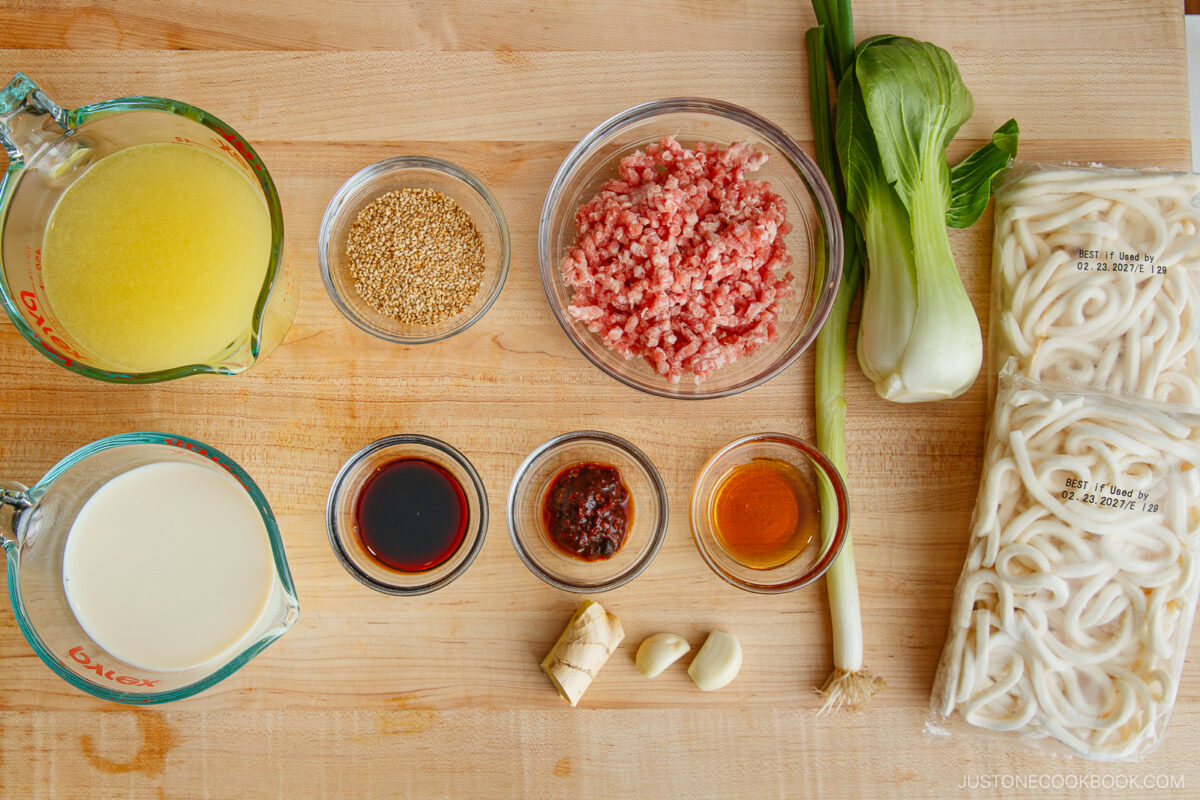
Gather all the ingredients.
To Make the Soup
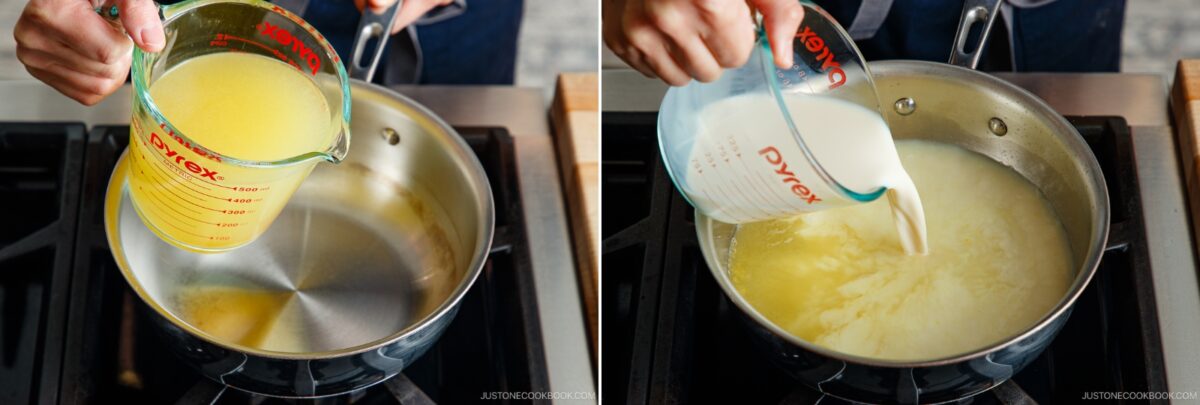
Combine 2 cups chicken stock/broth and 1 cup unsweetened soy milk in a saucepan and bring it to a simmer.
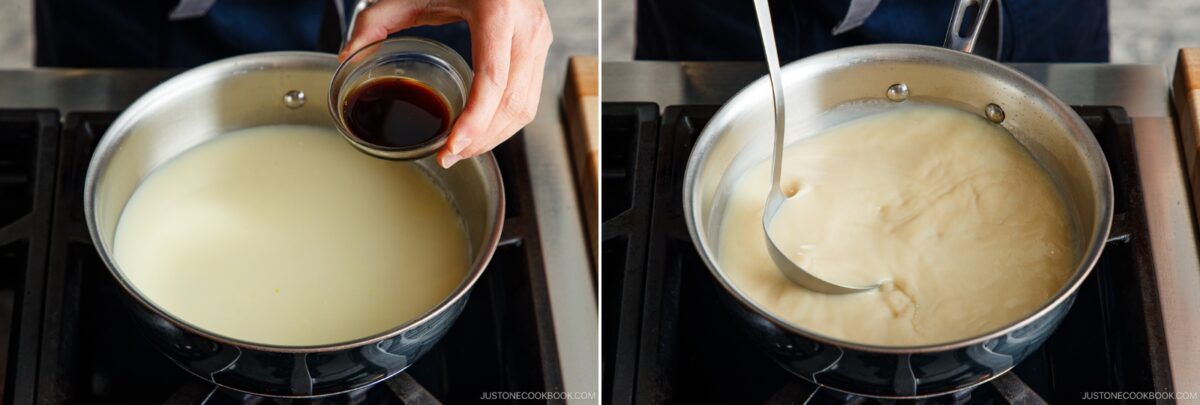
Add 1 Tbsp soy sauce and stir.
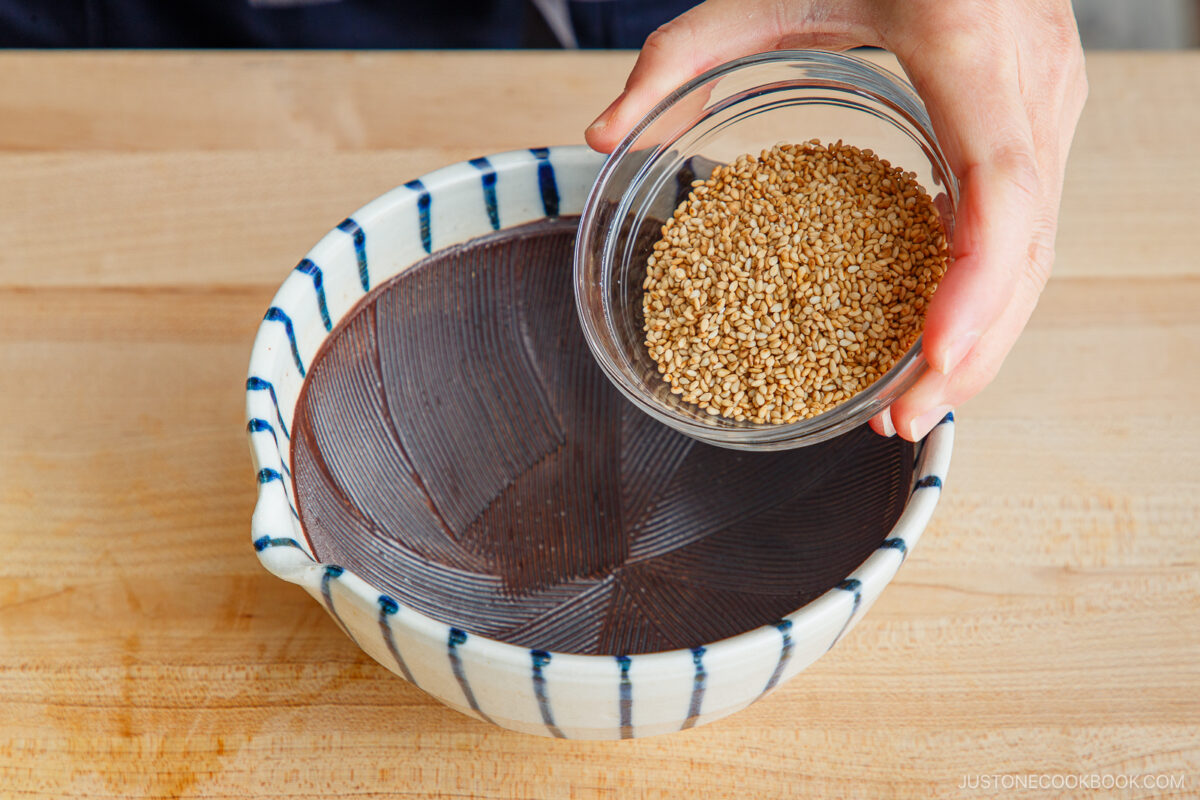
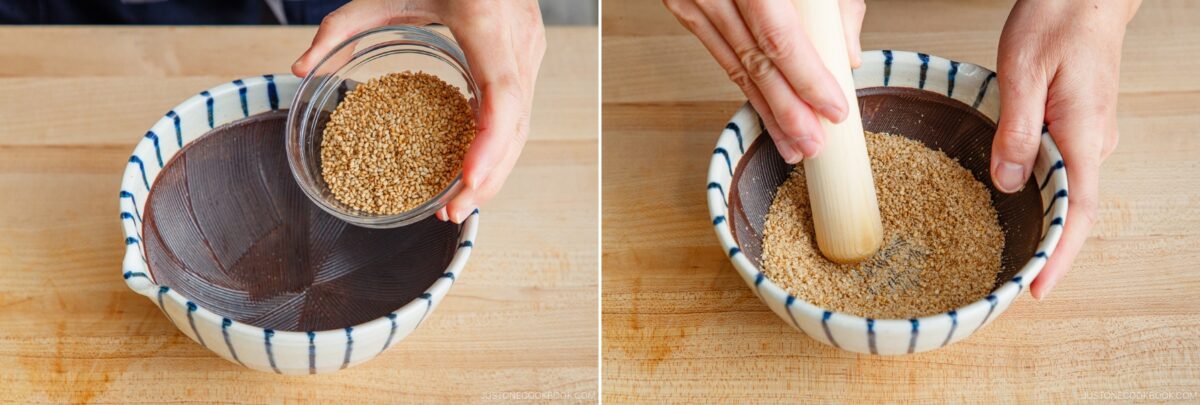
Grind 4 Tbsp toasted white sesame seeds with a mortar and pestle (I use a Japanese suribachi and surikogi). Keep some seeds unground for texture.
Nami's Tip: Freshly ground sesame adds a deeper aroma and richer flavor to the broth. Before grinding, you can develop more fragrance by briefly toast the sesame seeds in a dry pan, shaking frequently, until aromatic.
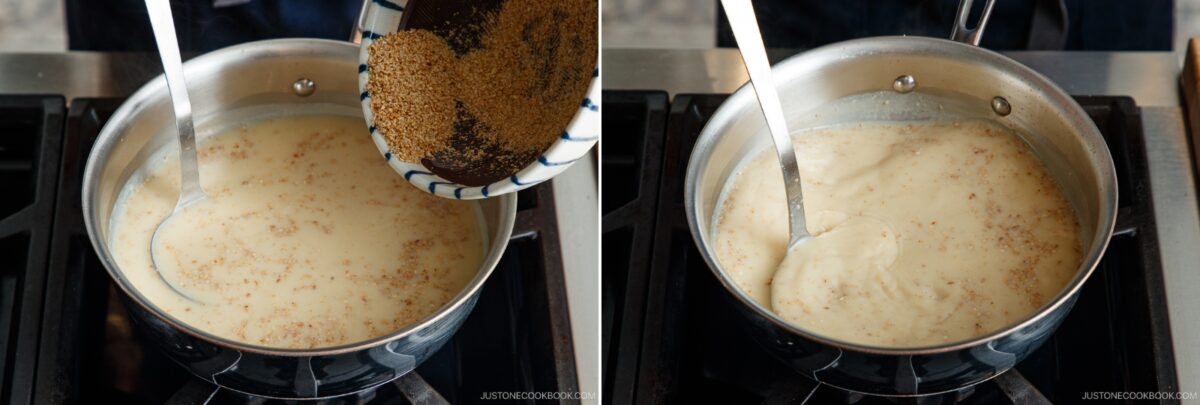
Add half the ground sesame seeds (set aside the rest for garnish). Stir to combine with the soup. Reduce to the lowest setting and cover to keep warm while you prepare the other ingredients.
Nami's Tip: Maintain a gentle simmer to prevent scorching. Soy milk can foam up and boil over quickly if heated too aggressively.
To Cook the Pork Mixture
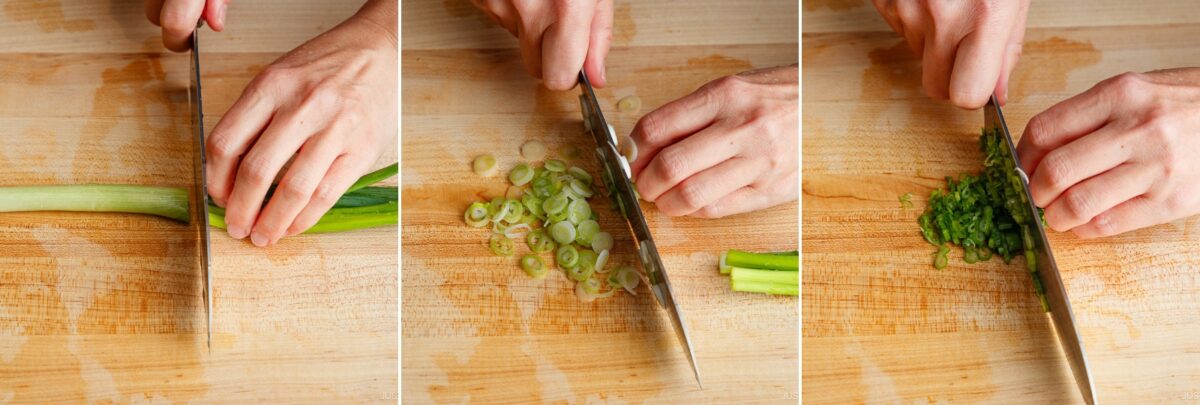
Thinly slice 2 green onions/scallions diagonally. Separate the white and green parts.
Peel and grate 1 inch ginger (I use a ceramic grater). I use about 1 tsp. Preheat a frying pan over medium heat. Add 1 Tbsp toasted sesame oil.
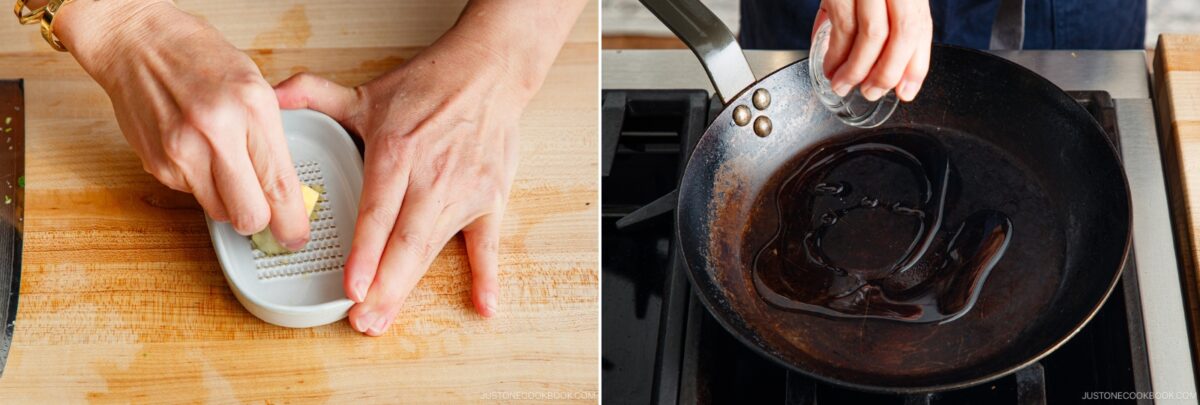
Mince 2 cloves garlic (I use a garlic press) and add to the pan. Add the grated ginger with juice.

Add 2 tsp doubanjiang (spicy chili bean paste). Sauté until fragrant with a spatula.
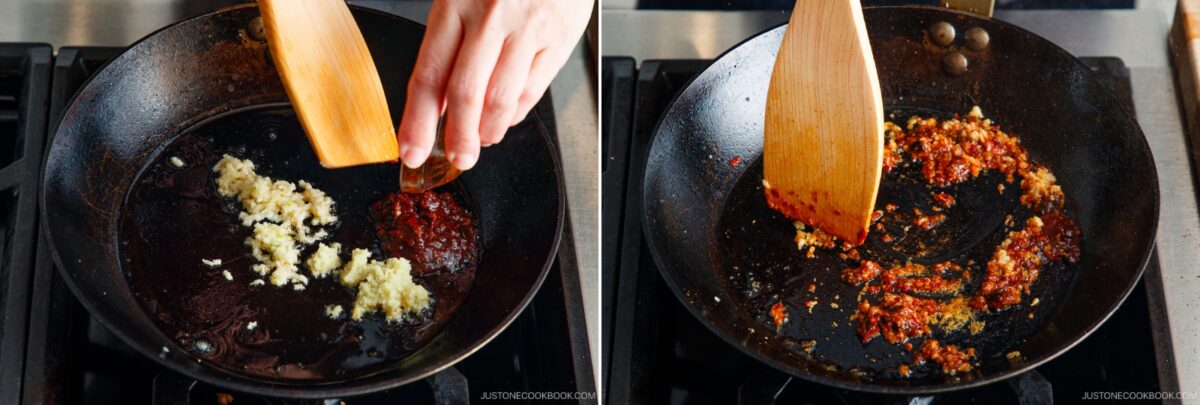
Add the white part of green onion and sauté until wilted.

Add 6 oz ground pork and cook, breaking up the chunks with a spatula. Cook until it's no longer pink.
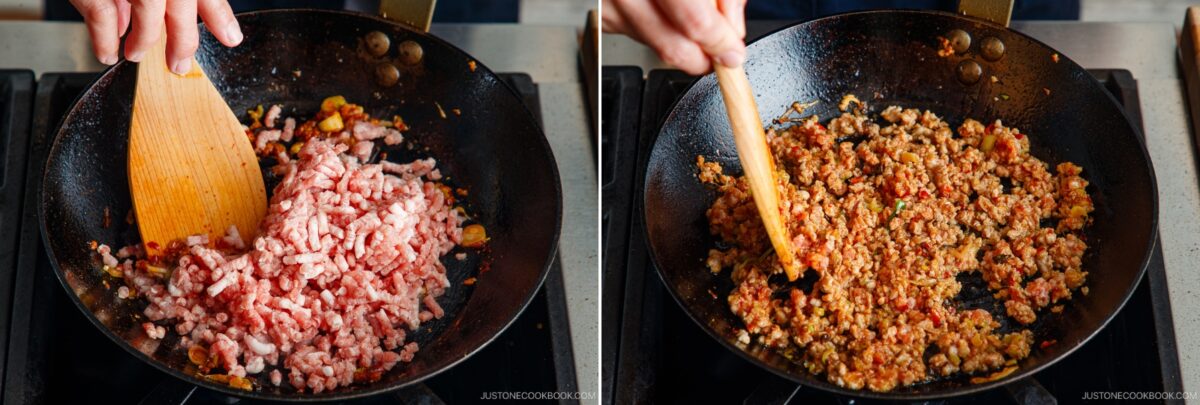
Add most of the green part of the green onion, reserving some for garnish. Stir to combine. Turn off the heat.

To Cook the Bok Choy and Udon
Bring a medium pot of water to a boil. While you're waiting, cut 1 head Shanghai bok choy lengthwise into quarters. Rinse well under cold running water to remove the dirt between the leaves. Drain.
Add the bok choy to the boiling water and blanch until tender, about 1½–2 minutes depending on the thickness. Remove with tongs or a strainer (keep the water boiling for the next step) and dunk the bok choy in a bowl of cold water to stop the cooking. Squeeze out the water when cool enough to handle and set aside.
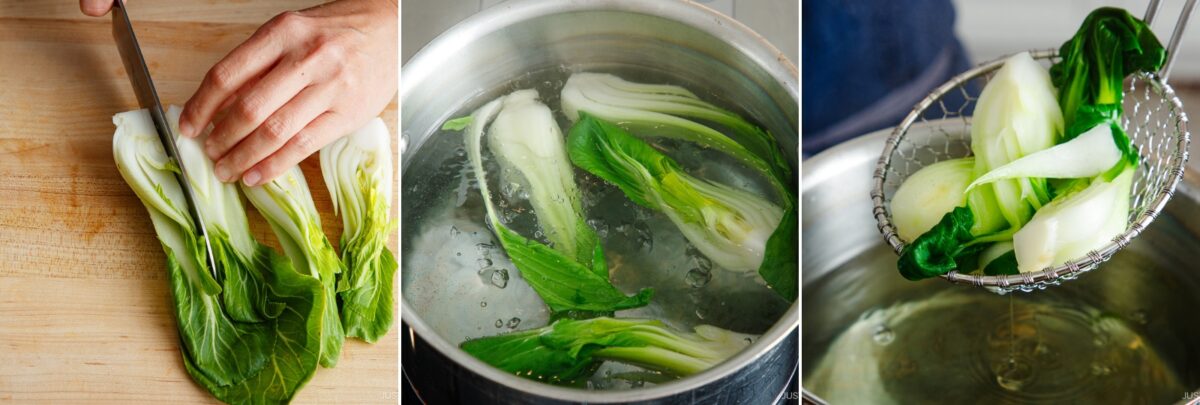
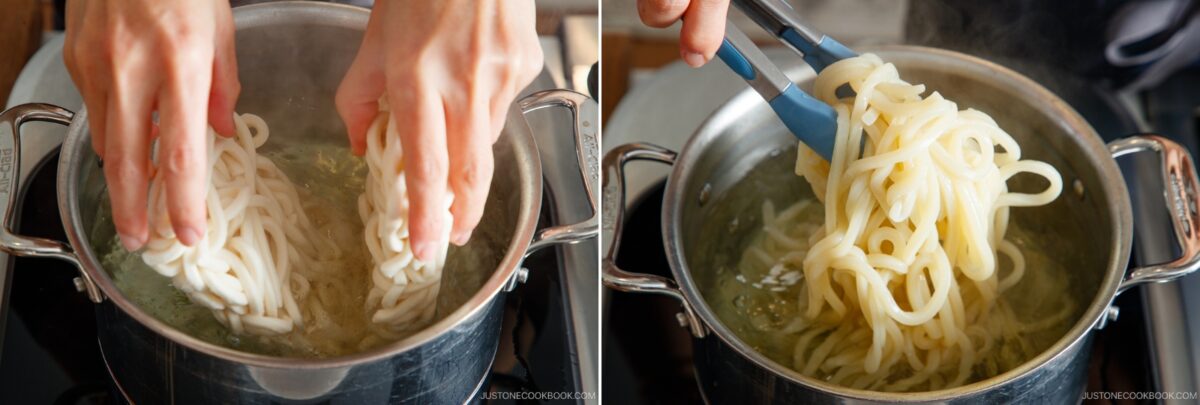
To the same pot of boiling water, add 2 servings udon noodles (frozen; no need to defrost). Heat until loosened; it may take less than the 1-minute cooking time on the package. Then, remove from the pot with tongs or a sieve and serve into individual bowls.
To Serve
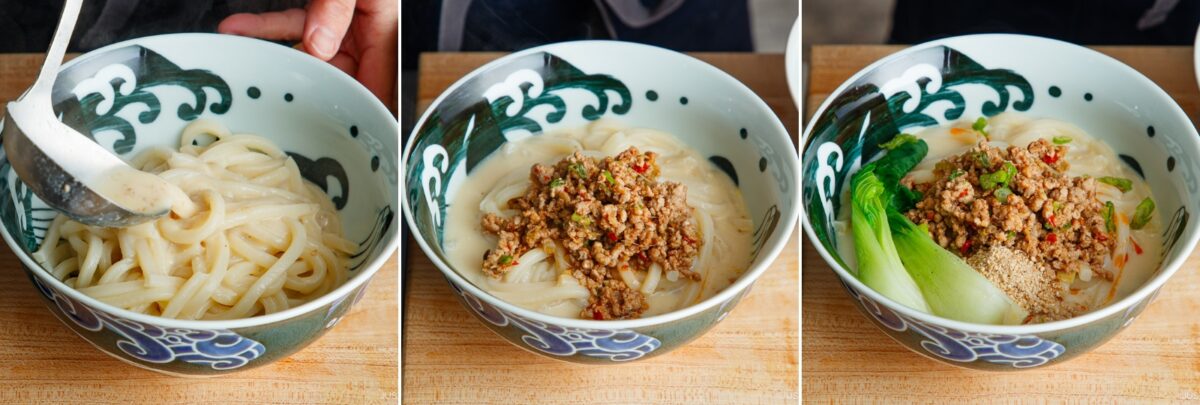
Pour the soup broth into the bowls. Spoon the pork mixture on top. Top with the bok choy and sprinkle with ground sesame seeds and green onions. Serve immediately and drizzle with optional la-yu (Japanese chili oil) at the table. Enjoy!
To Store
Keep the soup broth and pork mixture in separate airtight containers and store in the refrigerator for up to 3 days. You can also freeze the pork mixture up to 3–4 weeks. Cook the frozen noodles right before serving.
Ingredient Notes
- Udon noodles: I highly recommend frozen udon noodles for this recipe. My favorite is thick and chewy Sanuki udon from the freezer section of the Japanese market. If you can’t find it, cook 6.3 oz, 180 g dry udon noodles for 2 servings or 10.6 oz, 300 g Homemade Udon Noodles.
- Ground pork: You can use ground chicken or ground turkey as a lighter alternative.
- Doubanjiang: Use either the spicy or non-spicy type, or use gluten-free doubanjiang.
- Unsweetened soy milk: Use Asian-style soy milk for the right flavor. Western soy milk, even unsweetened, often includes vanilla or natural flavors, while Asian soy milk is typically just soybeans and water for a cleaner, more savory taste.
- Toasted sesame seeds: Since this shortcut recipe doesn’t use sesame paste, feel free to increase the sesame seeds for a fuller sesame flavor.
Variations and Customizations
Looking to change things up? Try these easy and tasty ideas!
- Vegan/vegetarian. Use vegetable stock and replace the pork with firm tofu crumbles or finely chopped mushrooms.
- Change the creaminess. To make the creamy soup lighter or heavier, adjust the chicken stock, soy milk, and ground sesame (or use sesame paste).
- Use your choice of veggies. Top it with spinach, green cabbage, or other vegetables instead of baby bok choy.
- Serve it cold. In the summer, use cold soup broth.
Did you make this recipe?
Tag @justonecookbook on Instagram so we can see your delicious creation!








 English (US) ·