
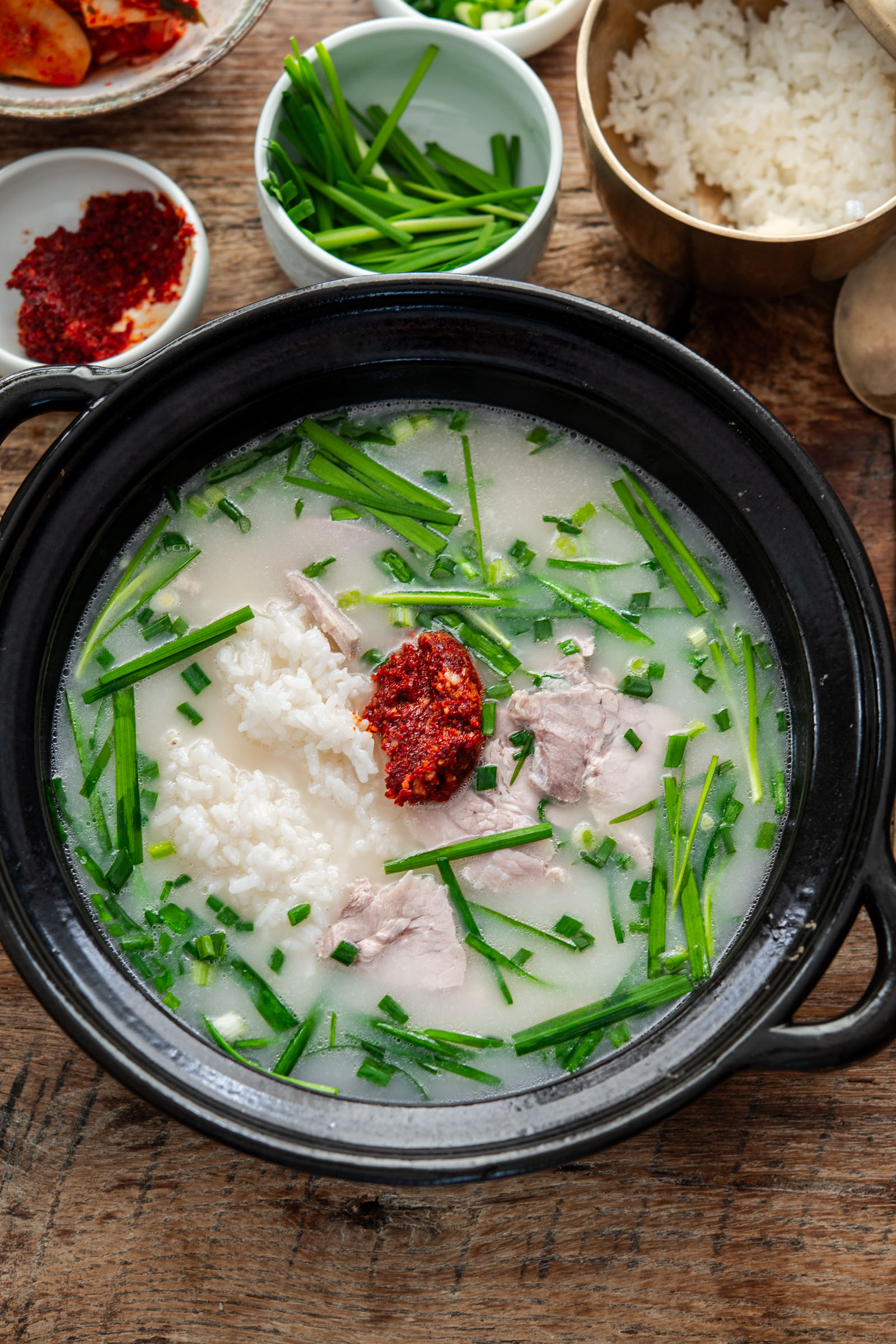
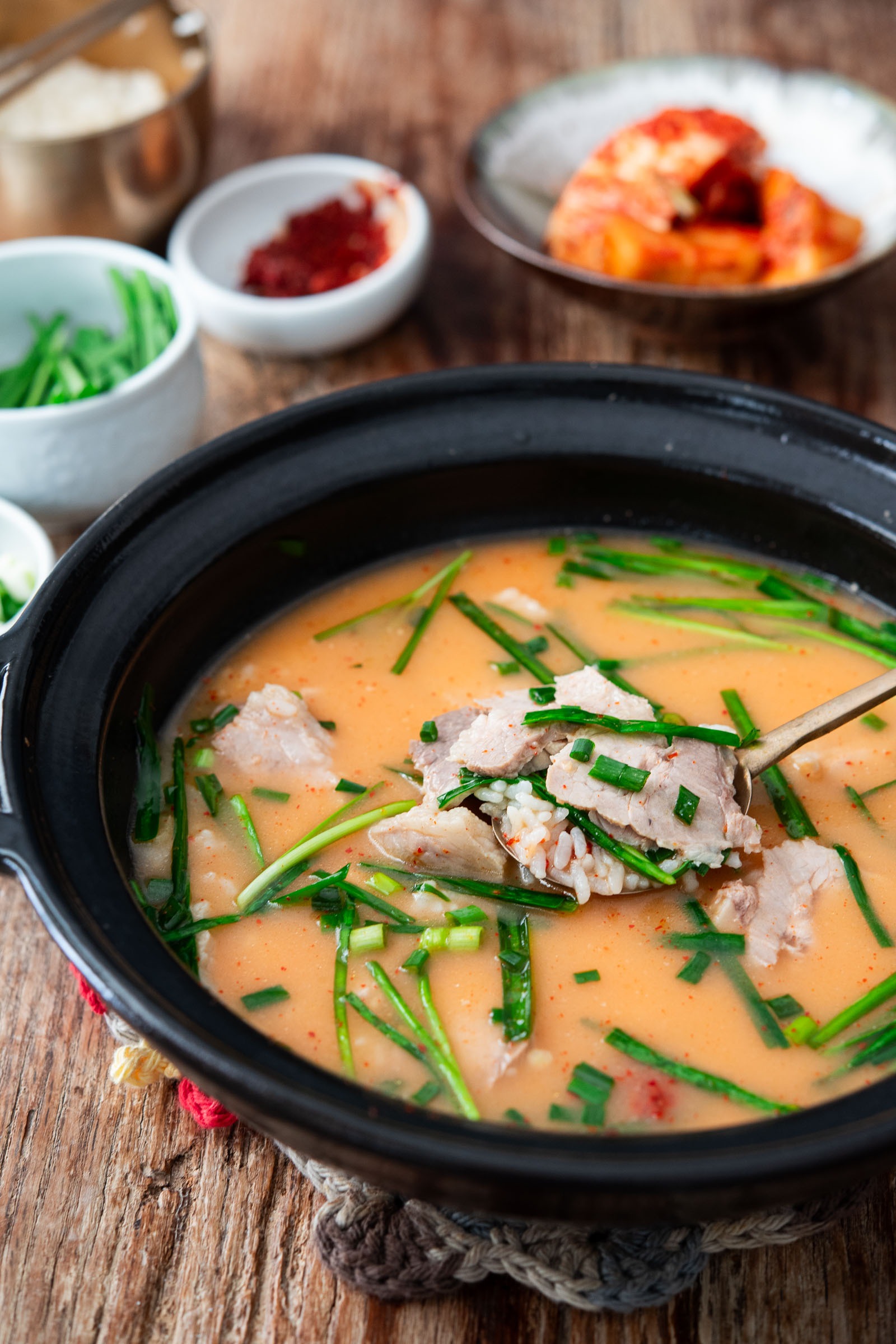
A comforting bowl of dwaeji gukbap (Busan pork rice soup) made the easy way at home. Tender pork shoulder simmers in rich bone broth and is finished with bold dadaegi and fresh garlic chives. This Korean comfort meal comes together in about 40 minutes, perfect for a cozy weeknight dinner with rice.
Get new recipes via email:
Thank you for subscribing!
One of the most memorable dishes from our family food trip to Busan was dwaeji gukbap (돼지국밥), a pork bone broth soup served with rice. My husband and I took our grown-up kids there to explore local foods, and this steaming bowl of pork soup quickly became a favorite.
The milky pork broth came topped with tender pork slices, garlic chives, and a bright red spoonful of chili sauce. I stirred in rice, took a bite, and instantly understood why Busan locals love it so much. My American son finished his bowl and declared it his new favorite Korean dish.
Back home, I wanted to recreate that comforting bowl. The challenge is that traditional dwaeji gukbap broth simmers for hours using pork bones, similar to the slow process used for my Korean ox bone soup (seolleongtang).
For a practical home version, I start with a good quality bone broth and simmer pork shoulder to build flavor. The soup turns rich and savory without the all-day cooking. Add a spoonful of homemade dadaegi chili sauce and fresh chives on top, and the bowl tastes surprisingly close to the Busan classic.
If you enjoy making broth from scratch, you can follow my Instant Pot Seolleongtang Method and simply swap pork bones for beef bones.
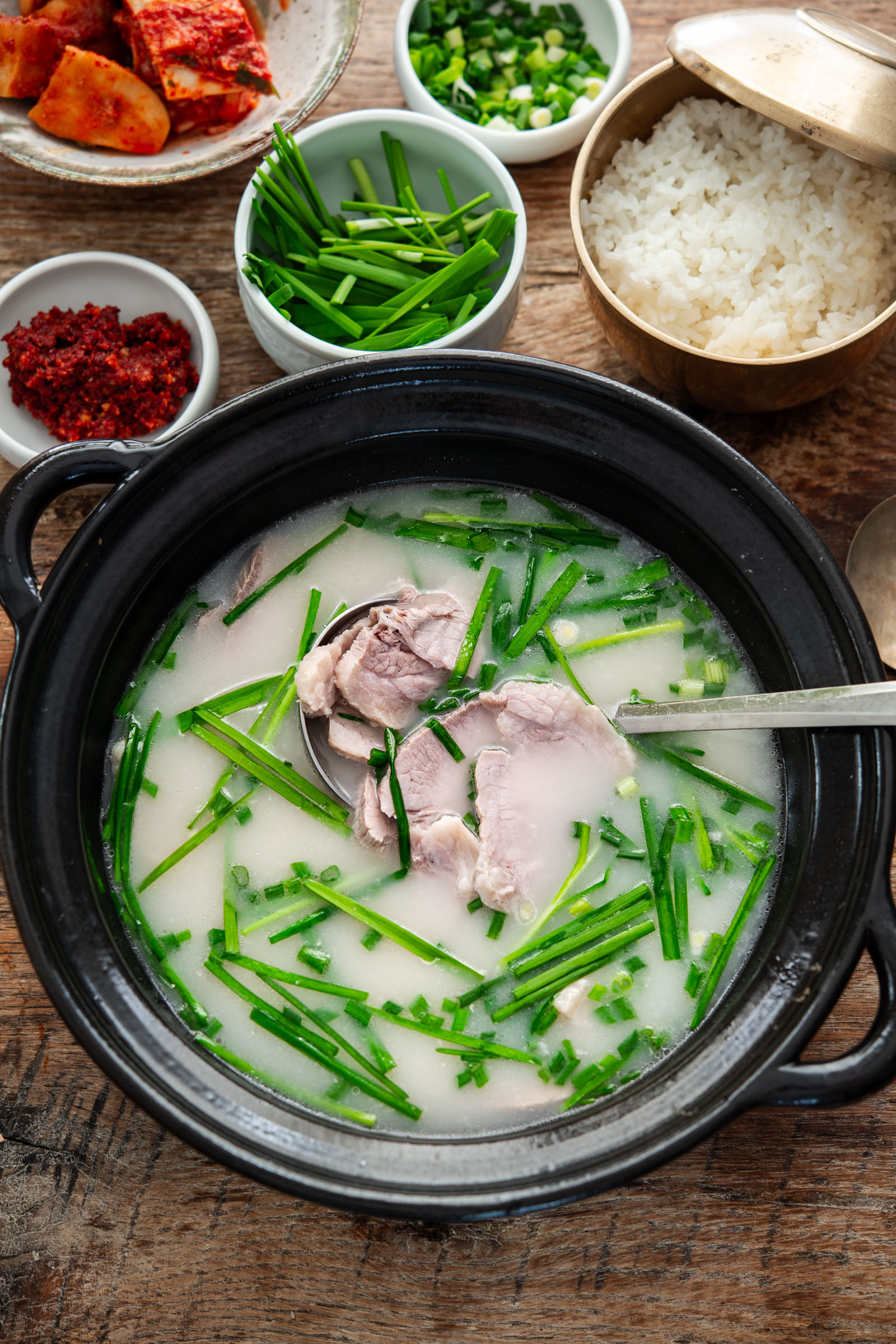
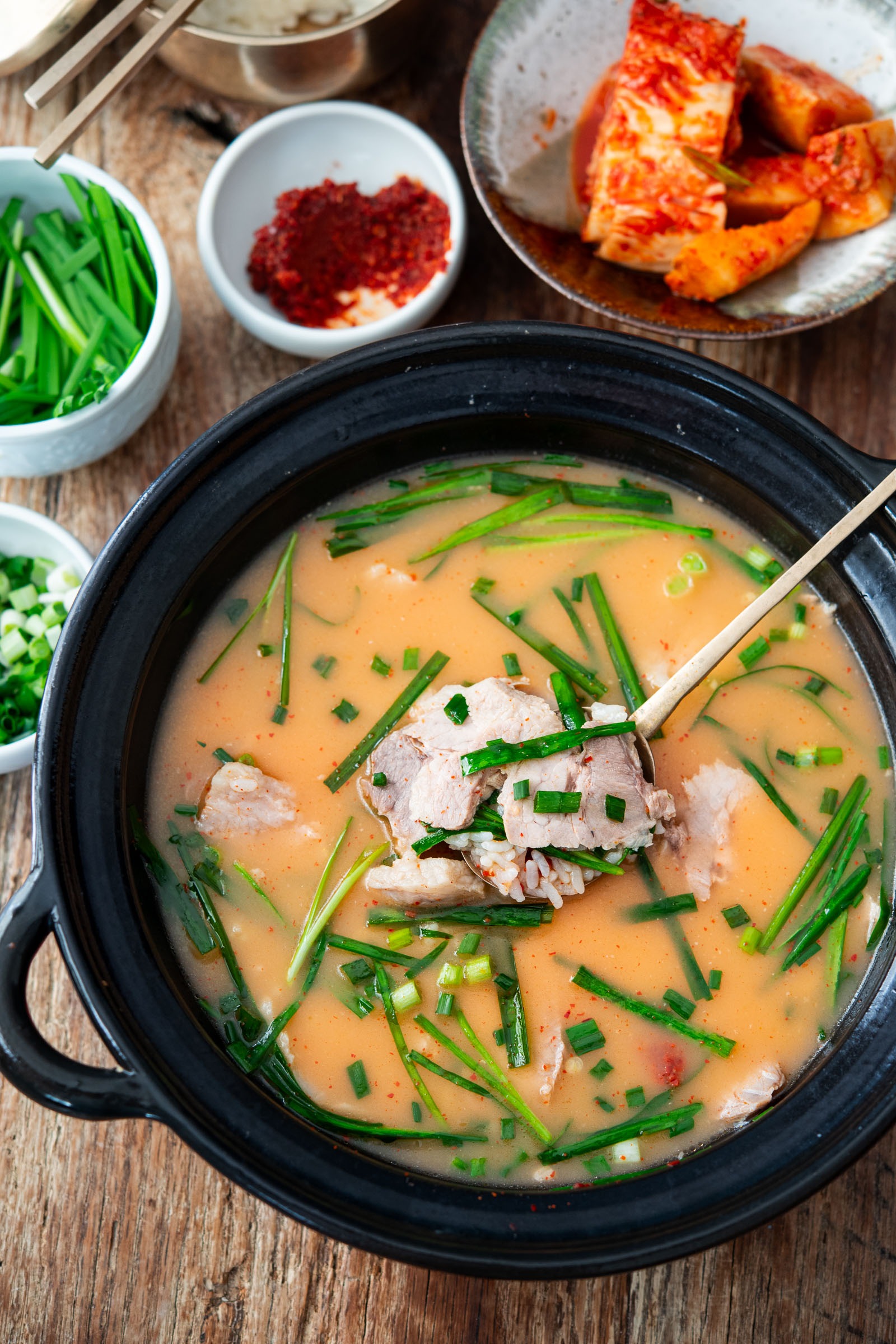 Tender pork, rice, and garlic chives in a milky broth. This is the comforting bowl Busan calls dwaeji gukbap.
Dwaeji Gukbap vs Seolleongtang: What’s the Difference?
Both dishes belong to the Korean gukbap tradition, which simply means “soup with rice.” Serve a bowl of rice with the hot broth, mixing it into the soup or eating it alongside.
The main difference comes from the bones used for the broth. Seolleongtang is made by simmering beef bones for many hours until the broth turns milky and rich. Dwaeji gukbap uses pork bones instead, giving the soup a deeper pork flavor.
They season the two soups differently. People usually serve seolleongtang plain and add salt, pepper, and green onion at the table. In Busan, cooks top dwaeji gukbap with dadaegi (다대기), a spicy chili paste that melts into the broth as you eat. They add fresh garlic chives and sometimes saeujeot (salted shrimp) to deepen the flavor.
Different ingredients and seasoning, but the same comforting idea: a hot bowl of bone broth and rice that Koreans have loved for generations. Another classic Korean beef broth soup is galbitang, a clear short rib soup known for its clean, deeply savory flavor.
Choosing the Right Broth
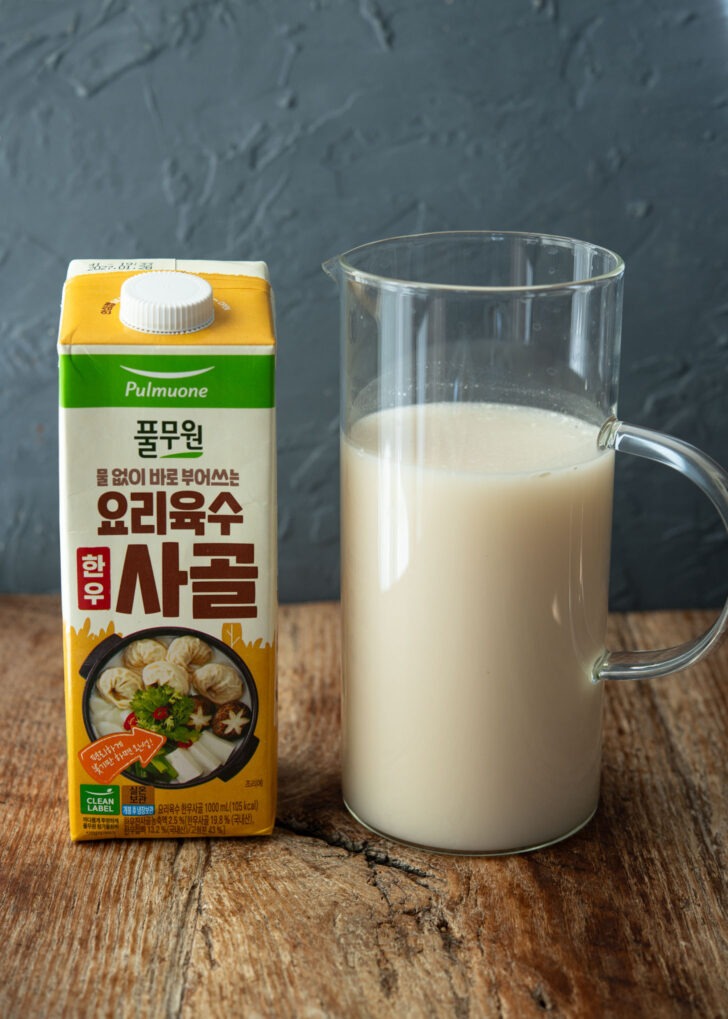 Store-bought bone marrow broth makes a rich shortcut base for quick dwaeji gukbap at home.
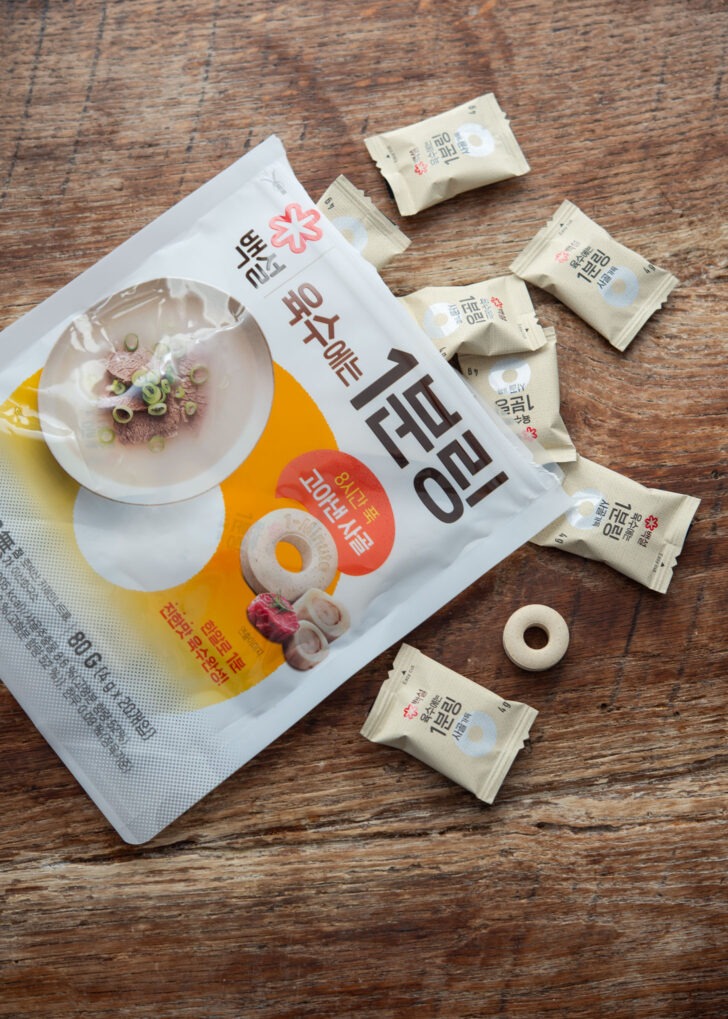 Korean stock coins (sagol broth tablets) dissolve in hot water to create an instant soup base.
For an easy home version of dwaeji gukbap, a good quality store-bought bone broth works surprisingly well. Many Korean markets now sell packaged bone marrow broth that you can simply pour into a pot and heat. It saves hours of simmering while still giving the soup a rich, milky base.
Another convenient option is Korean stock coins (sagol). These small concentrated broth tablets dissolve quickly in hot water and create an instant soup base. Just drop a few coins into simmering water and you have a flavorful broth ready for the pork and toppings.
Of course, if you already have homemade bone broth tucked away in the freezer, this is a perfect dish to use it. A frozen batch of pork or beef bone stock will add even deeper flavor to the soup.
Whichever base you choose, the broth is only the starting point for building the flavor of the bowl.
Dadaegi (The Chili Topping)
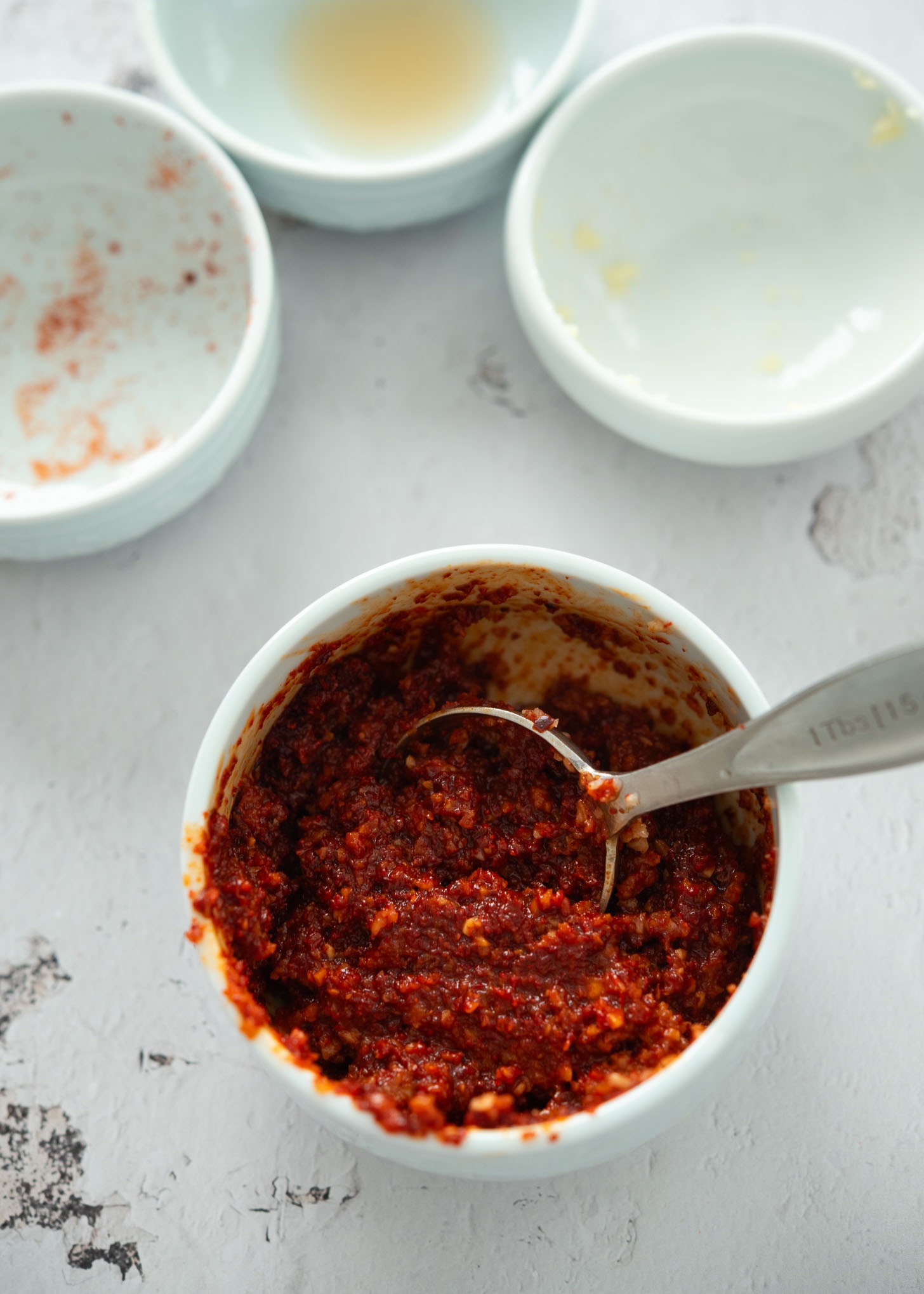 Dadaegi chili topping for seasoning dwaeji gukbap
A bowl of dwaeji gukbap is usually finished with dadaegi (다대기), a spicy chili topping stirred into the soup just before eating. The broth itself is mild and savory, so the chili paste adds depth, heat, and color.
My simple version mixes gochugaru (Korean chili flakes), garlic, tuna sauce, and black pepper. When a spoonful melts into the hot broth, it turns the soup a light orange and gives the pork broth a deeper, slightly spicy flavor.
In Busan restaurants, dadaegi is often served on the side so diners can season their bowl to taste. Start with a small spoonful and add more as you like. Along with fresh garlic chives, it is what gives dwaeji gukbap its distinctive character.
How I Make Quick Dwaeji Gukbap at Home
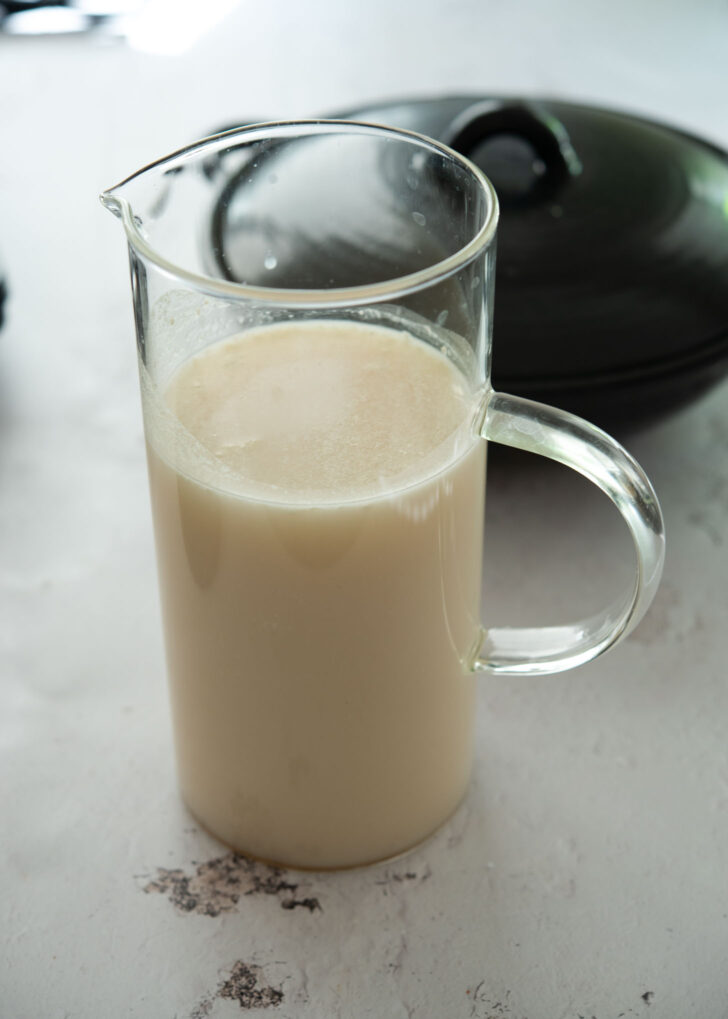
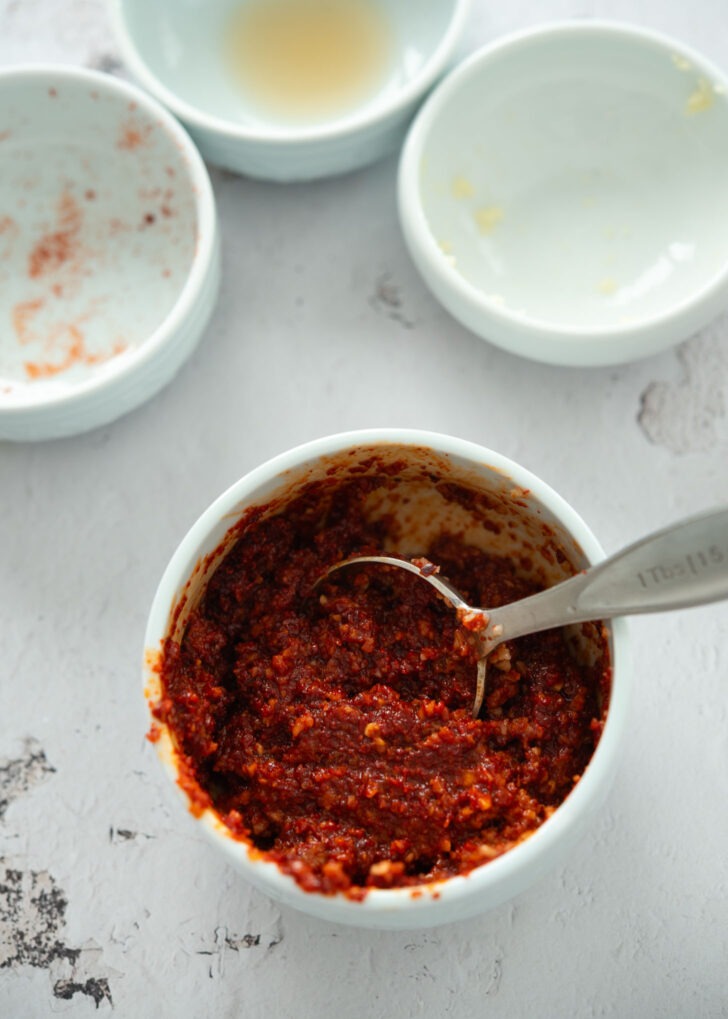
Start by heating a good quality bone marrow broth. While the broth heats, mix a simple dadaegi with gochugaru, garlic, tuna sauce, and black pepper.
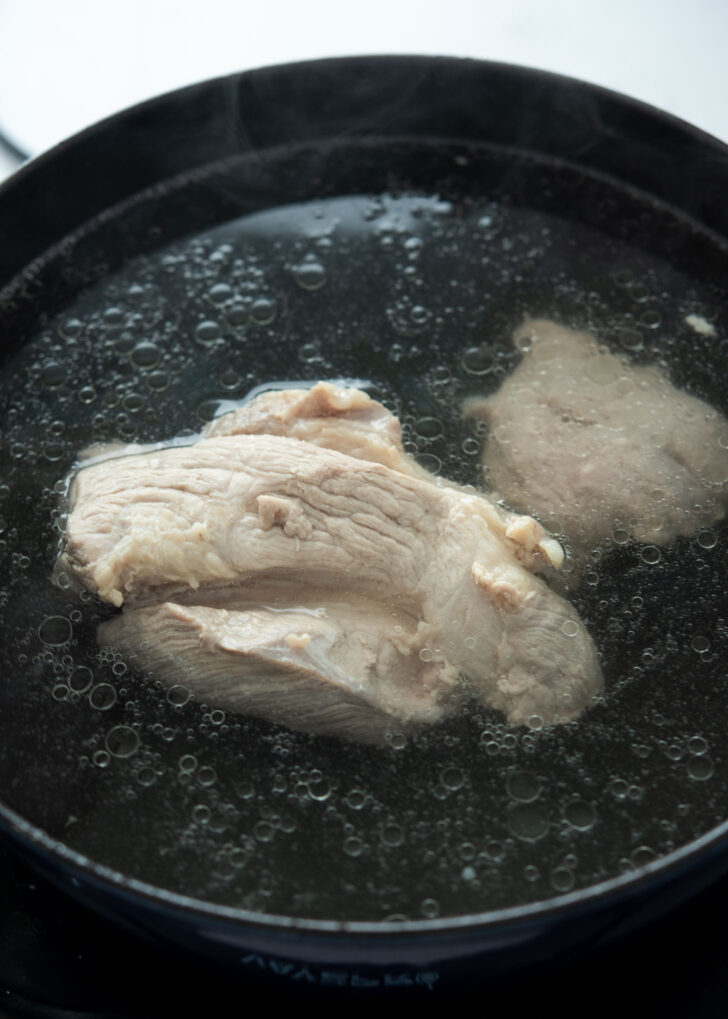
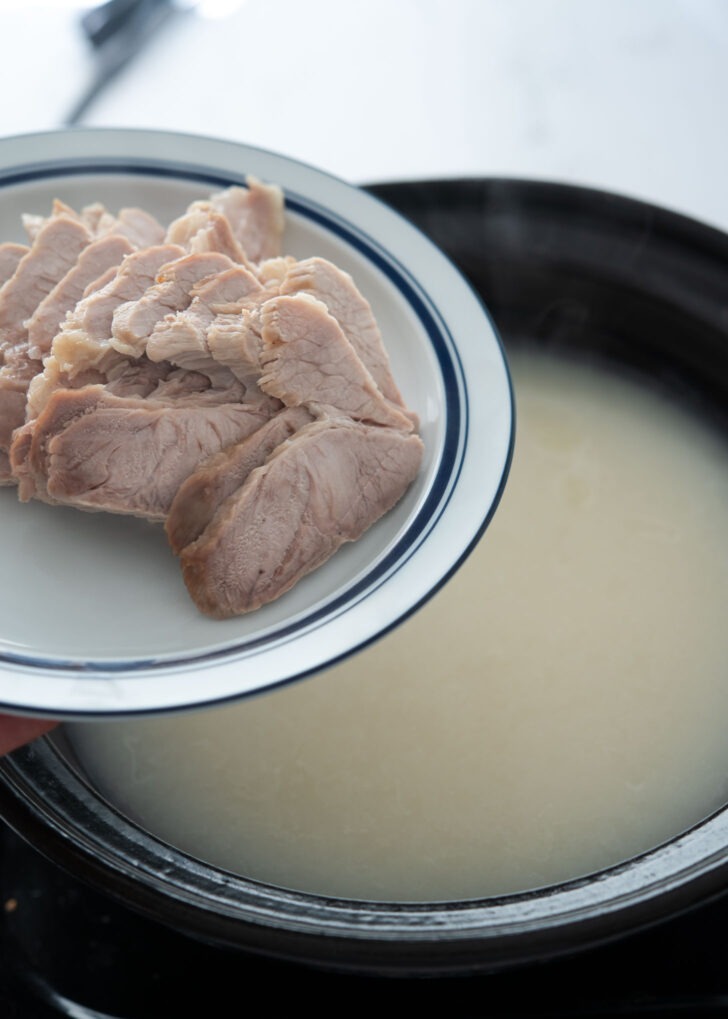
Meanwhile, briefly boil a chunk of pork shoulder in salted water, then let it rest covered so the meat stays tender. Slice the pork and add to the hot broth just before serving. That’s all the cooking. The final flavor comes from seasoning the gukbap at the table.
How Koreans Season Their Gukbap
Gukbap is usually served with a mild broth so diners can season the soup to their own taste. At the table, Koreans commonly add dadaegi (chili topping), sliced garlic chives, green onion, and a little saeujeot (salted shrimp) to deepen the flavor.
Start with a small amount and adjust as you eat. A spoonful of chili paste adds heat and color, while saeujeot brings a subtle salty umami that lifts the pork broth. This custom seasoning is part of the gukbap experience, letting each person build their bowl exactly the way they like it.
Like most Korean soups, I serve dwaeji gukbap with homemade napa cabbage kimchi. In Busan, restaurants serve it with kkakdugi (Korean radish kimchi) on the side.
Korea has many comforting broth soups built around simple, nourishing broths. Another well-known bowl is samgyetang, the ginseng chicken soup Koreans traditionally eat during the hottest days of summer.
Love this recipe? Rate it and share your experience in the comments below! On Instagram? Tag me to showcase your creation. For more delicious recipes, subscribe to our newsletter!
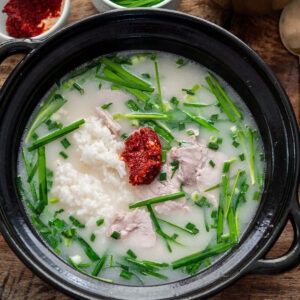
Busan Pork Rice Soup (Dwaeji Gukbap)
Servings: 4 servings
Cook Time: 45 minutes
Total Time: 45 minutes
Busan-style pork rice soup made with tender pork shoulder, rich bone broth, and spicy dadaegi chili topping. A quick home version of Korea’s famous gukbap comfort soup.
- 8 cups (2 liters) bone broth, see note
- 1½ lb (680 g) pork shoulder
- 3½ oz (100 g) Asian garlic chives, diced
- 3 green onion, finely chopped
- 2 tbsp salted shrimp, optional
- salt & pepper, to taste
- 3-4 cups (600-800 g) cooked rice, for serving
Heat the broth: Pour the bone broth into a pot and bring to a gentle simmer over medium heat.
Make the dadaegi: In a small bowl, mix gochugaru, minced garlic, tuna sauce, and black pepper until combined. Set aside.
Cook the pork: Bring a separate pot of water to a boil. Add salt and pork shoulder. Boil for 10–12 minutes, then turn off the heat, cover, and let the pork rest in the hot water for 30 minutes until tender. Remove the pork and let it cool slightly. Slice thinly against the grain.
Assemble the soup: Divide the hot broth into serving bowls. Add sliced pork and a portion of cooked rice to each bowl.
Add toppings and serve: Top with garlic chives, green onion, and a spoonful of dadaegi. Season with salted shrimp, salt, and pepper to taste. Serve hot.
For the broth, use a good quality bone broth for the best flavor. Packaged bone marrow broth or Korean sagol stock (coin broth tablets) both work well for this recipe.
If using sagol stock coins, dissolve them in hot water according to package instructions before adding the pork.
You can also use homemade bone broth if you have some stored in the freezer., for serving
Calories: 387kcal, Carbohydrates: 12g, Protein: 55g, Fat: 15g, Saturated Fat: 5g, Polyunsaturated Fat: 3g, Monounsaturated Fat: 6g, Cholesterol: 114mg, Sodium: 1739mg, Potassium: 1045mg, Fiber: 6g, Sugar: 2g, Vitamin A: 5565IU, Vitamin C: 20mg, Calcium: 124mg, Iron: 5mg
Tag @beyondkimchee on Instagram. I love to see your masterpiece.








 English (US) ·