
 1 month ago
42
1 month ago
42
Hyogo is one of Japan’s major sake-producing prefectures, especially because of Nada Gogo. Its sake culture grew from water, rice, winter climate, ports, and brewer’s craft. The best-known examples often taste dry, firm, and clean. Inland breweries may show softer rice flavor, broader umami, or a gentler finish. This range matters because Hyogo sake should not be reduced to one style.
To understand Hyogo sake, it helps to begin with three elements. Nada Gogo provides the historic coastal brewing center. Yamadanishiki gives brewers a premium sake rice with strong polishing potential. Miyamizu adds mineral-rich brewing water from Nishinomiya. Together, these factors explain why Hyogo is famous for sake. For basic terms, see the Japanese sake guide and the Types of Japanese Sake overview.
TOC
Quick Summary of Hyogo Sake
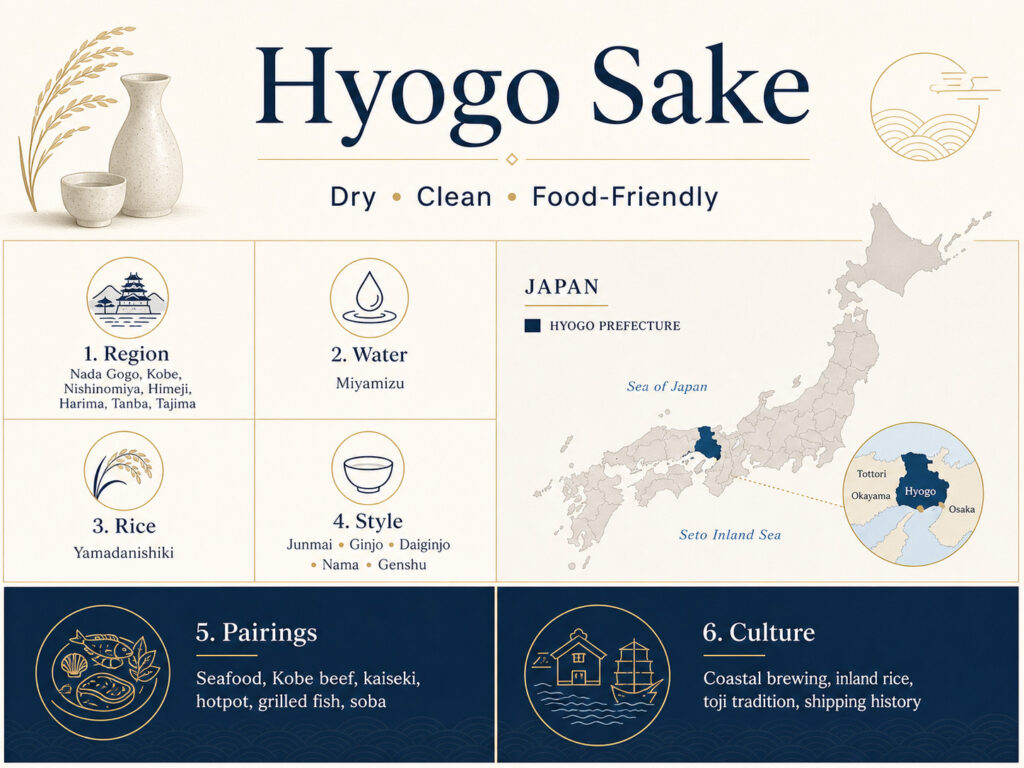
| Item | Summary |
| Region | Hyogo Prefecture, especially Nada Gogo, Kobe, Nishinomiya, Himeji, Harima, Tanba, and Tajima |
| Famous for | Nada Gogo, Yamadanishiki, Miyamizu, and large-scale brewing heritage |
| Water type | Miyamizu is mineral-rich hard water or semi-hard water from Nishinomiya |
| Major brewing center | Nada Gogo, spread across Kobe and Nishinomiya |
| Famous sake rice | Yamadanishiki, a leading premium sake rice |
| Flavor trend | Dry, structured, clean, balanced, and food-friendly |
| Key styles | Junmai, Ginjo, Daiginjo, Junmai Ginjo, Honjozo, nama, and genshu |
| Best pairings | Seafood, Kobe beef, Hyogo cuisine, kaiseki, hotpot, grilled fish, and soba |
| Cultural background | Coastal brewing, inland rice culture, toji traditions, and sake shipping history |
In practical terms, Hyogo sake is traditional Japanese sake shaped by local geography and skill. The prefecture links coastal brewing, inland rice fields, and old trade routes. That combination gives the local sake culture a clear regional identity.
What Is Hyogo Sake?
Hyogo sake refers to Japanese sake brewed in Hyogo Prefecture. The most famous production area is Nada Gogo, a group of five historic districts along the coast. These districts include areas in Kobe and Nishinomiya. The name appears often in sake history because Nada supplied large urban markets.
The classic image of Hyogo sake is dry, firm, and clean. This image comes mainly from Nada. Miyamizu supports active fermentation, while cold seasonal conditions help brewers control the mash. Yamadanishiki also helps premium sake production, especially in Ginjo and Daiginjo styles.
Still, Hyogo sake is broader than Nada alone. Himeji and Harima connect sake with castle town culture and rice-growing areas. Tanba and Tajima connect brewing with toji traditions and inland climates.
What Makes Hyogo Sake Unique?
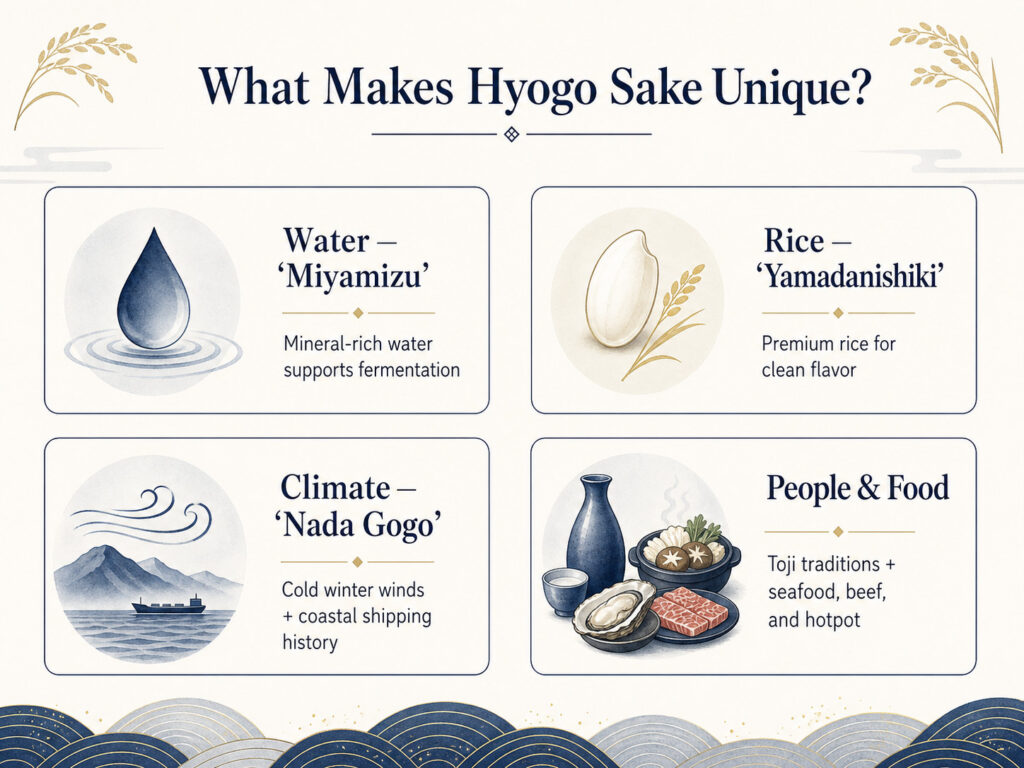
Hyogo sake is distinctive because several brewing advantages meet in one prefecture. Water comes first. Miyamizu from Nishinomiya contains minerals that support vigorous fermentation. This explains how Miyamizu affects sake and why many Nada bottles feel firm.
Rice matters just as much. Hyogo is closely associated with premium sake rice, especially Yamadanishiki. Brewers value the grain because it polishes well and ferments steadily. It also supports clear flavor and stable aroma. For more background, see the Food in Japan guide to sake rice.
Climate adds another layer. Nada Gogo sits between the Rokko mountains and the Seto Inland Sea. Cold winter winds from the mountains help fermentation. The coastal location also helped breweries ship sake during the Edo period. Geography shaped production before modern logistics existed.
Toji traditions shaped the human side. Tanba Toji and Tajima Toji built reputations for discipline and careful work. Their labor connected inland villages with coastal breweries. Echigo Toji often appear in national sake discussions too. In Hyogo, local toji culture deserves close attention.
Food culture completes the picture. Hyogo cuisine includes seafood, beef, mountain vegetables, soba, and local hotpot dishes. A clean finish works well with that range. This food connection helps explain how sake developed across coastal and inland areas.
Nada Gogo: The Coastal Core of Hyogo Sake
Nada Gogo means the five brewing districts of Nada. They are Nishigo, Mikage-go, Uozaki-go, Nishinomiya-go, and Imazu-go. The area extends along the coast from Kobe toward Nishinomiya. It became one of Japan’s best-known brewing centers.
How Nada Gogo became a major brewing district starts with geography. The district had suitable water, nearby rice, winter winds, and access to ports. Brewers could ship sake to Osaka and Edo by sea. This practical advantage mattered greatly in the Edo period.
What makes Nada sake unique is not only scale. It is the combination of hard water brewing and accumulated technique. Miyamizu encourages strong yeast activity. Brewers then guide that power through temperature, koji, and timing. The goal is structure, not roughness.
Nada often appears beside Fushimi in Kansai sake comparisons. Fushimi is usually softer and rounder. Nada tends to feel drier and more assertive. Readers can compare regional context through Food in Japan’s Nada Gogo sake guide and Kyoto food overview.
How Local Water Influences Hyogo Sake
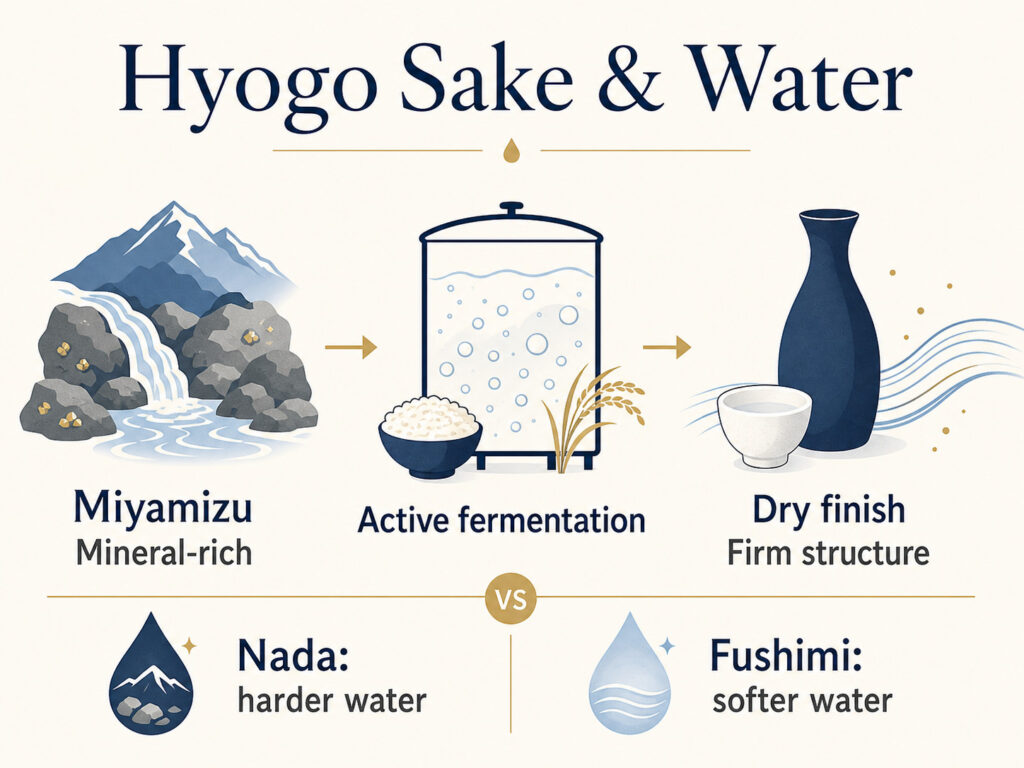
Water is one of the clearest ways to understand Hyogo sake. Miyamizu rises in Nishinomiya and carries minerals from the Rokko area. Brewers have long valued it because it helps yeast work actively. In sake terms, this supports steady fermentation and a dry finish.
Hard water brewing can produce firm sake. It can also produce rough sake if the brewer loses control. This is why Nada brewing depends on skill as much as water. Mineral-rich water gives energy to the mash. The brewer’s craft decides how that energy becomes flavor.
A clean finish is not the same as a thin taste. Many Nada examples carry rice flavor and mineral tension. The finish then clears quickly. This makes the sake useful at the table, especially with salty seafood or rich meat.
Fushimi gives a useful contrast. Its soft water often supports a smoother and gentler profile. Nada’s harder water tends to support a firmer frame.
How Yamadanishiki Shapes Sake Flavor
Yamadanishiki is central to Hyogo sake because it gives brewers flexibility. The grain has a large starchy center, known as shinpaku. This structure helps the rice handle polishing. It also makes the rice useful for premium sake production.
How Yamadanishiki shapes sake flavor depends on polishing and fermentation. In Ginjo and Daiginjo styles, it can support clear aroma and refined texture. In Junmai styles, it may show more rice depth and savory balance.
Hyogo is associated with premium sake rice because Yamadanishiki developed strongly in the prefecture. Harima and nearby inland areas matter here. Their basin-like landscapes and agricultural conditions support high-quality rice cultivation. The result links farm geography with brewery identity.
Yamadanishiki does not make excellent sake by itself. Koji, yeast, water, and fermentation control still matter. A careful brewery can use the rice to create elegance. A less careful process can still blur the result. This is why sake rice should be seen as potential, not a guarantee.
Water, Rice, Koji, and Brewer’s Craft
Sake begins with rice, water, koji, and yeast. In Hyogo, each ingredient has a strong local story. Miyamizu gives structure. Yamadanishiki gives polishing potential. Fermentation turns those materials into flavor, aroma, and alcohol.
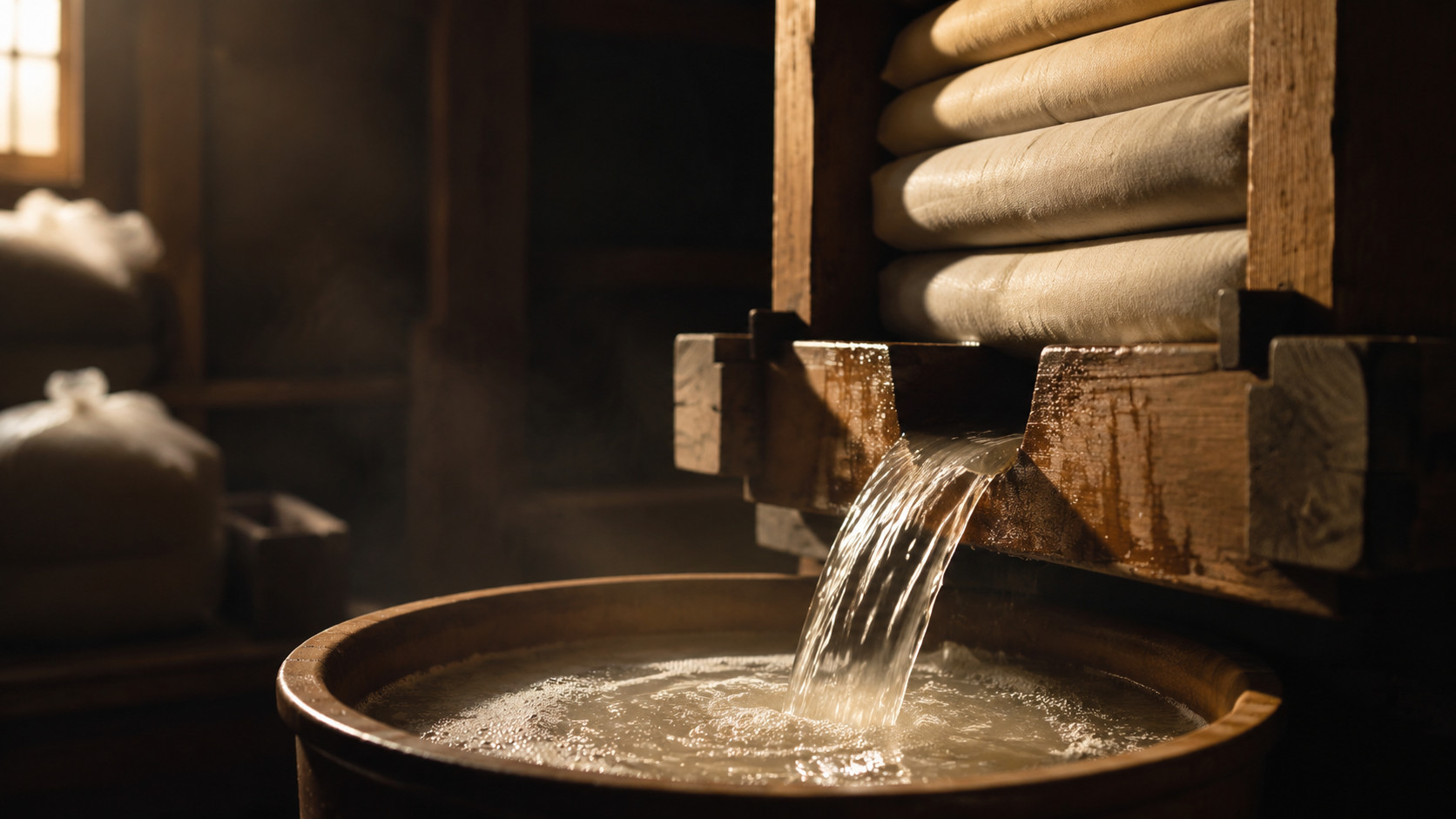
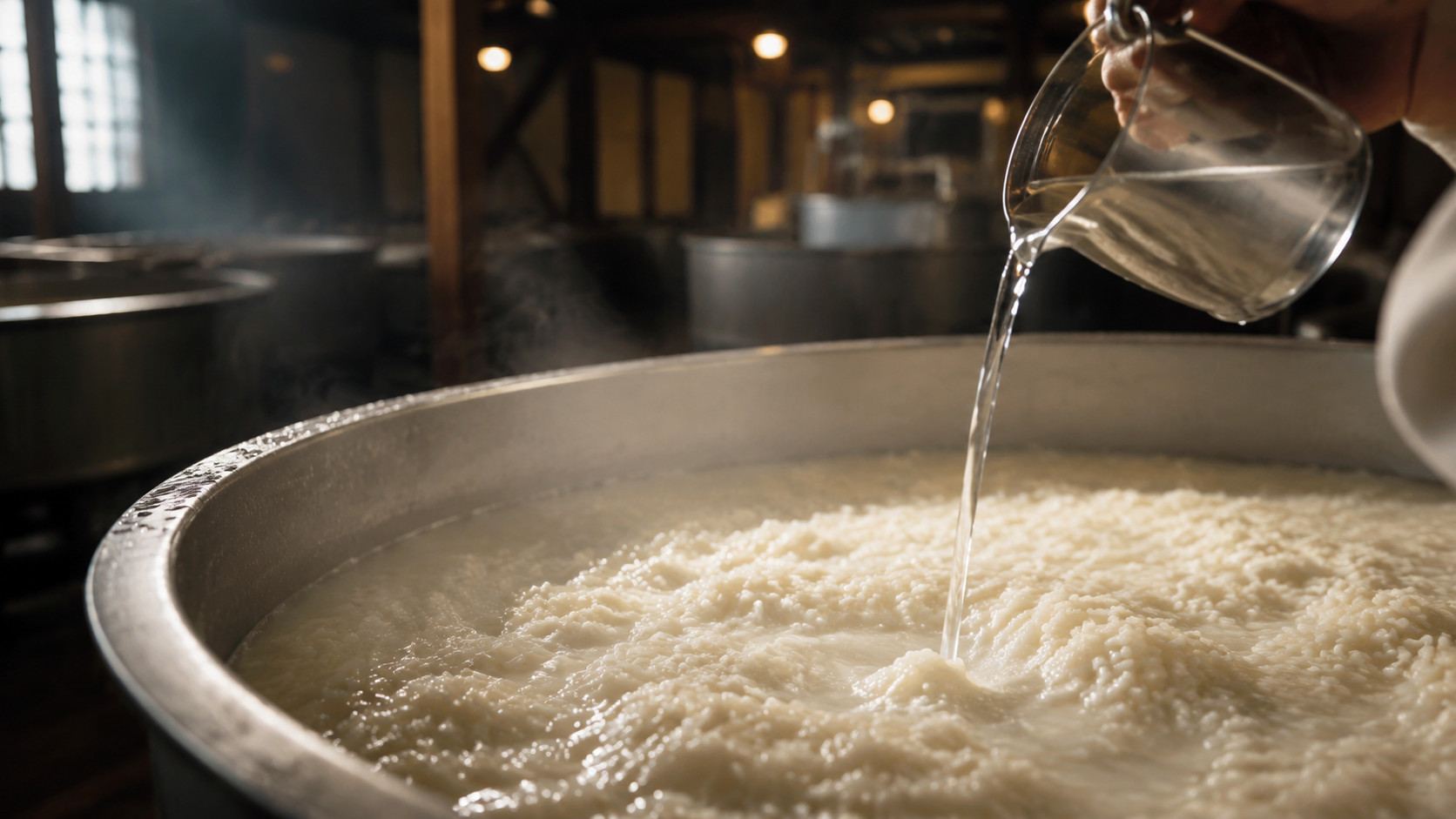
Koji remains central. Food in Japan explains the broader brewing process in its how sake is made guide. Koji mold converts rice starch into sugar. Yeast then turns that sugar into alcohol and aroma. The process sounds simple at first. In practice, every batch needs judgment.
Brewer’s craft appears in small decisions. The koji room needs heat and humidity control. A starter must develop cleanly. Main fermentation must move at the right pace. A few degrees can change the final impression.
This is especially true in hard water brewing. Miyamizu can push fermentation forward. Brewers must keep that movement controlled. When the balance works, the sake feels energetic but clean.
Hyogo Sake Flavor Profile and Characteristics
Hyogo sake flavor profile depends on the subregion. Nada sake often shows a dry taste, medium body, and firm structure. It can feel crisp at first. Rice flavor and mineral tension often appear next.
A classic expression of Hyogo’s brewing heritage is called otoko-zake. The phrase means “male sake” in older regional language. Today, it mainly points to dryness and strength. Some readers may find the term dated. Still, it remains common in sake history.
Junmai from Hyogo can show rice depth and savory balance. Ginjo may bring apple, melon, pear, or light floral notes. Daiginjo often emphasizes polish, fragrance, and a clean finish. Warmed sake also suits some Nada styles.
Not every bottle tastes powerful. Modern breweries make lighter sake too. Some release sparkling, low-alcohol, or aromatic styles. Even so, many Hyogo examples still value balance, clarity, and food compatibility.
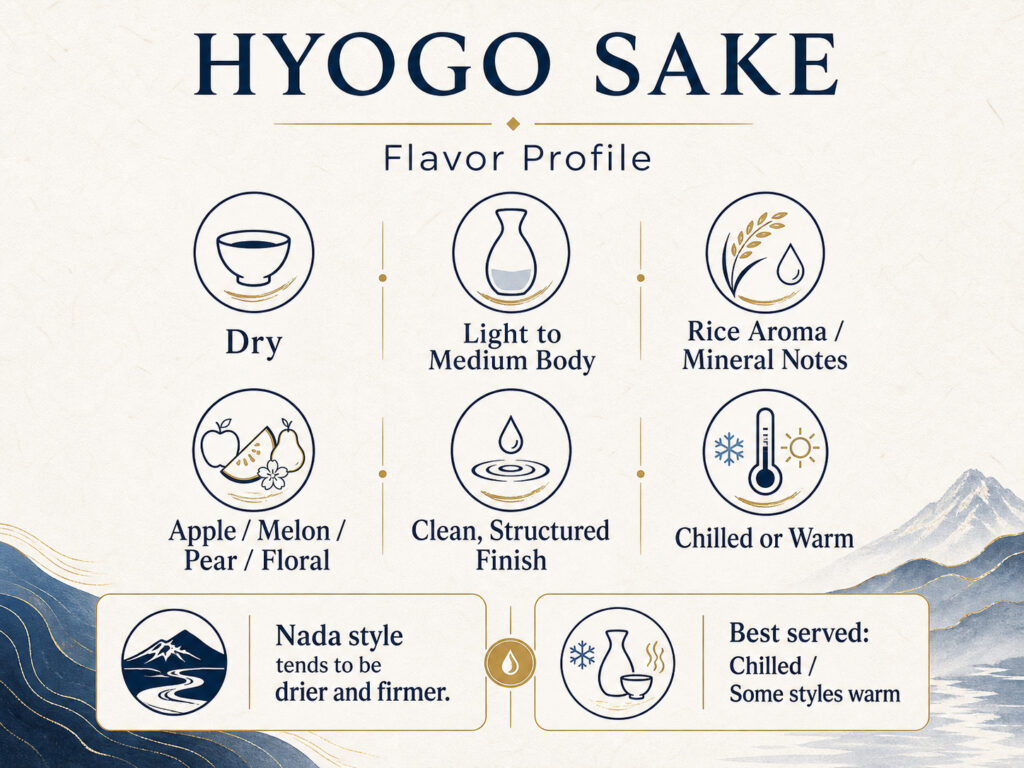
| Character | Typical Hyogo expression |
| Sweetness | Usually dry to gently sweet, depending on style |
| Body | Light-medium to medium, with firmer Nada examples |
| Aroma | Rice, mineral, apple, melon, pear, or gentle floral notes |
| Texture | Clean, structured, sometimes rounded in inland styles |
| Finish | Clean finish, often dry and food-friendly |
| Serving style | Chilled for Ginjo, room temperature or warm for some Junmai and Honjozo |
Hyogo Sake by Subregion
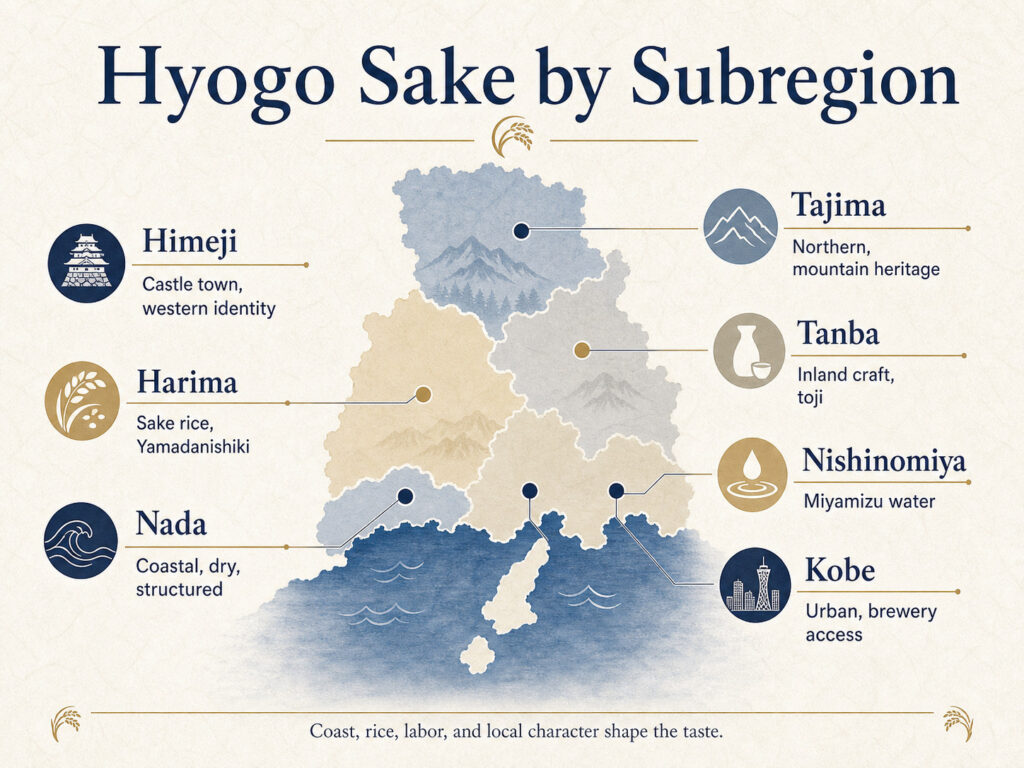
Hyogo’s geography is varied, so subregion matters. The prefecture includes coastal brewing districts, inland basins, mountain areas, and castle towns. These differences help explain why Hyogo sake does not taste the same everywhere.
| Area | Sake culture role | Typical association |
| Nada Gogo | Historic coastal brewing center | Dry, firm, clean, and structured sake |
| Kobe | Urban sake culture and brewery access | Nada breweries, sake museums, and food pairings |
| Nishinomiya | Miyamizu water source and brewing district | Mineral-rich water and hard water brewing |
| Himeji | Castle town and western Hyogo identity | Harima rice culture and local breweries |
| Harima | Important sake rice area | Yamadanishiki and premium sake rice context |
| Tanba | Inland brewing labor tradition | Tanba Toji and rural craft culture |
| Tajima | Northern inland identity | Toji heritage, mountain food, and local brewing |
Nada shows the coastal side of Hyogo sake. Harima shows the rice-growing side. Tanba and Tajima show the labor and toji side. Together, these areas explain why the prefecture has both scale and local variation.
Comparison Table: Hyogo, Nada, and Fushimi Sake
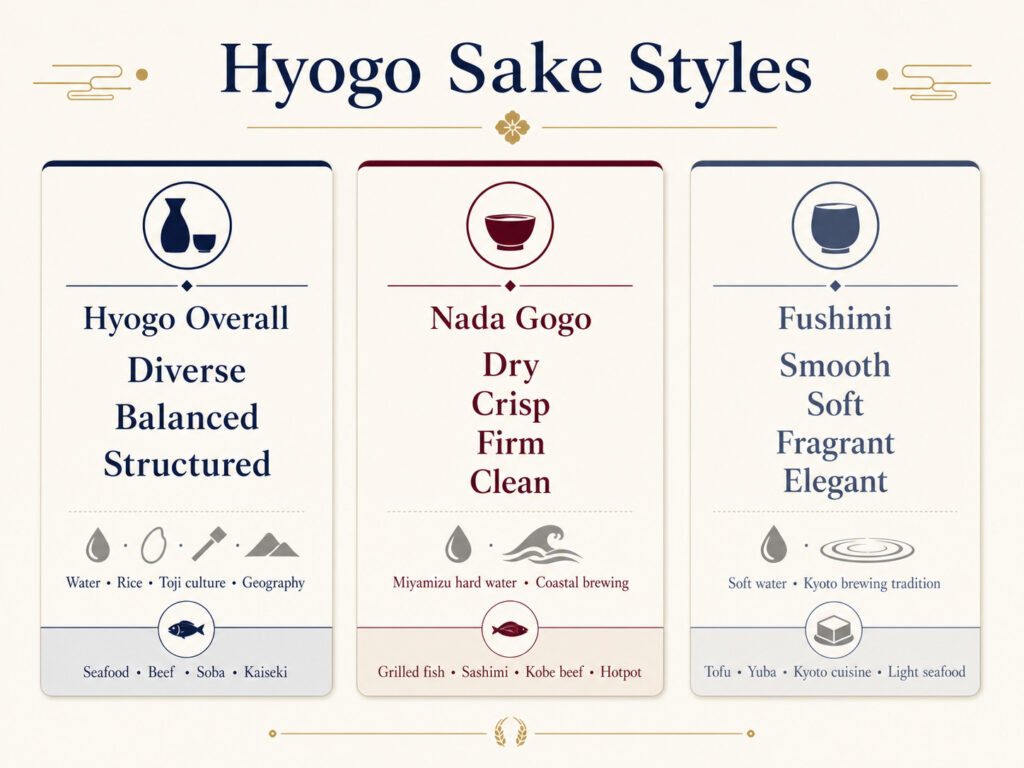
| Region or style | Typical profile | Main influence | Food direction |
| Hyogo overall | Diverse, balanced, and structured | Water, rice, toji culture, and geography | Seafood, beef, soba, and kaiseki |
| Nada Gogo | Dry, crisp, firm, and clean | Miyamizu hard water and coastal brewing | Grilled fish, sashimi, Kobe beef, and hotpot |
| Fushimi | Smooth, soft, fragrant, and elegant | Soft water and Kyoto brewing tradition | Tofu, yuba, Kyoto cuisine, and light seafood |
This table is a quick guide, not a strict rule. Breweries can cross these patterns. Rice, yeast, polishing, and fermentation choices always matter.
History of Hyogo Sake
The history of sake production in Hyogo reaches back centuries. Nada’s sake brewing developed strongly from the Edo period. The district used coastal transport to reach major markets. Osaka and Edo created steady demand.
Several conditions made growth possible. Miyamizu improved fermentation quality. Watermills near the Rokko mountains helped polish rice. Ports allowed sake barrels to move quickly by boat. Local rice fields supplied excellent raw material.
Nada Gogo grew into one of Japan’s leading brewing districts by the 18th century. The area became known for volume and dependable quality. That reputation still shapes how many people view Hyogo sake today.
Hyogo sake history also includes rebuilding. The 1995 Great Hanshin Earthquake damaged many breweries. Brewers rebuilt facilities and preserved local knowledge. Modern Nada now combines older methods with scientific control.
Inland areas also matter. Harima and Himeji connect sake with castle town culture. Tanba and Tajima link brewing with rural toji traditions. These places show that Hyogo prefecture brewing culture extends beyond Nada.
Famous Breweries and Brands in Hyogo
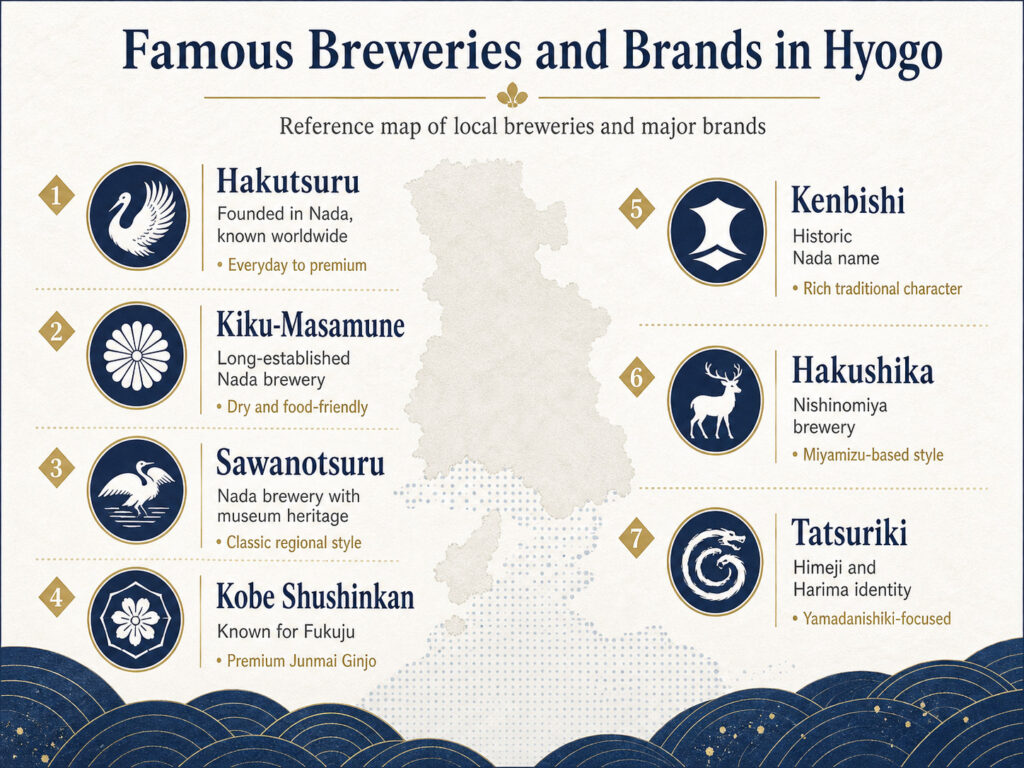
This section is not a ranking. It gives a reference map for local breweries and major brands. Large producers helped make Hyogo sake visible nationwide. Smaller breweries add local detail and different flavor choices.
| Brewery or brand | Background | General style |
| Hakutsuru | Founded in Nada and known worldwide | Wide range from everyday sake to premium bottles |
| Kiku-Masamune | Long-established Nada brewery | Dry, food-friendly sake and traditional brewing identity |
| Sawanotsuru | Nada brewery with museum heritage | Classic Nada character and accessible regional style |
| Kobe Shushinkan | Known for Fukuju | Premium sake, Junmai Ginjo, and brewery dining |
| Kenbishi | Historic Nada name | Rich, traditional sake with a strong identity |
| Hakushika | Nishinomiya brewery | Miyamizu-based sake and food-pairing styles |
| Tatsuriki | Himeji and Harima identity | Premium Yamadanishiki-focused brewing |
Tatsuriki is useful for understanding Harima. Kobe Shushinkan connects sake with Kobe food culture. Hakushika and Nihon Sakari show the Nishinomiya side of Miyamizu brewing. Together, these producers explain why Hyogo sake is highly regarded.
Famous Local Sake Types
Hyogo breweries produce many sake types. The following list helps readers connect label terms with local character.
- Junmai: rice-forward sake with umami and solid food pairing power.
- Ginjo: aromatic sake shaped by polishing and careful fermentation.
- Daiginjo: highly polished sake with refined aroma and clean texture.
- Honjozo: often crisp, light, and practical with everyday meals.
- Namazake: fresh unpasteurized sake with lively aroma.
- Genshu: undiluted sake with stronger body and fuller impact.
- Nigori: cloudy sake with soft texture and gentle sweetness.
Yamadanishiki appears across many of these types. It works especially well in premium Ginjo and Daiginjo brewing. Still, Hyogo breweries also use other sake rice varieties when they want different texture or aroma.
Best Food Pairings for Hyogo Sake
Hyogo sake pairs well with food because many bottles finish clean. Dry Nada sake can refresh the palate after rich dishes. This matters with seafood, beef, and simmered food. The sake supports umami without covering the dish.
Seafood is a natural starting point. Akashi sea bream, octopus, oysters, and grilled fish all work well. Salt, smoke, and natural sweetness can meet the sake’s dry finish. The pairing feels direct and practical.
Kobe beef needs a different approach. A dry Junmai or structured Ginjo can balance fat. Warmed sake may also work with beef hotpot. The goal is contrast, not sweetness.
Kaiseki and Hyogo cuisine benefit from balance. Lighter Daiginjo can match delicate courses. Junmai can support mushrooms, root vegetables, and broth. For broader food context, see Japanese regional specialties.
- Seafood: sashimi, grilled fish, octopus, oysters, and sea bream.
- Meat: Kobe beef, wagyu steak, shabu shabu, and sukiyaki.
- Hot dishes: nabe, oden, simmered vegetables, and clear soups.
- Regional dishes: soba, mountain vegetables, pickles, and kaiseki courses.
Best Places to Experience Hyogo Sake
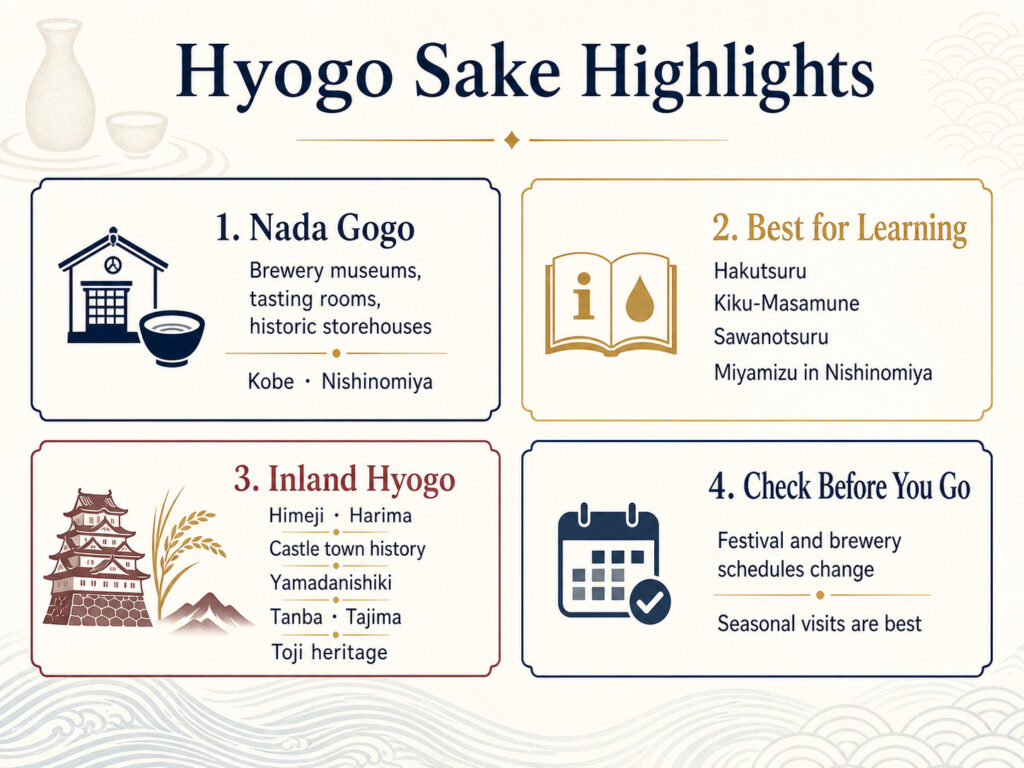
Hyogo sake is best studied through both Nada and inland areas. Nada Gogo offers brewery museums, tasting rooms, and historic storehouses. Kobe and Nishinomiya provide the clearest introduction to the coastal brewing story.
Hakutsuru Sake Brewery Museum, Kiku-Masamune Sake Brewery Museum, and Sawanotsuru Museum explain brewing processes well. Nishinomiya also helps visitors understand Miyamizu. These places work as practical learning sites, not only sightseeing spots.
Himeji and Harima offer another angle. They connect sake with castle town history and Yamadanishiki culture. Tanba and Tajima show the human side through toji heritage. The inland story makes Hyogo more complete.
Sake festivals and brewery openings can help. Still, check current schedules before visiting. Regional sake culture changes with seasons, production calendars, and local events.
Final Thoughts
Hyogo sake is a major part of Japanese sake history because its materials and geography developed together. Miyamizu, Yamadanishiki, Nada Gogo, and toji traditions all matter. None of them explains the region alone.
The classic image is dry, structured, and clean. Yet Hyogo also contains inland traditions, premium rice culture, and many modern styles. That range makes the prefecture more than a single flavor profile.
Local water, local rice, coastal shipping, and brewing knowledge supported each other over time. That connection is the heart of Hyogo sake.
FAQ About Hyogo Sake
What is Hyogo sake?
Hyogo sake is Japanese sake brewed in Hyogo Prefecture. It is best known for Nada Gogo, Miyamizu water, Yamadanishiki rice, and strong brewing heritage.
Why is Hyogo famous for sake?
Hyogo is famous for sake because Nada Gogo combines Miyamizu water, Yamadanishiki rice, coastal transport, and skilled toji traditions.
What makes Nada sake unique?
Nada sake is unique because Miyamizu supports active fermentation. The classic profile is dry, firm, clean, and food-friendly.
How does Miyamizu affect sake?
Miyamizu contains minerals that help yeast work actively. This can create dry structure, strength, and a clean finish.
How does Yamadanishiki shape sake flavor?
Yamadanishiki polishes well and ferments steadily. It can create clear aroma, refined texture, and balanced flavor in premium sake.
Is Hyogo sake always dry?
No. Nada sake is often dry, but Hyogo has many styles. Junmai, Ginjo, Daiginjo, nama, and genshu can all taste different.
What food pairs well with Hyogo sake?
Seafood, Kobe beef, hotpot, kaiseki, grilled fish, soba, and simmered dishes pair well. Dry sake works especially well with rich or salty food.
How is Hyogo different from Fushimi?
Hyogo’s Nada sake often tastes firmer because of Miyamizu. Fushimi sake usually feels softer because its water is gentler.
Why is Hyogo associated with premium sake rice?
Hyogo is associated with premium sake rice because Yamadanishiki production is strongly linked to inland areas such as Harima.
What role do toji play in Hyogo sake?
Toji manage the brewing team and guide fermentation. Tanba and Tajima toji traditions connect inland labor culture with coastal sake production.
References
Hyogo Sake Guide – checked in 2026; nine brewing associations, Miyamizu, Yamadanishiki, Tanba and Tajima toji, and regional sake diversity.
Nadagogo Brewers Association – checked in 2026; Nada Gogo history, brewery districts, and official association information.
Highlighting Japan – Sake Production in Nada – checked in 2026; fiscal 2023 production context, 700-year history, Miyamizu, and 18th-century growth.
Visit HYOGO – Five Villages of Nada – checked in 2026; more than 700 years of history, hard water, Yamadanishiki, and post-1995 rebuilding context.
Sakamai – Food in Japan – checked in 2026; internal article for sake rice and Hyogo Sakamai.
Japanese Sake Guide – Food in Japan – checked in 2026; internal sake overview and general sake education.
How Sake Is Made – Food in Japan – checked in 2026; koji, fermentation, rice, and brewing process context.
Types of Japanese Sake – Food in Japan – checked in 2026; sake categories and label terms.
Daiginjo – Food in Japan – checked in 2026; internal article for Daiginjo category context.



 English (US) ·