
 1 month ago
47
1 month ago
47
Few dishes say “home cooking” in Japan like cream stew. It is warm, creamy, and gently sweet. A pot of it can fill a whole kitchen with comfort. Children adore it, and adults feel nostalgic. This dish is Japanese cream stew.
So what is Japanese cream stew? It is a creamy white stew with chicken and vegetables. Cooks simmer the ingredients in a milk-based sauce. The result is rich, mild, and soothing. In Japanese, it is called kurimu shichu.
Many people assume it came from Europe. That guess feels natural, yet it is wrong. Cream stew was actually invented and developed in Japan. So it counts as a yoshoku dish, a Japanese take on Western food. Its story is more surprising than it looks. For more Western-style Japanese food, see our yoshoku guide.
This Japanese white stew is a winter staple. It appears on family tables and in school lunches. It is easy to make and loved by all ages. So it holds a special place in Japanese life. Let me walk you through this cozy classic.
TOC
Quick Facts About Japanese Cream Stew
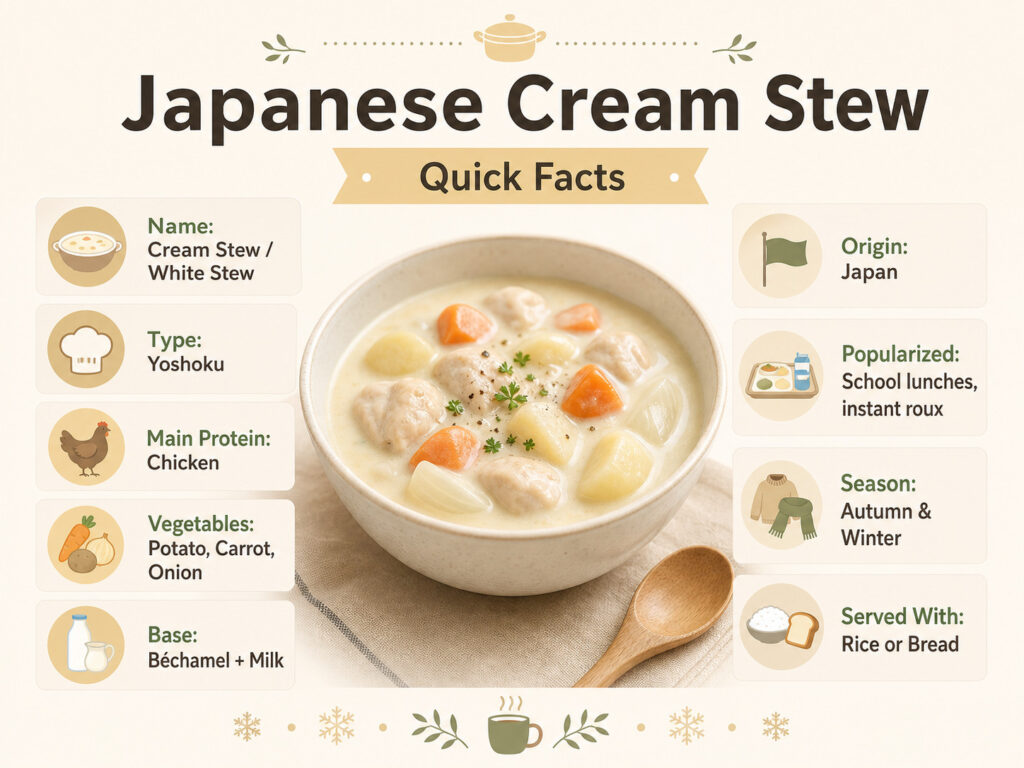
Here is a quick snapshot before the details begin.
| Japanese Name | クリームシチュー (kurimu shichu) |
| Also Called | White stew (howaito shichu) |
| Type | Yoshoku (Japanese Western-style dish) |
| Main Protein | Chicken (sometimes pork) |
| Main Vegetables | Potato, carrot, onion |
| Base | White sauce (béchamel) and milk |
| Origin | Invented and developed in Japan |
| Popularized | Postwar school lunches; 1966 instant roux |
| Season | Autumn and winter |
| Served With | Rice or bread |
Japanese cream stew is a mild, creamy stew. The base is a white sauce and milk. Cooks add chicken, potatoes, carrots, and onions. Then they simmer everything until tender. So each bowl feels hearty yet gentle.
The dish is a comforting milk-based stew from Japan. It tastes rich but stays surprisingly light. The white sauce brings a smooth, velvety texture. So it coats the vegetables beautifully. Every spoonful feels warm and mellow.
Most families make it in one pot. That makes it a perfect weeknight dinner. Many cooks use ready-made roux blocks. Others prepare a homemade white sauce from scratch. So the dish suits both busy and ambitious cooks.
What Does Japanese Cream Stew Taste Like?
The flavor is creamy, savory, and lightly sweet. Milk and butter give a gentle richness. Sweet onions add a soft, natural note. So the taste feels rounded and kind. It rarely overwhelms the palate.
The texture is a big part of its charm. Its sauce is smooth and slightly thick. Potatoes turn soft and fluffy inside. Meanwhile, the chicken becomes tender and juicy. So each bite offers a comforting contrast.
I always find the aroma inviting too. Butter, milk, and sweet onions fill the air. It smells like a warm kitchen on a cold day. So the dish comforts you before the first taste. That scent alone brings back childhood memories for many.
The Main Ingredients
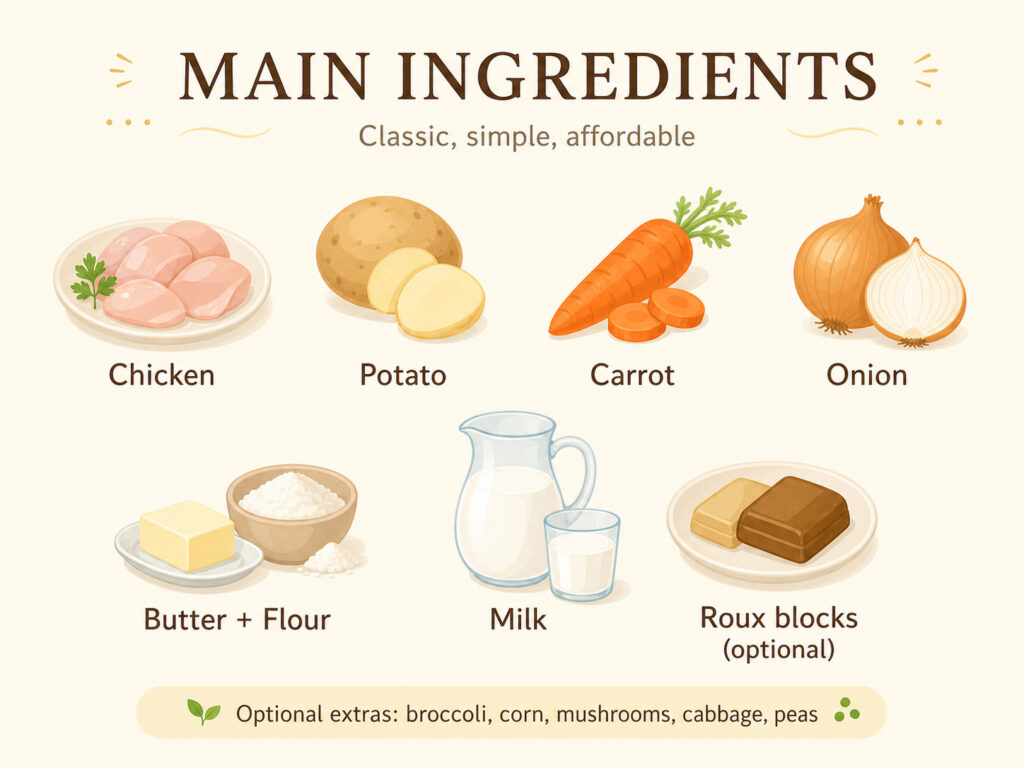
The classic recipe keeps things simple. A handful of everyday ingredients does the work. So almost anyone can gather what they need. Here is the usual cast of characters.
- Chicken: usually thigh meat, though pork also works
- Potato: turns soft and fluffy in the sauce
- Carrot: adds color and gentle sweetness
- Onion: melts down for a natural sweetness
- Butter and flour: the base of the white sauce
- Milk: gives the stew its creamy body
- Roux blocks (optional): a quick shortcut to the sauce
Chicken is the most common protein. Many cooks use pork instead, though. The vegetables are humble and familiar. Potato, carrot, and onion form the base. So the dish stays affordable and easy.
Some cooks add extra vegetables for variety. Broccoli, corn, and mushrooms are popular choices. Others toss in cabbage or green peas. So the recipe welcomes personal touches. Each family builds its own version.
How Japanese Cream Stew Compares to Other Dishes
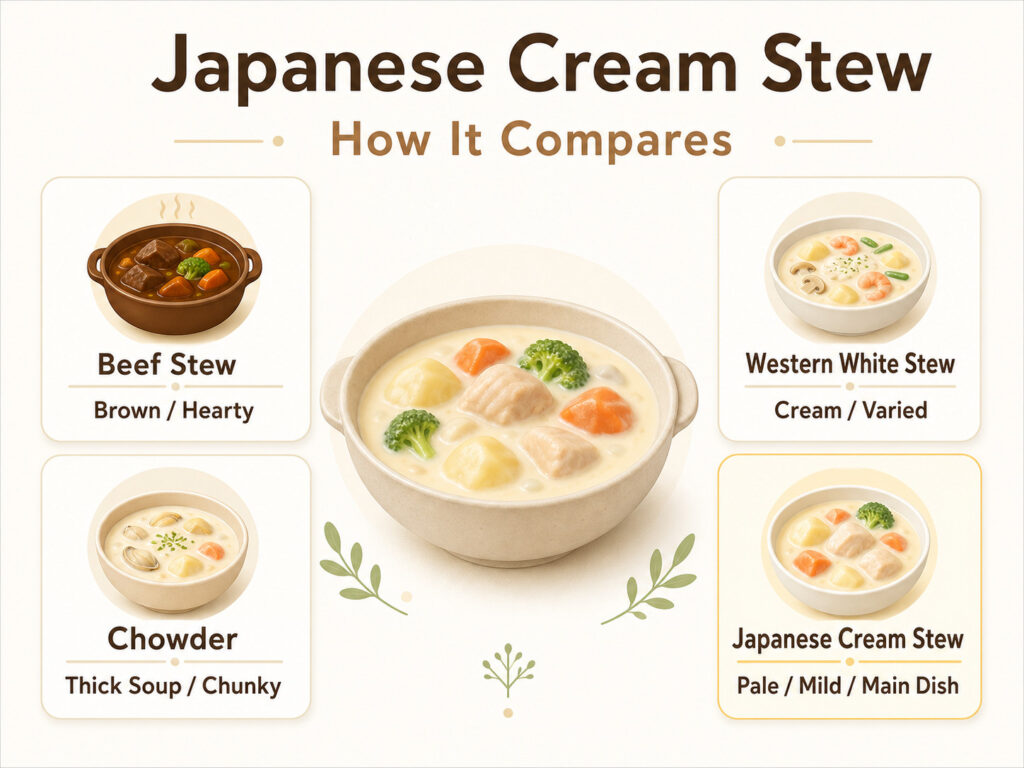
People often confuse cream stew with similar foods. A quick comparison helps clear things up. So let us look at a few close relatives. The differences are smaller than you might expect.
| Japanese cream stew | White sauce and milk | Creamy pale | Mild, rich, comforting |
| Beef stew | Brown demi-glace sauce | Deep brown | Savory, hearty |
| Western white stew | Cream or velouté | Pale | Varies by country |
| Chowder | Milk or cream soup | Pale | Thick, chunky soup |
Beef stew is the most obvious cousin. It uses a brown sauce and red meat. Cream stew, by contrast, stays pale and mild. So the two look and taste quite different. One is deep and savory, the other soft and creamy.
Western white stews are another relative. Dishes like blanquette and fricassee exist in France. Ireland has its beloved Irish stew too. Yet none matches the Japanese version exactly. So cream stew stands as its own creation.
Stew and chowder can also cause confusion. A chowder is usually a thick, chunky soup. Cream stew is heartier and served as a main dish. So it fills a bigger role at the table. It anchors a meal rather than starting it.
The History of Japanese Cream Stew
Now we reach the surprising part of the story. Cream stew is not an old European recipe. It grew up in Japan over the last century. So its history is fairly recent and local. The details reveal a lot about modern Japan.
Early Roots and School Lunches
White sauce dishes appeared in Japan long ago. Records show milk-based stews in the 1920s. One 1924 cookbook described a stew with milk. Yet the dish was still rare at the time. So few families cooked it at home.
The real turning point came after World War II. Food was scarce, and children needed nutrition. So the government promoted a “white stew” in schools. It became part of the national school lunch program. This step changed everything.
At first, the stew used skimmed milk powder. Fresh milk was simply too scarce and costly. The powder provided vital calcium for children. Over time, real milk replaced the powder. So the dish slowly grew richer and creamier.
Many adults still remember this school lunch fondly. It warmed them on cold childhood mornings. That nostalgia helped the dish endure. So cream stew carries deep emotional weight. It tastes like memory for a whole generation.
The Roux Block Revolution
For years, home cooks faced one big problem. White sauce is tricky to make from scratch. The flour can clump into stubborn lumps. It also burns easily during cooking. So many families avoided making it.
Then a major change arrived in 1966. A food company released an instant stew roux. This product came as a simple powdered mix. Later versions took a convenient block form. So making cream stew suddenly became easy.
The developers had a clear goal in mind. They wanted a stew that suited rice-based meals. They even studied Irish stew for inspiration. So they designed a flavor that fit Japanese tables. This choice shaped the dish we know today.
The roux block was a runaway success. Families could now cook cream stew in minutes. The name “cream stew” spread across the country. So the dish became a household staple. Convenience turned it into a true classic.
Japanese Cream Stew Today
Today, cream stew is a beloved home dish. It appears most often in the cold months. Supermarkets stock rows of stew roux in winter. So the dish signals the arrival of the season. Many families cook it almost weekly.
The dish keeps evolving in creative ways. Some cooks add corn for a sweeter version. Others blend in a little curry for warmth. So new twists appear all the time. The basic idea stays flexible and fun.
It also remains a school lunch favorite. Many regions still serve it to students. Grown-ups often crave it long afterward. So the cycle of nostalgia continues. Each generation passes the love along.
Can You Eat Japanese Cream Stew with Rice?
Here lies one of Japan’s great food debates. Should you pour cream stew over rice? Or should you keep the two separate? So opinions split sharply across the country. Families even argue about it at home.
Some people love spooning stew onto rice. Others find the very idea unthinkable. Surveys suggest most prefer to keep them apart. Yet a large minority happily mixes them. So there is no single right answer.
Regional habits shape these preferences too. Some areas lean strongly toward pouring it over rice. The dish also pairs wonderfully with bread. So you can enjoy it with rice or bread. In the end, personal taste decides.
This friendly debate shows how personal the dish is. Cream stew grew up inside Japanese homes. So each family developed its own customs. That is part of its warm, homey charm. The argument itself is a sign of love.
A Simple Way to Make It at Home
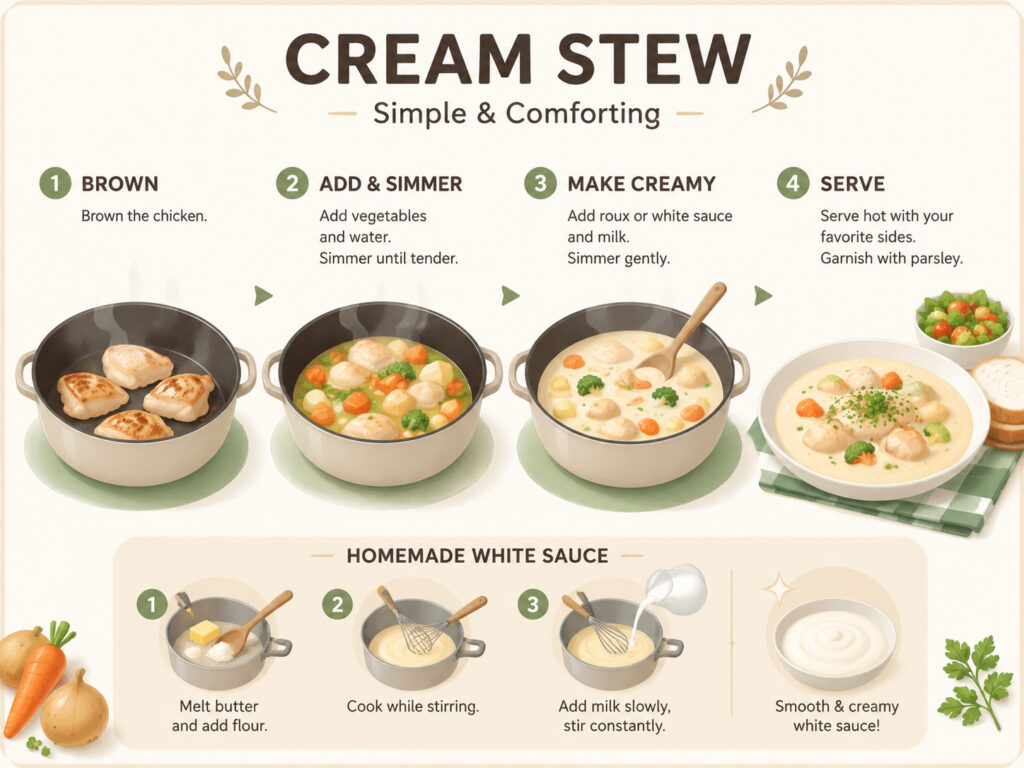
You do not need fancy skills to make it. The basic method is refreshingly simple. So even beginners can succeed easily. Here is the general idea in brief.
First, brown the chicken in a large pot. Then add the chopped vegetables and stir. Pour in water and simmer until tender. So far, the process feels relaxed and forgiving.
Next comes the creamy heart of the dish. You can add roux blocks for ease. Otherwise, stir in a homemade white sauce and milk. So the stew turns smooth and rich. Let it simmer gently, and it is ready.
For a homemade sauce, melt butter and flour together. Add milk slowly while stirring constantly. This care keeps the sauce free of lumps. So patience is the real secret here. A steady hand rewards you with silk.
Serve it hot in a deep bowl. Pair it with rice, bread, or a salad. A sprinkle of parsley adds a nice touch. So the meal feels complete and cozy. Few dinners are this comforting.
Tips for the Perfect Cream Stew
A few small habits make a big difference. So beginners can avoid the common mistakes. These pointers come from long home practice. They help the stew turn out well every time.
The first tip concerns the roux. Turn off the heat before adding roux blocks. Let them dissolve fully in the warm liquid. Then return the pot to low heat. So the sauce stays smooth and lump-free.
The second tip involves the milk. Add the milk near the very end. Do not let the stew boil hard afterward. High heat can split the milk and sauce. So a gentle warmth keeps it creamy.
The third tip is about the chicken. Cook it through to the center. Well-cooked chicken stays safe and tender. So brown it first, then simmer it fully. This step also deepens the flavor.
The fourth tip is optional but useful. Coat the meat lightly in flour first. This adds body and prevents clumping. So the sauce thickens more evenly. Small touches like this really help.
For homemade white sauce, patience is everything. Melt butter, then stir in the flour. Add milk in small amounts while whisking. So the sauce stays silky and smooth. Rushing this step invites stubborn lumps.
Storing and Reusing Leftovers
Storing leftover cream stew takes a little care. The dish contains dairy, so it spoils fairly fast. Keep it in the fridge, not at room temperature. So it stays safe to eat later. Move it from the pot into a container.
In the fridge, eat it within two or three days. Reheat it gently over low heat. Avoid a hard boil, which can split the sauce. A splash of milk can restore the creaminess. So the leftovers taste nearly fresh again.
Freezing is possible, but one issue arises. Potatoes turn grainy and spongy when frozen. So many cooks remove them before freezing. Alternatively, mash the potatoes first. This simple trick keeps the texture pleasant.
Leftover cream stew also shines in new dishes. It works beautifully as a base for gratin. Just add pasta, top with cheese, and bake. So a second meal feels completely different.
Doria is another popular way to reuse it. Spoon the stew over buttered rice. Add cheese and bake until golden. So the stew becomes a rich, baked treat. Many families plan this second meal on purpose.
You can also stretch it into a creamy pasta. Loosen the stew with a little milk. Then toss it with cooked noodles. So dinner comes together in minutes. Leftovers rarely go to waste this way.
Nutrition and Serving Ideas
Cream stew offers a fairly balanced plate. It combines protein, vegetables, and dairy. The chicken provides protein for growing bodies. The milk adds calcium and a creamy body. So the dish supports a wholesome family meal.
Of course, richness depends on your recipe. Extra butter and cream raise the calories. A lighter hand keeps the dish gentle. So you can adjust it to your needs. Many cooks lean on vegetables for balance.
Serving ideas are simple and flexible. A bowl of rice or crusty bread suits it well. A crisp green salad adds freshness. So the meal feels rounded and complete. A little parsley brightens the plate.
The dish also fits many occasions. It works for a quiet weeknight dinner. It also warms a weekend family gathering. So cream stew adapts to daily life. Its comfort never feels out of place.
Why Japanese Cream Stew Endures
It is worth asking why this dish lasts. After all, food trends come and go. Yet cream stew stays firmly in place. So something about it truly resonates.
Part of the answer is pure comfort. The dish is warm, mild, and filling. It suits children and grandparents alike. So it brings whole families together. Comfort food rarely goes out of style.
The other part is emotional memory. Many people first tasted it as children. That early bond runs surprisingly deep. So the flavor feels like home itself. In this way, cream stew is more than food. It is a small, warm piece of Japanese daily life.
Japanese Cream Stew FAQ
What is Japanese cream stew?
It is a creamy white stew from Japan. Cooks simmer chicken and vegetables in a milk-based sauce. The flavor is mild, rich, and comforting. In Japanese, it is called kurimu shichu.
Is cream stew really Japanese?
Yes, the dish was developed in Japan. White sauces exist across Europe, of course. Yet this specific stew grew up locally. So it is considered a yoshoku dish.
What is the difference from beef stew?
Beef stew uses a brown sauce and beef. Cream stew uses a white sauce and milk. So one is dark and savory. The other is pale, mild, and creamy.
What meat is used in cream stew?
Chicken is the most common choice. Many cooks use pork instead. The meat simmers until soft and tender. So it blends into the creamy sauce.
What are the best vegetables for it?
Potato, carrot, and onion are the classics. Broccoli, corn, and mushrooms also work well. These add color and sweetness. So you can mix and match freely.
How do you make it from scratch?
Brown the chicken, then add vegetables and water. Simmer until everything turns tender. Stir in a white sauce made from butter, flour, and milk. So the stew becomes smooth and rich.
Can you make it without roux blocks?
Yes, a homemade white sauce works well. Melt butter, add flour, then whisk in milk. Stir constantly to avoid lumps. So you can skip the store-bought roux entirely.
How do you keep the sauce from separating?
Add the milk near the end of cooking. Then avoid boiling the stew hard. High heat splits the milk and sauce. So keep the heat gentle for a smooth result.
Can you freeze cream stew?
Yes, but the potatoes can turn grainy. Many cooks remove or mash them first. Store the stew in a sealed container. Then reheat it gently with a splash of milk.
Can you eat cream stew with rice?
Yes, though opinions differ sharply. Some people pour it over rice. Others prefer to keep them separate. So it comes down to personal taste.
When do people eat cream stew?
It is mostly a cold-weather dish. Families cook it often in autumn and winter. It also appears in school lunches. So many people link it to childhood.
Is cream stew healthy?
It offers protein, vegetables, and calcium from milk. The dish is filling yet fairly gentle. Portion size and added butter affect richness. So it fits well into a balanced meal.
References
- House Foods, history of stew in Japan and the 1966 “Stew Mix” instant roux. (Surveyed: June 2026)
- Ministry of Agriculture, Forestry and Fisheries (MAFF), information on the Japanese school lunch program and dairy use. (Surveyed: June 2026)
- Japan Cream Stew Association, definition and background of cream stew as a Japan-developed dish. (Surveyed: June 2026)
- Nikkei, feature on cream stew’s Japanese origins and the “over rice or separate” debate. (Surveyed: June 2026)
Related Articles
- Yoshoku (Japanese Western-Style Food) (Surveyed: June 2026)
- The Complete Guide to Miso Soup (Surveyed: June 2026)
- Traditional Japanese Soups (Surveyed: June 2026)





 English (US) ·