
 1 month ago
45
1 month ago
45

Recipe Highlights
I make Miso Salmon in Foil for my family on busy weeknights because everything cooks together in one neat packet—no pots to scrub, no splatter to clean up. The miso-Kewpie mayo glaze is the real star. It clings to the fish and locks in moisture as it steams, so the salmon stays silky and never dries out.
- Ready in 30 minutes, start to finish
- One packet = one serving, zero mess
- Foolproof method that’s adaptable for different vegetables or proteins
If you love Japanese salmon recipes, try my Teriyaki Salmon, Miso Salmon, and Japanese Salted Salmon recipes next!
Table of Contents
What is Miso Salmon in Foil?
Miso salmon in foil cooks fish, vegetables, and seasonings inside an aluminum foil pouch. The tightly sealed packet traps heat and moisture, which gently steams the salmon until tender. Called hoiru yaki (ホイル焼き) or “foil cooking,” the technique is a staple of Japanese home cooking because it’s hands-off and forgiving. It can be made in a frying pan on the stovetop or in the oven.
Ingredients for Miso Salmon in Foil
- skin-on salmon fillets – center cut
- miso
- Japanese mayonnaise (Kewpie mayo)
- shiitake mushroom and shimeji mushroom
- carrot
- onion
- lemon slices
- sake – or substitute dry white wine or water
- salt and black pepper
- unsalted butter
- green onion – for garnish
Find the printable recipe with measurements below.
Jump to Recipe
3 Reasons We Use Mayo in This Recipe
- Binder – Miso doesn’t spread easily on its own. Mayo turns it into a smooth paste that coats the salmon evenly.
- Moisture – Mayo’s oil and egg yolk keep the salmon moist and tender as it cooks.
- Balance – Mayo’s richness mellows the saltiness of miso for a more rounded flavor.
And no, you won’t taste the mayo in the final dish—miso takes center stage.
How to Make Miso Salmon in Foil
- Prep the ingredients. Slice the onion and julienne the carrot. Slice the shiitake caps and separate the shimeji mushrooms into small clusters.
- Make the miso sauce. Mix the miso paste and Kewpie mayo together in a small bowl until smooth.
- Build the packets. Lightly butter each foil sheet. Layer onion slices and a salmon fillet, skin side down. Spread with the miso mixture and pile on the mushrooms and carrots. Add a lemon slice on top of the salmon and sprinkle with sake.
- Seal the foil. Fold all sides to tightly form a sealed pouch. If you prefer parchment paper instead of foil, see my other Salmon in Foil recipe for step-by-step instructions.
- Bake. Bake at 425ºF (220ºC) oven for 15–18 minutes or until the fish registers 125–130°F (52–54ºC) at the thickest part. Open and scatter sliced green onions on top.


Nami’s Recipe Tips
These simple tips will help you make Miso Salmon in Foil perfectly every time.
- Adjust the miso – Red miso and white miso vary widely in saltiness and depth. Start with 2 tablespoons and taste the glaze before spreading. If it’s too salty, add a little more mayo.
- Butter the foil first – A thin layer of butter on the foil keeps the onion from sticking and adds a subtle richness.
- Drizzle sake for moisture – Half a tablespoon creates enough steam inside the packet. Sake also removes fish odor and adds umami.
- Seal the packets snugly – A tight seal is key, so press each fold firmly. Loose folds let steam escape, which can dry out the salmon.


- Use a thermometer – An instant-read thermometer is the most reliable way to avoid overcooking. Pull the packets at 125–130°F (52–54ºC) for tender, flaky fish. For medium rare, stop at 120°F (49ºC).
- Open packets carefully – Tilt the opening away from you and let the initial burst of hot steam escape before reaching in.

Variations and Customizations
Looking to switch things up? Here are some of my favorite ways to customize this recipe.
- Make plant-based version. Use firm tofu (press it for 30 minutes), crispy fried tofu, king oyster mushroom as a base instead of fish.
- Swap the mushrooms. Cremini, oyster, or enoki mushrooms all work well here.
- Try a different fish. Cod, halibut, or sea bass are all great substitutes. Thinner fillets will need a minute or two less; thicker ones may need a bit more.
- Add aromatics. Add julienned ginger or slivered garlic to the packet before sealing.
- Drizzle soy sauce + lemon juice or ponzu sauce for a bright, citrusy finish at the table.
- Frying pan method. Place the packets in a dry frying pan with a lid. Heat on medium for 2 minutes, then reduce to medium low and cook for 15 minutes.
- Parchment method. You can also use parchment instead of foil—no butter needed. Fold the edges over 3 times to seal, then snip or tear the top to open at the table.


What to Serve with Miso Salmon in Foil
Serve these dishes to make a complete miso-glazed salmon set meal.
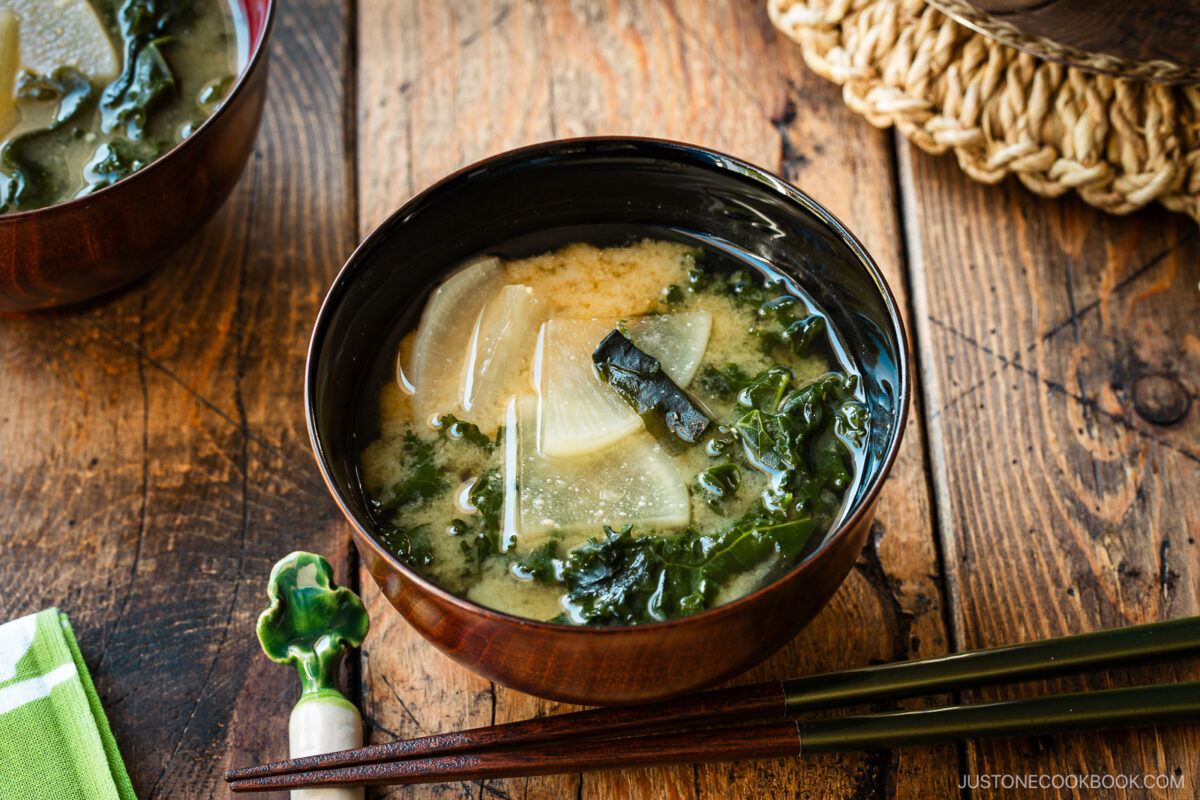
- Kale Daikon Miso Soup – A simple soup rounds out the meal and adds warmth without competing with the salmon’s flavors.
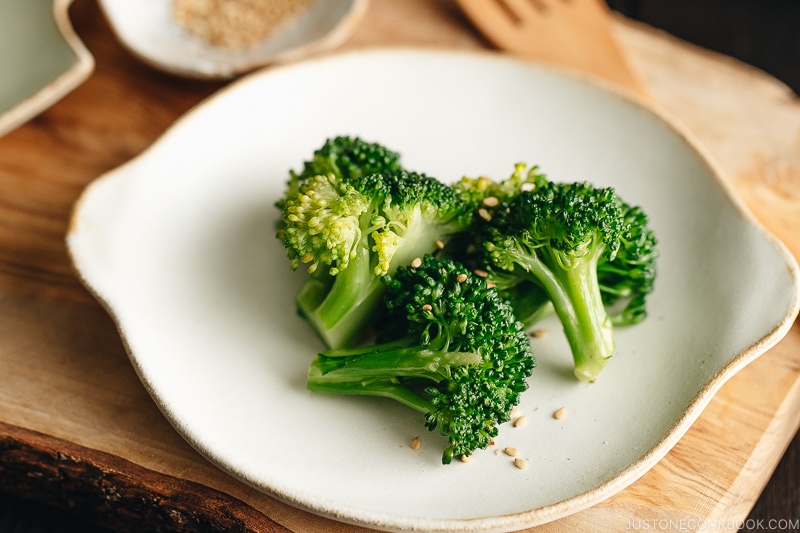
- Broccoli Blanched in Sesame Oil – The nutty sesame oil balances the richness of the miso glaze.
- Japanese Cucumber Salad – This light, vinegary sunomono salad cuts through the richness of the miso glaze and brightens the plate.
- Steamed Rice – This is the perfect base for soaking up the savory glaze. See How to Cook Japanese Rice in a Pot on the Stove.
Storage and Reheating Tips
To store: Transfer leftovers to an airtight container and keep in the fridge for up to 3 days or in the freezer for 2 weeks.
To reheat: Warm gently in a covered frying pan over medium-low heat with a splash of water, or microwave at 50% power until heated through.
FAQs
Can I use a different type of miso?
Yes. White (shiro) miso is milder and slightly sweet, red (aka) miso is more intense and salty, and yellow (shinshu) miso falls in between. Taste the glaze before spreading and adjust to your preference.
Do I have to use Kewpie mayonnaise?
Japanese mayonnaise (the most common brand is Kewpie) is richer, creamier, and more umami-forward than regular American mayo because it’s made with egg yolks and rice vinegar. That said, regular mayonnaise will work in a pinch, but the glaze will be lighter in flavor.
Can I cook the salmon packets on a grill?
Yes! Place the packets directly on a preheated grill over medium heat and cook for about 10–15 minutes, depending on fillet thickness.
The USDA recommends cooking salmon to 145°F. Should I cook it longer?
For a foil-cooked recipe like this, 125–130°F (52–54ºC) is a good target for juicy salmon. The sealed pouch continues cooking from residual heat after you remove it from the stove. If you cook it to 145°F, the salmon will likely be dry.
I’d love to hear how yours turned out! 💛 Please leave a star rating and comment below to share your experience. Your feedback not only supports Just One Cookbook but also helps other home cooks discover recipes they can trust.
If you are using the oven method (instead of the stovetop), preheat to 425ºF (220ºC). For a convection oven, reduce the temperature by 25ºF (15ºC).
Gather all the ingredients.

To Prepare the Ingredients
Peel and cut ½ onion into thin slices. Peel and cut 2 inches carrot lengthwise into thin slabs, then into julienne strips.

Cut off the stems from 3 pieces shiitake mushrooms and thinly slice the caps.

Cut the roots off ½ package shimeji (brown beech) mushrooms. Separate them into small clusters with your fingers.

Thinly slice 1 green onion and set aside.

Mix 2–3 Tbsp miso and 2 Tbsp Japanese Kewpie mayonnaise in a small bowl until smooth and uniform.
Nami's Tip: Adjust the amount of miso based on the saltiness and flavor of your miso type.

To Assemble the Foil Packets
Prepare 2 sheets of aluminum foil, each 12 x 12 inches (30 x 30 cm). Use ½ Tbsp butter to lightly grease the centers, making rectangles the same length as the salmon and 2–3 times its width. Spread the sliced onion on top.
Nami's Tip: See how to make the packets with parchment paper in the end Notes.

Place one salmon fillet skin side down, on the onions. Sprinkle with kosher salt and black pepper.

Spread the miso sauce on the salmon. Pile the shimeji mushrooms, carrots, and shiitake mushrooms on top. Add one lemon slice and sprinkle with ½ Tbsp sake on each fillet.

Bring the top and bottom edges of the foil together above the salmon. Fold it over a few times to seal, keeping the foil snug against the ingredients so they stay in place.

Fold up the left and right sides a few times to seal.

Press all folds firmly to secure. Put the foil packets on a baking sheet, spacing them apart to allow heat to circulate evenly.

To Cook
You can cook the salmon one of two ways:
Oven – Bake at 425ºF (220ºC) for 15–18 minutes for center-cut fillets (1 to 1½ inches thick) or 10 minutes for thinner fillets.
Use an instant-read thermometer to check for doneness. It's ready when the thickest part registers 125–130°F (52–54°C); pull at 120°F (49°C) for medium-rare.

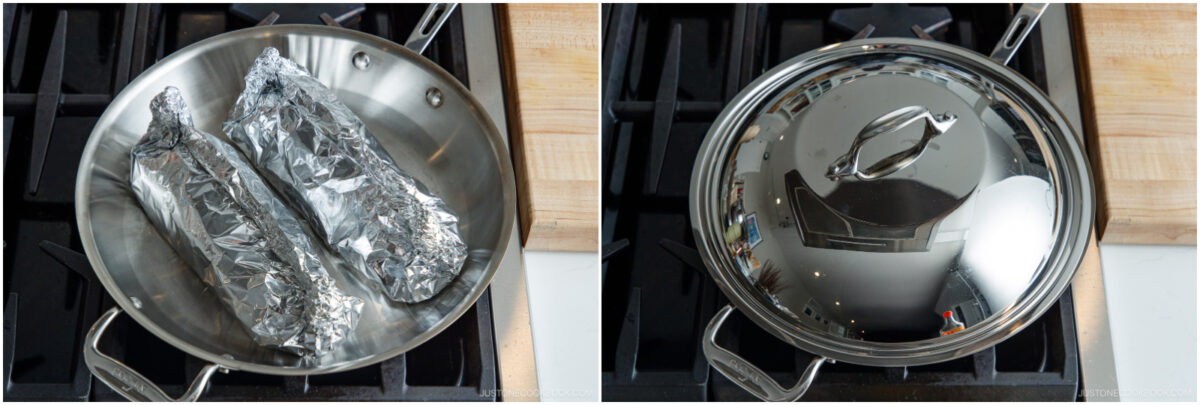
Stovetop – Place the packets in a dry frying pan and cover with a tight-fitting lid. Do not overcrowd the pan so the heat can circulate evenly.
Cook on medium for 2 minutes. Then reduce to medium-low and cook 15 minutes for center-cut fillets (1 to 1½ inches thick) or 10 minutes for thinner fillets.
Nami's Tip: I'm using a stainless steel or carbon steel pan. If you're using a non-stick pan, add ⅓–½ cup (100 ml) water to protect the non-stick surface.
To Serve
Carefully open each packet away from you to avoid the hot steam. Sprinkle with sliced green onions and serve immediately.

To Store
Keep the leftovers in an airtight container and store in the refrigerator for up to 3 days or in the freezer for 2 weeks.
To Make Packets with Parchment
Start with a sheet of parchment large enough to fold over the salmon with ample space on all three sides. Fold the paper in half, crease it, then open it flat. Lay your ingredients close to the fold, close the paper over the salmon, and you're ready to seal the packet.
To seal, fold and crease each of the three open edges three times, pressing firmly as you go. Finish by folding the corners back twice in the opposite direction and pressing them down to secure.

Variations and Customizations
Looking to switch things up? Here are some of my favorite ways to customize this recipe.
- Make plant-based version. Use firm tofu (press it for 30 minutes), crispy fried tofu, king oyster mushroom as a base instead of fish.
- Swap the mushrooms. Cremini, oyster, or enoki mushrooms all work well here.
- Try a different fish. Cod, halibut, or sea bass are all great substitutes. Thinner fillets will need a minute or two less; thicker ones may need a bit more.
- Add aromatics. Add julienned ginger or slivered garlic to the packet before sealing.
- Drizzle soy sauce + lemon juice or ponzu sauce for a bright, citrusy finish at the table.
Did you make this recipe?
Tag @justonecookbook on Instagram so we can see your delicious creation!





 English (US) ·