
 1 month ago
19
1 month ago
19
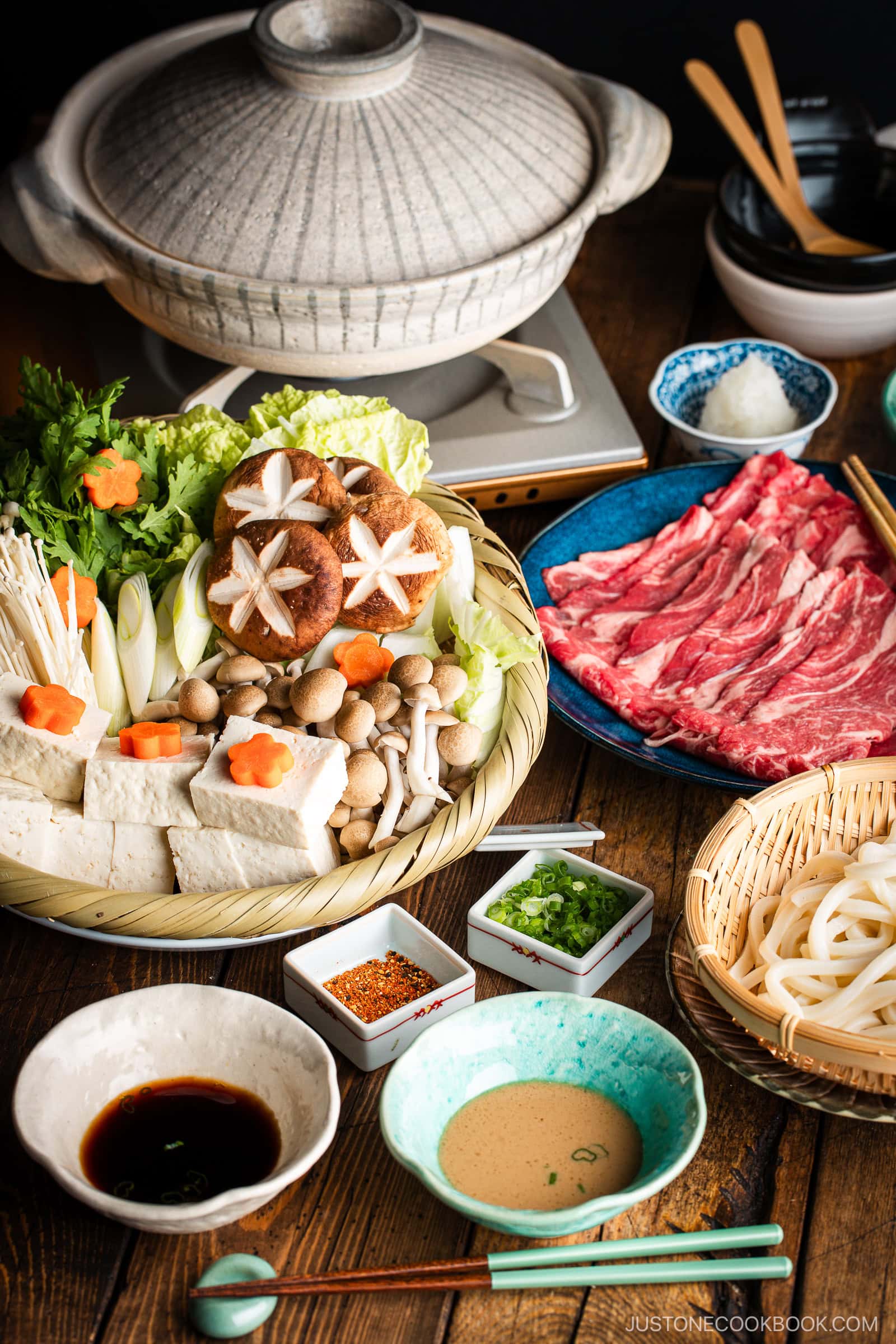
Ready to enjoy one of Japan’s coziest meals? Nabemono, or nabe, are Japanese hot pot dishes cooked right at the table. In this guide, I’ll walk you through the basics so you can make a warm, comforting Japanese hot pot at home anytime.
Quick Overview
When the weather turns cold or rainy, many Japanese families turn to nabe (鍋). A pot of simmering broth, fresh ingredients, and everyone cooking together at the table—this is the heart of a Japanese hot pot meal.
Why you’ll love nabe:
- A cozy, shareable meal that brings everyone together
- Easy to customize with your favorite proteins and vegetables
- Comforting broths that warm you from the inside out
In this guide, you’ll learn what nabe is, the essential equipment, key ingredients, and the most popular Japanese hot pot recipes to try.
Table of Contents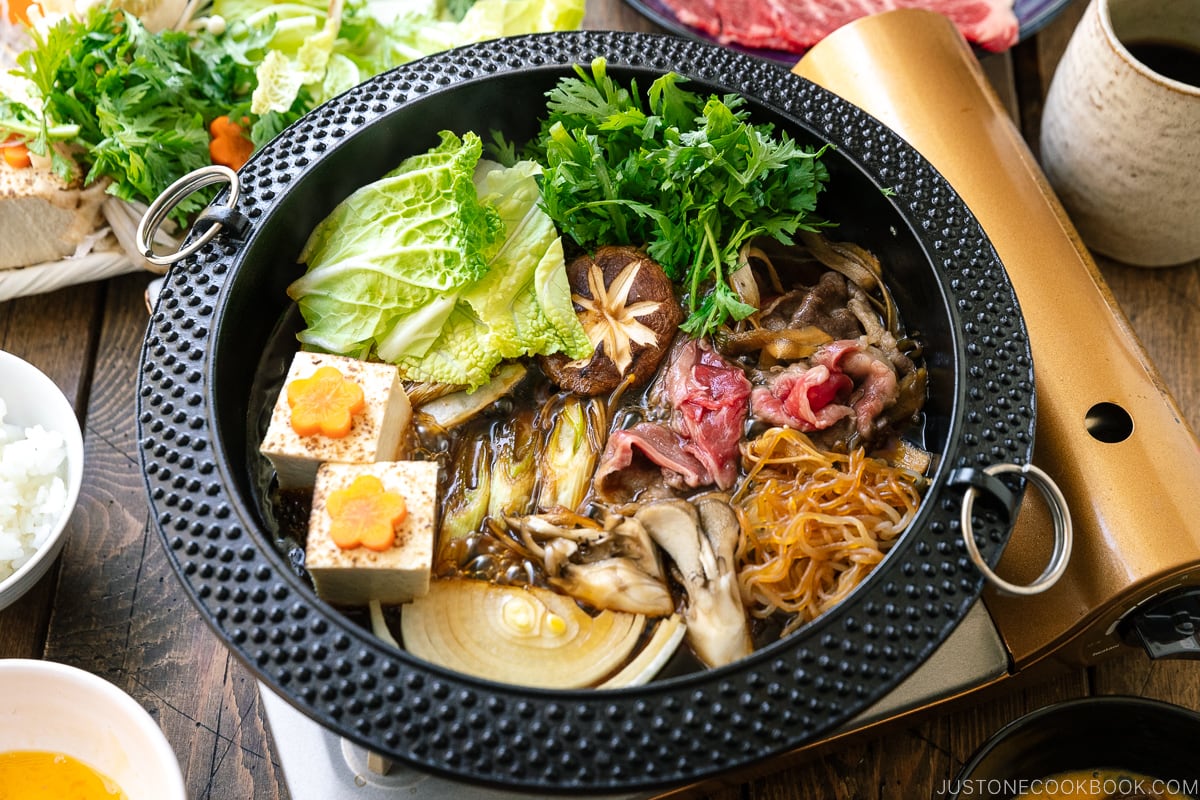
What is Nabemono (or Nabe)?
Nabemono is the Japanese term for hot pot dishes cooked and enjoyed at the table.
- Nabe (鍋) means “pot.”
- Nabemono (鍋物) means “ingredients cooked together in a pot.”
The meal is simple and communal. Everyone adds ingredients to a simmering broth, waits for it to cook, and enjoys it piping hot. It’s interactive, cozy, and very homey.
While nabe is classic winter meal, it’s also perfect for casual gatherings, holidays, and family dinners. If you love warm one-pot meals, you’ll enjoy nabe all year long.
Essential Nabe Equipment
You only need a few simple tools to make Japanese hot pot at home. These keep the broth hot at the table and make meal easy and fun.
Quick list
- Donabe pot (or another sturdy pot)
- Portable butane stove (or induction cooktop)
- Butane canisters
- Serving utensils – skimmer, ladles, slotted ladles, cooking chopsticks
- Tableware – medium bowl, small bowl, and chopsticks
1. Donabe pot
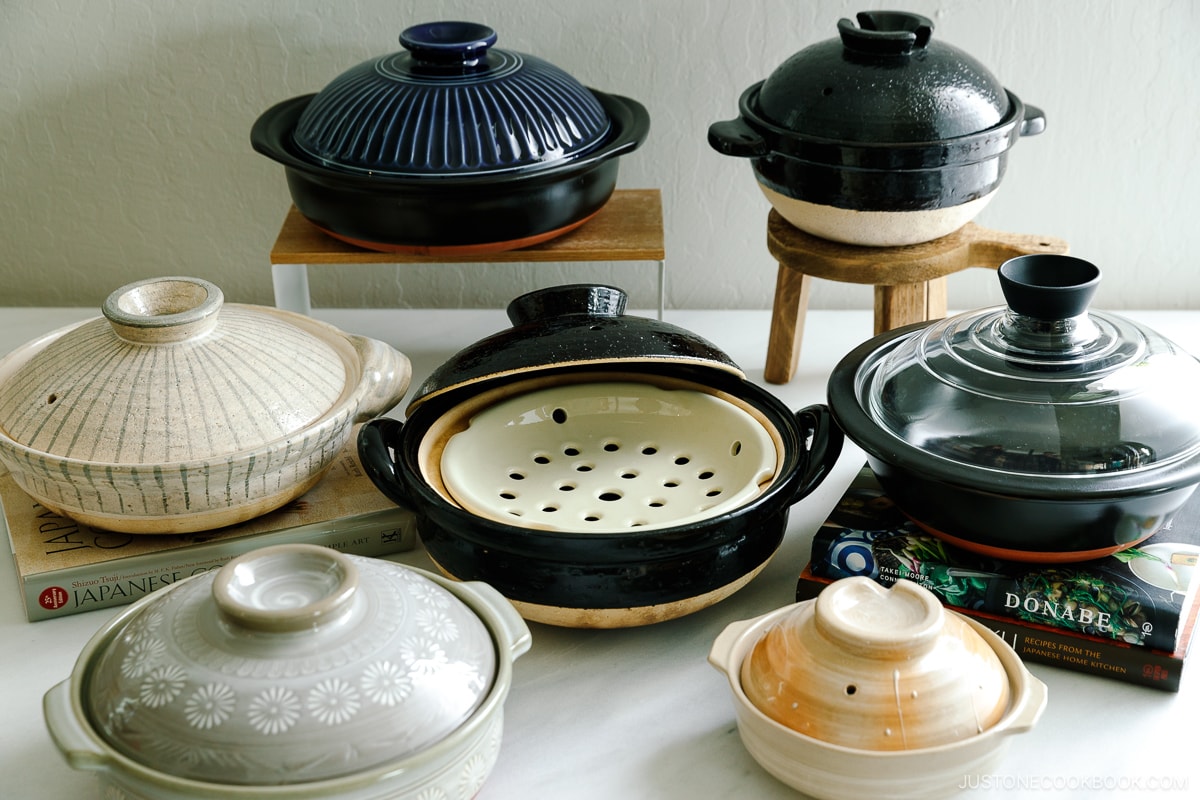
The donabe (土鍋) is the most traditional pot for Japanese hot pot. It holds and distributes heat well, which is perfect for simmering hot pot at the table. Donabe pots come in many sizes and designs, so if you cook nabe often, investing in a good-quality donabe is well worth it.
Where to Buy
Start with JOC Goods, where we carefully curate donabe directly from trusted Japanese kilns. You can also find them at Japanese or Asian grocery stores, specialty ceramic shops, and on Amazon, though the quality can vary.
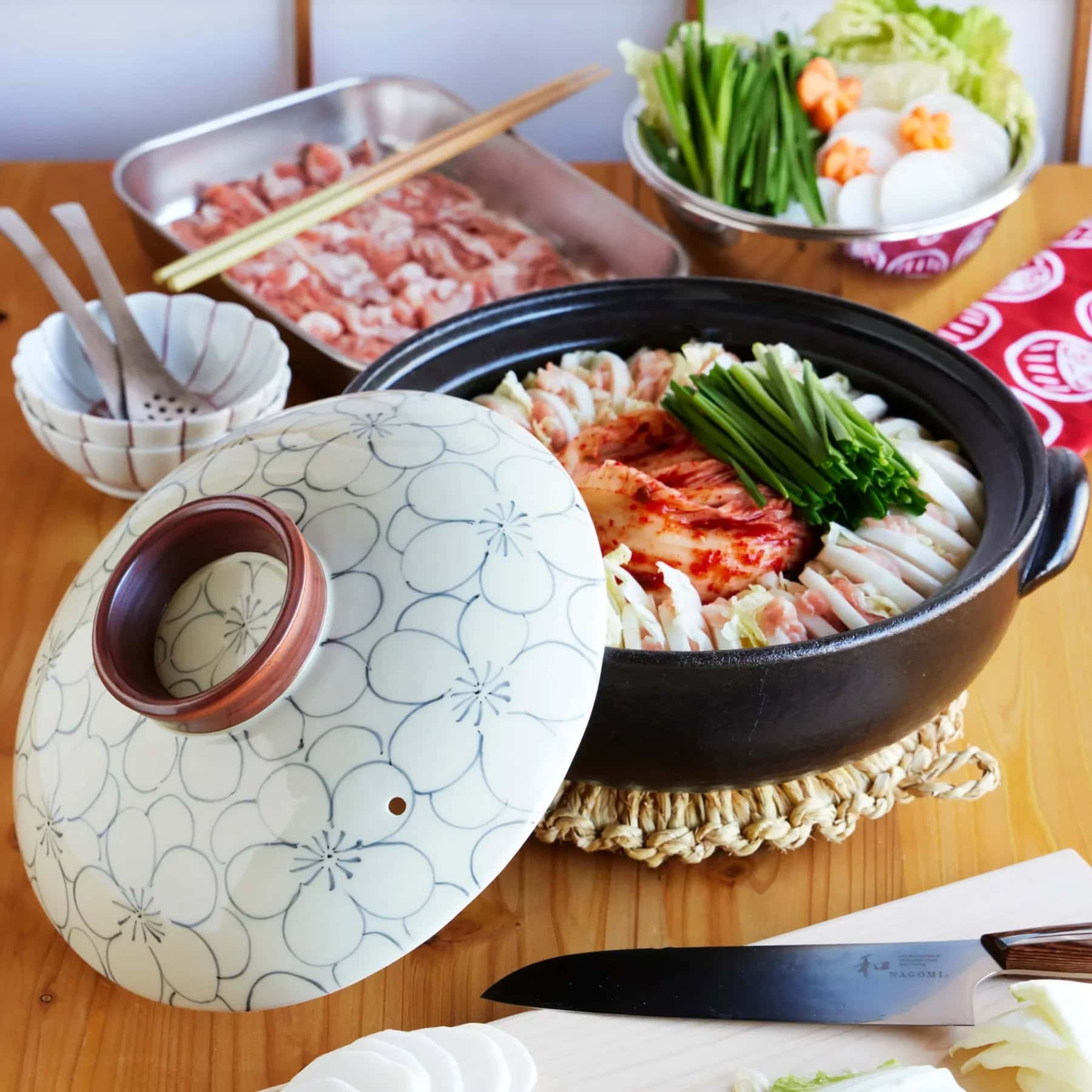
Donabe Size Guide
Donabe sizes are measured by the diameter of the pot. For large groups (6 people or more), using two donabe pots works best.
- Small (6.5–8 in / 16.5–20 cm, 6号) – Serves 1–2
- Medium (8.5–11 in / 22–28 cm, 7号〜9号) – Serves 2–3
- Large (12 in / 31 cm, 10号) – Serves 4–6
⚠️ Before your first use, season your donabe properly so it will last for years. Follow my step-by-step guide in How to Season and Care for Your Donabe.
Alternative Pots
No donabe? You can still enjoy nabe with these options:
- Dutch oven: Heavy and sturdy; best with a low, wide shape like this braiser.
- stainless steel pot with divider: Great for cooking two broths—spicy and mild.
- multi-functional electric skillet: Ideal for small kitchens or dorms; you can sauté, grill, and simmer in one appliance.
- electric stainless steel pot with divider: Works well when you prefer not to use gas.
2. Portable butane stove
A portable butane stove keeps the broth hot at the table—the traditional way to enjoy nabe!
📌 Most donabe pots need a gas flame and cannot be used on standard electric or induction cooktops unless specifically noted.
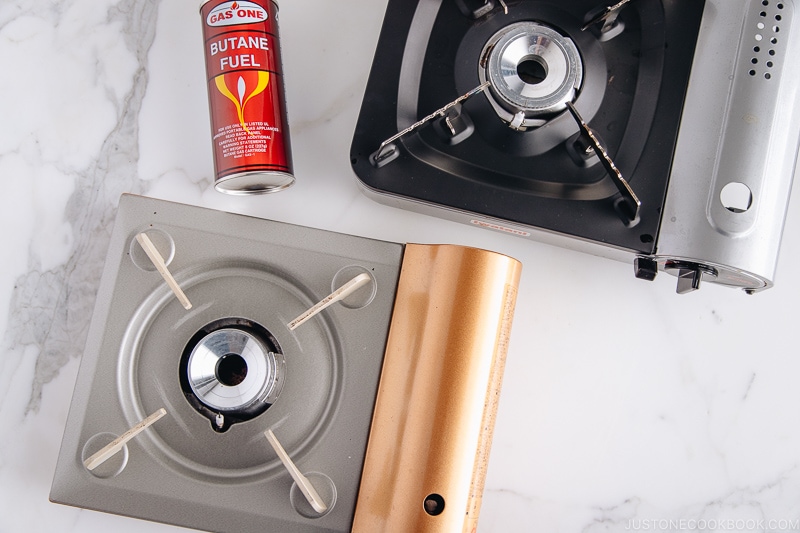
Many families use a single-burner butane stove for tabletop cooking, grilling, and hot pot. It’s also very useful for emergencies, camping, or road trips.
Portable Stove Options
We’ve used several Iwatani stoves over the years, and they’re reliable:
- 15,000 BTU model – Strong heat, similar to a home gas burner.
- 12,000 BTU low-profile model – Fits larger donabe without hitting the canister cover.
I’ve also listed a few additional Iwatani options for you.
Alternative option: If you are using a stainless steel pot, you can also use a portable induction cooktop.
3. Butane canisters
You’ll need butane canisters (カセットガス) for your portable stove.
⚠️ Safety Tip: Always cook in a well-ventilated space. (Butane burners typically don’t produce carbon monoxide.)
Expert Tip: Keep extra canisters on hand in winter. Cold temperatures weaken the flame, and hot pot meals often last a long time. Extra fuel makes sure your nabe stays hot until the end.
4. Serving utensils
Set out a few shared utensils so everyone can cook and serve with ease:
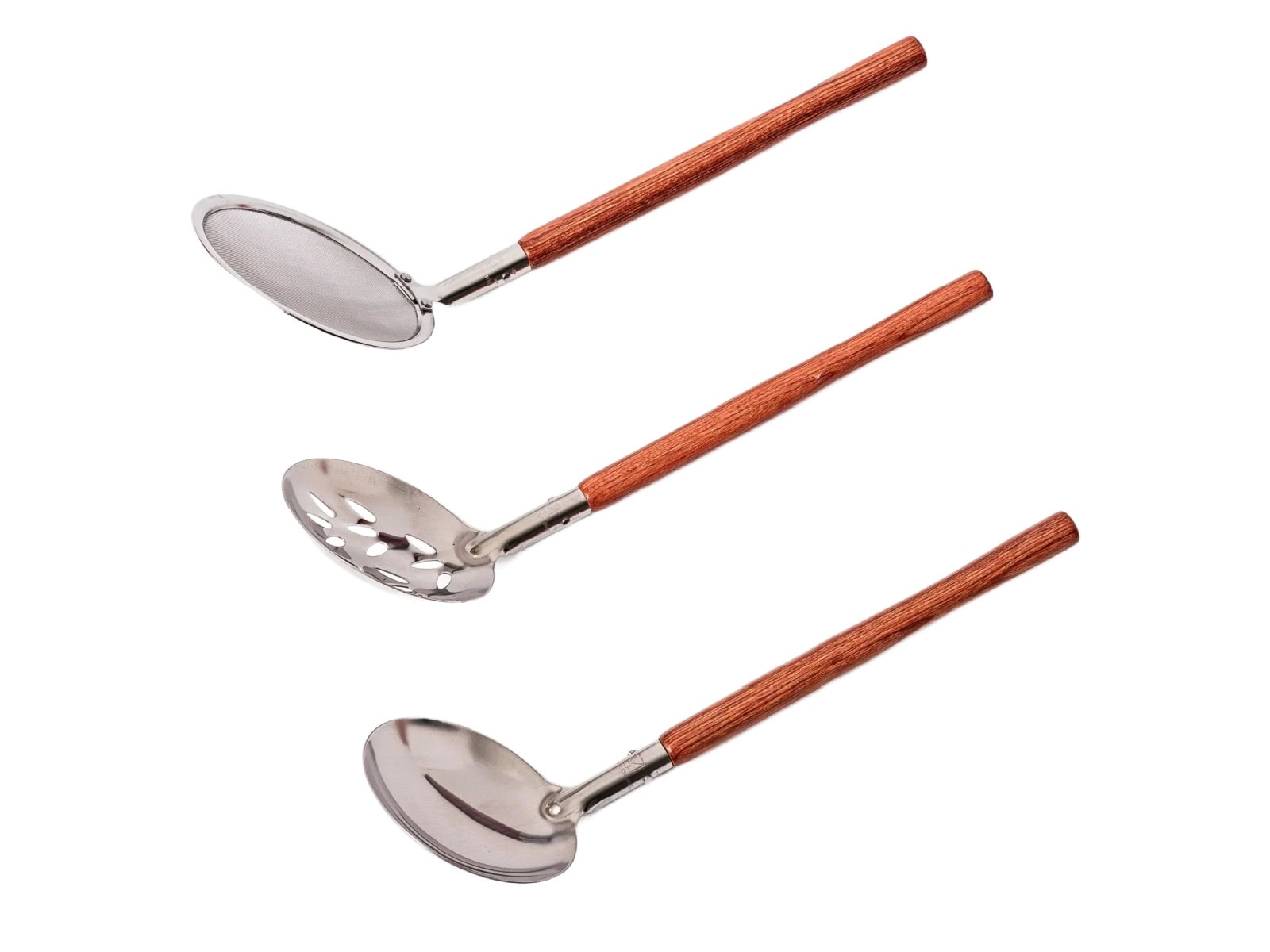
- fine mesh skimmer
- ladles
- slotted ladles
- 3-piece nabe tool set
- long cooking chopsticks
- tongs
- prep trays for ingredients
A matching nabe tool set with beautiful wooden handles looks tidy on the table and makes serving so much easier!
5. Tableware and drinkware
Give each guest a small personal setup:
- medium bowl for holding cooked ingredients and broth.
- small dipping bowl for ponzu, sesame sauce, or any dipping sauce.
- chopsticks and chopstick rest
- drinkware
You might also want:
- serving platters for arranging veggies, meat, mushrooms, and tofu.
- condiment bowls for green onions, grated daikon, shichimi togarashi, and yuzu kosho.
Japanese Hot Pot Ingredients
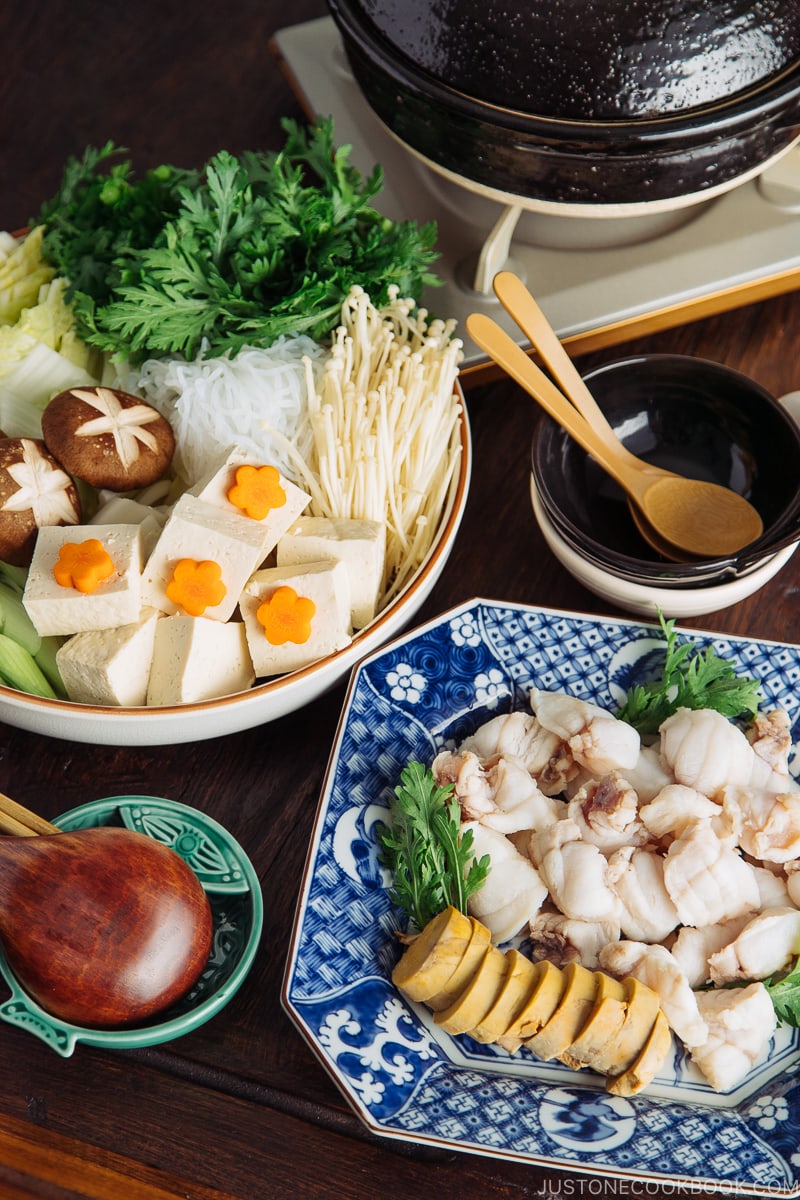
A delicious nabe starts with a good dashi (Japanese soup broth), then layers in vegetables, protein (sometimes protein, then vegetables), and a simple finish of rice or noodles.
Quick list
- Dashi (Japanese soup stock)
- Meat and seafood
- Tofu and soybean products
- Vegetables and mushrooms
- Rice or noodles
- Dipping sauce
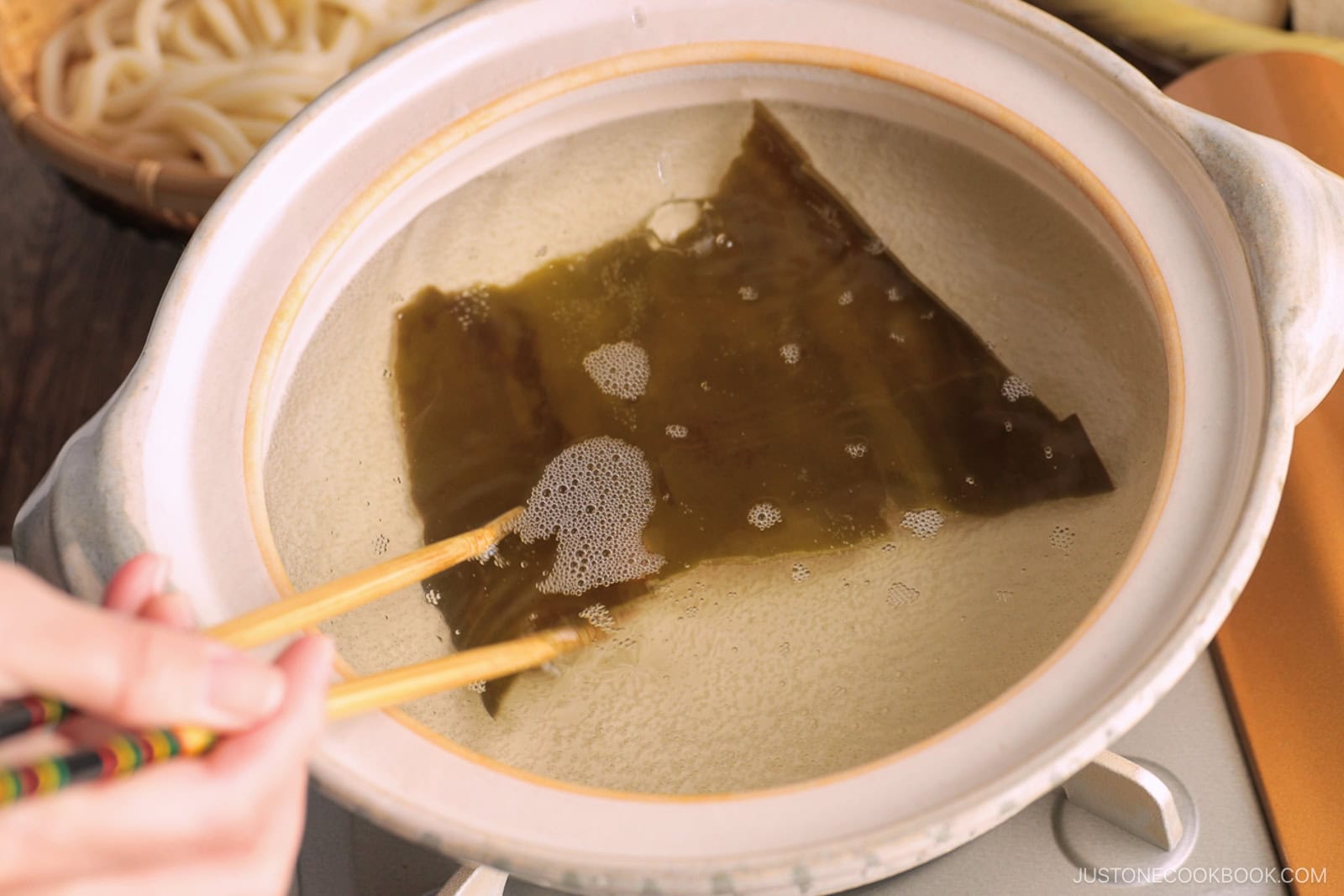
1. Dashi (Japanese soup stock)
The common broths for Japanese hot pot include:
- Kombu dashi – Made from dried kelp; light and clean.
- Katsuo (bonito) dashi – Made from dried bonito flakes; richer and more savory.
- Awase dashi – A blend of kombu and bonito; the most classic all-purpose.
- Iriko (anchovy) dashi – Made from dried anchovies; deep and bold.
- Vegan dashi – Made with kombu and/or dried shiitake mushrooms.
2. Meat and seafood
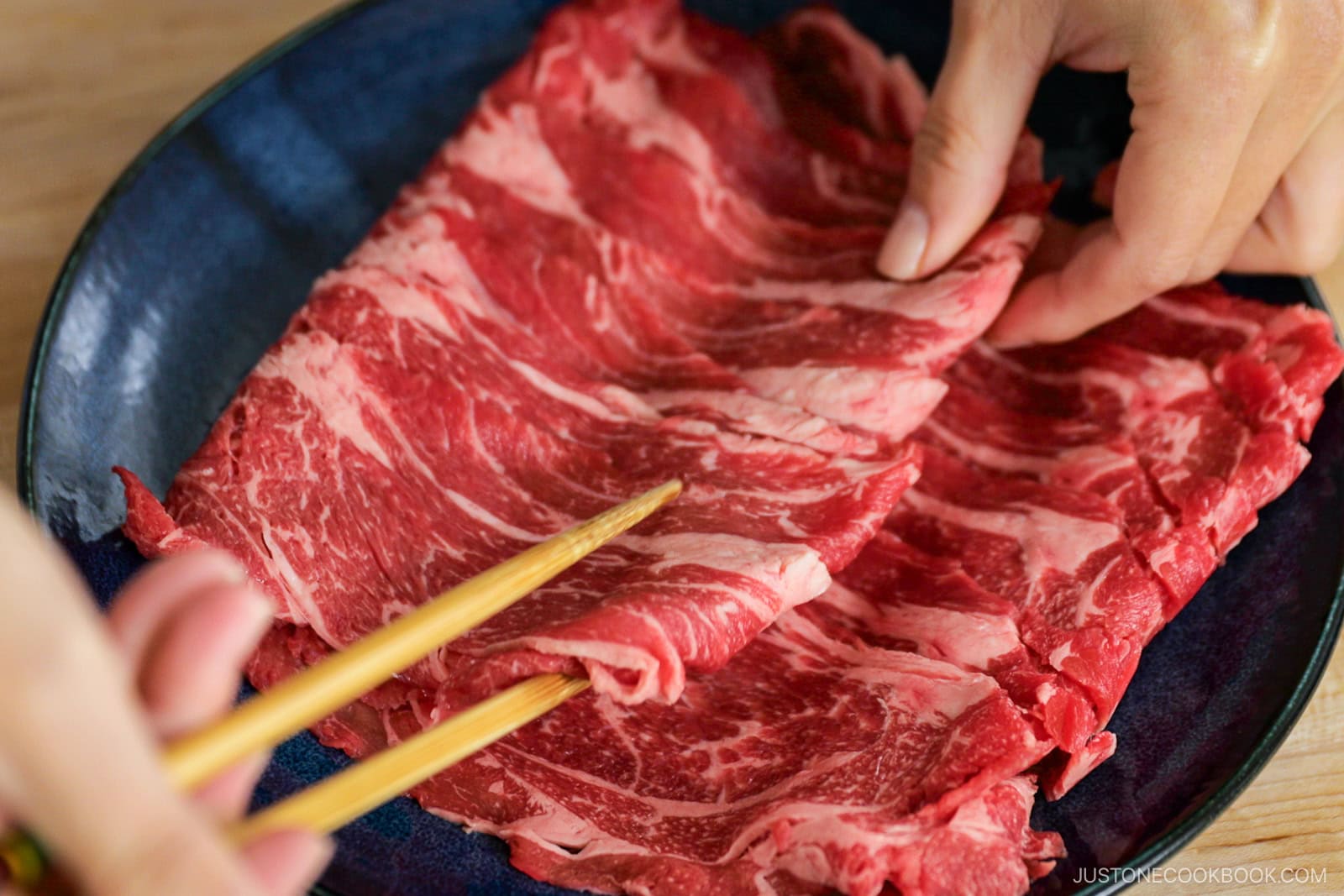
- Thin sliced beef or pork (about 1–2 mm thick) cooks in seconds in hot broth and adds a lovely richness. Well-marbled cuts like ribeye, sirloin, pork belly, or pork loin give a soft, silky, texture and a naturally sweet flavor. Because the meat is rich and tender, a few slices go a long way.
- Chicken thigh stays juicy and tsukune (chicken meatballs) add body and richness.
- White fish or salmon hold their shape and add a clean, delicate taste.
- Shrimp, scallops, and clams cook quickly and bring deep umami.
- Squid or crab add great texture and natural sweetness; great for winter hot pots.

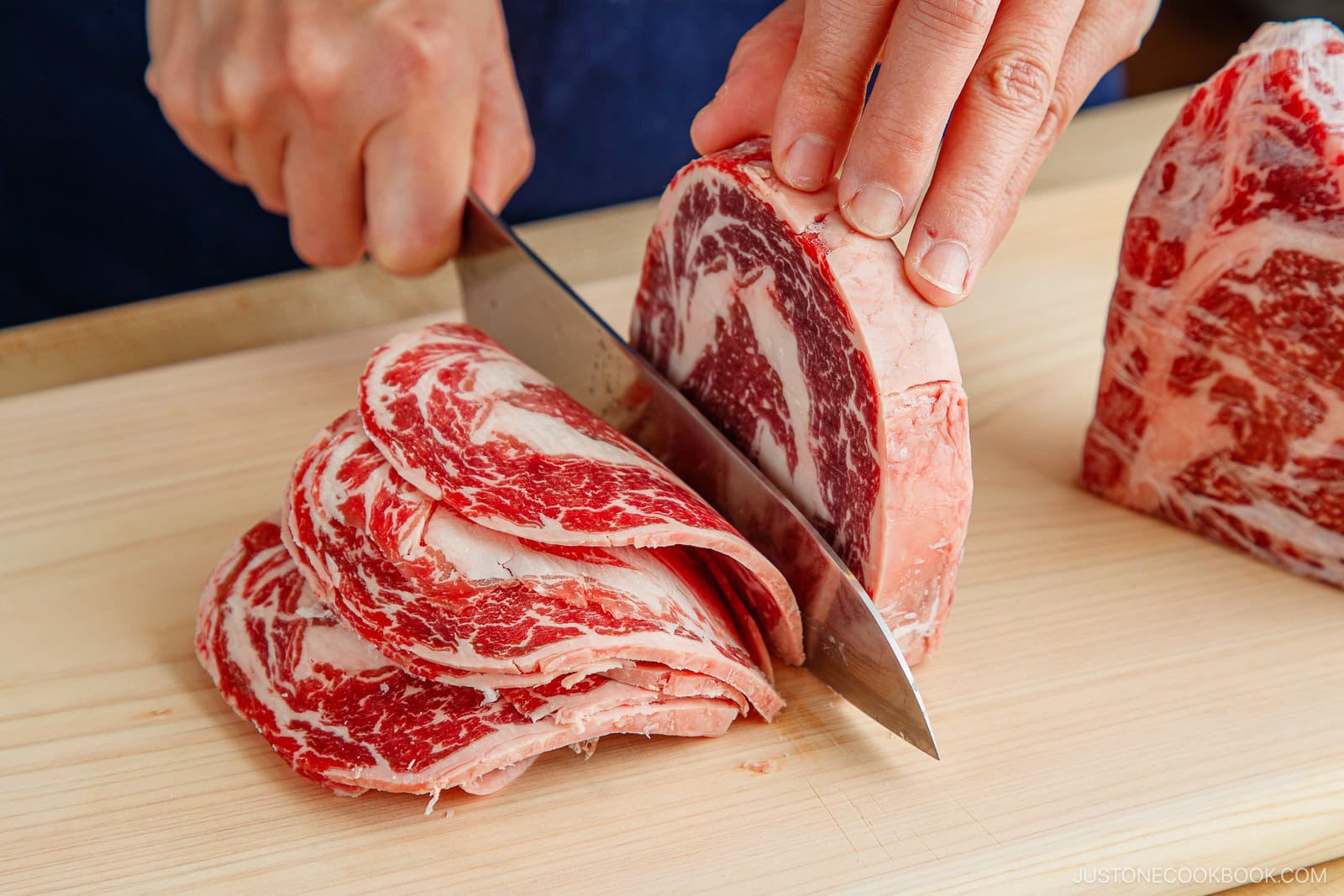
Nami’s Tips on How to Slice Meat Thinly
Butchers at Japanese or Asian grocery stores chill the meat slightly so they can slice it paper-thin.
You can do this at home, too! Follow my easy step-by-step tutorial on How to Slice Meat Thinly for best results.
If you live near Japanese or Korean grocery stores, they often sell high-quality thinly sliced meat for hot pot.
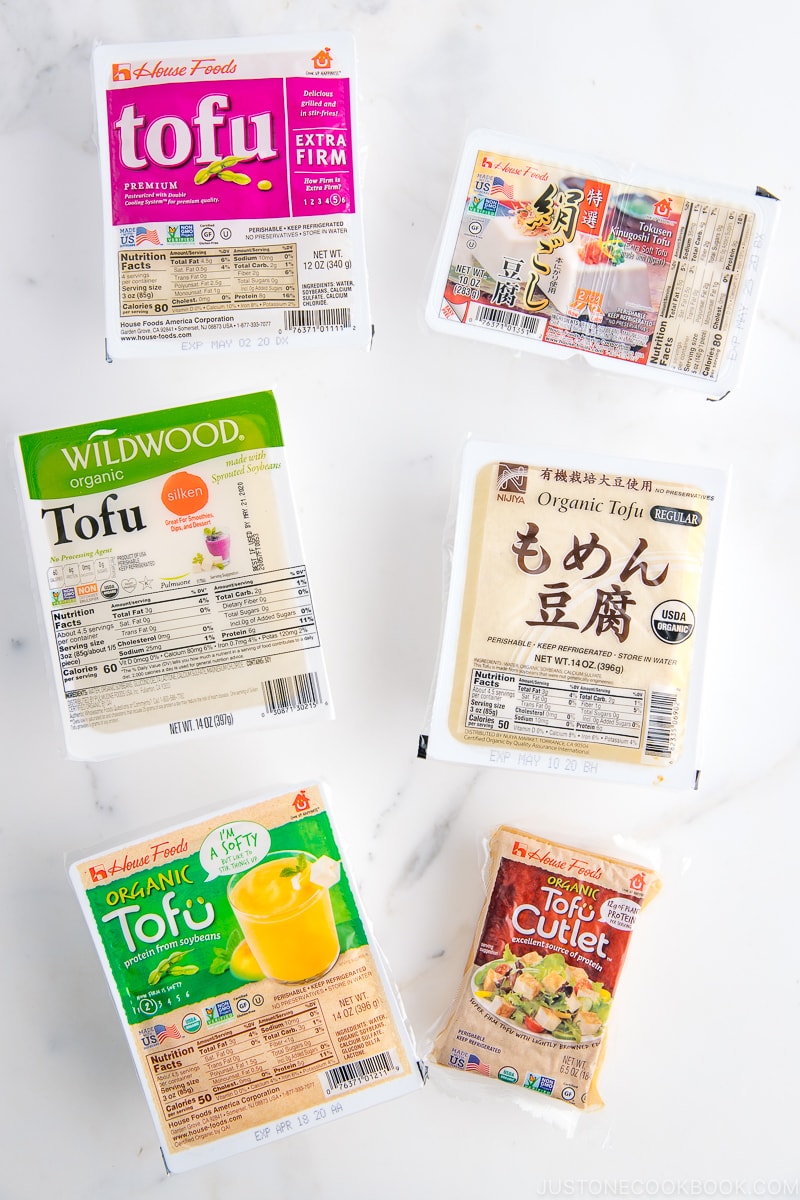
3. Tofu and soybean products
Tofu is a nabe staple and soaks up the flavorful broth beautifully. Here are some options:
- soft tofu – Very smooth and delicate.
- medium-firm tofu – Holds its shape well in hot broth.
- yaki tofu (grilled tofu) – Firmer texture with a light grilled flavor.
- aburaage (deep-fried tofu pouch) – Soft and spongy; great for absorbing broth.
- atsuage – Thick fried tofu with a crisp outside and soft inside.
- yuba (tofu skin) – Thin, delicate layers with a silky texture.
- ganmodoki – Tofu fritters mixed with vegetables.
- kinchaku – Aburaage pouches filled with mochi (plain rice cake).
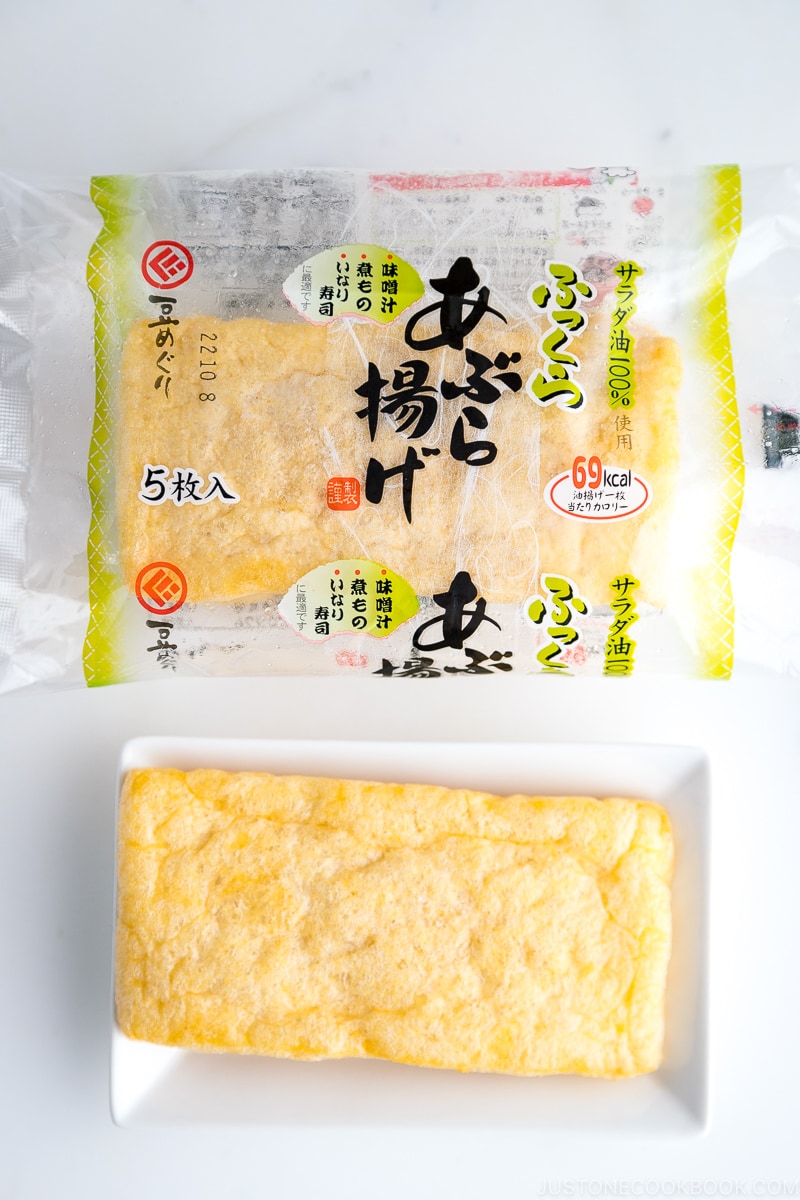
4. Vegetables and mushrooms
Classic vegetables for nabe include:
- napa cabbage
- carrot
- daikon
- Tokyo negi (Japanese long green onion)
- chrysanthemum greens (shungiku)
- gobo (burdock root)
- mizuna
They add sweetness, texture, and lots of color to the pot.
You can also use what’s available locally, such as bok choy, broccoli, spinach, watercress, zucchini, and more. Add firm stems first to the broth, then leafy greens.
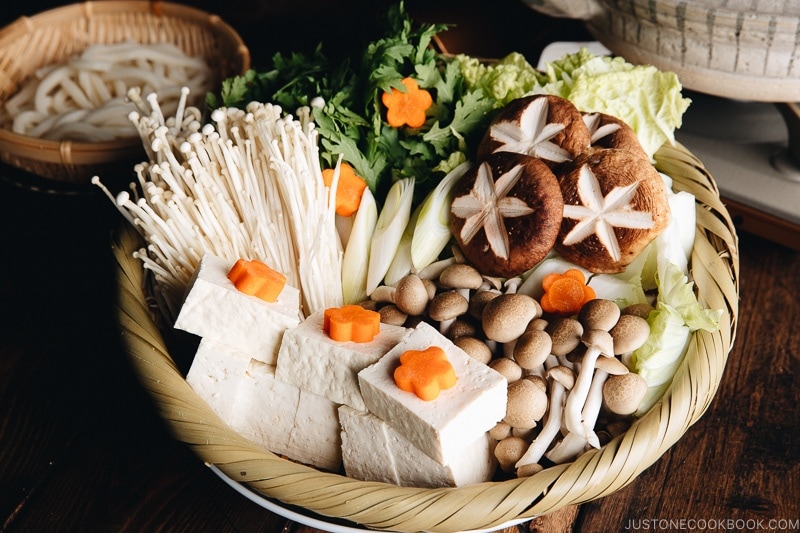
Japanese mushrooms are another must-have. They add deep umami and a wonderful texture to the broth. My favorites are:
- shiitake mushrooms
- enoki mushrooms
- shimeji mushrooms
- maitake mushrooms
- king oyster mushrooms
Each brings its own flavor and shape to the pot.
5. Dipping sauce
The broth is delicious on its own, but dipping sauces make nabe extra fun. Here are two most common sauces:
- Ponzu – A citrusy soy sauce that brightens the dish, especially fatty meat.
- Goma dare – A creamy roasted sesame sauce that pairs well with marbled beef and pork.
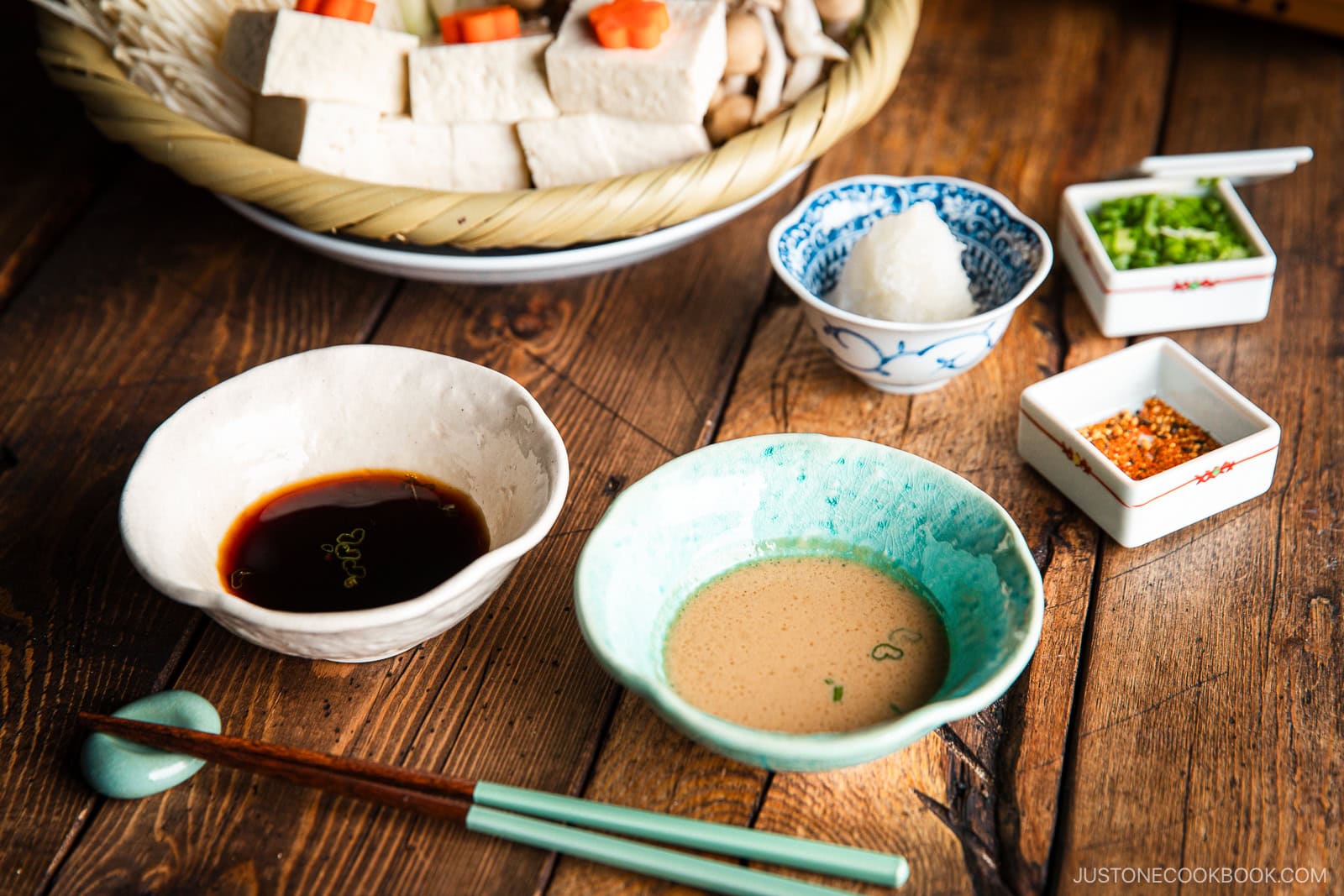
You can customize your bowl with toppings like:
- grated daikon
- green onions
- yuzu kosho
- chili oil
- toasted sesame seeds
Have fun creating your own perfect mix!
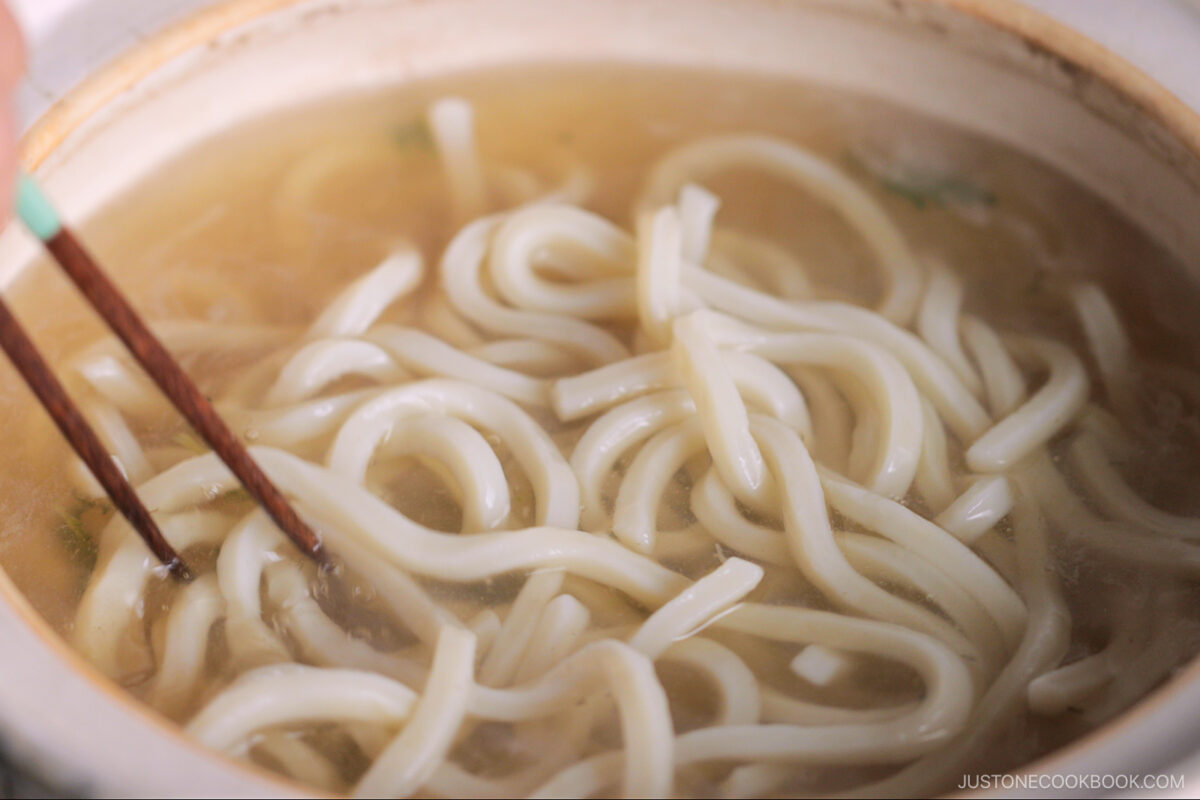
6. Rice or noodles
Finish the meal with shime, the final course.
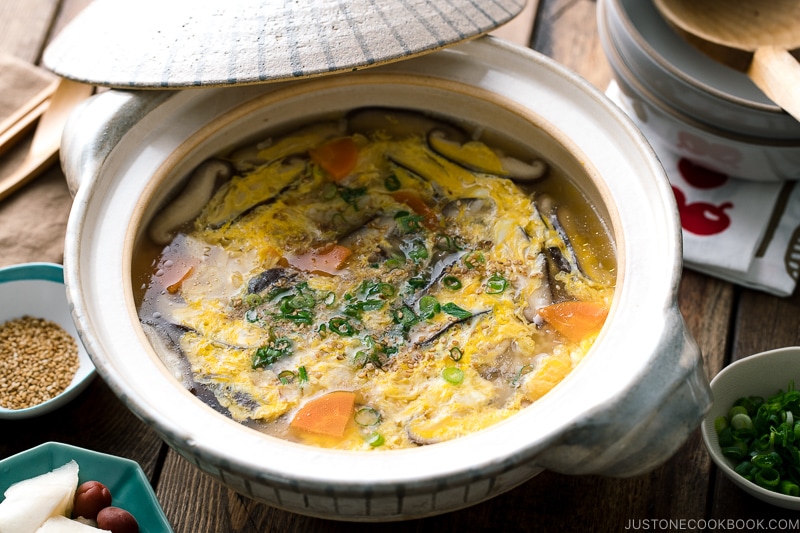
- Add cooked rice to the remaining broth and simmer for Zosui (rice soup).
- Or add cooked udon noodles and simmer until tender.
It’s the perfect way to enjoy every last drop of the flavorful broth.
Nami’s Best Tips for Nabemono
Cooking and eating nabemono is all about shared experience. Here are my best tips to help you cook Japanese hot pot like a pro!
- Follow the cooking order. Start with ingredients that build flavor, like chicken, fish, or meatballs. Add root vegetables that take longer to cook next, like daikon, carrots, or gobo, then mushrooms and finish with thinly sliced meat and leafy greens.
- Don’t overcrowd the pot. Too many ingredients at once lowers the broth temperature. Add ingredients in small batches so everything cooks evenly.
- Add ingredients to a boiling broth. Wait until the broth is bubbling before you add new ingredients. This keeps the broth temperature high all the time.
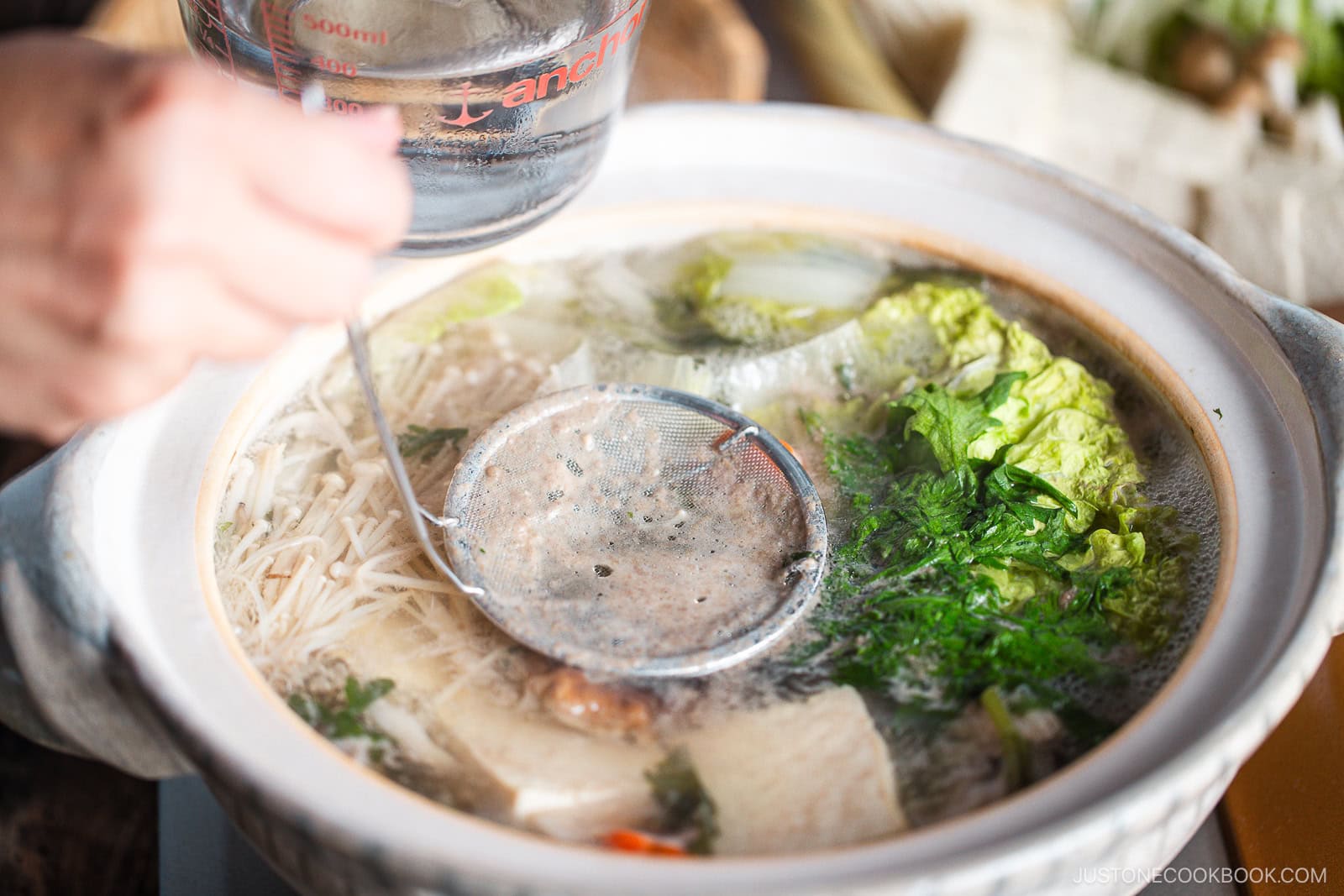
- Skim the broth occasionally. Proteins and vegetables can create foam or scum on the surface. Skim occasionally to keep the broth clean and clear. I usually skim while Mr. JOC adds ingredients—teamwork!
- Taste and adjust. As you cook, the broth may become stronger or lighter. Adjust with a bit more dashi, water, or seasoning.
- Practice good sharing etiquette. When cooking with guests, avoid fishing around for specific pieces in the pot. As the host, you can offer to help newcomers cook their ingredients, which makes the meal welcoming and fun.
Popular Nabe Recipes
Here are some of my most loved Japanese hot pot recipes so you can pick one to start with!
Shabu Shabu
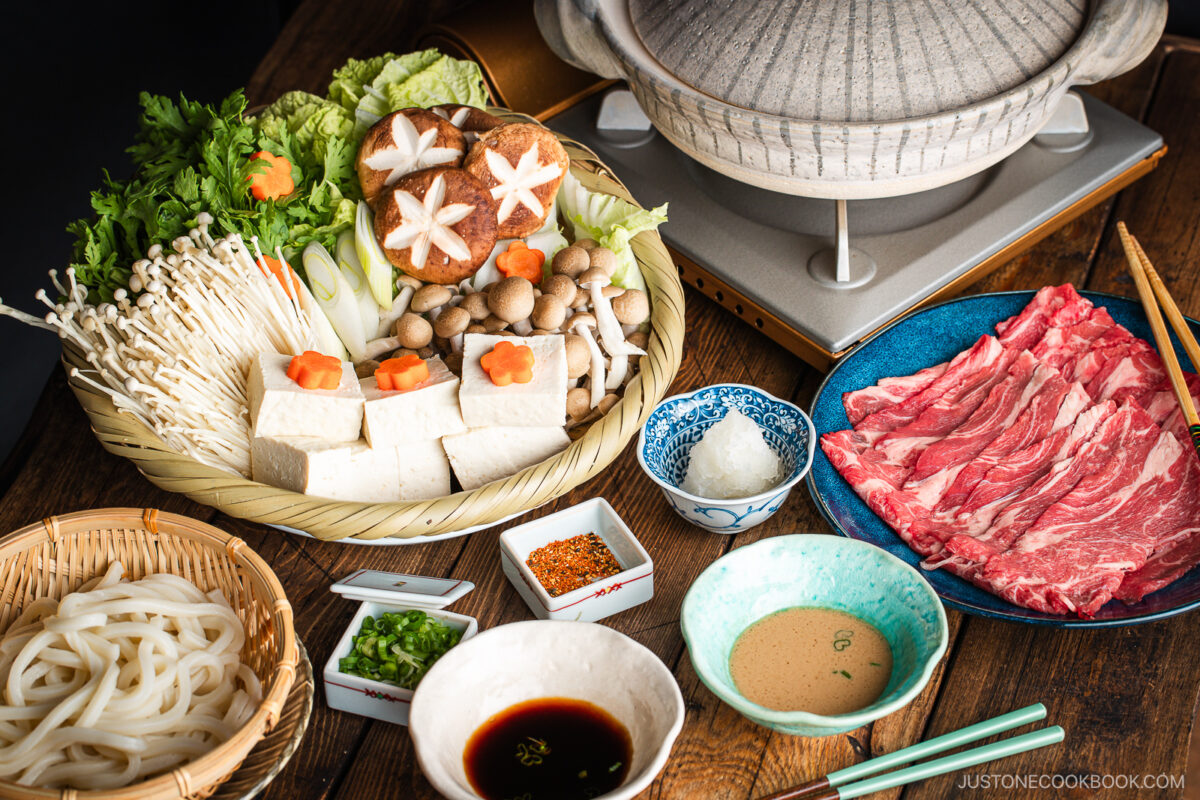
Shabu Shabu is a famous Japanese hot pot where everyone at the table cooks together. Diners swish marbled meat, tofu, and vegetables in a light broth and enjoy it with savory dipping sauce. It's an intimate yet casual meal that's fun and easy to pull off at home.
Sukiyaki
Cozy up at your next get-together with friends and family with my homemade Sukiyaki recipe. In this dish, we sear marbled beef and simmer it with tofu, mushrooms, and vegetables in a sweetened soy sauce. This family-style dinner will warm your stomachs and hearts with its authentic Japanese flavors.
Mille-Feuille Nabe
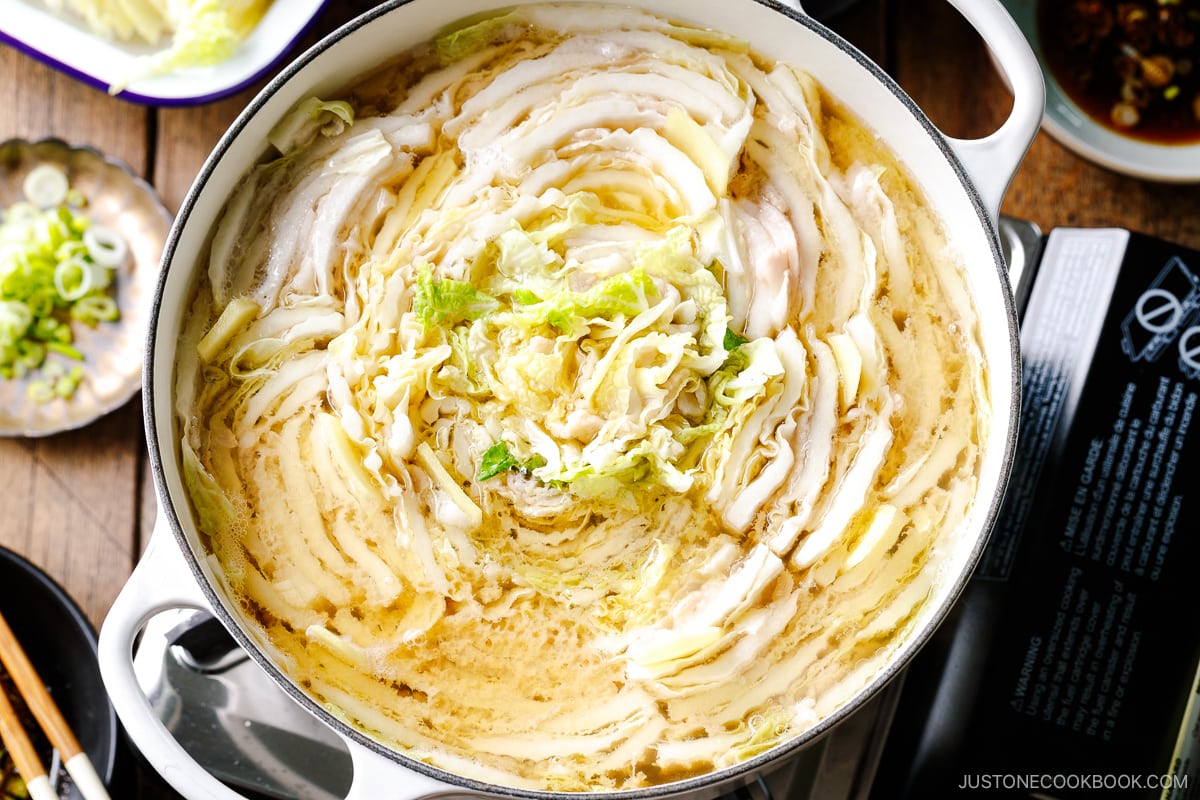
Mille-Feuille Nabe is one of the most popular hot pot recipes to cook at home in Japan. “A thousand layers“ of napa cabbage leaves and pork belly slices are beautifully packed and simmered in a warming dashi broth. It comes together quickly for a weeknight dinner or hot pot party that you will treasure during the cold-weather months.
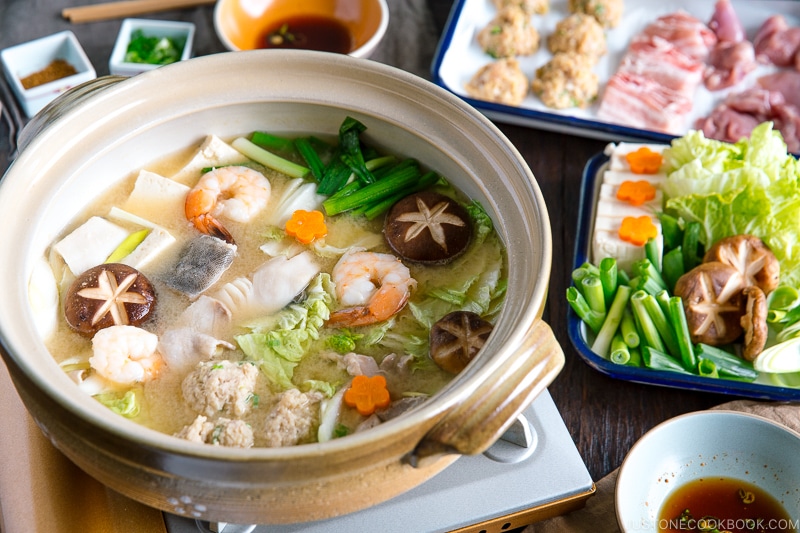
Chanko Nabe (Sumo Stew)
Chanko Nabe or Sumo Stew is a robust hot pot filled with all kinds of vegetables and tons of protein in a rich dashi and chicken broth. Traditionally eaten by sumo wrestlers, this well-balanced meal is also enjoyed in Japanese homes and at some restaurants.
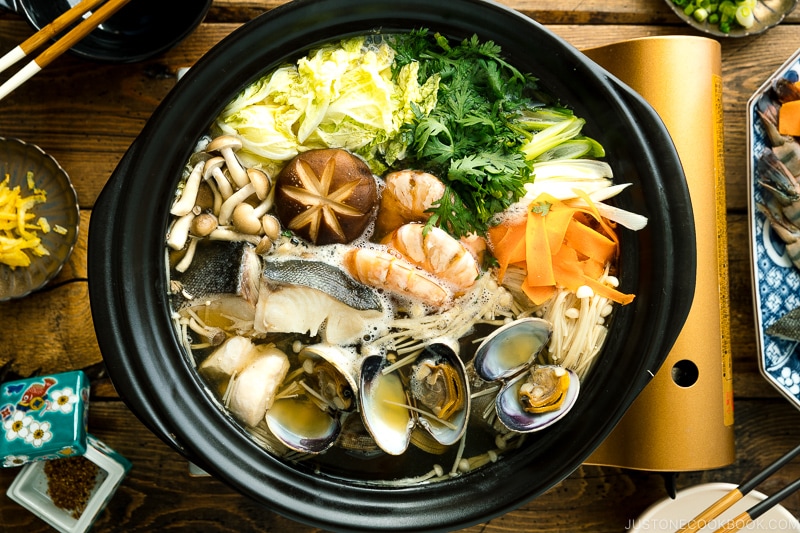
Yosenabe (Japanese Hot Pot)
Yosenabe is a basic Japanese hot pot where you can cook whatever ingredients—chicken, seafood, tofu, and all kinds of vegetables—in a delicious dashi broth.
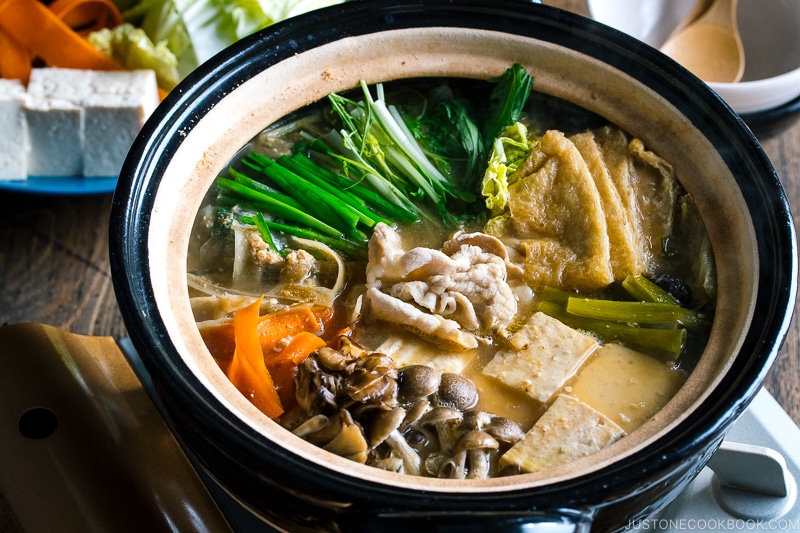
Sesame Miso Hot Pot (Goma Miso Nabe)
Loaded with vegetables, mushrooms, and tofu, my easy Sesame Miso Hot Pot is an ideal dish to make with friends and family. With a savory and nutty broth, this Japanese one-pot recipe will warm your belly and soothe your soul. {Vegan Adaptable}
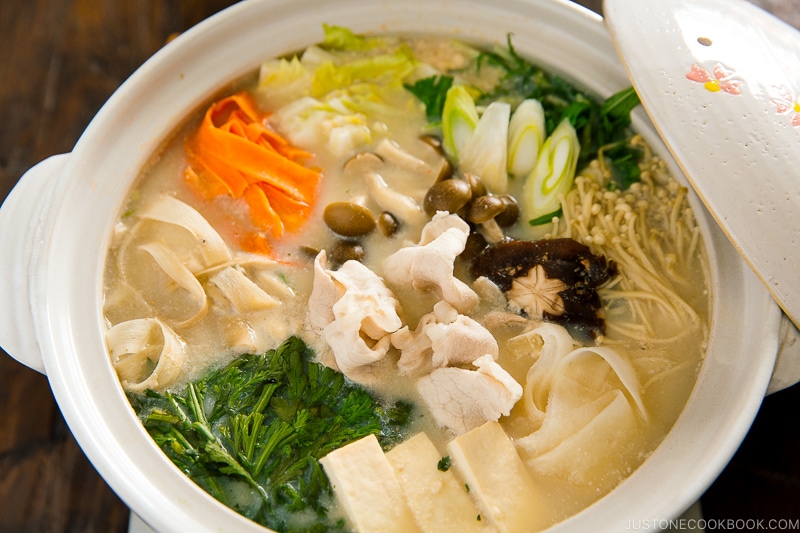
Soy Milk Hot Pot
Delicious Japanese Soy Milk Hot Pot recipe with napa cabbage, mushrooms, and thinly sliced pork cooked in a creamy and savory soy milk broth.
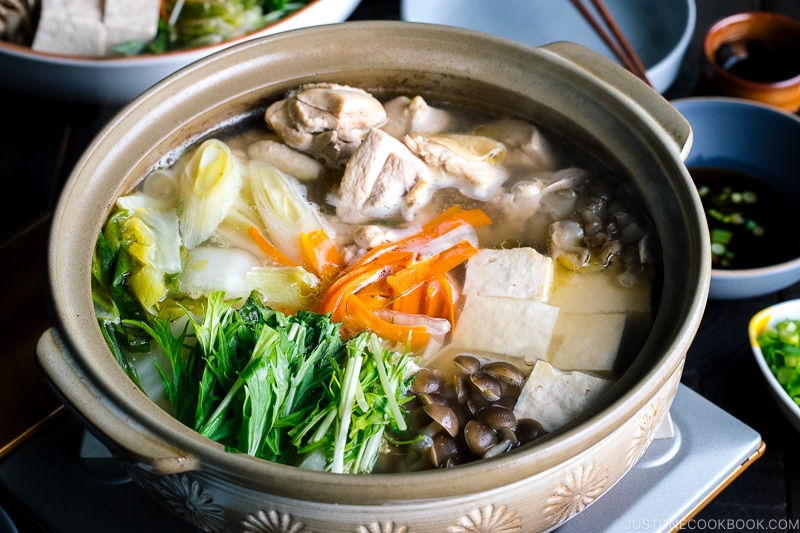
Mizutaki (Japanese Chicken Hot Pot)
Mizutaki is a Japanese Chicken Hot Pot in which chicken, assorted vegetables, mushrooms, and tofu are cooked in a light kombu dashi broth. Dip the freshly cooked ingredients in the savory and citrusy ponzu sauce. It‘s one of the best wintery foods to enjoy!
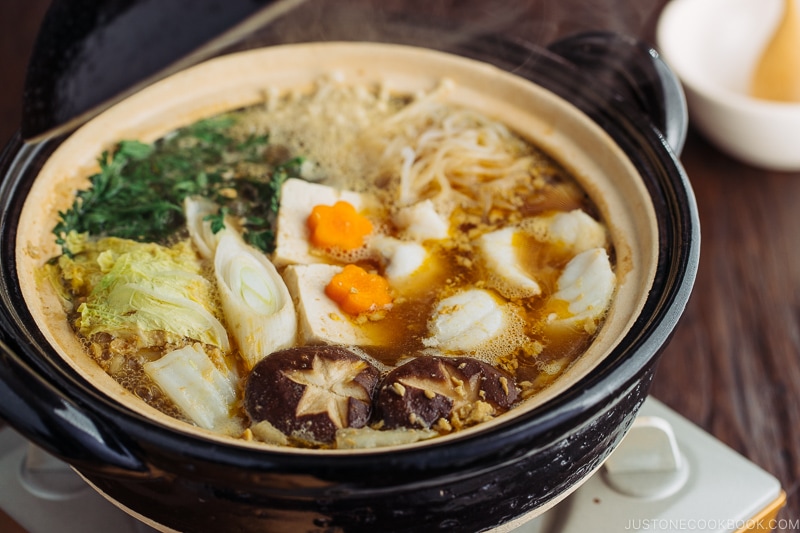
Monkfish Hot Pot (Anko Nabe)
Experience the warmest communal dining at home with this incredibly flavorful Japanese Monkfish Hot Pot called Anko Nabe. The rich soup broth will blow you away. Such a fun way to cook and eat together, it‘s one of our family's favorite meals in the winter months!
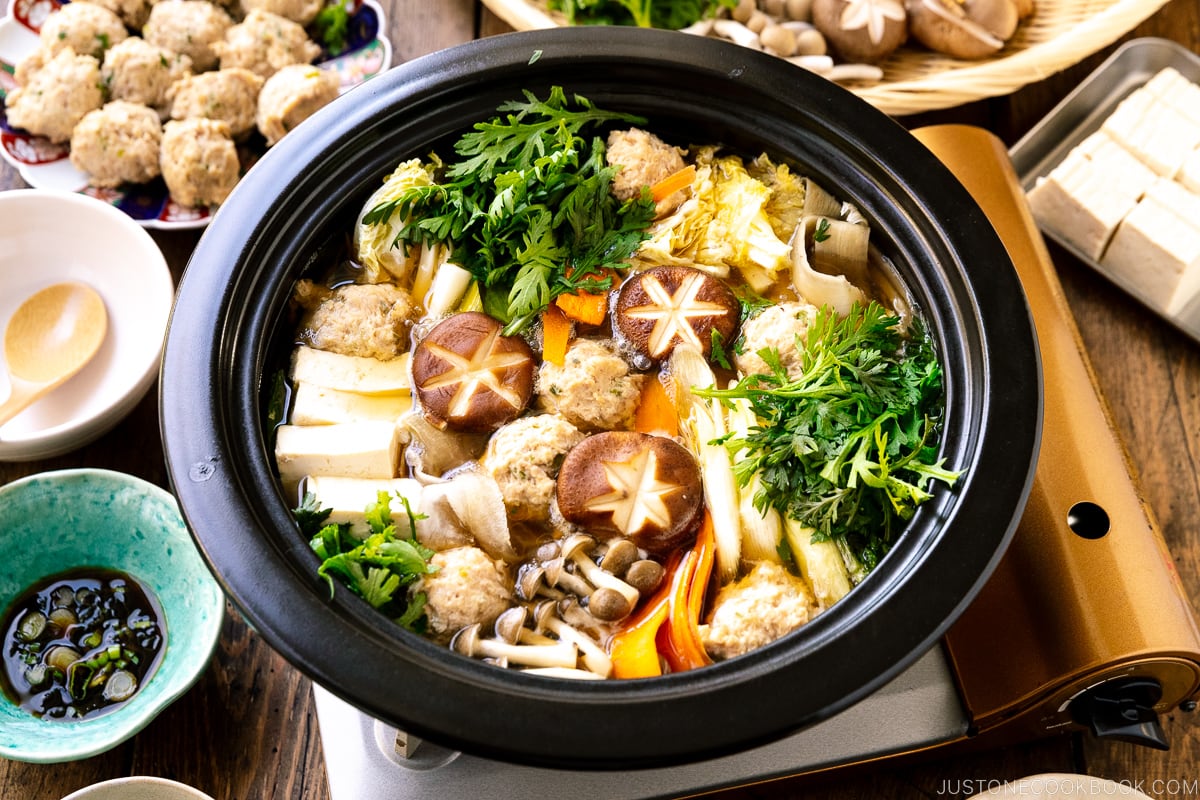
Tsukune Hot Pot (Tori Dango Nabe)
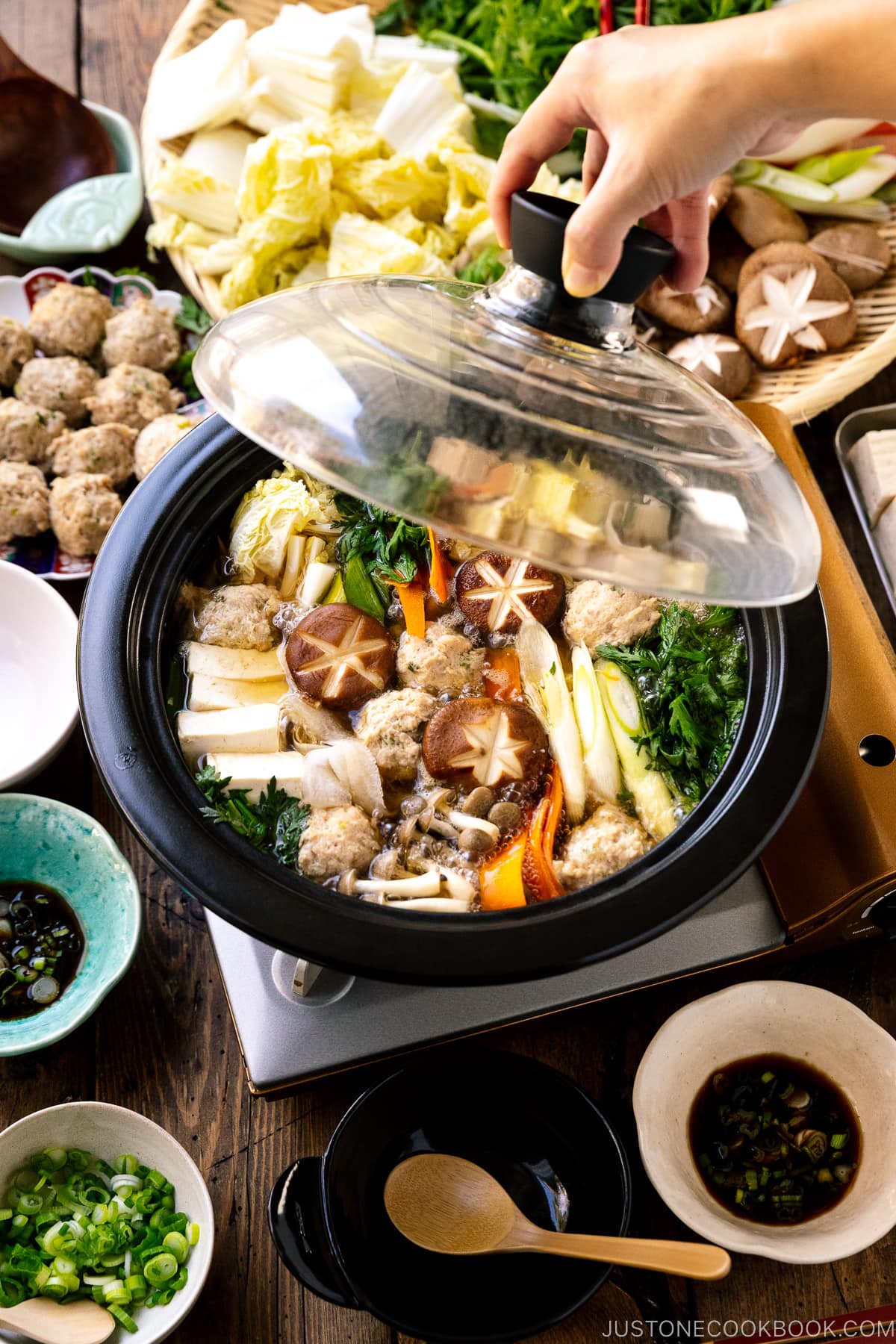
Tsukune Hot Pot, or Tori Dango Nabe, is a Japanese hot pot recipe where ginger-flavored chicken meatballs are simmered in a dashi-based broth along with a healthy mix of tofu, vegetables, and mushrooms. Cooked at the table in a donabe clay pot, it’s a warm and comforting family-style dinner for fall and winter nights.
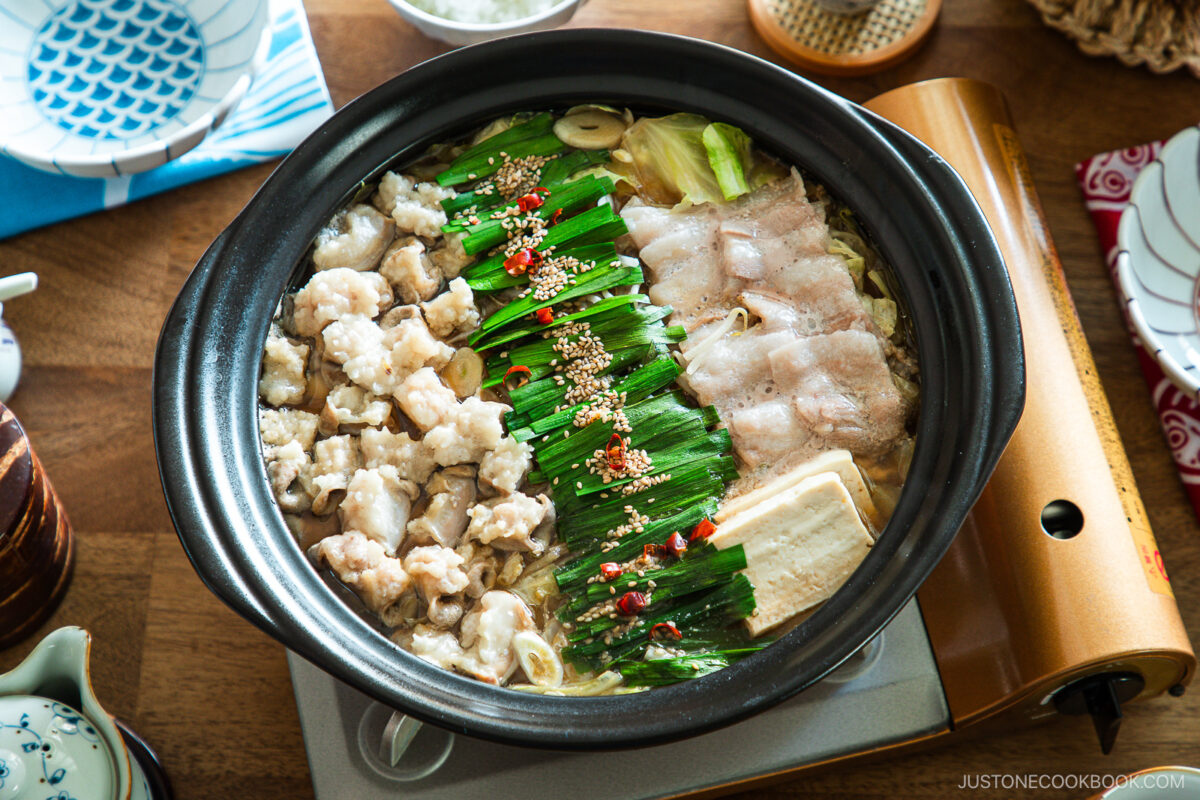
Motsunabe Recipe
Warm up with a bowl of rich and savory Motsunabe—a regional Japanese hot pot dish with plump beef offal, garlic chives, cabbage, and tofu simmered in a creamy miso broth. It's packed with deep umami goodness!
Editor’s Note: This post was originally published on March 5, 2019. It was updated on November 24, 2021, and republished on November 26, 2025 with more helpful information.





 English (US) ·