
 1 month ago
45
1 month ago
45
Some fruits stop you in your tracks. Shine Muscat grapes are one of them. Walk past a display at a Japanese department store in late summer, and the clusters catch your eye immediately. Plump, almost luminously green, each grape sitting perfectly formed in a cushioned box. Then you read the price, and you pause.
But here’s the thing. Once you taste one, the price starts to make sense.
TOC
What Is Shine Muscat?
Shine Muscat is a Japanese seedless grape celebrated for its sweet, faintly musky flavor and crisp, juicy flesh. Unlike most grape varieties, it carries no seeds. The skin is thin enough to eat whole without any bitterness. And the sugar content, when fully ripe, typically reaches around 18 to 20 degrees Brix, which puts it well above the sweetness of standard green table grapes found in Western supermarkets.
In Japan, Shine Muscat grapes belong to a broader tradition of premium Japanese fruit that people give as gifts, purchase for special occasions, and eat slowly, with real attention. If you enjoy this style of luxury grape, the Ruby Roman grape from Ishikawa is another Japanese variety worth exploring. This isn’t casual snacking fruit. It’s something closer to a luxury experience.
Why Shine Muscat Grapes Became So Famous
Several things made Shine Muscat grapes famous, both within Japan and increasingly abroad.
First, the flavor profile is genuinely unusual. Most green grapes taste either tart or blandly sweet. Shine Muscat offers something different: a clean, honeyed sweetness with a distinctly floral, muscat-like fragrance that lingers after each bite. The texture adds to the appeal. The flesh is firm but juicy, never mealy or watery.
Second, the seedless, thin-skin combination makes eating effortless. No seeds to navigate, no tough skin to chew through. Just bite and enjoy. That simplicity matters more than it might sound.
Third, and perhaps most powerfully, Shine Muscat became a social media phenomenon. Clusters appeared on Instagram and food blogs across Asia in the 2010s, attracting attention from fruit enthusiasts worldwide. By 2020, demand had spread well beyond Japan, with Korean, Chinese, and Taiwanese markets paying premium prices for authenticated Japanese Shine Muscat.
The History Behind Japan’s Famous Green Grape
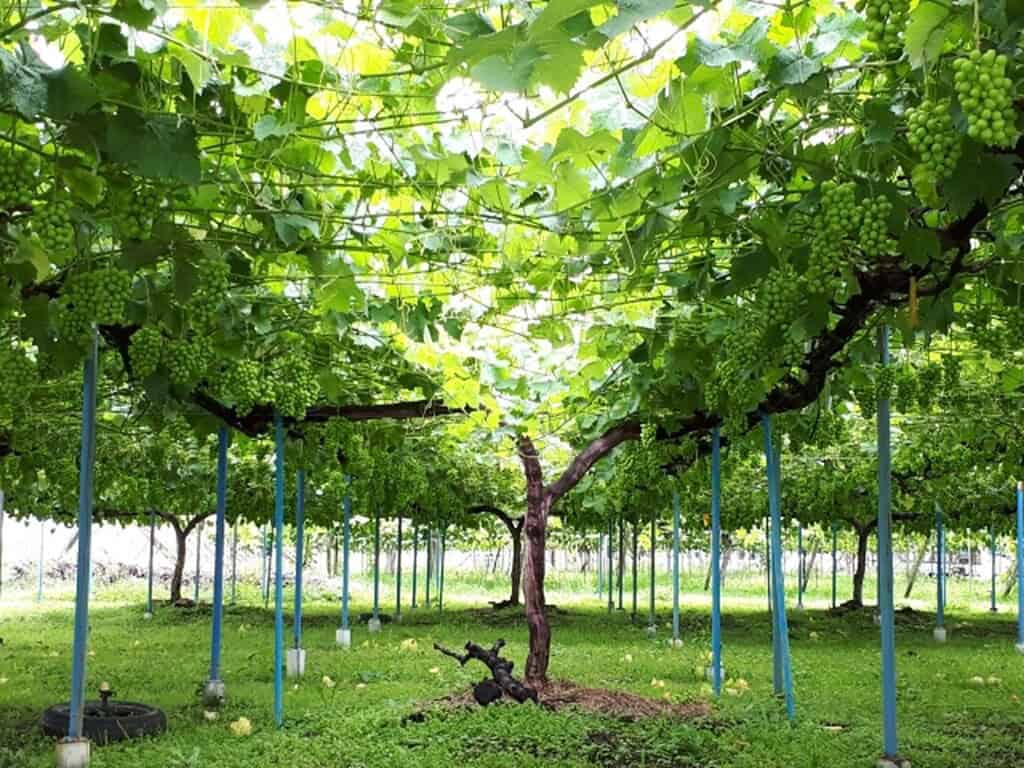 Vineyard with lush Shine Muscat grapes growing on trellises in Japan, showcasing premium fruit cultivation.
Shine Muscat has a surprisingly recent origin story. Researchers at Japan’s National Agriculture and Food Research Organization (NARO) developed it through crossbreeding over several decades. The primary parent varieties were Akitsu 21 and Hakunan, both bred for different qualities. Additionally, muscat of Alexandria influenced the aromatic character of the final variety.
NARO officially registered Shine Muscat as a new variety in 2006. From that point, licensed Japanese farmers began cultivating it commercially, primarily in Yamanashi Prefecture and Nagano Prefecture, both known for their cooler mountain climates and well-drained soils ideal for high-quality grape production.
Growth in popularity accelerated quickly. By the early 2010s, Shine Muscat had become a flagship fruit for Japan’s premium fruit market. Department stores started featuring it prominently in gift sections, often boxed in careful arrangements with each cluster nestled in its own padding. Some high-end selections sold for tens of thousands of yen per bunch.
Unfortunately, unauthorized cultivation became a serious problem. Farmers in China and South Korea began growing Shine Muscat outside the licensed Japanese framework, sometimes labeling the product in ways that suggested Japanese origin. By 2021, Japan estimated annual losses from unauthorized overseas cultivation at roughly 100 billion yen. In response, NARO and the Japanese government tightened export controls on plant material and began pushing for international intellectual property protections.
Today, authentic Japanese Shine Muscat remains distinguishable by its provenance documentation and the quality consistency that licensed growers maintain through strict agricultural standards.
What Does Shine Muscat Taste Like?
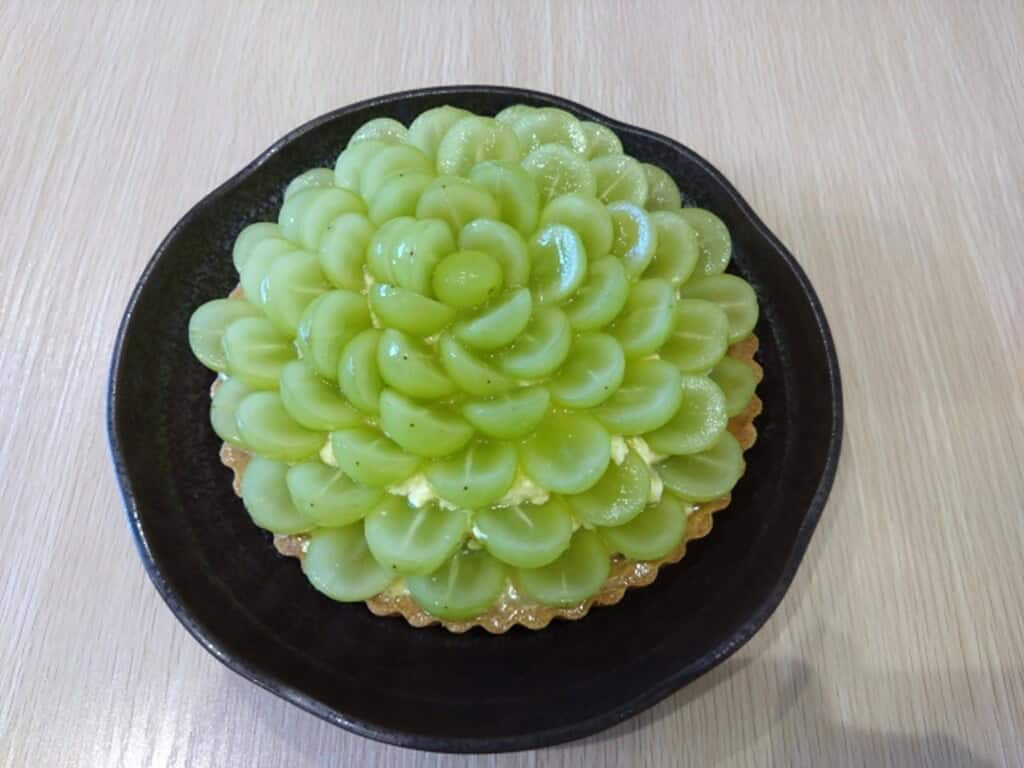
The flavor is the main event, so it deserves careful description.
At its best, Shine Muscat grapes deliver a sweetness that feels refined rather than cloying. There’s a fragrance in each bite, somewhere between lychee and white muscat wine, with a faintly floral note that sets it apart from any other green grape. The sugar and acid balance is careful. Some tartness exists, but it stays in the background, keeping things lively without distracting from the primary sweetness.
One factor that surprises many people: the color tells you a great deal about the flavor.
How to Read Shine Muscat Color: Green vs Yellow
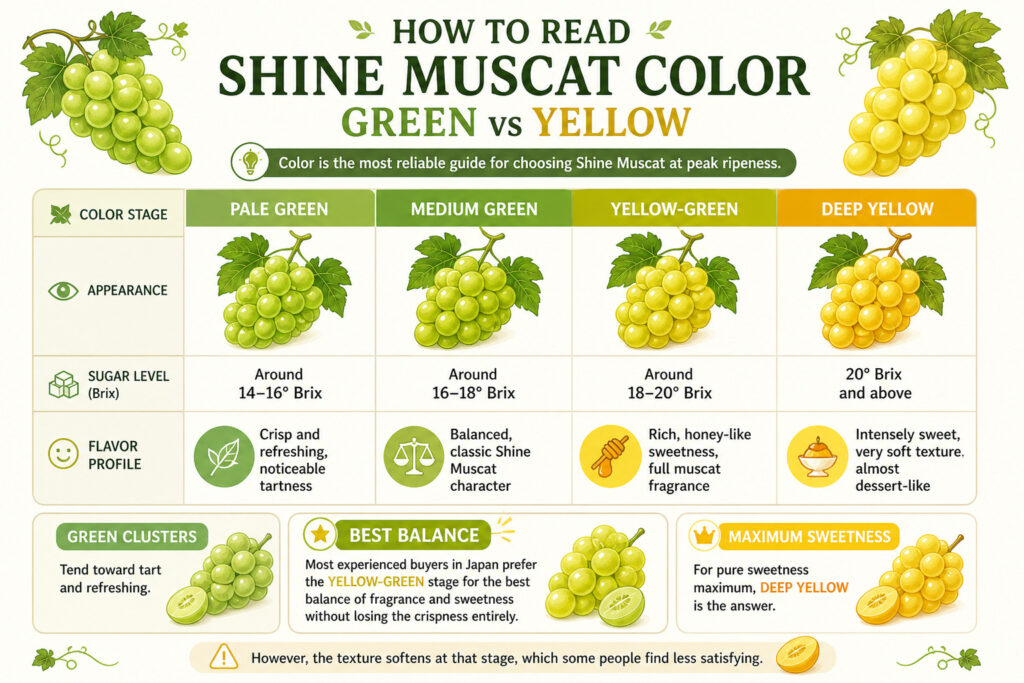
Color is the most reliable guide for choosing Shine Muscat at peak ripeness.
| Pale green | Bright, vivid green | Around 14-16° Brix | Crisp and refreshing, noticeable tartness |
| Medium green | Slightly golden tint beginning | Around 16-18° Brix | Balanced, classic Shine Muscat character |
| Yellow-green | Warm, golden-green tone | Around 18-20° Brix | Rich, honey-like sweetness, full muscat fragrance |
| Deep yellow | Fully amber-gold | 20° Brix and above | Intensely sweet, very soft texture, almost dessert-like |
Green clusters tend toward tart and refreshing. Yellow clusters lean rich and honey-like in sweetness. Most experienced buyers in Japan prefer the yellow-green stage for the best balance of fragrance and sweetness without losing the crispness entirely.
For pure sweetness maximum, deep yellow is the answer. However, the texture softens at that stage, which some people find less satisfying.
Shine Muscat as a Japanese Gift Fruit
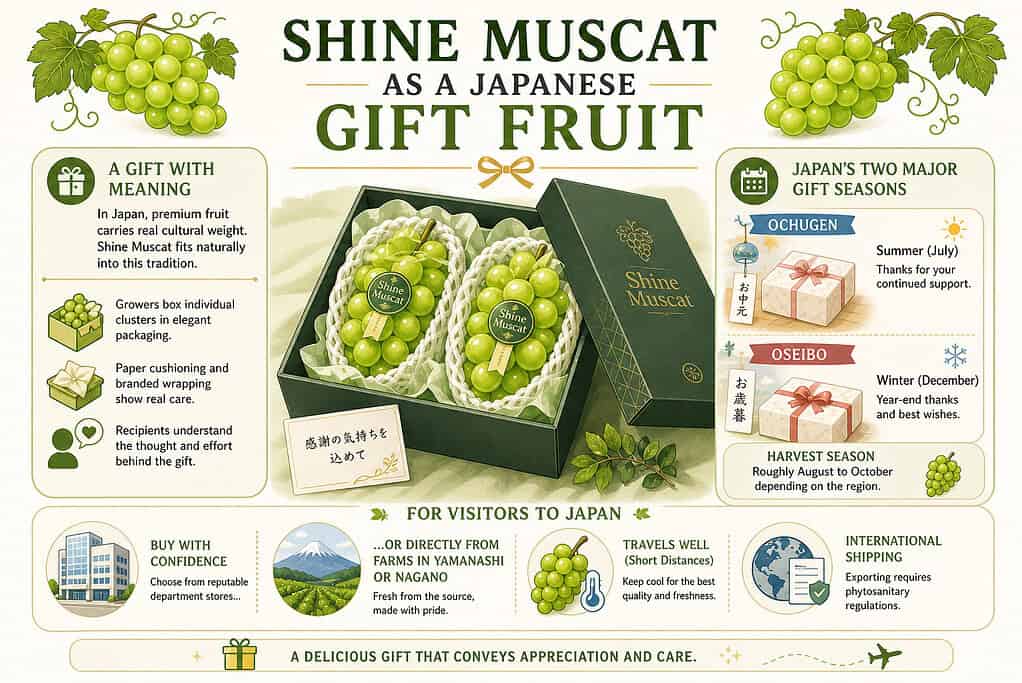
In Japan, giving premium fruit carries real cultural weight. Shine Muscat fits naturally into this tradition. Growers often box individual clusters in gift packaging, complete with paper cushioning and branded wrapping. Recipients understand immediately that the giver put thought and money into the choice.
Shine Muscat gift boxes appear prominently during Japan’s two major gift-giving seasons: ochugen in summer (July) and oseibo in winter (December). The summer timing aligns perfectly with harvest season, which runs roughly from August through October depending on the growing region.
For visitors to Japan, Shine Muscat gifts from reputable department stores or directly from Yamanashi or Nagano fruit farms make memorable souvenirs. They travel reasonably well over short distances when kept cool, though exporting them internationally involves phytosanitary regulations that can complicate things.
Shine Muscat Outside Japan: Can You Find It?
This is a question worth answering honestly. Finding authentic Japanese Shine Muscat outside Japan takes real effort.
Some specialty Japanese grocery stores in the United States, particularly in cities with significant Japanese communities like Los Angeles, New York, and Seattle, carry Shine Muscat during peak season. Prices reflect the import costs and short window. Expect to pay significantly more than for domestic American green grapes.
Online importers sometimes offer Japanese Shine Muscat with expedited cold shipping. Quality varies depending on transit time and handling. The best approach, if you’re serious about experiencing the genuine version, remains visiting Japan during late summer and buying directly from a fruit specialist or department store fruit counter.
Korean and Chinese-grown Shine Muscat, sold under the same name, has become widely available internationally. The flavor can be good. However, it differs noticeably from licensed Japanese-grown fruit, particularly in fragrance intensity and skin texture.
Nutrition and Practical Notes
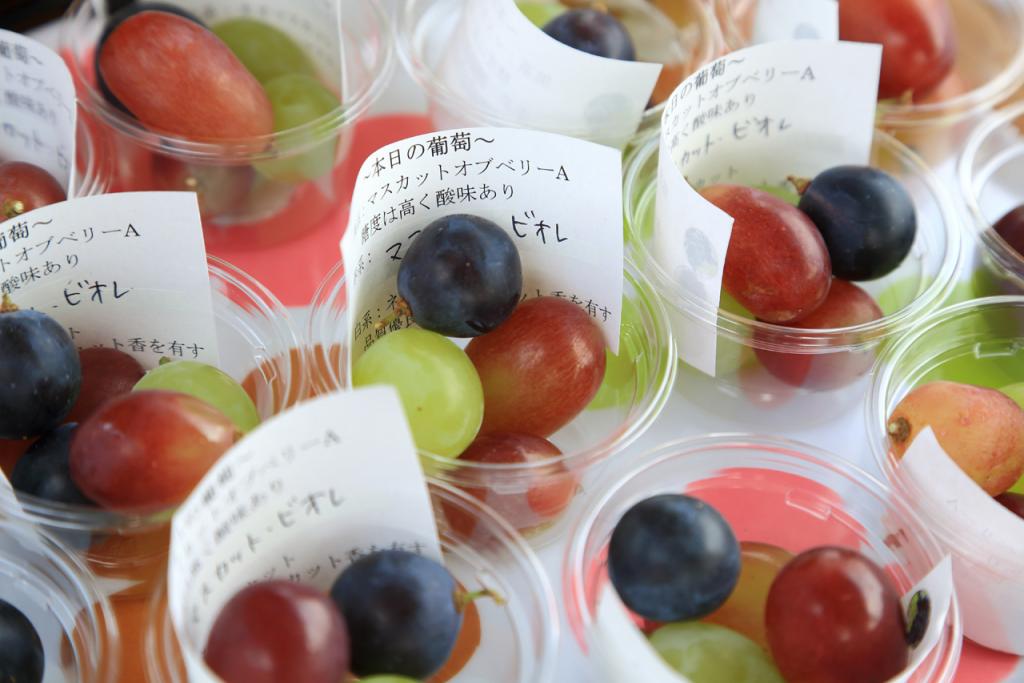 Close-up of Shine Muscat grapes served in individual cups, highlighting their freshness and appealing appearance.
Shine Muscat provides moderate nutritional value alongside its exceptional taste. A 100g serving delivers roughly 59 to 65 kilocalories, primarily from natural sugars. The grapes contain vitamin C, potassium, and small amounts of polyphenols. Given the serving sizes typical of premium fruit, they function more as an indulgent treat than a dietary staple.
Store Shine Muscat unwashed in the refrigerator. Wash just before eating. The ideal eating temperature sits around 10 to 15°C, cool enough to enhance the crispness without numbing the flavor. At room temperature, the sweetness comes forward more strongly but the texture softens faster.
For anyone exploring Japan’s broader seasonal fruit culture, Shine Muscat represents one of the clearest examples of what Japanese agricultural breeding has achieved. Along with varieties like Ruby Roman grapes, it shows how Japan has turned fruit cultivation into an art form recognized globally.
That’s a rare thing to find in a single bunch of grapes.
References
- National Agriculture and Food Research Organization (NARO), “Shine Muscat Grape Variety Registration” (2006): https://www.naro.go.jp/english/
- Japan Times, “Japan Loses About 100 Billion Yen a Year to Unauthorized Cultivation of Agricultural Products Abroad” (2021): https://www.japantimes.co.jp/news/2021/03/05/business/shine-muscat-intellectual-property/
- Nippon.com, “Shine Muscat: Japan’s Premium Grape Faces Overseas Copying” (2022): https://www.nippon.com/en/japan-topics/g02006/
- Yamanashi Prefecture Agricultural Technology Center, “Shine Muscat Cultivation Guidelines” (2020): https://www.pref.yamanashi.jp/engei-kc/
- Tasting Table, “What Is Shine Muscat and Why Is Everyone Obsessed?” (2023): https://www.tastingtable.com/1275952/what-is-shine-muscat/
- Serious Eats, “Shine Muscat Grapes: The Japanese Grape Taking the World by Storm” (2022): https://www.seriouseats.com/shine-muscat-grapes



![STOP SCROLLING❗️ Korean FIRE Cheese Buldak Recipe you will use OVER & OVER [Spicy Chicken] 치즈 불닭](https://i.ytimg.com/vi/io1dzjTdt5s/maxresdefault.jpg)



 English (US) ·