
 1 month ago
52
1 month ago
52
Not every Japanese sweet makes it into travel guides. Urajiro manju is exactly the kind of thing you stumble across in a small confectionery tucked into a Yamanashi mountain town, buy one out of curiosity, and then find yourself thinking about for days afterward.
It’s a steamed Japanese sweet made with oyamabokuchi, a wild mountain herb native to the highlands of central Japan. The result is slightly chewy, earthy, and mildly sweet, with a subtle herbal quality that feels genuinely unlike anything most Western visitors have encountered before.
TOC
What Is Urajiro Manju?
Urajiro manju (うらじろまんじゅう) is a traditional steamed cake from Yamanashi Prefecture’s mountain regions, particularly the area around Koshu City and the Oku-Tama highland villages. The name combines two elements: urajiro, referring to the oyamabokuchi plant used in the dough, and manju, the broad Japanese term for a steamed sweet bun typically filled with bean paste.
Oyamabokuchi (Synurus pungens) is a tall, thistle-like plant that grows wild across Japan’s mountain forests. Farmers and foragers historically collected the fibrous inner leaves in autumn. After drying and processing, these fibers add a distinctive texture and subtle earthy flavor to the mochi or manju dough. The plant’s leaf backs are notably white and fuzzy, which connects to the name “urajiro,” meaning “white underside.”
The outer dough uses a blend of glutinous rice flour and regular rice flour mixed with processed oyamabokuchi fibers. Inside, a filling of sweet red bean paste (anko) provides the primary sweetness. Each piece gets steamed rather than baked, giving the exterior a soft, slightly sticky surface and the interior a pleasantly chewy resistance.
Think of it as a regional wagashi from Yamanashi’s mountain areas, similar to a herbal rice cake but with a character completely unique to this corner of Japan.
Why Urajiro Manju Is Worth Knowing About
Most regional Japanese sweets stay regional for a reason. They use local ingredients, reflect local seasonal rhythms, and don’t travel particularly well. Urajiro manju fits this pattern exactly, and that’s part of what makes it worth seeking out.
First, the oyamabokuchi plant itself is unusual. Outside of certain parts of Nagano, Yamanashi, and a few other mountain prefectures, foragers rarely collect it for food use. The plant appears in other traditional preparations too, most notably kusamochi (herb mochi) in parts of the Kanto and Chubu regions. However, urajiro manju represents one of the most specific and refined expressions of this ingredient.
Second, production remains genuinely small-scale. Most urajiro manju comes from family-run confectioneries in the Koshu area, each with its own formula and proportions. Larger commercial production would require stabilizers and modified ingredients that alter the texture completely. Consequently, finding authentic urajiro manju means finding the right shop in the right place.
Third, the sweet carries a meaningful connection to mountain village life. Historically, Yamanashi’s highland communities relied heavily on foraged plants to supplement cultivated crops. Oyamabokuchi appeared in local cooking not as a novelty ingredient but as a practical, available resource. Urajiro manju evolved from that context, turning a foraged plant into a refined confection that local families made for festivals, ceremonies, and gifts.
The History and Origins of Urajiro Manju
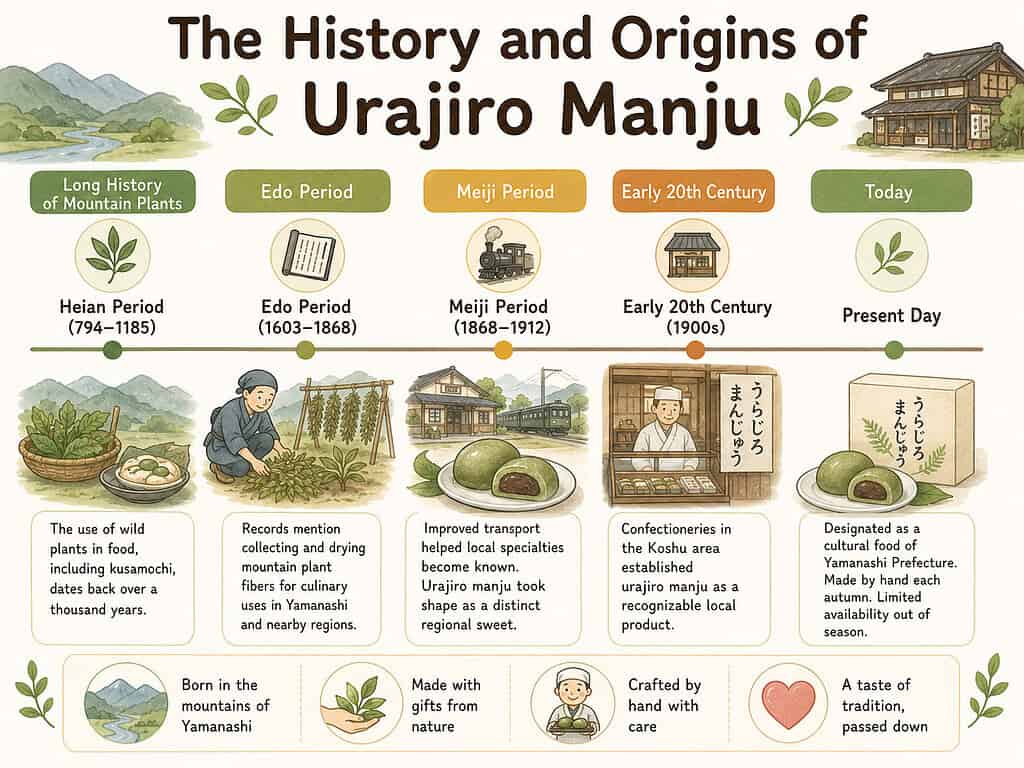
Pinning down an exact origin date for urajiro manju is difficult. Like most rural wagashi, it developed gradually within a community rather than appearing fully formed at a specific moment.
The use of oyamabokuchi in food preparation has a long history across central Japan’s mountain regions. Historical records from the Edo period (1603 to 1868) reference the collection and drying of mountain plant fibers for various culinary uses in Yamanashi and neighboring Nagano. Kusamochi traditions using wild plants date back even further, with evidence of herbal rice preparations appearing in Japanese food records from the Heian period (794 to 1185).
Within Yamanashi, the specific form of manju using oyamabokuchi fibers appears to have solidified as a distinct regional product during the Meiji era (1868 to 1912), as improved roads and railway connections made local specialties more visible to travelers passing through the prefecture. By the early 20th century, several confectioneries in the Koshu area had established urajiro manju as a recognizable local product.
Today, Yamanashi Prefecture includes urajiro manju on its list of regional foods designated for cultural preservation. A small number of traditional confectioneries continue producing it by hand each autumn, when freshly dried oyamabokuchi becomes available. Outside this season, availability drops significantly, and some shops close entirely during summer months.
What Urajiro Manju Tastes Like
The flavor is harder to describe than you might expect. Let’s try anyway.
The anko filling delivers the primary sweetness, smooth and gently bean-forward in the way that good red bean paste always is. Against that, the outer dough brings something different: a mild earthiness, faintly grassy, with a whisper of bitterness that keeps the sweetness from feeling one-dimensional. Some people detect a hint of smoke or forest floor, particularly in pieces made with well-aged dried oyamabokuchi.
Texture matters as much as flavor here. The dough resists slightly before giving way, somewhere between the chewiness of fresh mochi and the softness of a steamed bun. The surface feels lightly sticky, typical of steamed glutinous rice preparations. Overall, each bite takes a moment to unfold rather than delivering everything immediately.
For reference, the experience sits somewhere between a standard kusa mochi (mugwort rice cake) and a more savory herbal dumpling. Neither comparison is exact. Urajiro manju occupies its own niche within the broader world of Japanese wagashi sweets.
How Urajiro Manju Compares to Similar Japanese Sweets
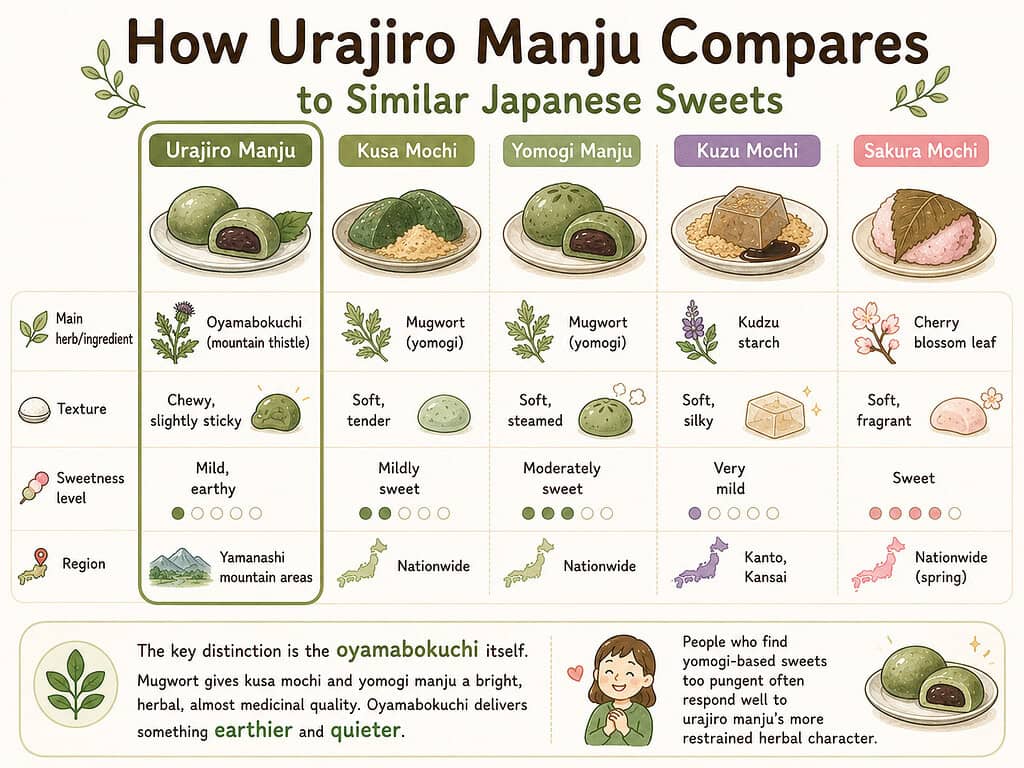
Understanding where urajiro manju sits among related sweets helps set expectations.
| Urajiro manju | Oyamabokuchi (mountain thistle) | Chewy, slightly sticky | Mild, earthy | Yamanashi mountain areas |
| Kusa mochi | Mugwort (yomogi) | Soft, tender | Mildly sweet | Nationwide |
| Yomogi manju | Mugwort (yomogi) | Soft, steamed | Moderately sweet | Nationwide |
| Kuzu mochi | Kudzu starch | Soft, silky | Very mild | Kanto, Kansai |
| Sakura mochi | Cherry blossom leaf | Soft, fragrant | Sweet | Nationwide (spring) |
The key distinction is the oyamabokuchi itself. Mugwort gives kusa mochi and yomogi manju a bright, herbal, almost medicinal quality. Oyamabokuchi delivers something earthier and quieter. People who find yomogi-based sweets too pungent often respond well to urajiro manju’s more restrained herbal character.
How and Where to Find Urajiro Manju
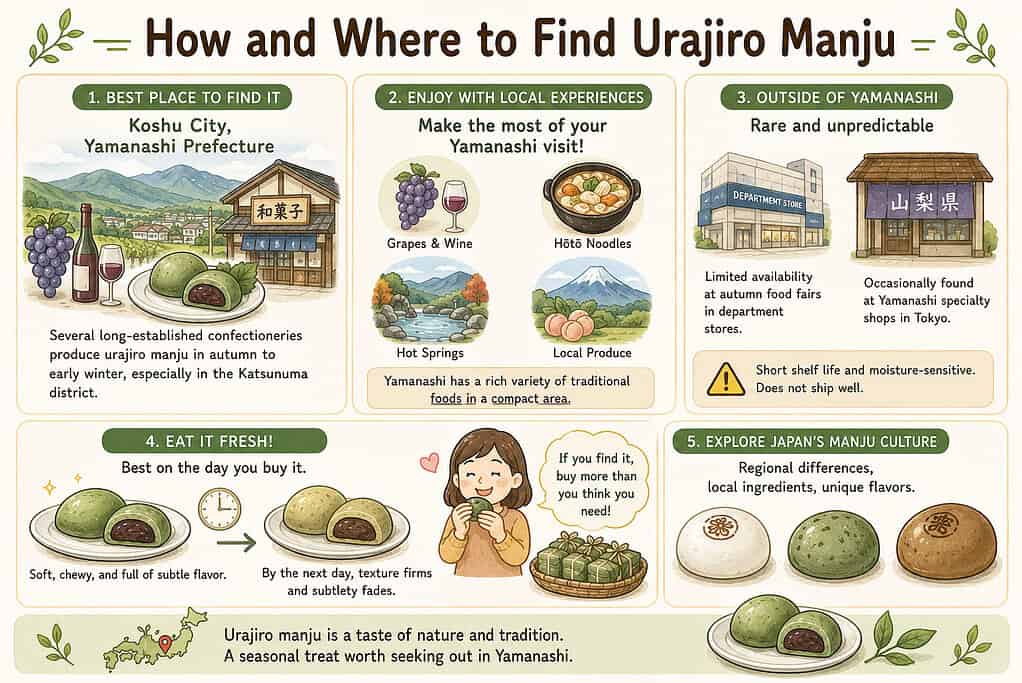
Within Japan, Koshu City in Yamanashi Prefecture is the most reliable place to start. Several long-established confectioneries in the area produce urajiro manju during autumn and into early winter. The Katsunuma district, already known for grape and wine production, has a cluster of traditional food producers worth visiting together.
For visitors to Yamanashi, combining urajiro manju with other regional food experiences makes the most sense. The prefecture offers an unusually rich concentration of traditional local products within a small geographic area. The Yamanashi food guide covers many of these alongside the context needed to plan a meaningful food-focused visit.
Outside of Yamanashi, urajiro manju rarely appears. Some Tokyo department stores carry limited regional wagashi selections during autumn fair periods, and occasionally a Yamanashi specialty shop in central Tokyo stocks it. However, availability is unpredictable, and the product doesn’t ship particularly well due to its short shelf life and moisture-sensitive texture.
If you encounter it while traveling, buy more than you think you need. Eating it fresh, on the day of purchase, is the experience worth having. By the following day, the texture firms and the subtlety begins to fade.
For broader context on Japan’s manju traditions and how regional variations reflect local ingredients and culture, the differences between prefectures can be striking even when the base format looks similar.
Practical Notes for First-Time Buyers
A few things help when approaching urajiro manju for the first time:
- Buy in autumn. Freshly dried oyamabokuchi becomes available from late summer onward. Autumn purchases offer the best texture and flavor.
- Eat the same day. Shelf life is short. The texture changes noticeably by the following day, becoming firmer and less nuanced.
- Ask about the filling. Most versions use koshian (smooth red bean paste), but some shops offer tsubuan (chunky) or white bean variations. The filling choice affects the overall sweetness significantly.
- Try it at room temperature. Refrigeration firms the mochi-like exterior and dulls the herbal notes. If you’ve stored it cold, let it come to room temperature before eating.
- Pair with green tea. The earthiness of the dough balances naturally against the gentle bitterness of sencha or the more robust character of hojicha. This pairing isn’t incidental — it’s the traditional way to enjoy it.
Urajiro Manju FAQ
What is Urajiro Manju?
It is a rustic steamed bun from Yamanashi Prefecture. Local confectioners make it with sweet red bean paste and special wild leaves. Food lovers know this treat for its dark green color and deep earthy aroma.
Where does Urajiro Manju come from?
This traditional confection originates from Uenohara City in Yamanashi Prefecture. Farming families have enjoyed it as an everyday countryside snack for many generations.
What does Urajiro Manju taste like?
It delivers a sweet, earthy, and slightly herbal flavor. The dough feels pleasantly chewy and soft. Diners often compare it to standard mugwort mochi but with a much milder, less bitter herbal taste.
Where can I eat Urajiro Manju in Japan?
You will find the best ones exclusively in Yamanashi Prefecture. Famous spots include roadside stations (Michi-no-Eki) in Uenohara City. Traditional local sweet shops also sell these fresh buns daily.
How much does Urajiro Manju cost?
A single bun typically costs between 100 and 150 yen. Prices vary slightly depending on the specific bakery and the packaging format.
Is Urajiro Manju vegetarian or vegan friendly?
This rustic sweet contains absolutely no animal products. Vegans and vegetarians can safely eat this 100% plant-based snack anywhere.
What are the main ingredients in Urajiro Manju?
The main ingredients include wheat flour, sweet red bean paste, and wild “urajiro” (Oyamabokuchi) leaves. The wild leaves give the dough its distinctive dark green color and springy texture.
Can I make Urajiro Manju at home?
Yes, you can bake this sweet at home if you find the right herbs. Specialty farmers sell the dried wild leaves online. Home cooks knead the dough and steam the buns effortlessly with a little practice.
What is the difference between Urajiro Manju and Kusa Mochi?
The main difference involves the type of wild plant the baker uses. This Yamanashi specialty features mild Oyamabokuchi leaves, while Kusa Mochi relies on strong, bitter mugwort (yomogi) leaves.
Is Urajiro Manju popular outside Japan?
It remains completely unknown outside Japan. You will never find this specific local pastry at Asian markets in North America or Europe. This hidden countryside treasure successfully maintains its exclusive status entirely within Yamanashi Prefecture.
References
- Yamanashi Prefecture, “Special Regional Foods of Yamanashi” (2022): https://www.pref.yamanashi.jp/shokuhin/
- Yamanashi Tourism Organization, “Traditional Sweets of Koshu” (2023): https://www.yamanashi-kankou.jp/foreign/en/
- Nihon Wagashi Kyokai (Japan Wagashi Association), “Regional Wagashi Index” (2021): https://www.wagashi.or.jp/
- SHUNGATE, “Japan’s Regional Manju Traditions” (2022): https://shun-gate.com/en/
- Ministry of Agriculture, Forestry and Fisheries (MAFF), “Urajiro Manjuu” (2024): MAFF Urajiro Manjuu Page



 English (US) ·