
 1 month ago
49
1 month ago
49
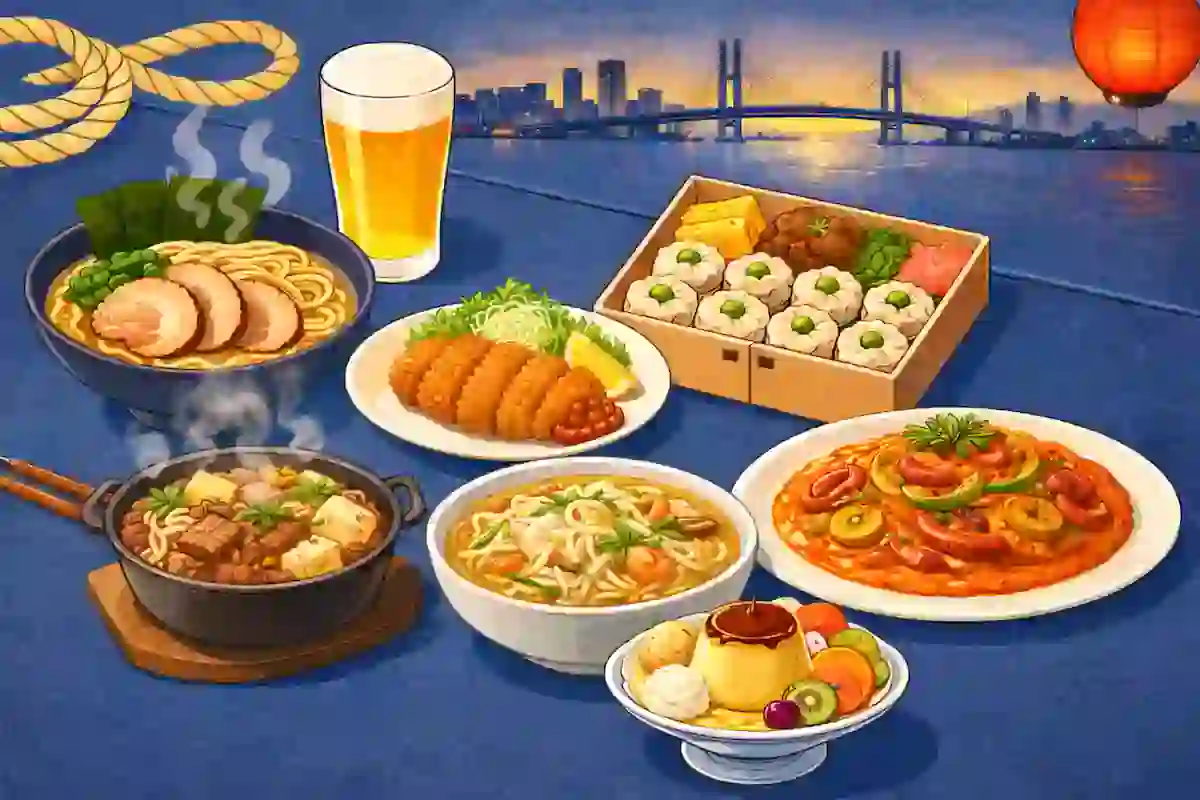
Yokohama is Japan’s most cosmopolitan food city. As the country’s first modern port, opened in 1859, it became the birthplace of Japan’s ramen culture, home to the nation’s largest Chinatown, and the city where Western-style dining first took root. Yokohama cuisine — shaped by centuries of international exchange — spans Iekei ramen, Shumai dumplings, Sanmamen, Gyunabe beef hot pot, and the freshest seafood from Sagami Bay. This guide covers 20 essential dishes with prices, the best neighborhoods, and insider tips from the city’s most distinctive eating streets.
How to Use This Guide — Price Scale
- ¥ Under ¥500 (~$3) — Snacks, street food
- ¥¥ ¥500–¥1,500 — Ramen, casual lunch
- ¥¥¥ ¥1,500–¥5,000 — Sit-down restaurants
- ¥¥¥¥ ¥5,000+ — Premium dining, kaiseki
🍜
Ramen
Yokohama is the city where Japan’s ramen revolution began — and where it keeps reinventing itself
Iekei ramen is Yokohama’s most important contribution to Japanese food culture: a rich hybrid broth combining pork bone (tonkotsu) with chicken-based soy sauce tare, served with thick, straight noodles, three slices of chashu pork, spinach, and sheets of nori leaning against the bowl wall. The style was invented in 1974 by Minoru Yoshimura at Yoshimuraya in Yokohama — the first of hundreds of “ya” (house) suffix shops that form the Iekei family tree.
The broth is thicker and saltier than Tokyo-style ramen, with a distinctive chicken oil added at the end that gives it a glossy, deeply savory finish. Yoshimuraya in Kanagawa Ward remains the original, with a permanent queue. The Iekei Tokyo in Yokohama Station area is more accessible for first-time visitors.
Customize your bowl by specifying noodle firmness (katame), broth richness (koteme), and oil level (karame). Ask for extra nori — most shops provide refills. Rice is offered free or at low cost at many Iekei shops.
Sanmamen was born in Yokohama around 1947, originally created as a meal for kitchen staff in the city’s Chinese restaurants. The defining feature is its sauce: a thick, glossy ankake (starch-thickened) glaze of stir-fried vegetables — bean sprouts, Chinese cabbage, carrots, pork, and sometimes seafood — poured hot over a bowl of light soy-sauce ramen. The starchy topping stays hot far longer than regular ramen toppings and clings to the noodles.
Sanmamen is almost exclusively found in Kanagawa Prefecture, particularly in Yokohama and Kawasaki. It represents the direct influence of Yokohama’s Chinese restaurant culture on local Japanese food.
Available at Chinese-influenced ramen shops and old-school yoshoku restaurants throughout Yokohama’s central districts. The Kannai and Isezakicho areas have the highest concentration of traditional sanmamen shops.
Miura Maguro Ramen is a specialty from the Miura Peninsula at the southern tip of Kanagawa — one of Japan’s leading tuna fishing regions. The broth is built on a tuna-based dashi rather than the standard pork or chicken stock, giving it a clean, oceanic depth that is entirely unlike anything found in Yokohama’s ramen scene. Slices of fresh or marinated maguro tuna replace the chashu pork as the centrepiece topping.
Miura City is 60 minutes from Yokohama Station by Keikyu Line. The ramen was developed as a way to use the entire tuna, including cuts that restaurants wouldn’t typically serve as sashimi.
Visit Miura on a Friday or weekend when the Miura Fish Market stalls are also open. Combine the ramen with nama shirasu don for the ultimate Miura Peninsula seafood day trip.
🥟
Chinatown Classics
Yokohama’s Chinatown — Japan’s largest — has defined the city’s food culture since the 1860s
Yokohama Chinatown (横浜中華街) is Japan’s largest and oldest Chinatown, home to over 600 restaurants and shops across 10 blocks near Motomachi. It has been a living, working neighborhood since 1863 — not a tourist replica — and its food represents four centuries of Cantonese, Shanghainese, and Sichuan cooking adapted for Japanese palates.
Yokohama shumai (spelled “Siumai” in local usage) is the city’s most iconic food and a source of intense civic pride. The Yokohama style is distinguished by a filling of coarsely ground pork mixed with dried scallop powder — a technique introduced by崎陽軒 (Kiyoken) in 1928 — which gives the dumpling a noticeably sweet, oceanic depth. Each shumai is small, firm, and topped with a single green pea. They are served with soy sauce and karashi mustard.
Kiyoken‘s cold-eaten shumai — developed to be delicious even without reheating, for train journeys — became one of Japan’s most beloved ekiben (train station bento) experiences. The Shumai Bento sold at Yokohama Station has been served since 1954 and sells over 50,000 units daily.
Buy Kiyoken shumai hot from their Yokohama Station shops for the freshest experience, or pick up the cold boxed version as a train snack. The cold version was intentionally designed to be eaten at room temperature — it is not a lesser product.
5
Chinatown Dim Sum
飲茶 · Yokohama Chinatown Yum Cha
¥¥ to ¥¥¥ · ¥1,500 to ¥3,500 per person (~$10 to $23)
Chinatown Classic
Yokohama Chinatown’s dim sum culture is the most developed outside of Hong Kong in Asia. Steamed har gow (shrimp dumplings), siu mai, cheung fun rice noodle rolls, char siu bao (BBQ pork buns), dan tart (egg custard tarts), and turnip cake are served tableside in bamboo steamers at dedicated yum cha restaurants. The Chinatown’s dim sum quality significantly surpasses what is typically found at Chinese restaurants elsewhere in Japan.
Weekend mornings from 10am–2pm are peak dim sum hours. Heichinrou and Manchinrou are the two most celebrated high-end Chinatown restaurants, both operating since the Meiji era. Budget-friendly options line Chukagai Odori, the main Chinatown street.
Arrive before noon on weekends for the best selection. Point at the bamboo steamers as they pass — no menu knowledge required. Jasmine tea is the standard pairing and is often included in the cover charge.
6
Nikuman
肉まん · Chinatown Steamed Pork Bun
¥ to ¥¥ · ¥300 to ¥700 (~$2 to $5)
Street Snack
Walking through Yokohama Chinatown and eating a freshly steamed nikuman (steamed pork bun) from a street-side shop is one of the city’s most iconic food experiences. Yokohama’s Chinatown nikuman are significantly larger and more elaborately filled than the convenience store versions found nationwide — fluffy white dough encasing a dense, juicy filling of minced pork, bamboo shoots, ginger, and shiitake mushrooms. Specialty versions include black sesame, custard, and seafood fillings.
The giant 600g “king nikuman” served at several Chinatown shops has become a social media phenomenon and a genuine Yokohama experience. Even the standard version is a meal in itself.
Eat while walking along Chukagai Odori — street eating is fully accepted in Chinatown. The largest and most theatrical nikuman shops are near the Zenrinmon gate on the western end of the main street.
🐟
Seafood
Sagami Bay and Tokyo Bay deliver some of Japan’s finest shirasu, tuna, and shellfish to Kanagawa’s tables
7
Kanagawa Treasure
Nama shirasu don is Kanagawa’s most beloved seafood bowl: a generous mound of raw baby sardines (shirasu) served ice-cold over warm sushi rice, garnished with grated ginger, green onions, and a drizzle of soy sauce. The shirasu must be caught that morning to be served raw — the slender, translucent fish have a mild, oceanic flavor and an almost creamy texture when ultra-fresh.
The Shonan coast towns of Kamakura and Enoshima are the premier destinations for nama shirasu don, with the fishing boats landing catches at Koshigoe Port just minutes from the restaurants. The season runs roughly April to December, with August and September producing peak quality.
Check the “nama shirasu available today” signs before entering any restaurant — on rough sea days, only cooked shirasu (kama shirasu) is available. Enoshima’s Shonan Beach restaurants offer the most scenic setting.
Beyond the celebrated raw version, shirasu appears across Kanagawa’s food culture in multiple preparations: kama shirasu (gently boiled, lightly salted), tama shirasu (dried in the sun), and shirasu pasta (a Shonan coastal invention that has spread nationwide). Shirasu pizza, shirasu toast, and shirasu tempura are all served at beach cafes along the Shonan and Miura coastline.
The Kanagawa coastline produces over 3,000 tonnes of shirasu annually, making it one of Japan’s top three shirasu fishing regions. The fish are so delicate that they deteriorate within hours of landing, making the Shonan and Miura versions incomparable in freshness.
Koshigoe in Kamakura and the Ejima Island area near Enoshima are the two best places to try shirasu in multiple preparations across one meal. Many restaurants serve shirasu comparison sets (nama and kama side by side).
9
Kamakura Seafood
鎌倉の海鮮 · Sagami Bay Catch
¥¥¥ to ¥¥¥¥ · ¥2,500 to ¥7,000 (~$17 to $47)
Day Trip
Kamakura, 30 minutes from Yokohama by train, sits directly on Sagami Bay and offers some of Kanagawa’s finest seafood dining. Local catches include kinmedai (splendid alfonsino), aji (horse mackerel), tako (octopus), and seasonal sakuraebi (cherry shrimp) from Suruga Bay. The town’s seafood restaurants along Yuigahama and Zaimokuza beaches serve kaisendon (seafood rice bowls) and freshly grilled whole fish at lunch prices that drop dramatically on weekdays.
The Kamakura Fish Market at Zaimokuza, open on weekend mornings from 7am, sells the day’s catch directly from fishing families. Some stalls offer grilled fish on-site for ¥400–600 — one of Kanagawa’s best value food experiences.
🥩
Meat Dishes
Yokohama pioneered Japan’s beef culture — the first gyunabe was served here in the 1860s
10
Historical Dish
Gyunabe is one of Japan’s most historically significant dishes: beef hot pot cooked in a shallow iron pan with soy sauce, sugar, mirin, and green onions — the direct ancestor of sukiyaki. When Yokohama’s port opened in 1859, Western traders brought beef-eating culture to Japan, and the city’s restaurants began serving gyunabe as a way to let Japanese customers experience beef for the first time. The dish became a symbol of Meiji-era modernization.
Authentic gyunabe is distinguished from sukiyaki by its earthier, less sweet broth and the traditional use of an iron pan rather than a sukiyaki pot. The beef is dipped in raw egg before eating. Juyukaku in Yokohama’s Kannai district is the most celebrated gyunabe restaurant.
Order the wagyu beef option if budget allows — the marbling interacts with the gyunabe broth differently than regular beef. Add udon noodles at the end to finish the remaining broth (shimé).
11
Yokohama Yakiniku
横浜焼肉 · Koreatown BBQ
¥¥¥ · ¥2,500 to ¥5,000 per person (~$17 to $33)
Tsurumi District
Yokohama’s Tsurumi Ward contains one of Japan’s largest Koreatown concentrations, and its yakiniku (Korean-style BBQ) restaurants are among the best in the Kanto region. The proximity to Yokohama’s port — through which Korean workers arrived throughout the 20th century — created an authentic Korean-Japanese food culture distinct from the more tourist-oriented Korea-towns in Tokyo. Galbi (short rib), samgyeopsal (pork belly), and naengmyeon (cold noodles) are the stars.
Tsurumi Station on the JR Keihin-Tohoku Line is 15 minutes from Yokohama Station. The yakiniku restaurants on the streets east of the station offer some of the best value BBQ in greater Tokyo, and many are open past midnight.
🍛
Yoshoku / Western-Influenced
Yokohama invented Japan’s relationship with Western food — curry, hamburgers, and pudding all started here
Yokosuka Kaigun Curry is Japan’s most historically significant curry dish: a recreation of the exact recipe served aboard Imperial Japanese Navy ships from the Meiji era, based on the official Navy cookbook. The curry is mild, thick, and slightly sweet — closer to the British-style curry that the Navy adopted from Royal Navy rations than to the spice-forward Indian version. It is served alongside a glass of milk and a simple salad, exactly as it was on naval vessels.
Yokosuka City, 40 minutes from Yokohama Station by Keikyu Line, actively promotes the dish as its regional identity. Over 50 restaurants in the city serve certified “Kaigun Curry” using the historical recipe guidelines.
The Yokosuka Naval Base area restaurants near Dobuita Street serve the most authentic versions alongside the US military base’s own curry variations — a uniquely bicultural dining experience.
13
Yokohama Original
Pudding à la mode was invented in Yokohama in 1950 at Hotel New Grand — a caramel-custard pudding served alongside ice cream, fresh fruit, and whipped cream on an elaborate dessert plate. It became the defining yoshoku (Western-influenced Japanese cuisine) dessert and has remained on the menus of Yokohama’s grand hotels and old-school cafes ever since. The dish reflects Yokohama’s unique role as the city where Western dining culture was first absorbed and transformed by Japanese sensibility.
Hotel New Grand in Yamashita Park, just steps from Chinatown, serves the original pudding à la mode in the Salon de The on the ground floor. Their version uses the 1950 recipe unchanged — the benchmark for all versions in Japan.
14
Local Craft
Yokohama has one of Japan’s strongest craft beer cultures, rooted in its long history as a port city where foreign brewing traditions arrived earliest. Yokohama Beer (横浜ビール), founded in 1999, brews distinctive ales and lagers using local Kanagawa hops and ingredients including Kamakura vegetables and Sagami Bay salt. The brewery taproom in the Kannai district is the anchor of Yokohama’s craft beer scene.
The city’s beer culture is particularly concentrated in the Kannai, Motomachi, and Minatomirai waterfront areas, where converted warehouse bars and harbor-view craft beer pubs create an atmosphere unlike anything in Tokyo.
The Yokohama Beer taproom in Kannai offers brewery tours on weekends. Their Hamakaze (harbour breeze) pale ale and the seasonal Sakura Beer are the most celebrated local varieties.
🍱
Local Specialties
Dishes and ingredients unique to Kanagawa Prefecture’s diverse coastal and mountain regions
Yokohama’s food identity is shaped by three forces that exist nowhere else in Japan simultaneously: the port’s tradition of international exchange (dating to 1859), the presence of Japan’s largest Chinatown, and the Shonan coast’s extraordinary seafood. The result is a city where Chinese, Korean, Western, and traditional Japanese cuisines have been merging and evolving for over 160 years. Yokohama’s food overview covers the key districts and dining philosophies in depth.
The Minatomirai waterfront, Chinatown, Motomachi shopping street, and Yamashita Park form a walkable 3km loop that covers the essential Yokohama food experience. All four areas are within 15 minutes on foot from each other.
Kakigoori (shaved ice) holds a special place in Kanagawa’s summer food culture, particularly along the Shonan coast where beach matsuri (festivals) and outdoor stalls serve the dessert from June through September. Yokohama’s kakigoori scene has evolved far beyond the basic school-festival versions — Motomachi and Kamakura cafes serve artisanal versions with natural fruit syrups, condensed milk, and red bean paste built into the ice in layers.
Kamakura in particular has developed one of Japan’s most sophisticated kakigoori cultures, with dedicated shops that source regional ingredients including Shonan yuzu, Sagamihara peaches, and locally harvested azuki beans for their toppings.
Peak kakigoori season is July–August. The shops near Kamakura’s Komachi-dori shopping street and along Enoshima Island’s approach path serve the most celebrated artisanal versions in the region.
17
Traditional Sweet
Saka manjyu is a traditional steamed bun made from wheat flour dough fermented with rice koji (natural sake yeast), filled with sweet red bean paste. The koji fermentation gives the bun a light, naturally leavened texture and a gentle sake-like fragrance that distinguishes it from standard manju. Found throughout the mountain and valley communities of inland Kanagawa, particularly in the Tanzawa and Hakone foothill areas.
The best saka manjyu are freshly steamed — look for shops where steam is visibly rising from bamboo baskets. The Isehara and Hadano areas of western Kanagawa have the highest concentration of traditional producers.
🍮
Sweets and Desserts
Yokohama’s Western-influenced sweet culture is unlike anywhere else in Japan
18
Yokosuka Specialty
Herahera dango is a uniquely shaped rice-flour dumpling from the Sajima area of Yokosuka City — flat and wide like a spatula (hera) rather than the standard round shape. The dango is coated in sweet red bean paste (anko) and has a chewy, slightly firm texture. The shape is practical as well as distinctive: the flat form means more surface area for the anko coating and easier handling. An authentic local sweet with almost no presence outside Yokosuka.
Sajima is accessible by Keikyu Hayama Line from Yokohama in about 50 minutes. The dango shops near Sajima Beach are open on weekends from late morning. Best eaten fresh on the same day.
19
Sagamihara Specialty
Kanko yaki is a traditional drum-shaped baked snack from the Tsukui area of Sagamihara City in inland Kanagawa. Its round, slightly convex shape mimics the kakko drum used in Japanese imperial court music (gagaku), from which the name derives. The shell is a thin, lightly sweetened wheat batter baked until golden, filled with smooth white bean paste or red bean paste. Simple, elegant, and almost unknown outside its home region — the definition of a true hidden local specialty.
The Tsukui area of Sagamihara is accessible by train from Hashimoto Station. The traditional shops near Tsukui Lake produce kanko yaki in small batches using the original recipe — call ahead to confirm availability.
The Japanese Christmas cake — a light sponge layer cake covered in whipped cream and decorated with strawberries — was first popularized in Yokohama, where Western bakery traditions arrived earliest through the port. The Fujiya confectionery company, which standardized the Japanese Christmas cake format, originated its confectionery culture through Yokohama. Today the city’s patisseries produce some of Japan’s most elaborate Christmas cake versions, and the tradition of purchasing one on Christmas Eve remains deeply embedded in local family culture.
Pre-order Christmas cakes from Yokohama’s top patisseries by early December — the best ones sell out weeks in advance. The Motomachi shopping street’s European-style bakeries produce the most celebrated versions in the region.
📍 Where to Eat by Area
🏮 Chinatown (中華街)
- 🥟 Dim sum and yum cha
- 🐷 Nikuman (steamed pork buns)
- 🍜 Chinese-style ramen and noodles
- 🎂 Chinese desserts and mooncakes
🚉 Yokohama Station Area
- 🍜 Iekei ramen shops
- 🥟 Kiyoken Shumai (hot & bento)
- 🍺 Yokohama Beer taproom
- 🎁 All souvenir foods
🏙 Kannai / Isezakicho
- 🥩 Gyunabe restaurants
- 🍜 Sanmamen shops
- 🍺 Craft beer bars
- 🍛 Old-school yoshoku cafes
🌊 Motomachi / Yamashita
- 🍮 Pudding à la mode (Hotel New Grand)
- 🥐 European-style bakeries
- 🍰 Christmas cake patisseries
- ☕ Historic kissaten
🐟 Shonan / Kamakura
- 🐟 Nama shirasu don
- 🍧 Artisanal kakigoori
- 🐟 Shirasu dishes (all styles)
- ⏱ 30 min from Yokohama
⚓ Yokosuka (Day Trip)
- 🍛 Kaigun (Navy) Curry
- 🍡 Herahera dango
- 🍺 Dobuita Street bars
- ⏱ 40 min by Keikyu Line
Budget Breakdown: A Day of Eating in Yokohama
| Breakfast | Shumai bento + coffee at Kiyoken | ¥700–¥900 | ~$5–$6 |
| Lunch | Iekei ramen + rice | ¥900–¥1,200 | ~$6–$8 |
| Snack | Nikuman in Chinatown | ¥300–¥600 | ~$2–$4 |
| Dinner (casual) | Dim sum + beer at Chinatown | ¥2,000–¥3,500 | ~$13–$23 |
| Dinner (special) | Gyunabe at Juyukaku (2 persons) | ¥6,000–¥12,000 | ~$40–$80 |
| Day total (casual) | ~¥3,900–¥6,200 | ~$26–$41 |
💡 Practical Tips for Eating in Yokohama
🕐 Hours and Access
Chinatown restaurants open from 11am and most run until 10pm; dim sum is best from 11am–2pm. Iekei ramen shops typically open 11am–midnight. Yokohama Station is 25 minutes from Tokyo Station by Tokaido Line or Keikyu Line. From Shinjuku, take the Shonan-Shinjuku Line (30 minutes). The Yokohama City Subway Bluelune and Minato Mirai Line connect all key food districts.
💳 Cash vs. Card
Chinatown street stalls and nikuman shops are cash-only. Major restaurants, Hotel New Grand, and Kiyoken shops accept cards. The Chinatown’s sit-down restaurants increasingly accept IC cards and QR payments. Bring ¥5,000–¥10,000 cash for a day of eating. ATMs at 7-Eleven and Japan Post accept international cards reliably.
🌿 Dietary Restrictions
Yokohama has better vegetarian options than most Japanese cities due to its Chinatown, which offers tofu dishes, vegetable dim sum, and Buddhist-style Chinese cuisine. Seafood eaters are exceptionally well served throughout the city. Halal-certified restaurants exist in Chinatown and near Yokohama Station. Apps like HappyCow and Gurunavi English list suitable options across the city.
🎁 Best Souvenir Foods
Kiyoken Shumai (vacuum-sealed, keeps 4 days; frozen version available), Yokohama Beer cans and bottles, Chinatown mooncakes (seasonal), dried shirasu (tama shirasu, shelf-stable), and Yokohama curry roux are the most popular edible gifts. Kiyoken shops at Yokohama Station and Yokohama Airport stock all their products.
Yokohama Food FAQ
What is Yokohama’s most famous food?Kiyoken Shumai and Iekei ramen are the two most iconic Yokohama foods. The Shumai is the city’s edible symbol — sold at Yokohama Station in the famous boxed bento since 1954. Iekei ramen, invented here in 1974, has since spread nationwide but is experienced at its best in Yokohama.
Is Yokohama Chinatown worth visiting for food?Absolutely — it is Japan’s largest and most authentic Chinatown and has been a living culinary community since 1863, not a tourist recreation. The dim sum, nikuman, and Cantonese cooking quality genuinely exceeds what is typically available at Chinese restaurants elsewhere in Japan. Weekend lunch is the best time to visit for the full dim sum experience.
Where can I eat shirasu in Kanagawa?The best nama shirasu don and shirasu dishes are found in Kamakura (Koshigoe area) and Enoshima, both about 30 minutes from Yokohama Station. Always check the “nama shirasu available today” sign before entering — raw shirasu is only served when the morning catch is fresh enough.
How do I get from Tokyo to Yokohama for food?Yokohama Station is 25 minutes from Tokyo Station (Tokaido Line, ¥480) or 28 minutes from Shibuya (Tokyu Toyoko Line, ¥270). From Shinjuku, the Shonan-Shinjuku Line takes 30 minutes. All trains drop you at Yokohama Station, a 5-minute walk from Chinatown and 10 minutes from Kannai’s restaurants.
What is the difference between Iekei ramen and regular ramen?Iekei ramen uses a hybrid broth combining pork bone (tonkotsu) with chicken-based soy tare — a style invented in Yokohama in 1974. The noodles are thick and straight, the toppings include nori sheets leaning against the bowl. Customers customize three parameters: noodle firmness, broth richness, and oil level. It is saltier and richer than Tokyo-style ramen but cleaner than Fukuoka’s tonkotsu.
What are the best day trips from Yokohama for food?
If you like this article, please
Like or Follow !





 English (US) ·