
 3 weeks ago
42
3 weeks ago
42

Recipe Highlights
I grew up enjoying Dorayaki as an afternoon snack with tea. My kids and Mr. JOC love them just as much. The honey gives the pancakes a subtle sweetness that pairs perfectly with the earthy richness of anko—sweet chunky azuki bean paste. I’ll share my best tips on how to make the pancakes evenly golden, soft, and fluffy every time.
- Easy to make at home
- Pantry-friendly ingredients
- Makes 8–10 dorayaki—great for sharing while fresh
If you enjoy Japanese sweets, try my Taiyaki, Daifuku mochi, and Mitarashi Dango recipes next!
Table of Contents
What is Dorayaki?
Dorayaki (どら焼き) is a traditional Japanese sweet made by sandwiching sweet red bean paste between two golden honey pancakes. Dorayaki is traditionally filled with tsubuan (chunky red bean paste made from azuki beans), but silky koshian works just as well. The beloved anime character Doraemon made it especially famous since he loves dorayaki. Today, it’s a nostalgic treat enjoyed across generations in Japan.
Ingredients for Dorayaki
- large eggs
- sugar
- honey
- all-purpose flour (plain flour)
- baking powder
- water
- neutral oil
- anko (sweet red bean paste) – store bought or make your own (see below)
Find the printable recipe with measurements below.
Jump to RecipeSweet Red Bean Paste: Chunky or Smooth?
Not sure which type of anko to use for your dorayaki? Here’s how to decide.
My favorite is tsubuan (chunky)—the traditional choice, and honestly the best. Every bite gives you whole beans and a little smooth paste together. The best of both worlds.
But if you’re more like Mr. JOC—someone who loves soft desserts like pudding, mousse, and tiramisu—go for koshian (smooth) for a silky, melt-in-your-mouth filling.
Recipes:
- Stovetop: Anko (Sweet Red Bean Paste) Recipe
- Instant Pot: Pressure Cooker Anko Recipe
How to Make Dorayaki
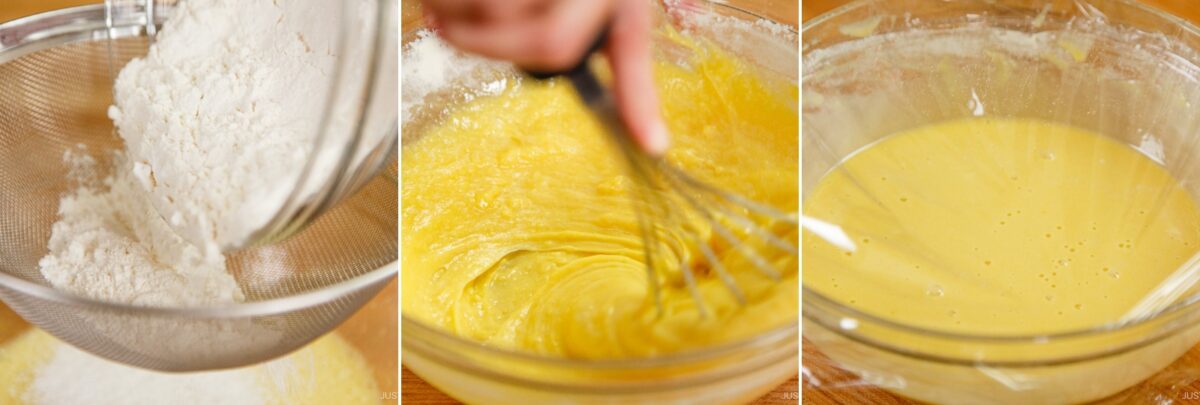
- Make the batter. Whisk the eggs, sugar, and honey in a large bowl. Sift and stir the dry ingredients into the egg mixture and whisk in water until smooth. Let the batter rest.
- Heat the pan slowly. Preheat a non-stick pan over the lowest setting, then increase to medium-low heat. Lightly oil the pan and wipe off the excess.
- Cook the pancakes. Ladle 3 Tbsp of batter into the pan to make a 3-inch (8 cm) pancake. When bubbles appear on the surface, flip and cook the other side. Transfer to a plate, cover with a damp towel, and let cool until just warm—about 5 minutes—before filling.
- Assemble. Spread sweet red bean paste on one pancake and sandwich with another.


Nami’s Recipe Tips
Keep these tips in mind for soft, evenly golden dorayaki!
- Whisk the eggs until pale and thick. Air incorporated into the mixture expands during cooking, giving the pancakes their light, fluffy texture.
- Rest the pancake batter. Let it rest in the fridge for 15 minutes to 1 hour. This relaxes the gluten for softer, fluffier pancakes.
- Preheat slowly. Heat the pan over the lowest heat setting for 5 minutes to eliminate hot spots.
- Wipe off excess oil. Too much oil or oil streaks cause uneven browning. Wipe the pan clean before making each pancake.
- Use gentle heat. Because the batter contains sugar and honey, it burns easily. Cook over medium-low heat to prevent burning.
- Keep dorayaki moist. As each pancake comes off the pan, cover with a tightly wrung damp towel.
- Give yourself a practice round. The first few pancakes may not look perfect. You’ll get the hang of it quickly.

Variations and Customizations
Looking to change things up? Try these easy and tasty ideas!
- Custard cream. Swap the red bean paste with homemade Custard Cream (Pastry Cream) for a popular variation.
- Chestnuts. Add chopped chestnuts to the filling for extra texture and flavor.
- Whipped cream. Try plain whipped cream or matcha cream with or without sliced fruit for a modern twist.
- Make Purin Dora, a popular Japanese sweet from Yufuin that pairs soft dorayaki pancakes with creamy custard pudding.
What to Serve with Japanese Red Bean Pancake
Dorayaki is perfect as a snack or dessert. Here’s how I like to enjoy it.
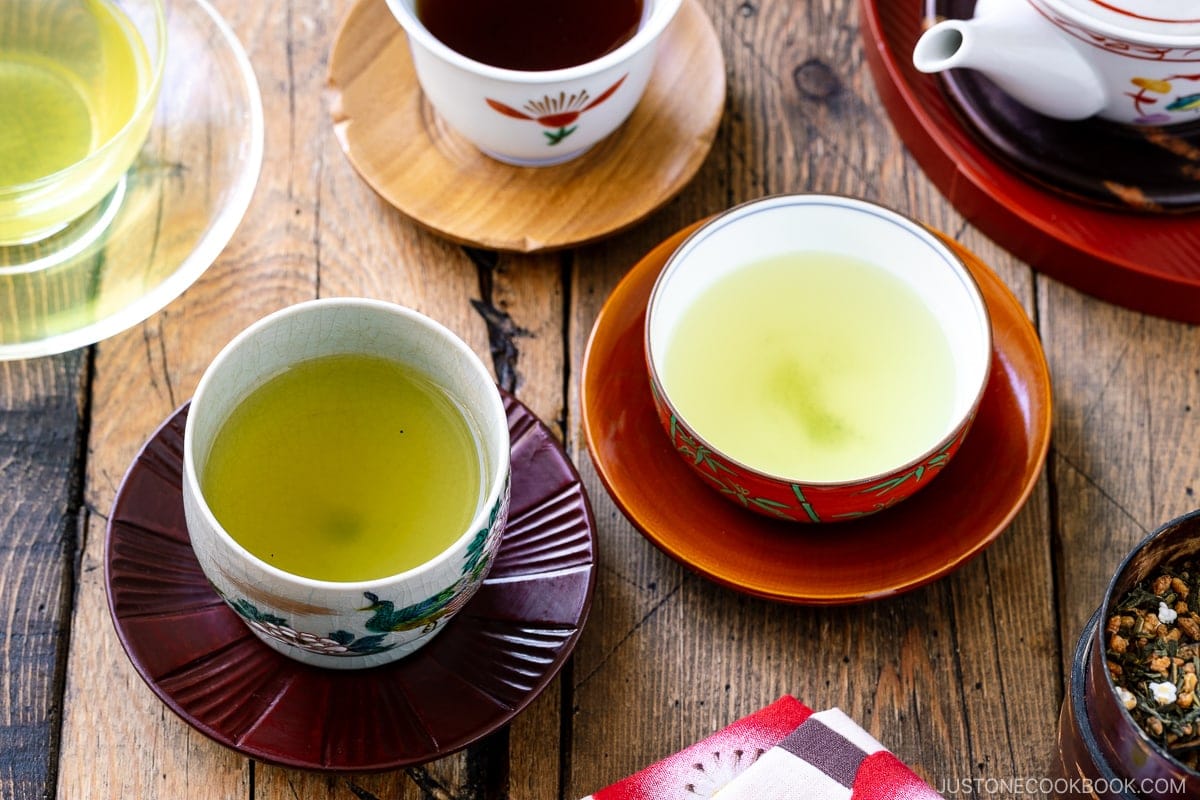
- With tea – Serve with Japanese Green Tea to balance the sweetness.
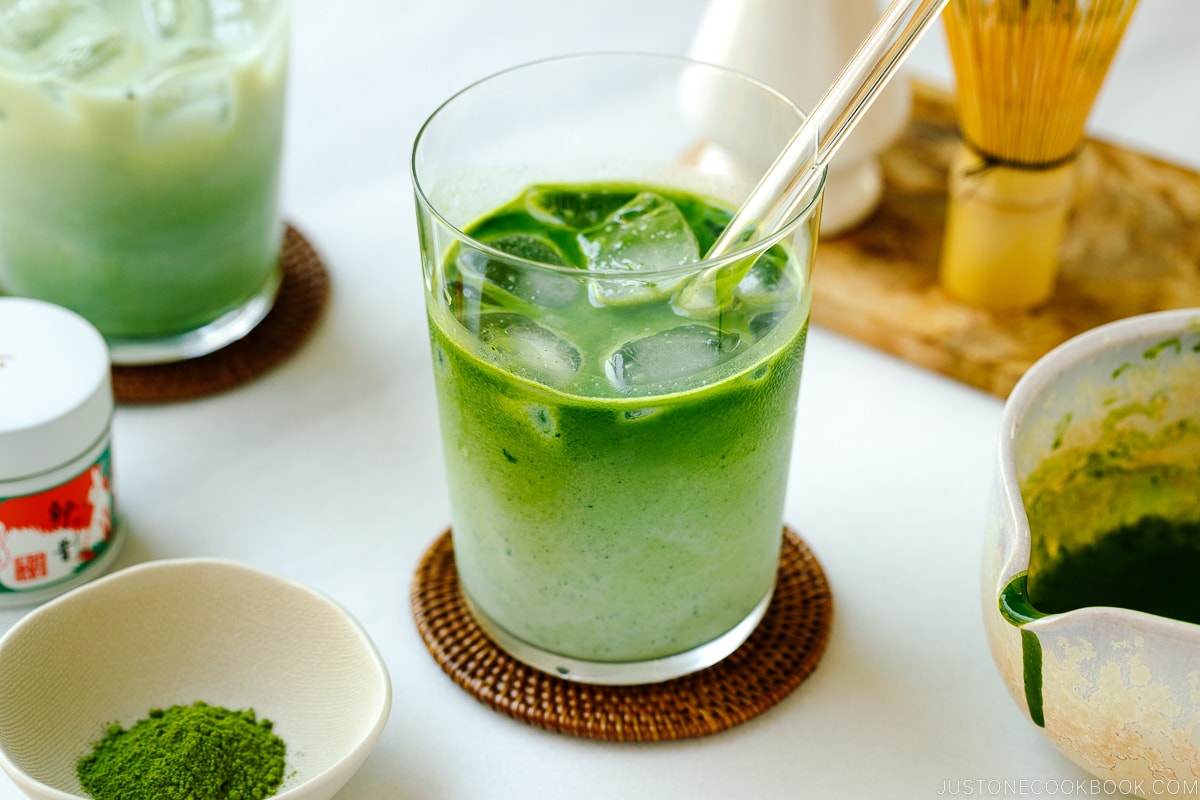
- With matcha – An Iced Matcha Latte is the perfect creamy treat.
- With hot or cold milk – Kinako Milk with roasted soybean powder is nutty and nutritious.
- With other Japanese sweets – Pair with wagashi like Strawberry Mochi for a cozy spread.
Storage and Reheating Tips
To store: Wrap individually in plastic wrap and store in a cool place for 2 days. You can also freeze them in a freezer bag for up to a month.
To reheat: Remove from the fridge and let them come to room temperature, or warm gently in a toaster oven for the best texture.
FAQs
How is dorayaki different from imagawayaki and taiyaki?
Dorayaki uses two separate honey pancakes cooked on a flat griddle and sandwiched with filling, usually Anko (sweet red bean paste).
Imagawayaki and Taiyaki are enclosed cakes cooked in special molds with the filling sealed inside—imagawayaki in a round mold and taiyaki in a fish-shaped mold.
Can I make dorayaki ahead of time?
Yes! Wrap each dorayaki individually in plastic wrap and store at room temperature for up to 2 days.
Why is my dorayaki not fluffy?
The most likely causes are under-whisking, old baking powder, or skipping the rest time.
- Cook over medium-low heat—high heat makes the pancakes dense and dry.
- Whisk vigorously until the mixture turns pale and thick—this incorporates air for a fluffy texture.
- Check your baking powder—if it’s been open more than 6 months, replace it.
- Rest the batter in the fridge for 15 minutes to 1 hour to relax the gluten.
Why is my dorayaki not evenly browned?
The most likely culprits are too much oil or uneven heat.
- Cool briefly on a damp towel before each pancake to even out the heat.
- Wipe the pan until almost dry before each pancake—even a small excess of oil causes splotchy, uneven color.
- Preheat slowly over the lowest heat for 5 minutes before cooking.
I’d love to hear how yours turned out! 💛 Please leave a star rating and comment below to share your experience. Your feedback not only supports Just One Cookbook but also helps other home cooks discover recipes they can trust.
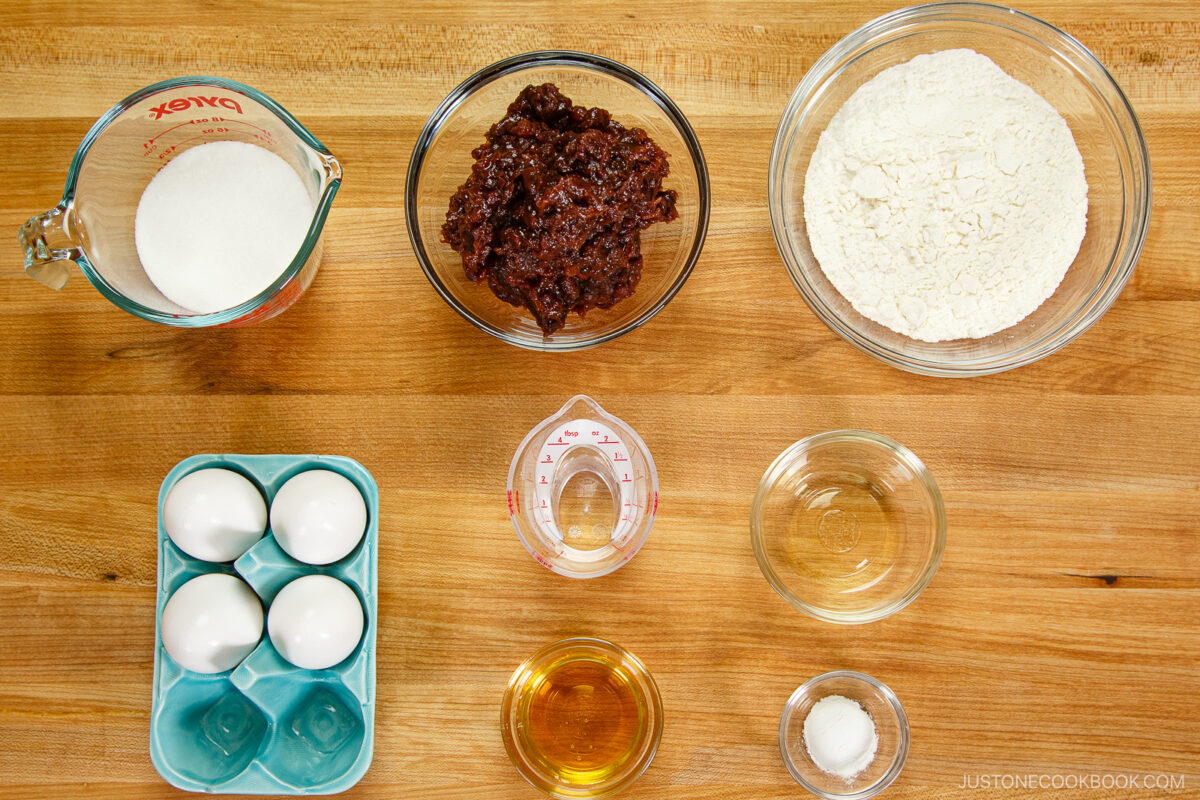
- 17.6 oz sweet red bean paste (anko) (see end Notes)
- 4 large eggs (50 g w/o shell)
- 2 Tbsp honey
- ⅔ cup sugar
- 1⅓ cups all-purpose flour (plain flour)
- 1 tsp baking powder (see Notes)
- 1–2 Tbsp water
- neutral oil (for greasing the pan)
Before You Start
For best results, weigh your ingredients using a digital kitchen scale. Click the Metric button above for weights. If you don't have a scale, fluff the flour with a spoon, sprinkle it into the measuring cup, and level it off. See my guide on how to measure flour correctly.
The batter needs to rest for 15 minutes to 1 hour before cooking.
Gather all the ingredients.
To Make the Batter
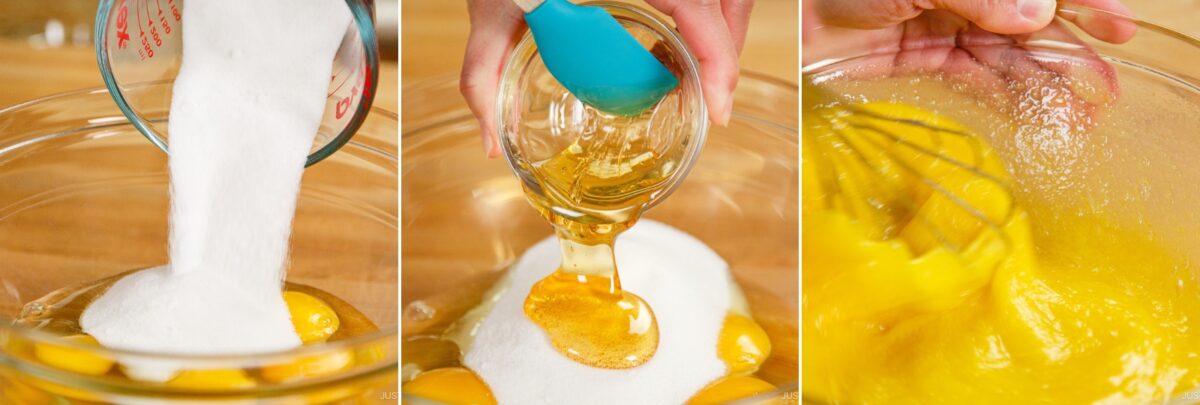
Combine 4 large eggs (50 g w/o shell), ⅔ cup sugar, and 2 Tbsp honey in a large bowl. Whisk vigorously until the mixture turns pale and thick.
Nami's Tip: The air bubbles expand during cooking and give the pancakes their fluffy texture.
Sift 1⅓ cups all-purpose flour (plain flour) and 1 tsp baking powder into the egg mixture. Fold until no dry streaks remain. Refrigerate the batter for 15 minutes to 1 hour.
Nami's Tip: The batter will smooth out as the gluten relaxes.
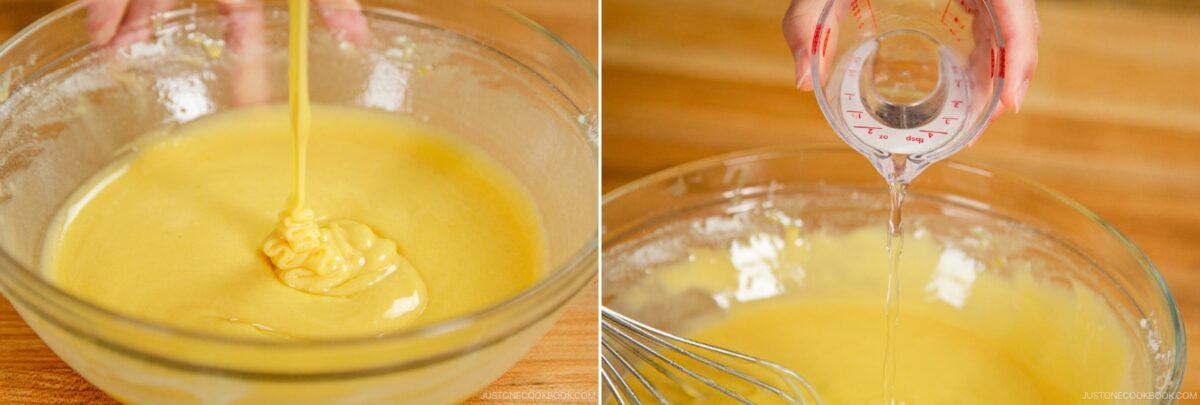
Stir in 1 Tbsp water and check the consistency. It should flow like pancake batter. If it's too thick, add up to 1 Tbsp more.
Nami's Tip: The water amount will vary based on the weight of the eggs and flour.
To Cook Dorayaki
Place a damp towel on the counter. Preheat a large nonstick frying pan over the lowest heat for 5 minutes. Set it briefly on a damp towel to eliminate hot spots. Increase the heat to medium low.
Keep the pan very lightly oiled. Dip a paper towel in neutral oil, coat the pan, and wipe off any excess with a clean paper towel.
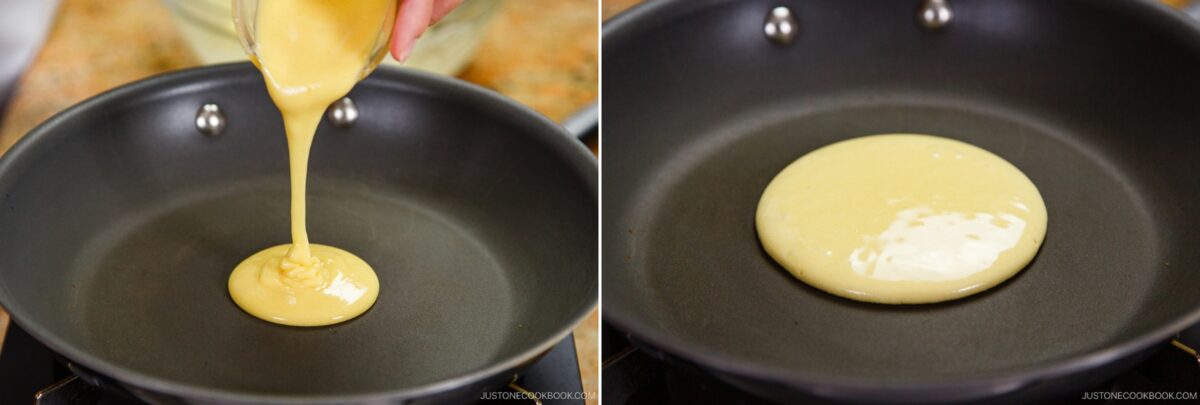
Cook one pancake at a time. Scoop 3 Tbsp of batter with a ladle or ¼ cup measuring cup. Pour from about 3 inches (8 cm) above the pan to form a 3-inch (8-cm) round.
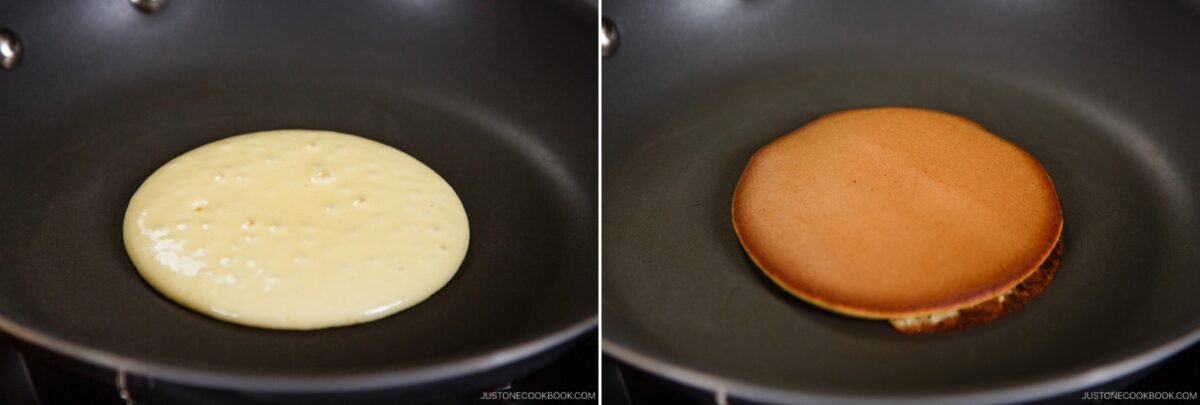
When bubbles form on the surface, about 60–90 seconds in, flip the pancake with a spatula.
Cook the other side for 20–30 seconds, until edges look dry and set, and the underside is golden brown.
Transfer the dorayaki to a plate, pretty side up. Loosely cover with a tightly wrung damp towel to prevent them from drying out.
Continue cooking the remaining batter, greasing and wiping the pan between each pancake.
To Assemble the Dorayaki
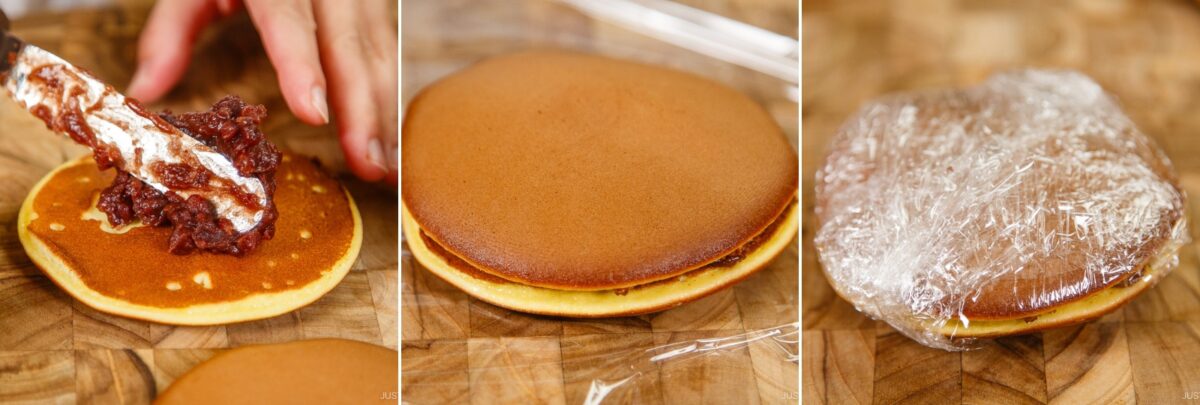
Spread a small scoop of sweet red bean paste (anko) on one pancake. Mound the paste in the center so it's thicker in the middle than the edges.
Place another pancake on top to form a curved, domed sandwich.
Wrap each dorayaki individually in plastic wrap until ready to serve.
To Store
Store the wrapped dorayaki at room temperature for up to 2 days, or freeze in a freezer bag for up to 1 month.
Ingredient Notes
- Sweet red bean paste – Use store bought (1 package for one batch) or make easy homemade stovetop Anko or Pressure Cooker Anko.
- Baking powder – It makes the pancakes light and fluffy. If it’s old or expired, they’ll come out flat and dense. Check that yours is still active—replace it if it’s been more than 6 months since opening.
Variations and Customizations
- Custard cream. Swap the red bean paste with homemade Custard Cream (Pastry Cream) for a popular variation.
- Chestnuts. Add chopped chestnuts to the filling for extra texture and flavor.
- Whipped cream. Try plain whipped cream or matcha cream with or without sliced fruit for a modern twist.
- Pudding. Purin Dora with custard pudding is the ultimate Japanese sweet treat!
Calories: 452kcal, Carbohydrates: 93g, Protein: 11g, Fat: 8g, Saturated Fat: 5g, Polyunsaturated Fat: 1g, Monounsaturated Fat: 1g, Trans Fat: 1g, Cholesterol: 124mg, Sodium: 201mg, Potassium: 443mg, Fiber: 5g, Sugar: 55g, Vitamin A: 184IU, Vitamin C: 1mg, Calcium: 80mg, Iron: 6mg
Did you make this recipe?
Tag @justonecookbook on Instagram so we can see your delicious creation!
Editor’s Note: The post was originally published on October 28, 2011, and updated with new images and video on May 28, 2015, and republished with new content on April 4, 2026.





 English (US) ·