
 3 weeks ago
35
3 weeks ago
35
There’s a moment every spring in Japan when something shifts. The cherry blossoms are just beginning to open, the air feels lighter, and at specialty sake shops, a new kind of bottle quietly appears on the refrigerated shelf. It’s labeled 生酒. That’s namazake and if you’ve never tried it, you’re missing one of the most alive, expressive drinks Japan has to offer.
So what exactly is namazake, and how is it different from regular sake? The answer starts with one simple process: heat.
TOC
What Is Namazake?
Namazake (生酒) means unpasteurized sake. The word “nama” (生) carries several related meanings in Japanese: raw, live, natural. Applied to sake, it signals that the liquid inside was never heat-treated after brewing.
Most sake goes through a process called hi-ire (火入れ), meaning pasteurization. This involves heating the sake to around 65°C (roughly 150°F) for about 30 minutes. Furthermore, standard sake is pasteurized not once but twice — once after pressing and again before bottling. The purpose is straightforward: heat deactivates enzymes, stops ongoing fermentation, and kills unwanted bacteria. As a result, pasteurized sake becomes shelf-stable and consistent over time.
Namazake, by contrast, skips both of those steps entirely. The enzymes remain active. The yeast is still technically alive. And the flavor, consequently, stays brighter, fresher, and more dynamic than its pasteurized counterpart.
In short, It is sake in its most natural state. Think of it as the difference between fresh-pressed juice and shelf-stable juice concentrate. Both are made from the same fruit, but one tastes like it was made this morning.
Namazake vs Regular Sake: Key Differences at a Glance
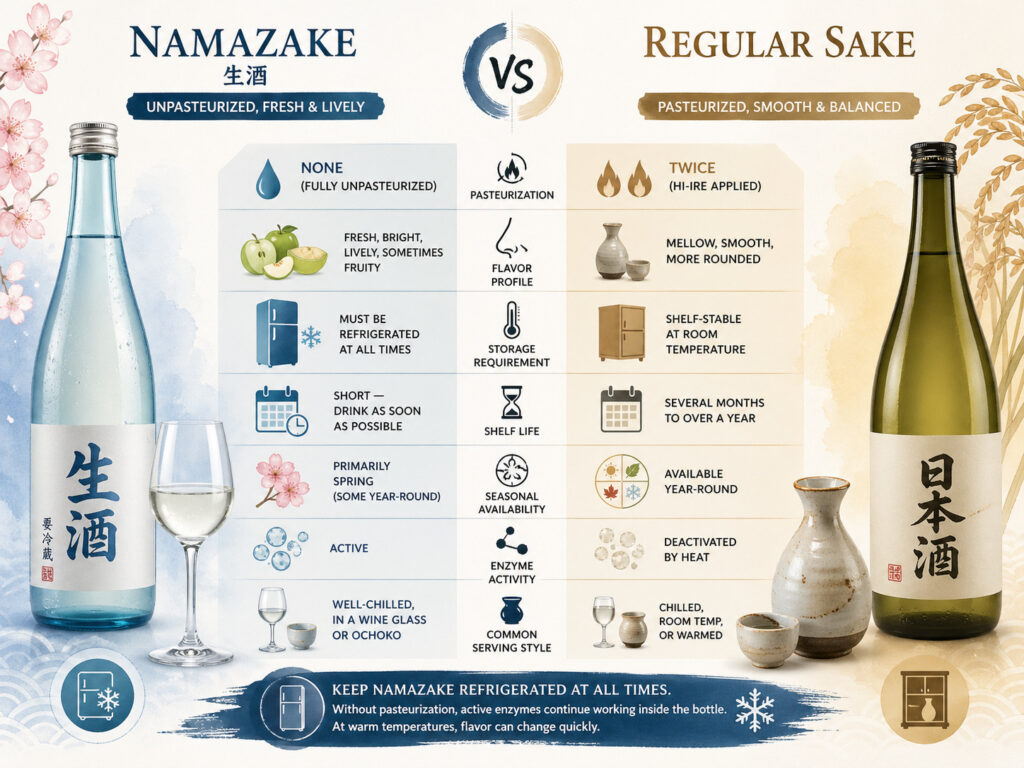
Understanding the comparison helps clarify why namazake feels so distinct from the bottle of sake you might already know.
| Pasteurization | None (fully unpasteurized) | Twice (hi-ire applied) |
| Flavor profile | Fresh, bright, lively, sometimes fruity | Mellow, smooth, more rounded |
| Storage requirement | Must be refrigerated at all times | Shelf-stable at room temperature |
| Shelf life | Short — drink as soon as possible | Several months to over a year |
| Seasonal availability | Primarily spring (some year-round) | Available year-round |
| Enzyme activity | Active | Deactivated by heat |
| Common serving style | Well-chilled, in a wine glass or ochoko | Chilled, room temp, or warmed |
One practical note worth remembering: Keep namazake refrigerated at all times. This isn’t optional. Without the protection of pasteurization, active enzymes continue working inside the bottle. At warm temperatures, flavors deteriorate rapidly, and in extreme cases, bottles can even build pressure from enzyme activity. Cold storage is what keeps namazake safe and delicious.
What Does Namazake Taste Like?
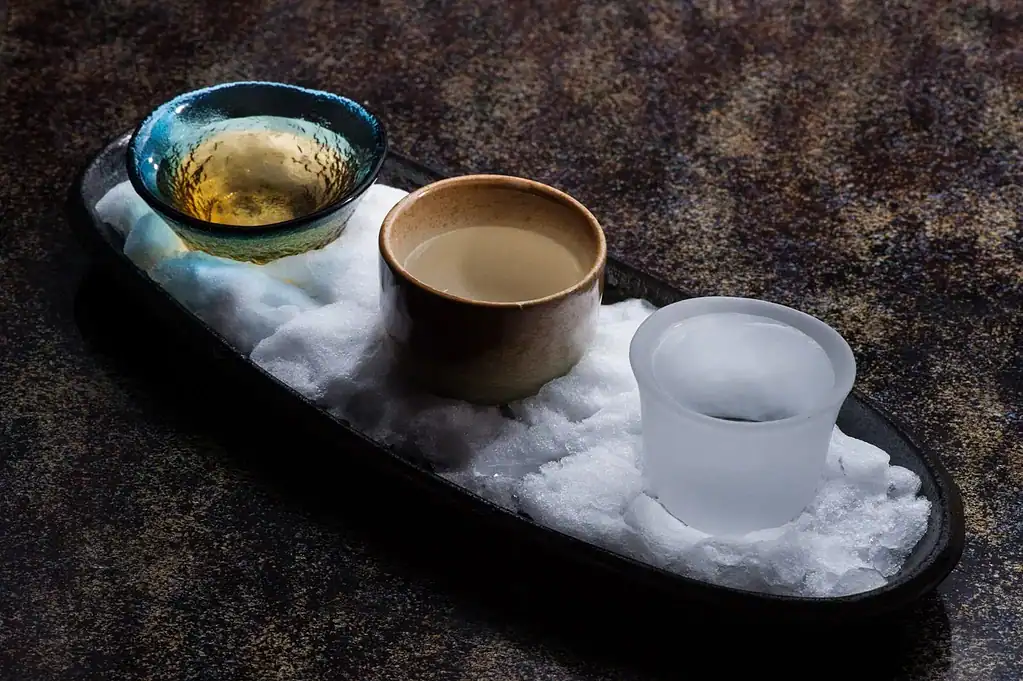
This is the question that genuinely excites people once they encounter it. Namazake tastes, above all, fresh. Unmistakably fresh.
The first thing you notice is how vibrant it feels. Where pasteurized sake tends toward smooth, mellow, polished notes, namazake comes across as zippy and bold. There’s an immediacy to it — a liveliness that registers right away. Some people describe it as fruity, others find floral notes, and many sense a brightness that almost fizzes on the palate without actual carbonation.
Is namazake sweeter than regular sake? Not necessarily. It depends on the individual brew and the rice variety used. However, the flavors in namazake are generally more expressive and forward. Umami tends to be pronounced, and some bitterness can appear at the finish, adding complexity rather than harshness.
The texture is also notable. Nama can feel mouth-coating in a way that polished, filtered sake rarely does. That comes from the active enzymes and, often, lower filtration. Many namazake are also muroka (unfiltered) and genshu (undiluted), which adds richness and depth on top of the raw freshness.
Overall, a good namazake tastes like a just-brewed sake — because it essentially is one. It pairs beautifully with sushi, sashimi, and light appetizers, where its brightness cuts through delicate flavors rather than overwhelming them.
The History Behind Japan’s Unpasteurized Sake
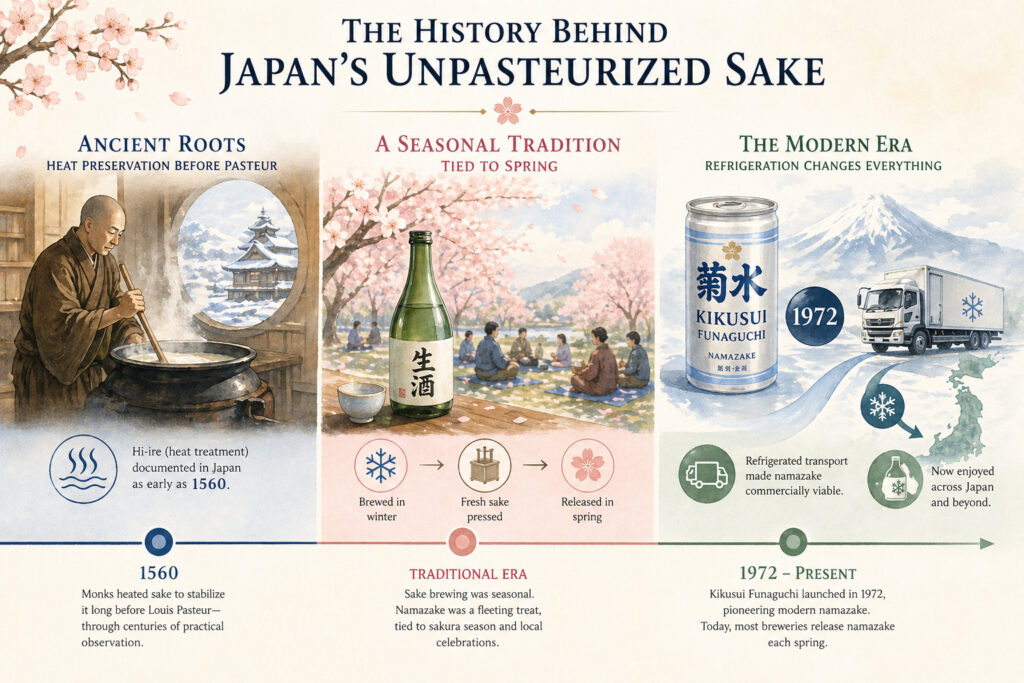
The story of namazake is older than Louis Pasteur. That might sound surprising, but it’s true.
Ancient Roots: Heat Preservation Before Pasteur
The technique of stabilizing sake with heat, called hi-ire, was already documented in Japan as early as 1560. This predates Pasteur’s famous discovery of pasteurization by roughly three hundred years. Monks in medieval Japanese temples had been heating freshly brewed sake to stabilize it long before that, protecting their batches through winter storage. In other words, the Japanese understood heat’s preserving role in brewing through centuries of practical observation, independent of Western science.
A Seasonal Tradition Tied to Spring
For most of Japan’s sake history, this meant that fresh, unpasteurized sake was always a fleeting thing. Sake brewing was traditionally a winter activity. Breweries pressed their sake in the colder months, and some of that freshly pressed liquid would be enjoyed immediately by those close to the brewery. Meanwhile, the rest was pasteurized and stored for distribution across the country. Namazake, by nature, wasn’t meant to travel far.
Traditional sake brewing was strictly seasonal, which meant namazake was naturally tied to spring. When the cold season ended and breweries completed their winter batches, fresh sake became momentarily available. Moreover, this release overlapped with sakura season, when cherry blossom viewing parties (hanami) gave people the perfect excuse to gather and drink something celebratory.
The Modern Era: Refrigeration Changes Everything
The modern chapter of namazake history began in the 1970s. In 1972, Kikusui Brewing Company released what is widely credited as Japan’s first commercially distributed namazake, called Kikusui Funaguchi. It came in a small aluminum can, designed to maintain cold temperatures during distribution. Notably, this was a breakthrough moment: refrigerated transport technology had advanced enough to make namazake commercially viable outside the brewery’s immediate neighborhood.
From that point, demand grew steadily. Today, most breweries across Japan release at least one namazake each year, typically in spring. Thanks to cold-chain logistics, it’s now possible to find namazake outside Japan too, though genuine hon-nama (fully unpasteurized) remains relatively rare in international markets due to the challenges of cold shipping.
Namazake in America: A Growing Story
For American sake drinkers, namazake’s story in the US is worth knowing. In the early days of sake retail in the United States, most consumers drank sake warm. The idea of chilled sake, let alone unpasteurized sake, was unfamiliar territory.
Beau Timken, founder of True Sake in San Francisco, America’s first sake-only retail store, recalls the challenge of selling any chilled sake in those early years. Consequently, nama was even harder to introduce. It required not just a shift in temperature preference but an entirely different understanding of sake as a perishable, seasonal product.
Today, the picture has changed considerably. Namazake is increasingly available at specialty Japanese retailers and online importers across the United States. Some importers now maintain cold chains from Japan all the way to American delivery addresses. If you’re looking to buy nama sake in the USA, checking Japanese specialty sake shops or reputable online importers with cold-shipping options is the best starting point.
How to Drink Namazake: Practical Tips
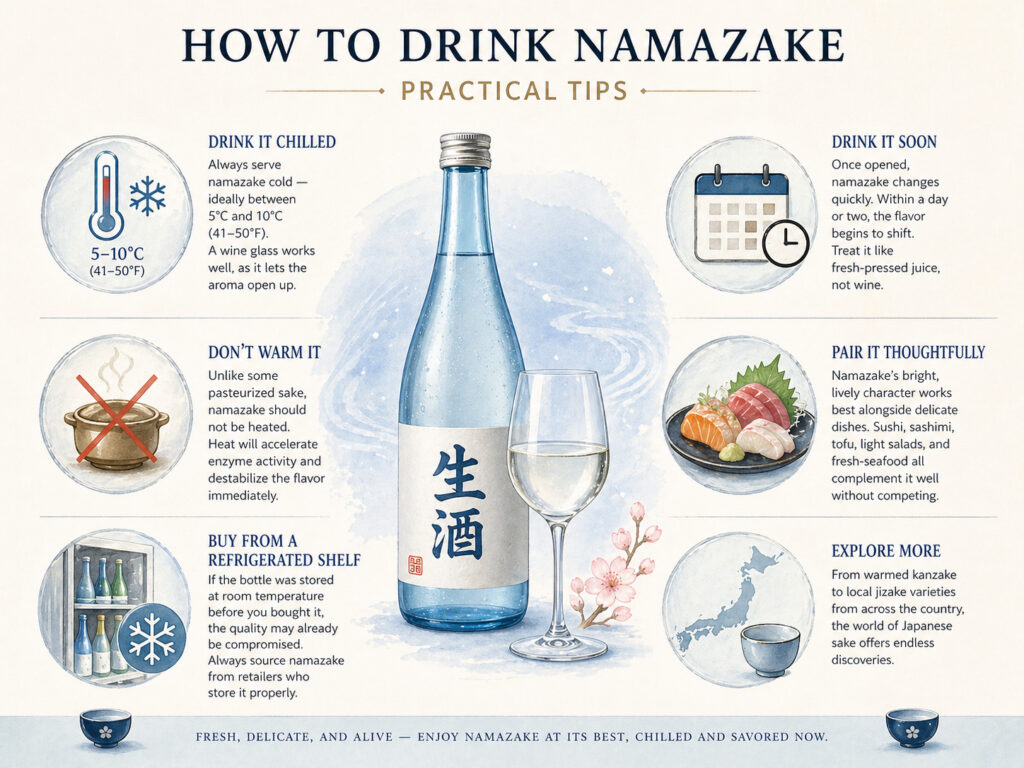
Namazake rewards a little attention. These pointers help get the most from the experience:
- Drink it chilled. Always serve namazake cold — ideally between 5°C and 10°C (41–50°F). A wine glass works well, as it lets the aroma open up.
- Drink it soon. Once opened, namazake changes quickly. Within a day or two, the flavor begins to shift. Treat it like fresh-pressed juice, not a wine that improves with age.
- Don’t warm it. Unlike some pasteurized sake, namazake should not be heated. Heat will accelerate enzyme activity and destabilize the flavor immediately.
- Pair it thoughtfully. Namazake’s bright, lively character works best alongside delicate dishes. Sushi, sashimi, tofu, light salads, and fresh seafood all complement it well without competing.
- Buy from a refrigerated shelf. If the bottle was stored at room temperature before you bought it, the quality may already be compromised. Always source namazake from retailers who store it properly.
For anyone interested in exploring more of Japan’s sake culture, from warmed kanzake to local jizake varieties from across the country, the world of Japanese sake offers something for every palate and season. Namazake is simply one of the most exciting entries in that tradition — and one of the most seasonal Japanese alcoholic beverages you’ll ever encounter.
Why Namazake Matters Now
There’s a broader reason namazake has captured so much attention in recent years. It fits naturally alongside the global movement toward natural, low-intervention beverages. People who love orange wine, natural wine, and unfiltered craft beer tend to respond immediately to namazake’s direct, honest character.
It’s sake that tastes like itself. No polish, no smoothing out of edges, no heat to quiet the enzymes down. Just freshly brewed Japanese rice wine in its most expressive form. And for a drink with over a thousand years of history behind it, namazake still manages to feel like something new.
That’s the appeal, ultimately. Every bottle is a little different. Every season’s release reflects the specific rice, water, and yeast from that particular winter’s brewing. You’re not just drinking sake. You’re drinking a moment.
Drink it cold,fresh and soon.
References
- Sugidama Sake Blog, “Namazake: Sake Alive!” (2022): https://www.sugidama.co.uk/sake-post/namazake-sake-alive/
- The Japanese Bar, “Namazake: Unpasteurized Sake Defined, Flavor Profile, & Famous Brands” (2022): https://thejapanesebar.com/learn-sake/namazake/
- SUSHIYA Sansaro, “Namazake – Unpasteurized Sake” (2022): https://www.sushiya.de/en/sake/sake-kategorien/namazake/
- The Koji Club, “When (and Why!) to Drink Unpasteurized Namazake Sake” (2025): https://www.thekojiclub.com/blog/namazake





 English (US) ·