
 1 month ago
64
1 month ago
64
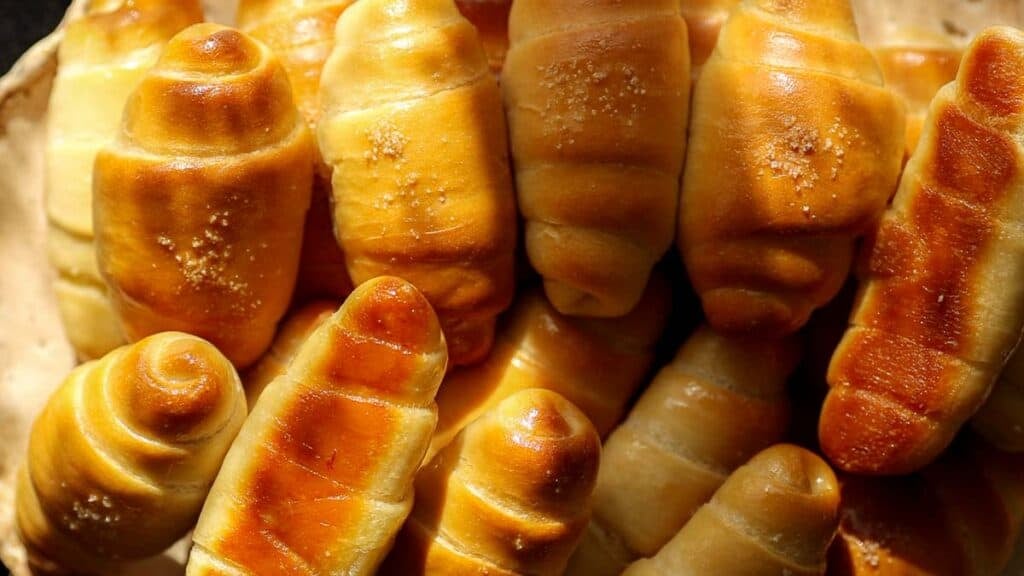
Buttery.
Viral.
SALT BREAD.
By now, you may have already seen the viral social media trend storming the internet: salt bread. And this is my vegan salt bread recipe. So that you can have this delicious take on Japanese salt bread or shio croissant (kinda of like if milk bread was turned into a crescent roll) in your own house! I’ve recipe tested this one rigorously, to ensure the process remains relatively easy but with a GREAT result you’re going to love. So, without further ado…
Let’s get into it!
Disclaimer: Some of the links in this post may be affiliate links for products I use and love. If you make a purchase after clicking one of those links, I may earn a small affiliate commission, perhaps enough to buy some extra gochujang or gochugaru 🙂
What Even Is Salt bread?

First of all, let’s get one thing straight: this salt bread recipe is not the European Victorian recipe for salt bread–the one originating in France that looks like a plain, Jane loaf of bread that happens to be salty. This salt bread recipe is the one that’s going viral right now on TikTok, i.e., the one that originates in Japan and is referred to as Japanese shio pan (which literally translates into “salt bread”). It looks like those Pillsbury crescent rolls you used to make with your mom (ok, well I definitely made those with my mom, growing up), only shinier and crispier and way more delicious.
Shio pan or salt bread came about in the early 2000s, so this is by no means a “traditional” bread that dates back hundreds of years. The idea is to take a soft piece of dough and wrap it around a cold piece of butter and then cook the whole thing in a combination of both steam and flame. The butter will melt, but because it is cold, it will do so slowly enough to create a delightful hole in the middle of your bun (since the bread dough) will have cooked in the meantime. The melted butter will then leak out and fry the bottoms of the rolls, creating this delightful buttery bottom.
A little bit of coarse sea salt sprinkled on the top punches up the flavor of this eponymous bread, which is what also gives it its name. Since it became popular in Japan, it spread to other parts of East Asia like wildfire. For example, many South Korean bakeries hopped onto the salt bread craze, making their own version called “soggeum bbang” (소금빵) (which translates into “salt bread”).
Why This Salt Bread Recipe Rocks.
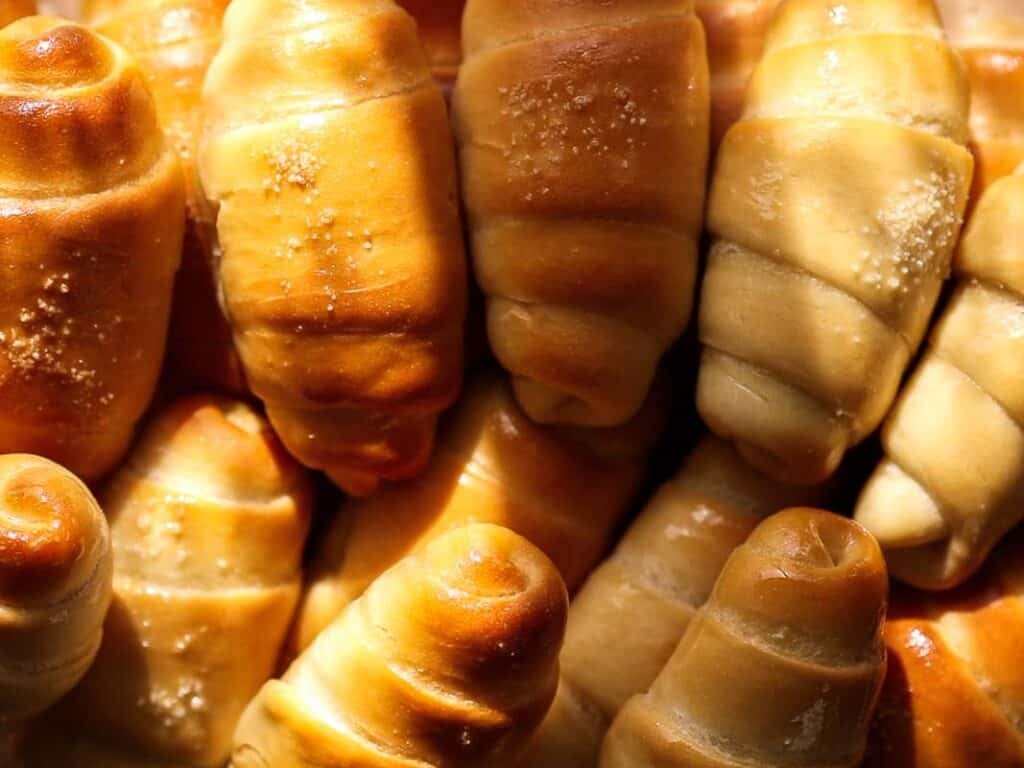
I consulted numerous salt bread recipes, vegan and non-vegan alike. I also tried several of them myself and with one of my favorite bakers, Jeanelle Castro of Jeanelle Eats and fellow foodophile Lisa Nguyen of instant ramen fame. And, to be fair, there are different types of salt bread. Some are breadier with a much crispier crust. Other salt breads have a soft texture, though the final product still turns out golden brown with a crispy exterior and that trademark crispy bottom.
I stuck to a very technical recipe for my first time making salt bread and found it, well, too hard. I mean this both from a methodology standpoint and a crumb perspective. The bread was just too hard. I wanted my salt bread to be super tender on the inside, but still have that crisp exterior. I also didn’t like that there was so much freaking math involved. I mean… I know that this is a relatively new bread, but who has time to bust out a ruler and calculator when making homemade bread?
I switched over to a more forgiving recipe (that involved minimal math!) and found it to be just as successful–even better–than the first one. But I still found the crumb to be a bit too hard. Thus for this salt bread recipe, I paid less attention to protein content and upped the fat content, making it a beautiful enriched dough that yields wonderful buttery flavor and a truly addictive bread.
This may not be exactly the way they make it in a Japanese bakery, but this salt bread recipe isn’t made for a professional baker. It involves simple ingredients, not a lot of guesswork, and plenty of room for “mistakes,” but still promises to turn out delicious!
KEY INGREDIENTS AND NOTES ON SUBSTITUTION For This Salt Bread Recipe.
The following are the key ingredients for this salt bread recipe:
Instant Yeast.
For this salt bread recipe, I used instant yeast or fast acting yeast, in order to speed up the proofing time. You can, of course, use active dry if that’s all you have, but you’ll want to proof it ahead of time (by mixing it with the water and a bit of sugar), before adding it to your dry ingredients.
All Purpose Flour.
Yes, this salt bread recipe calls for all purpose flour, not bread flour. This is my first major deviation from some of the different recipes I saw for salt bread. Why? Because I really prefer a less bready, softer texture for my salt bread. If you want something that’s harder and crispier (and, quite frankly, easier to knead), then use bread flour, which has a higher protein content.
Soy Milk Powder.
Of all the ingredients for this salt bread recipe, the soy milk powder is the hardest to acquire. I had to get mine online. But here’s the good news–if you don’t have it or don’t want to get it, you can totally make this salt bread recipe without it. Soy milk powder will help with a couple things: (a) gluten formation; and (b) keeping the bread softer for longer (kind of like milk bread). But I’ve made this recipe with and without milk powder and they both turned out great. And yes, you can substitute with oat milk powder or coconut milk powder, etc. etc.
Non-Dairy Milk.
This is another deviation from some of the salt bread recipes I consulted, again, with the idea of creating a soft texture. In addition to butter (fat) and water (hydration), I add a buttermilk to this salt bread recipe (i.e., non-dairy milk plus an acid like lemon juice or vinegar). I picked up this trick from when I developed my Garlic Dinner Rolls recipe (which is literally one of my favorite breads on the planet). I used extra creamy oat milk for this recipe, but you can also use soy milk.
Vegan Butter.
You cannot make salt bread without vegan butter. The whole point of salt bread is to achieve not just the crisp golden crust, but also that yummy golden flavor. I use Earth Balance or Country Crock Plant Butter for all my vegan butter baking needs. I find that these not only mimic the flavor of dairy-butter, they are the most chemically similar, as well. If you don’t have access to a good vegan butter, your best bet is to use coconut oil–one that is solid at room temperature.
Salt.
Surprise surprise! You’re going to need salt for this salt bread recipe! I used a fine sea salt for my dough and then a coarse sea salt for sprinkling, but you can use kosher salt as well.
Step-by-Step Instructions to Making This Vegan Salt Bread Recipe.
Step 1: Make Your Dough.
Add lemon juice to your cold dairy-free milk and stir (this is vegan buttermilk). Set aside. Add yeast, flour, salt, sugar, milk powder to the bowl of your stand mixer and begin mixing on low with hook attachment. Add 1 cup of cold water while continuing to mix on low until a scraggly dough begins to form. Then, add the vegan buttermilk you made earlier until a wet dough forms. Add 1/3 cup of cold butter, one cube at a time, into dough on medium. Continue to mix on medium speed until all the butter has been fully incorporated.



Step 2: Knead Your Dough For a Long Time.
Once the butter has been fully incorporated, raise the speed to medium-high (6 on a KitchenAid) and knead the dough until it becomes relatively smooth and stretchy. Pull a piece off and stretch it against the light. If you can see through the piece without it tearing, you’re done kneading. If it tears too easily, then knead for 5 more minutes. It took me a full 25 minutes of kneading at 6–after the butter had been incorporated–before I got the dough to where I wanted it.


Step 3: Proof Your Dough.
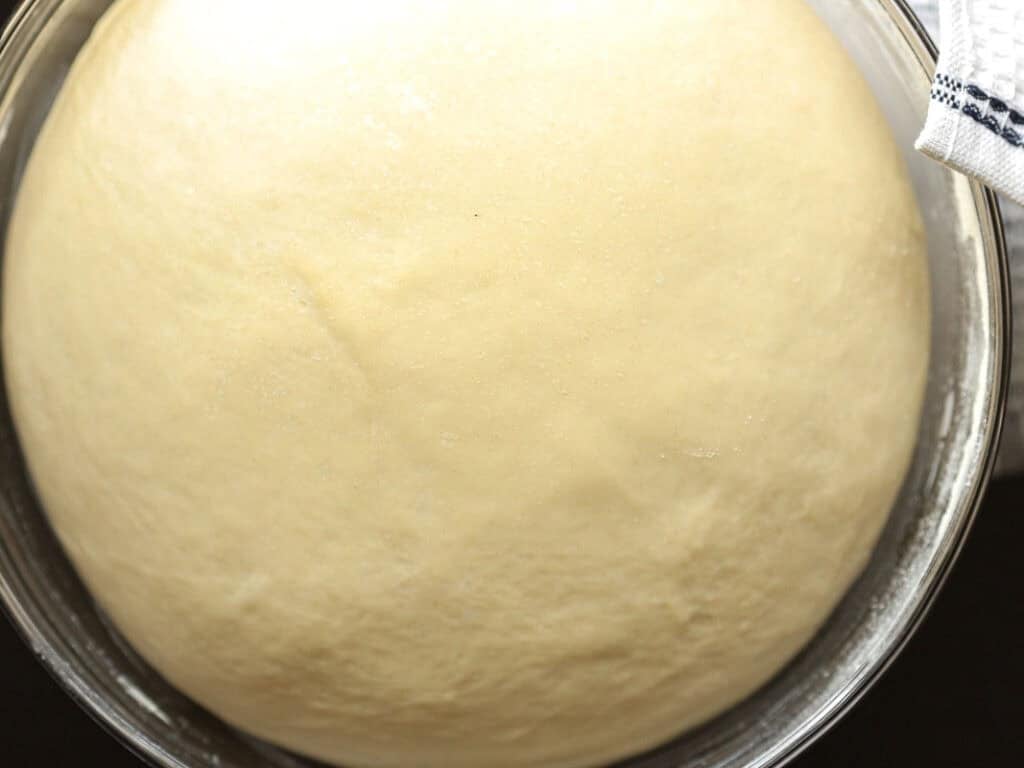
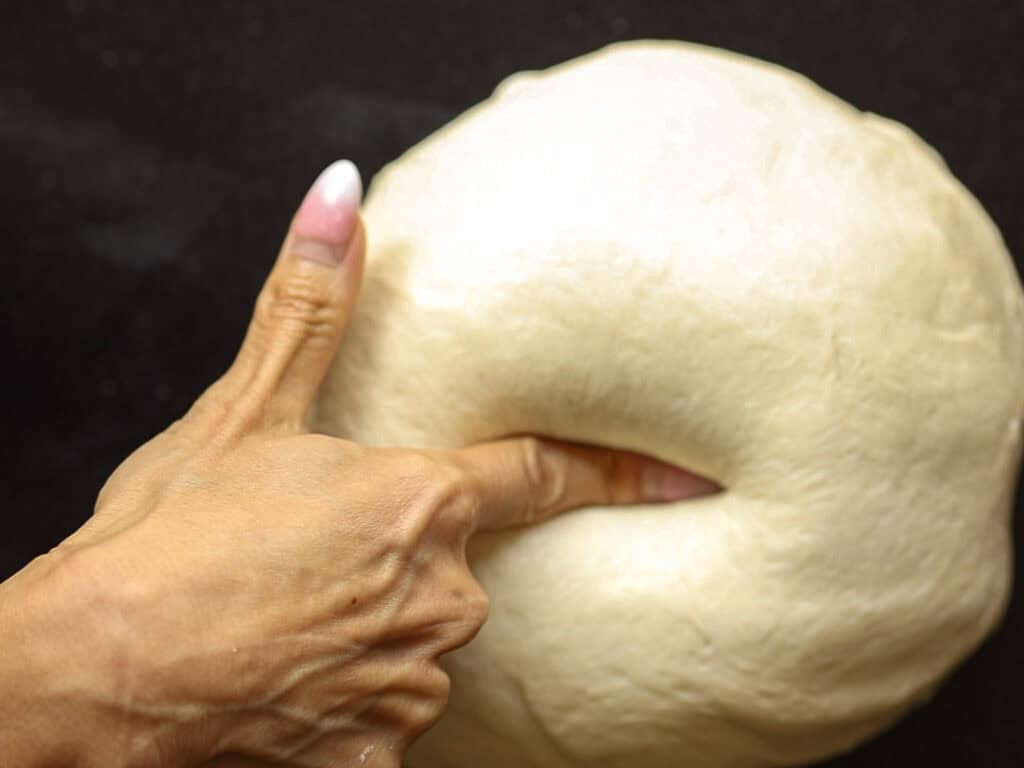
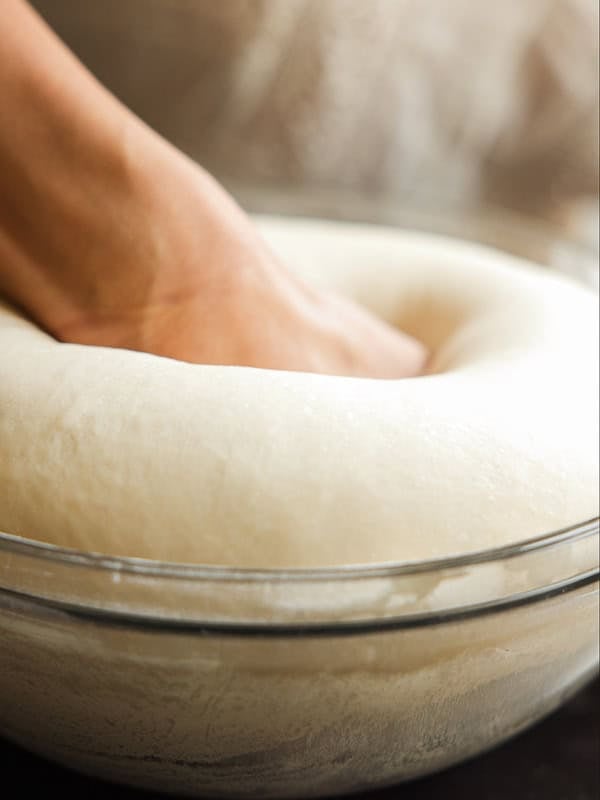
Once your dough has passed the “window pane test,” shape it into a ball and place it in a greased bowl. Cover it with plastic wrap or a kitchen towel. Let the dough rise at room temperature until it has doubled in size (usually about 90 minutes depending on how warm it is in your house). One good way to tell that your dough has sufficiently proofed is to stick your index finger into the dough. If it takes a long time to bounce back, you know it’s ready. If it bounces back right away, continue proofing for another 10 minutes and check again. Once it has doubled in size, punch down the dough, squeezing out all the air pockets.
Step 4. Divide and Freeze Butter Blocks.
While your dough is proofing, divide the butter you will be using to fill the dough into 20 even blocks (each one should be about 1-inch wide). Place them in the freezer. This recipe works BEST with frozen butter blocks so do not skip this step.
Step 5. Divide and Pre-Shape.
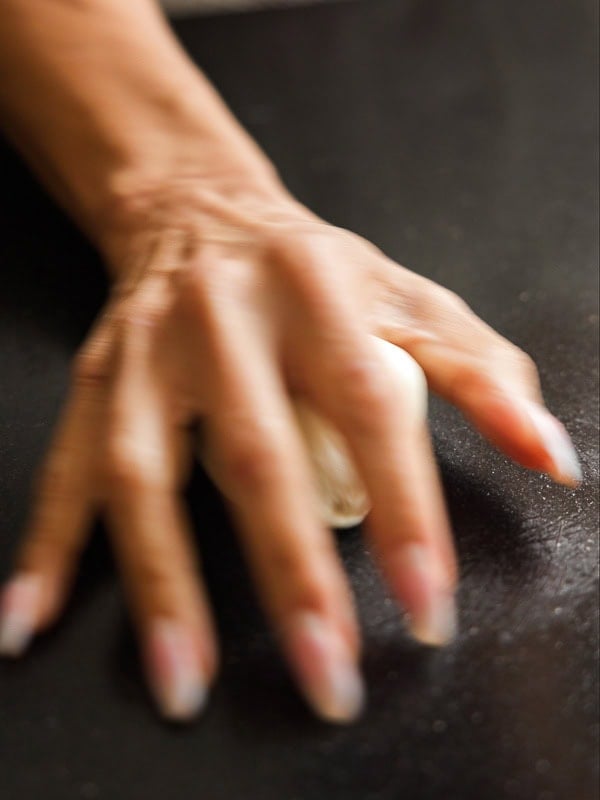
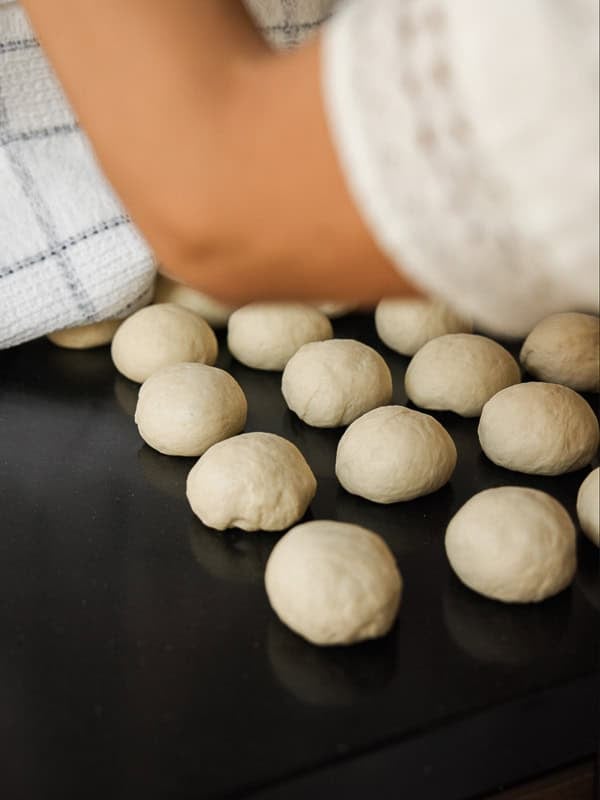
Divide the dough into 20 even pieces (I weighed the dough ball and it was a total of 1225 grams, which meant each individual piece was about 61 grams). Shape each individual piece into a round ball by creating a “cage” with your fingers and moving your hand quickly in a circular motion. Cover the dough again with plastic wrap or a kitchen towel and let the dough rest for about 40 minutes.
Step 6. Shape Your Salt Bread.
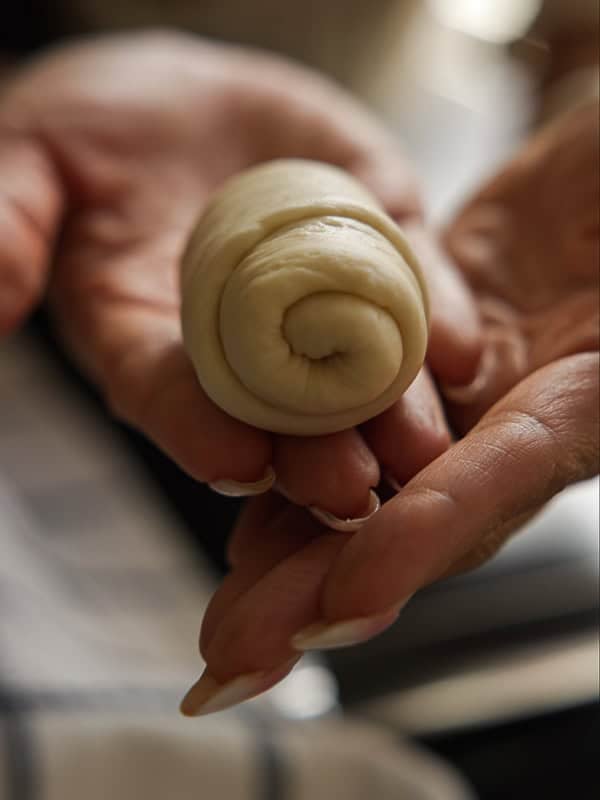
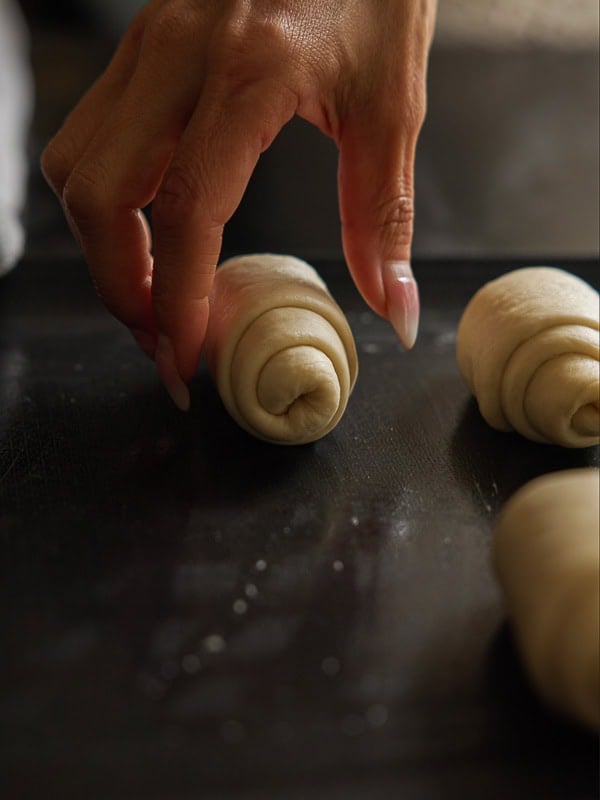
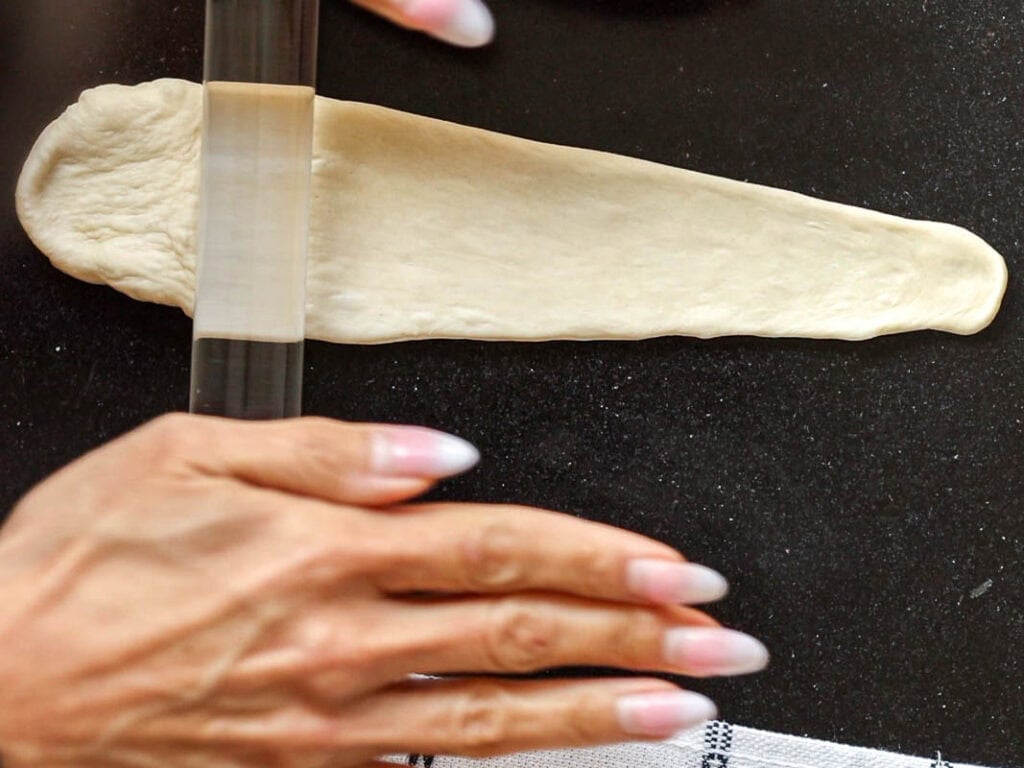
Take one of the dough balls and roughly shape it into something that resembles a carrot. Then, place it on your work surface and using a rolling pin, flatten it out so that you have a very long, narrow triangle. From tip to end, it should be at least 12 inches, though I tried to stretch mine out to 16 inches. The wider end should be about 1 1/2 inches to 2 inches wide. If your dough continues to spring back and resists being pulled, let it rest for another 10 minutes before trying again. If your dough sticks to your work surface, dust it with a tiny bit of flour.
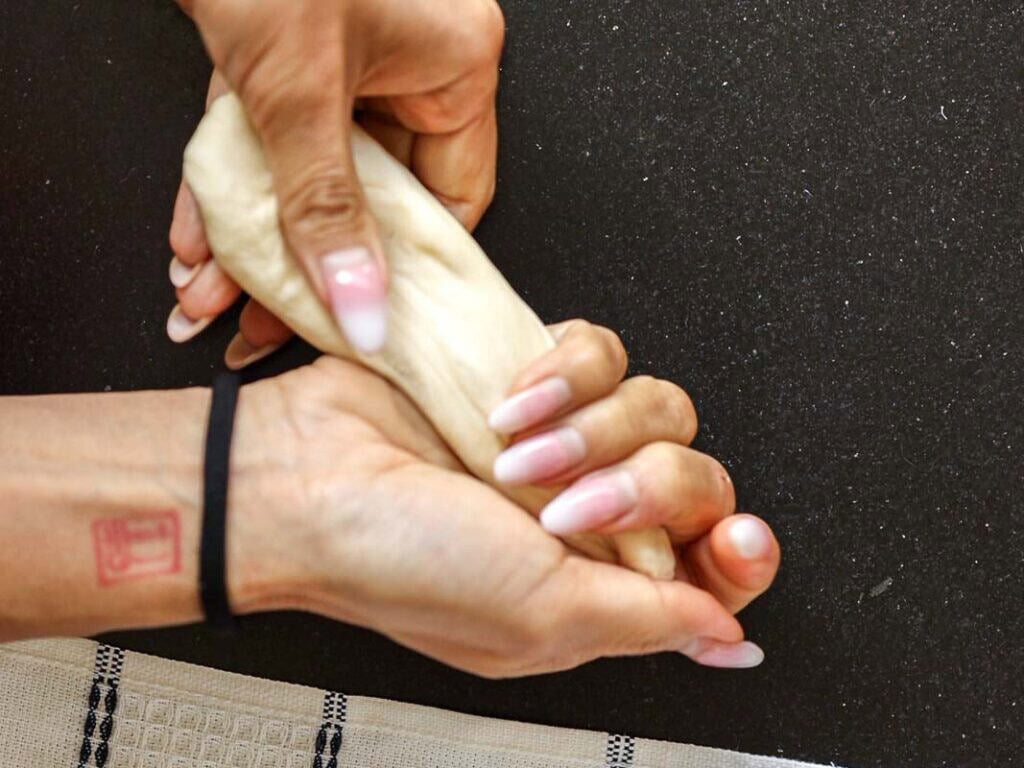
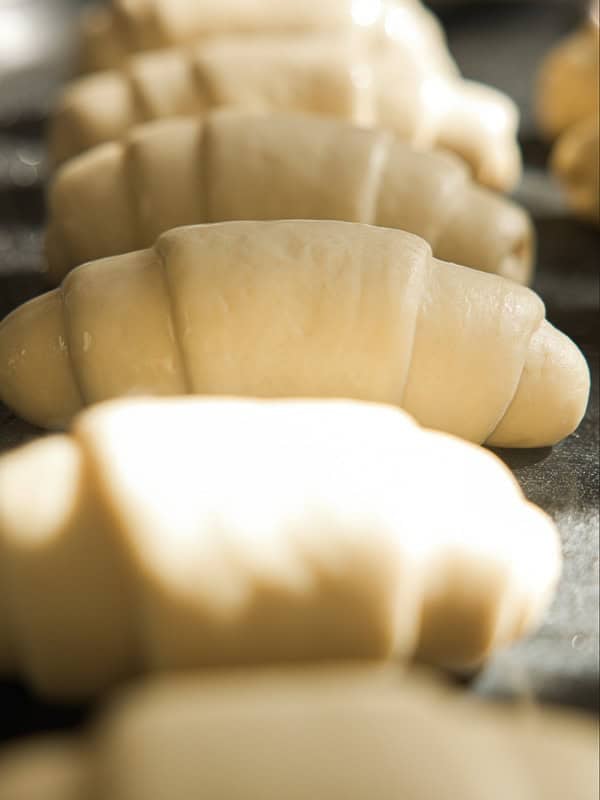
Place a butter block at the wider end of your dough triangle. Then, gently roll the dough around the butter block, making sure to keep the roll as tight and snug as possible without tearing the dough, until it reaches the very tip. Place the roll, tip side down, on a non-stick baking sheet or a baking sheet lined with parchment paper. Repeat with remaining dough balls and make sure to space the rolls so they space to grow. Cover the shaped rolls with plastic wrap or a kitchen towel or plastic wrap and let them proof for another 60 minutes (until they are nice and poofy).
Step 7. Bake Your Salt Bread.
About 30 minutes into your proof, preheat your oven to 425° F. When your salt bread rolls are nice and poofy, spray them with a lot of water (about 10 to 15 spritzes of water each). This water creates steam and the steam creates “oven spring,” making your crust thin and crispy. Then, sprinkle the tops of each with a pinch of coarse salt before baking in the oven for 15 minutes. Rotate your sheet pans (I had to use two) and continue baking for another 10 minutes, until your salt bread rolls are golden brown. Check the bottoms to make sure they are nice and crispy! Brush them with a little melted vegan butter and enjoy!
Storing And Reheating Salt Bread.

Your salt bread rolls are best when they’re fresh, just a few minutes after being dressed with melted butter. But if you have leftovers, they can remain at room temperature for 24 hours, loosely covered. Afterwards, they should be placed in the refrigerator in an airtight container, where they can last for about a week. To reheat your vegan salt bread, just zap them in the microwave covered with a damp paper towel for about 10 to 15 seconds.
Frequently Asked Questions.
Can I make this vegan salt bread recipe with gluten-free flour?
I have not tested this salt bread recipe with gluten-free flour, but if you have a solid, reliable gluten-free bread flour blend you’ve used in the past for bread, give it a try!
Can I use coconut oil instead of vegan butter?
I have not tested this salt bread recipe with coconut oil. However, you can try making this recipe using coconut oil that is solid at room temperature. You may have trouble shaping the “blocks” necessary to roll them and you will likely not achieve the massive holes running through the centers of each roll (since the oil will melt too quickly), but you should still have delicious rolls.
Disclaimer: Some of the links in this post may be affiliate links for products I use and love. If you make a purchase after clicking one of those links, I may earn a small affiliate commission, perhaps enough to buy some extra gochujang or gochugaru 🙂
Video: Watch Me Make It.
Recipe Card.

Vegan Salt Bread.
Joanne Molinaro
This vegan take on the viral salt bread recipe that has taken the internet by storm is perfect for your next dinner party or a night in with Netflix. Developed and modified from a classic Japanese bakery recipe, this salt bread recipe has been adapted to yield a tender crumb that home bakers can achieve in their own kitchen–with far less fuss and math! Full of buttery flavor and that tell-tale crisp, you'll return to this salt bread recipe over and over again!
Prep Time 4 hours 30 minutes
Cook Time 25 minutes
Course Appetizer, Side Dish, Snack
Cuisine Japanese
Servings 20 rolls
Calories 349 kcal
1 Rolling Pin
1 stand mixer
- 5 3/4 cups all purpose flour (690 grams)
- 2 1/4 tsp instant yeast
- 1 tsp sea salt (plus more for sprinkling)
- 3 tbsp organic cane sugar
- 3/4 cup non-dairy milk (cold)
- 1 tbsp lemon juice (or vinegar)
- 1 cup cold water
- 1/3 cup vegan butter (cut into rough 1-inch pieces)
- 2 1/3 cup vegan butter (divided evenly into 20 1-inch wide pieces)
Add lemon juice to your cold dairy-free milk and stir (this is vegan buttermilk). Set aside. Add yeast, flour, salt, sugar, milk powder to the bowl of your stand mixer and begin mixing on low with hook attachment. Add 1 cup of cold water while continuing to mix on low until a scraggly dough begins to form. Then, add the vegan buttermilk you made earlier until a wet dough forms. Add 1/3 cup of cold butter, one cube at a time, into dough on medium. Continue to mix on medium speed until all the butter has been fully incorporated.
Once the butter has been fully incorporated, raise the speed to medium-high (6 on a KitchenAid) and knead the dough until it becomes relatively smooth and stretchy. Pull a piece off and stretch it against the light. If you can see through the piece without it tearing, you're done kneading. If it tears too easily, then knead for 5 more minutes. It took me a full 25 minutes of kneading at 6–after the butter had been incorporated–before I got the dough to where I wanted it.
Once your dough has passed the "window pane test," shape it into a ball and place it in a greased bowl. Cover it with plastic wrap or a kitchen towel. Let the dough rise at room temperature until it has doubled in size (usually about 90 minutes depending on how warm it is in your house). One good way to tell that your dough has sufficiently proofed is to stick your index finger into the dough. If it takes a long time to bounce back, you know it's ready. If it bounces back right away, continue proofing for another 10 minutes and check again. Once it has doubled in size, punch down the dough, squeezing out all the air pockets.
While your dough is proofing, divide the butter you will be using to fill the dough into 20 even blocks (each one should be about 1-inch wide). Place them in the freezer. This recipe works BEST with frozen butter blocks so do not skip this step.
Divide the dough into 20 even pieces (I weighed the dough ball and it was a total of 1225 grams, which meant each individual piece was about 61 grams). Shape each individual piece into a round ball by creating a "cage" with your fingers and moving your hand quickly in a circular motion. Cover the dough again with plastic wrap or a kitchen towel and let the dough rest for about 40 minutes.
Take one of the dough balls and roughly shape it into something that resembles a carrot. Then, place it on your work surface and using a rolling pin, flatten it out so that you have a very long, narrow triangle. From tip to end, it should be at least 12 inches, though I tried to stretch mine out to 16 inches. The wider end should be about 1 1/2 inches to 2 inches wide. If your dough continues to spring back and resists being pulled, let it rest for another 10 minutes before trying again. If your dough sticks to your work surface, dust it with a tiny bit of flour.
Place a butter block at the wider end of your dough triangle. Then, gently roll the dough around the butter block, making sure to keep the roll as tight and snug as possible without tearing the dough, until it reaches the very tip. Place the roll, tip side down, on a non-stick baking sheet or a baking sheet lined with parchment paper. Repeat with remaining dough balls and make sure to space the rolls so they space to grow. Cover the shaped rolls with plastic wrap or a kitchen towel or plastic wrap and let them proof for another 60 minutes (until they are nice and poofy).
About 30 minutes into your proof, preheat your oven to 425° F. When your salt bread rolls are nice and poofy, spray them with a lot of water (about 10 to 15 spritzes of water each). This water creates steam and the steam creates "oven spring," making your crust thin and crispy. Then, sprinkle the tops of each with a pinch of coarse salt before baking in the oven for 15 minutes. Rotate your sheet pans (I had to use two) and continue baking for another 10 minutes, until your salt bread rolls are golden brown. Check the bottoms to make sure they are nice and crispy! Brush them with a little melted vegan butter and enjoy!
Calories: 349kcalCarbohydrates: 30gProtein: 5gFat: 23gSaturated Fat: 4gPolyunsaturated Fat: 7gMonounsaturated Fat: 11gTrans Fat: 4gSodium: 307mgPotassium: 70mgFiber: 1gSugar: 2gVitamin A: 36IUVitamin C: 1mgCalcium: 19mgIron: 2mg
Keyword salt bread, salt bread recipe
Did you like this recipe? If so, please leave a rating and share it!








 English (US) ·