
 4 weeks ago
39
4 weeks ago
39
After 10 years of Korean vegetable gardening, I’m sharing 18 more Korean vegetables worth growing at home — from mountain vegetables like gomchwi and chwinamul to winter-hardy bomdong and the sweetest Korean melon you’ve never tasted. Organized by season, so you know exactly what to plant and when.
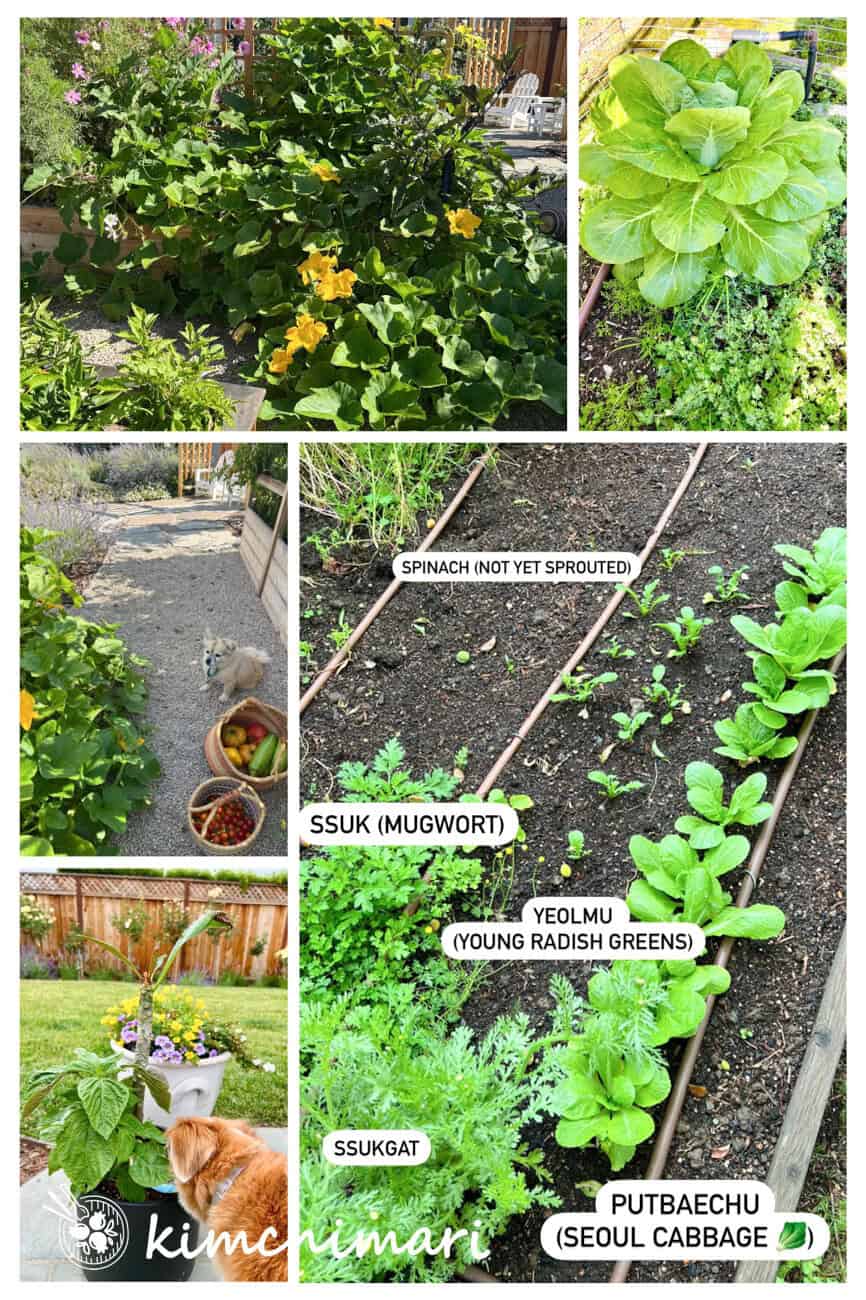
If you’ve been following Kimchimari for a while, you already know I’m a passionate Korean vegetable gardener. I’ve been growing Korean vegetables at home for over 10 years — and I can’t imagine cooking without stepping outside to pick fresh perilla leaves, cucumbers, or chives right before a meal.
In my original Korean vegetable gardening post, I shared the 9 most essential Korean vegetables to grow at home. But after years of expanding my own garden — and running my kimchimari shop for a short time — I realized there are so many more wonderful Korean vegetables worth growing that most people have never even considered.
Some of these you genuinely cannot find at any store. Some are mountain vegetables that Koreans have foraged for centuries. All of them will make your Korean cooking more authentic, more flavorful, and more joyful.
This is your guide to exploring the Korean vegetable garden in greater depth. 🌱
New to Korean vegetable gardening? Start with my 9 Korean Vegetables to Grow This Spring post first, then come back here when you’re ready for more!
🌸 Spring Planting
Plant after the last frost. These cool-season vegetables love mild spring temperatures and will bolt or become bitter in summer heat — harvest before it gets too warm!
1. Jeok Sangchu 적상추 — Korean Red Leaf Lettuce & Flower Lettuce
Korean Red Leaf Lettuce (Jeok Sangchu 적상추) and Flower Lettuce (Kkot Sangchu) are not quite the same as the regular lettuce you know. They are incredibly tender, sweet, and perfect for Korean ssam (lettuce wraps) and salad muchim. Once you try ssam with these leaves, regular romaine just won’t cut it.
- Light: Full sun or partial shade
- Ideal Temp: 60–70°F — will bolt quickly and become bitter if too warm
- Germination: 14 days
- Planting: Spring with no fear of frost, or fall in mild climates. Transplants easily. Grows well in containers.
- Depth & Spacing: ⅛” deep, cover seed lightly. 2″ apart, row spacing at least 6″
- Water: Keep moist — lettuce loves water
- Harvest: Pick individual leaves from the outer edges so inner ones continue to grow. Or cut and leave the stem and roots — they will regrow! Once it bolts, make Bolted Lettuce Kimchi.
- Recipes: Lettuce Salad, Bolted Lettuce Kimchi, Bulgogi Rice Bowl, Ssam
2. Yeolmu 열무 — Korean Young Radish Greens
Yeolmu is one of those vegetables that Koreans absolutely love but most non-Koreans have never heard of. The young radish greens are tender, slightly spicy, and make the most refreshing kimchi — Yeolmu Kimchi is a summer staple in Korea, eaten ice cold with noodles or rice.
- Light: Full Sun
- Planting: Sow in spring (March/April) or early fall (mid-August/September)
- Depth: About ½” depth. Spread seeds and cover lightly. Thin out as they grow.
- Water: Prefers moist soil
- Harvest: As early as 3 weeks, up to 5–6 weeks. Younger greens will be more tender.
- Recipes: I don’t yet have a recipe on my blog but you can make Namul – blanch in salted water, season with doenjang, gochugaru, garlic, sesame oil and green onions.
3. Naengi 냉이 — Shepherd’s Purse
Naengi is a beloved spring vegetable in Korea — Koreans eagerly wait for it every year as a sign that spring has truly arrived. Eaten whole including part of the root, it has an earthy, slightly nutty flavor perfect for doenjang guk and kimchi.
- Light: Full Sun
- Ideal Temp: 60–68°F — hardy, can even survive freezing winters when planted in fall
- Matures: About 60 days
- Planting: Early spring or fall. Does NOT transplant well — sow directly into soil or a large pot.
- Water: Prefers moist soil. Doesn’t need much fertilizer.
- Harvest: Eat the whole plant including part of the root
- Nutrition: High in protein
- Recipes: Make Doenjang Guk, Doenjang Jjigae, Kimchi, Muchim
4. Jeok Gat 적갓 — Korean Red Mustard Greens
Korean Red Mustard Greens have gorgeous deep purple-red leaves that are fragrant, tender, and slightly spicy — they add a wonderful zing to kimchi, especially Kimjang kimchi. Stunning in the garden too!
- Light: Full Sun or part shade
- Season: Cool season — sow early spring (3 weeks before last frost) or late summer
- Matures: 40–60 days. Best to harvest for kimchi when about 25″ long.
- Planting/Growing: Sprinkle seeds in rows about 15″ apart and thin as it grows. Cover lightly with soil. Plant every 2–3 weeks for continuous harvest. Water in the morning.
- Container: Can be grown in containers at least 4–6″ deep
- Recipes: Kimjang Kimchi, Dongchimi Kimchi, Gat Kimchi
☀️ Late Spring / Summer Planting
These heat-loving vegetables need warm soil and full sun. Don’t rush them into cold ground — wait until soil temperatures are reliably warm.
5. Kkari Gochu 꽈리고추 — Korean Wrinkled Green Peppers
You might know these as shishito peppers — but the Korean variety has a uniquely smoky flavor, especially enhanced by roasting or grilling. Usually mild (around 100 Scoville) but occasionally one will surprise you with a kick!
- Light: Full Sun
- Ideal Temp: 80–90°F for germination
- Germination: 10–25 days
- Planting/Growing: Start indoors in early spring. Plant directly outdoors when the weather is above 70°F. Use cages for support — grows about 4 feet tall. Can grow in pots.
- Depth & Spacing: ¼–½” depth, 3′ spacing between plants
- Water: Let soil dry completely between watering, then water deeply
- Harvest: When green, 2–4″ in length. Snip with shears.
- Recipes: Jangjorim, Myeolchi Bokkeum and Pork Ribs Jorim.
6. Chamoe 참외 — Korean Melon
If you’ve ever visited Korea in summer, you know chamoe. These amazingly sweet oval melons with deep golden skin and white stripes are a beloved Korean summer fruit. Each one grows to about 1 lb. Growing your own is genuinely the best way to enjoy them outside Korea!
- Light: Full Sun
- Planting: Late spring/summer after last frost (above 77°F). Or start indoors 2–4 weeks earlier. Germination 4–6 days.
- Growing: Grow in well-draining soil. Overwatering = less sweet fruits. Train on vertical trellis or let sprawl. Harvest about 40 days after fruit sets.
- Harvest: When fruit has a fragrant aroma and at first sign of cracking at base of melon stem
- Each packet: 30 seeds
- How to eat: Peel the skin, discard seeds, enjoy fresh!
7. Gaji 가지 — Korean Eggplant
Korean eggplant (흑수장가지 — ‘black long eggplant’) is extra tender and sweet with very few seeds. Much more delicate in flavor and texture than big American eggplant. Perfect for gaji namul or dried namul.
- Light: Full Sun
- Ideal Temp: Keep soil warm (80–90°F). Heavy feeder — fertilize throughout growing season.
- Planting: Start seeds inside 6 weeks before last frost. Transplant in late spring/summer when soil temps above 75°F. Don’t plant near tomatoes or pumpkins.
- Spacing: 2 to 2½ feet apart, rows 3–4 feet apart
- Growing: May need support as fruits can weigh down the plant
- Each packet: 50 seeds
- Recipes: Gaji Namul. Slice and dry to make dried namul.
8. Danhobak 단호박 — Korean Sweet Pumpkin (Kabocha Squash)
Danhobak has dark green skin with a hard exterior and yellow flesh that becomes incredibly soft and sweet when cooked. Each pumpkin grows to 3–4.5 lbs. Traditionally known as one of the best foods to help reduce water retention, a must-have food for new Korean mothers.
- Light: Full to Part Sun
- Planting: Great for spring and fall. Start indoors and transplant, or direct sow.
- Seedlings: Grow in pots for 45 days until about 5 leaves, then transplant outdoors
- Growing: Avoid wetting leaves — water at the base. Provide trellis or support for vine.
- Harvest: About 50–55 days after fruit sets
- Health benefits: Anti-diabetic, antioxidant, anti-carcinogenic, anti-inflammatory
- Recipes: – Hobak Juk (sweet pumpkin porridge), Danhobak Salad, Songpyeon, pan-fried or grilled slices
🍂 Fall Planting
Cool-season vegetables prefer to grow in the fall and winter. Plant in late summer/early fall for harvest through winter.
9. Mu 무 — Korean Radish
Korean radish is crunchy, juicy, slightly peppery, and slightly sweet. It is THE best radish for kimchi — nothing else comes close. In Korea, planted in late August and harvested in November for Kimjang. A must-grow for anyone serious about authentic kimchi.
- Light: Full Sun
- Planting/Growing: Plant in late summer to early fall in fertile, well-drained soil.
- Depth & Spacing: 1 or 2 seeds every 8–10 inches
- Water: Water deeply more than twice a week
- Harvest: 65–80 days. Pull out whole radish plant. Green tops can be used in dongchimi or dried to make Shiraegi Namul 시레기나물. Radish can be cut and dried to make Mumallaengi 무말랭이.
- Each packet: 400 seeds
- Recipes: How to dry Radish, Beef and Radish soup, Radish Salad
10. Chonggakmu 총각무 — Young Ponytail Radish
This small radish with many fine roots is what you need for Chonggak Kimchi — one of the most beloved kimchi varieties in Korea. Harvest the whole plant including the leaves and stems.
- Light: Full sun or partial light shade
- Ideal Temp: Above 68°F but cool temperatures are best
- Germination: 3–7 days
- Planting/Growing: Plant in spring after the last frost for an early summer harvest, or late summer/fall for fall-to-winter harvest
- Depth & Spacing: 3–5 seeds every 4–6 inches
- Water: Water deeply every 3–4 days
- Harvest: 40–45 days. Harvest when roots are big — consume with leaves and stems.
- Each packet: 700 seeds
- Recipes: Chonggak Kimchi
11. Bomdong 봄동 — Korean Spring Cabbage
Bomdong is a non-heading cabbage that grows through winter in Korea. Smaller, flatter, juicier, more tender, and slightly sweeter than regular napa cabbage. I have grown it successfully in California winters!
- Light: Full Sun
- Ideal Temp: Hardy — tolerates freezing down to 21°F (-6°C). Not suitable for hot summers.
- Planting/Growing: Sow in fall. Sprinkle seeds in a row and thin as it grows.
- Matures: 4 months
- Recipes: Bomdong Geotjeori, Kimchi, Soups
12. Eolgari Baechu 얼갈이배추 — Seoul Green Cabbage
A Korean loose-head type cabbage with narrow, light green leaves. Great for kimchi and baechu guk. Fast growing — can be harvested at any stage from 3 weeks to 7 weeks.
- Season: Cool-season annual
- Planting/Growing: Plant in spring or fall. Sow directly after last frost. Plant close together and thin after 3–4 weeks.
- Harvest: Any stage — early at 3–4 weeks, full maturity at 5–7 weeks
- Each packet: 200 seeds
- Recipes: Put Baechu kimchi, Baechu Guk (soup)
13. Shigeumchi 시금치 — Korean Spinach
Korean spinach is completely different from American spinach. Firmer, more fibrous, with a succulent, crunchy texture and light, sweet flavor. American spinach becomes mush when cooked — Korean spinach holds its texture beautifully. Once you try it, you’ll understand why Koreans are so particular about their spinach.
- Light: Full sun or partial light shade
- Ideal Temp: Mild and cool temperatures
- Matures: About 35 days
- Planting: Sow seeds 1″ apart in rows 8–10″ apart. Cover with ½” of soil and firm over seeds.
- Growing: Heavy feeder — fertilize several times throughout growing season
- Harvest: Harvest outer leaves only, leaving at least 4 center leaves. Will provide 2–3 pickings.
- Each packet: 700 seeds
- Recipes: Bibimbap, Japchae
14. Baek Kyeong Geundae 백경근대 — White Stem Swiss Chard
Korean Swiss chard is used in very Korean ways — blanched for namul or added to doenjang guk. Easy to grow and very versatile.
- Light: Full sun to part shade
- Season: Annual — plant in spring or fall
- Spacing: Spring: 4″ apart. Fall: 6″ apart. Thin out after true leaves appear.
- Korean schedule: April planting → June harvest. May → July. August → October.
- Recipes: Blanch leaves and make namul, or add to doenjang guk
🌿 Perennials — Plant Once, Harvest for Years
These remarkable plants come back year after year. A little patience up front rewards you with harvests for many seasons to come.
15. Doraji 도라지 — Balloonflower Root
Doraji is one of the most beloved traditional Korean vegetables — essential in bibimbap as Doraji Namul. It grows wild in Korean mountains with beautiful purple balloon-shaped flowers. The root looks similar to ginseng with a distinctive slightly bitter, ginseng-like flavor. A perennial that truly rewards patience.
- Light: Full sun or partial light shade
- Perennial: Best to harvest when 2 years old or older
- Planting/Growing: Mix seeds and soil in 1:3 ratio then sprinkle the seed-soil mixture. Barely cover with soil. Transplant around May for best results.
- Plant height: 15–40″ tall. Flowers white or purple in summer.
- Water: Keep ground moist
- Each packet: 1,000 seeds
- Health benefits: Known to be beneficial for the respiratory system. Can also dry and make tea or syrup.
- Recipes: Bibimbap, dried doraji tea
16. Chwinamul 취나물 — Aster Scaber
Chwinamul has traditionally been harvested from the mountains of Korea — now you can grow it in your backyard. Also called Chamchwi (참취), it’s a perennial that re-seeds easily and grows dormant in cold winters before coming back in spring. A true mountain vegetable, few people outside Korea have ever tasted it fresh.
- Light: Full Sun or light shade in summer
- Perennial: Re-seeds easily
- Planting/Growing: Mix soil and seeds in 3:1 ratio and sprinkle onto soil in early spring or early fall
- Water: Prefers moist soil
- Harvest: When leaves are around 10cm long. Will flower August–October.
- Seeds: So tiny they’re measured by weight — 2g of seeds per packet
- Recipes: Chwinamul (blanch and season similar to Ssukat Namul, add garlic). Use as ssam. Make dried namul.
17. Gomchwi 곰취 — Fischer’s Ragwort
Gomchwi originally grew wild in Korean mountains and was foraged — now you can grow it at home. A dramatic plant that can grow 5–6 feet tall with beautiful heart-shaped leaves. One of those special mountain vegetables that makes Korean cooking feel deeply authentic.
- Light: Part shade
- Perennial: Can be grown throughout the year in mild temperatures
- Planting/Growing: Special treatment needed! Soak seeds in water for 2–3 days, then freeze in a plastic bag for 4–5 days. Defrost and while still wet, sprinkle seeds in prepared soil. Cover with shade screen or hay and remove after sprouting.
- Water: Prefers moist soil — water frequently without leaving too wet
- Harvest: About 55 days after transplanting
- Recipes: Eat fresh or steamed as ssam, blanched and made into namul
18. Auk 아욱 — Curled Mallow
Auk (Chima Auk 치마아욱) is a nutritious green leafy vegetable with big leaves and beautiful purple stems. It grows up to 35″ tall, reseeds easily, and is even slug resistant! Perfect for doenjang guk on a cool autumn evening.
- Light: Full sun to part shade
- Season: Annual that reseeds easily
- Ideal Temp: Hardy — can last through hot summers but best grown until early summer or in late fall
- Planting/Growing: Cover seeds just slightly with soil (2–3mm layer). Thin plants to about 10″ apart. Also grows well in pots.
- Water: Prefers moist soil — water frequently without leaving too wet
- Harvest: Start harvesting leaves from about 5 weeks
- Recipes: Doenjang Guk (soybean paste soup), Namul, blanched as Ssam
A Few Tips for All Korean Vegetables
Where to find Korean vegetable seeds
Good sources for Korean vegetable seeds include Korean grocery stores, online Asian Seed companies and increasingly on Amazon.
Container growing
Many of these vegetables grow beautifully in containers — especially perilla, chives, lettuce, and green onions. If you have limited space, don’t let that stop you. A few pots on a sunny balcony can give you a steady supply of fresh Korean herbs.
Connect with other Korean vegetable gardeners
Join our Korean Vegetable Gardening Facebook group (facebook.com/groups/koreanvegetablegardening) — a community of people growing Korean vegetables at home. Share your progress, ask questions, and celebrate your harvests together!
Feeling overwhelmed? If this list feels overwhelming, go back to my 9 Korean Vegetables to Grow This Spring post and start with the basics. Come back here when you’re ready to expand.
Take care,
XOXO
JinJoo





 English (US) ·